





ABE MAGAZINE | ENERGY & GLOBAL MARKETS
October 22, 2026
Global oil markets entered another period of uncertainty on Thursday as crude prices climbed to their highest levels in five months following renewed attacks on energy infrastructure and commercial shipping in the Middle East. Brent crude surged above $112 per barrel, reflecting growing fears that escalating regional tensions could disrupt supplies from some of the world’s most important oil-producing countries. The consequences extend well beyond the energy industry. From shipping and aviation to manufacturing and household spending, sustained high oil prices threaten to increase costs across the international economy at a time when businesses are already struggling with geopolitical instability.
Oil Prices Reach a Five-Month High
Global oil prices rose sharply on Thursday as traders responded to fresh security threats in Saudi Arabia and the wider Gulf region.
Brent crude futures reached $112.68 per barrel during the session, their highest level since May 18. By 13:11 GMT, the international benchmark was trading at approximately $112.01, an increase of $3.19, or 2.9%.
U.S. West Texas Intermediate crude also advanced, briefly reaching $100.09 per barrel before trading near $99.56.
The increases followed reports of additional attacks on Saudi targets and commercial vessels operating near important regional shipping routes. Investors became increasingly concerned that damage to infrastructure or interruptions to maritime transport could reduce the amount of oil reaching international markets.
Oil prices respond not only to actual production losses but also to the possibility of future shortages. When traders believe that supplies could become more difficult to obtain, prices can rise before a major physical disruption occurs.
The latest increase therefore reflects both immediate security developments and the uncertainty surrounding the region’s ability to maintain reliable exports.
Attacks in Saudi Arabia Raise New Concerns
Saudi Arabia remains one of the world’s most influential oil producers, making threats to its energy infrastructure particularly important for global markets.
On Wednesday, Yemen’s Iran-aligned Houthi movement carried out attacks against several targets in Saudi Arabia. According to Reuters, at least one person was killed and eight others were wounded at a civilian airport in Dammam, while two people died in a drone attack on an oil field.
The violence intensified concerns about the safety of industrial facilities and transportation infrastructure in the region.
Saudi Aramco, the country’s major oil producer, subsequently instructed employees at its headquarters in Dhahran to evacuate and work remotely, according to Reuters reporting based on people familiar with the situation.
The decision illustrated the seriousness with which companies are treating the security environment.
For oil producers, maintaining operations during periods of regional conflict requires more than protecting production equipment. Companies must also ensure the safety of employees, transportation networks, storage facilities and export terminals.
Even when production continues, security concerns can complicate logistics and increase the cost of delivering oil to international customers.
The Strait of Hormuz Becomes a Major Risk
The Strait of Hormuz has emerged as another important source of market anxiety.
The narrow waterway connects the Persian Gulf with the Gulf of Oman and provides access to international shipping routes used by major oil exporters.
Commercial vessels operating in and around the strait have faced repeated security incidents during the regional conflict.
On Thursday, Iran’s Islamic Revolutionary Guard Corps Navy said that four vessels involved in what it described as illegal oil transfers had been struck and caught fire in the northern Gulf. It also reported that three additional vessels had collided with mines west of the Strait of Hormuz.
The Associated Press reported Iranian claims that seven oil tankers had been damaged or caught fire overnight. The circumstances surrounding individual incidents require independent verification.
Nevertheless, the reports have increased concern among shipping companies, insurers and energy traders.
When maritime routes become dangerous, vessels may face higher insurance costs, additional security requirements or operational delays. These expenses can increase the delivered cost of oil even if producers maintain their output.
For countries dependent on imported energy, such disruptions can create financial pressure far beyond the immediate conflict zone.
Why Oil Prices Remain High Despite Strong Exports
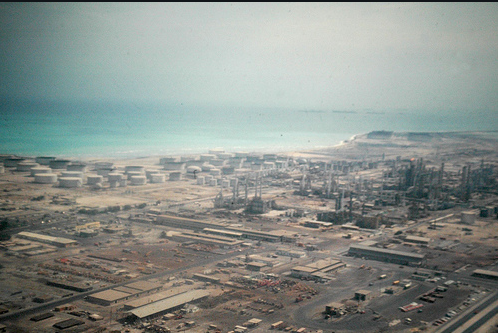
One of the more complicated aspects of the current market is that Middle Eastern oil exports have recovered significantly from earlier disruptions.
Morgan Stanley analysts estimated that crude exports from the region reached approximately 17 million barrels per day during the previous week.
This suggests that producers have managed to maintain substantial shipments despite the difficult security environment.
However, the existence of available oil does not necessarily guarantee that supplies can be transported safely, reliably or affordably.
Attacks on vessels, uncertainty surrounding shipping routes and the possibility of damage to export infrastructure all contribute to higher risk.
Earlier in September, attacks on Saudi Arabia’s East-West pipeline temporarily interrupted a major route used to bypass the Strait of Hormuz. According to the U.S. Energy Information Administration, the disruption contributed to Brent crude reaching approximately $131 per barrel on September 15.
Although repairs subsequently allowed some flows to resume, the episode demonstrated how vulnerable international energy markets can become when alternative transportation routes are also threatened.
The current price increase therefore reflects concerns about the security and reliability of supply rather than simply the total volume of oil being produced.
Disruptions Extend Beyond the Gulf
The uncertainty affecting energy markets is not limited to Saudi Arabia and the Strait of Hormuz.
Libya’s National Oil Corporation reported that a pipeline valve closure had reduced production at the Hamada and Tahara oil fields.
Although the disruption is separate from the conflict in the Gulf, it adds another source of uncertainty to international oil supplies.
Energy markets operate through interconnected production, transportation and refining systems. A disruption in one producing country can become more significant when other regions are already experiencing difficulties.
Buyers may respond by seeking alternative suppliers, increasing competition for available cargoes and placing further upward pressure on prices.
For refiners, the challenge is securing suitable crude oil at commercially viable prices. For governments, it involves maintaining energy security while limiting the economic consequences of rising fuel costs.
These pressures become particularly difficult when geopolitical developments remain unpredictable.
The Global Economy Faces Higher Costs
Sustained high oil prices have consequences for businesses and consumers around the world.
Airlines are particularly exposed because aviation fuel represents a substantial operating expense. Shipping companies, trucking operators and other transportation businesses also face pressure when diesel and marine fuel prices increase.
Manufacturers may experience higher costs through transportation, energy-intensive production and petroleum-based materials.
These increases can eventually reach consumers through higher prices for goods and services.
Countries that import most of their energy may face additional pressure on trade balances and foreign exchange markets, while major oil-exporting economies can benefit from stronger revenues.
The effects are therefore uneven, creating advantages for some businesses while increasing financial difficulties for others.
Governments also face difficult decisions. Measures designed to reduce fuel costs may provide temporary relief, but they can involve public expenditure or reduce emergency reserves intended for future disruptions.
In the United States, the administration has offered to lend part of its emergency heating oil reserve as it seeks to address fuel-market pressures.
Such measures may help manage immediate shortages, but they cannot independently resolve the geopolitical instability affecting international energy supplies.
What Happens Next for Oil Markets?
The direction of oil prices will depend heavily on security developments and the ability of producers to maintain exports.
Further attacks on tankers, pipelines or production facilities could increase concerns about supply reliability. Conversely, improved maritime security or diplomatic progress could reduce some of the risk currently reflected in prices.
Investors will also monitor global inventories, refinery activity and demand from major energy-consuming economies.
A period of high prices may encourage producers to increase output where capacity is available, but additional production cannot always compensate for disruptions to transportation routes.
The uncertainty makes planning difficult for businesses whose costs depend on energy markets.
Companies may respond by adjusting fuel purchasing arrangements, improving efficiency or reconsidering transportation and supply-chain strategies.
For households and governments, the central concern is whether the current price increase becomes a prolonged period of expensive energy.
THE ABE TAKE
The latest surge in oil prices demonstrates how deeply global economic stability depends on the security of international energy infrastructure.
Oil markets are not governed by production volumes alone. Pipelines, ports, shipping routes and insurance arrangements are equally important in determining whether energy can reach the businesses and households that need it.
The current crisis is particularly significant because substantial quantities of oil are still being exported from the Middle East. Yet the threat of further attacks is enough to raise prices and create uncertainty across international markets.
For businesses, the lesson is that energy risk must be treated as a central part of financial and operational planning. Companies that depend heavily on transportation or fuel-intensive production are especially vulnerable when geopolitical events create sudden changes in operating costs.
For governments, the challenge is broader. Protecting energy security requires reliable supply relationships, resilient infrastructure and policies that reduce exposure to disruptions.
The immediate market reaction may change as new information emerges, but the underlying vulnerability remains clear.
A global economy that depends on a limited number of strategically important energy routes will continue to face substantial risks whenever conflict threatens their operation.
The rise above $112 per barrel is therefore more than a financial-market development. It is another reminder that the cost of energy security extends into nearly every sector of the world economy.
ABE MAGAZINE
Understand More. Think Bigger.