







ABE MAGAZINE | AVIATION & INFRASTRUCTURE
November 14, 2026
By ABE Editorial Desk
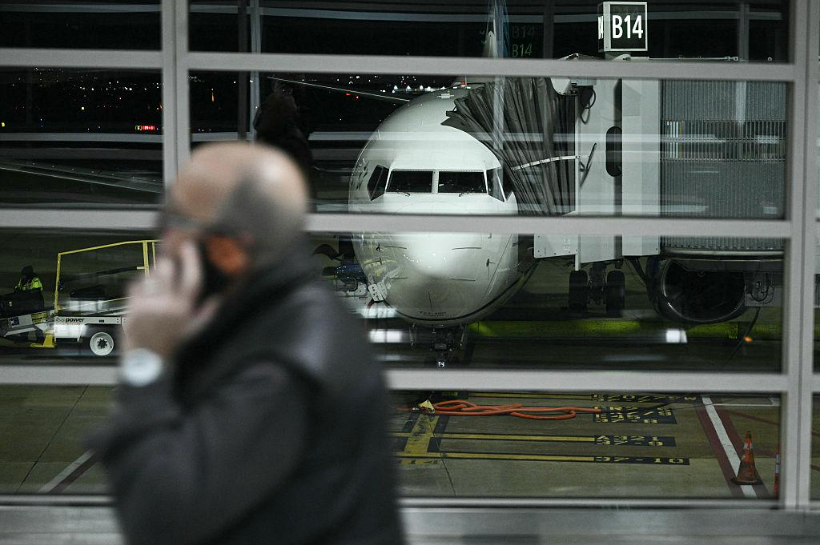
For more than four hours on Friday, the world’s largest aviation market faced an extraordinary disruption. Aircraft preparing to depart across the United States were ordered to remain on the ground after a critical communications failure struck the national air traffic control network. Thousands of flights were cancelled, passengers became stranded, and airlines struggled to restore their schedules. By Saturday, the disruption had exposed a deeper problem: America’s aviation system depends on ageing technology that urgently needs modernisation.
The incident was more than a transportation emergency. It revealed how weaknesses in essential infrastructure can disrupt an entire industry, affect international travel and threaten economic activity far beyond airport terminals.
The Day America’s Airspace Stopped
On November 13, the Federal Aviation Administration issued a nationwide ground stop after communications problems affected multiple Air Route Traffic Control Centers. These facilities coordinate aircraft travelling between airports and play a critical role in maintaining safe operations.
The order prevented departing flights from taking off across the country. Aircraft already airborne were generally permitted to continue toward their destinations, while controllers managed the disruption through established safety procedures.
The ground stop lasted more than four hours before authorities began restoring departures. Transportation Secretary Sean Duffy warned that returning to normal operations would take time because aircraft, crews and passengers were scattered across the aviation network.
By Saturday morning, FlightAware figures reported by ABC News showed more than 12,500 cancellations across Friday and Saturday. The figures were still changing as airlines adjusted their schedules.
The shutdown demonstrated how quickly a technical failure can become a nationwide economic problem.
The Ageing Technology Behind the Failure
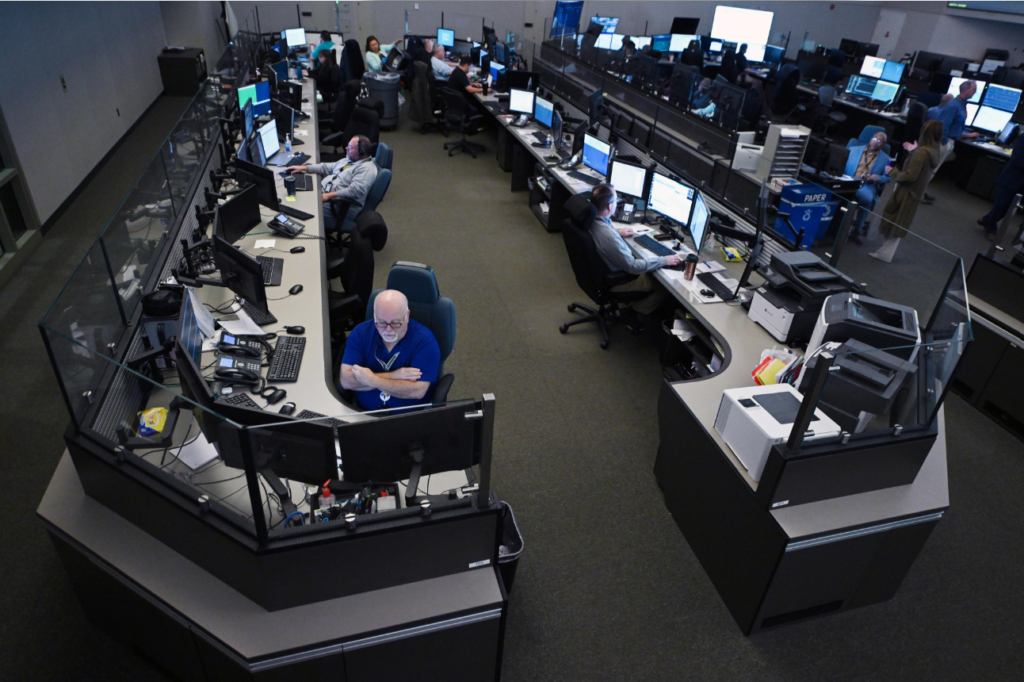
Initial findings pointed toward problems within the FAA’s communications infrastructure. Duffy said overloaded switches and routers had contributed to the failure, while investigators continued examining the precise sequence of events.
The incident renewed attention on the condition of America’s air traffic control systems. Many components rely on technology developed decades ago, creating difficulties with maintenance, replacement parts and compatibility.
A 2024 Government Accountability Office review examined 138 FAA systems. It classified 51 as unsustainable and another 54 as potentially unsustainable.
These findings suggest that the challenge extends beyond a single equipment failure. The network contains interconnected systems that require coordinated investment and long-term maintenance.
Modernising one component does not automatically resolve weaknesses elsewhere. Communication networks, controller workstations and supporting software must operate together reliably.
The FAA now faces the challenge of upgrading critical infrastructure while keeping one of the world’s busiest aviation systems operational.
Airlines and Passengers Face the Consequences
The financial consequences of a nationwide ground stop can spread rapidly. Airlines must rearrange aircraft, find available crews and accommodate passengers whose original journeys are no longer possible.
Cancelled flights can also affect connecting services in other countries. Aircraft scheduled to arrive in the United States may be delayed, while international passengers face uncertainty over onward travel.
For travellers, the disruption created missed appointments, unexpected accommodation expenses and difficult decisions about alternative transportation.
Airlines offered schedule changes and travel waivers, but those measures could not immediately restore lost capacity.
The effects also extend to businesses that depend on reliable aviation. Cargo operators, hotels, conference organisers and companies with international operations can all experience disruption when flight networks become unstable.
The precise economic cost remains uncertain. However, the scale of cancellations demonstrates why aviation reliability matters far beyond the transportation sector.
Washington Confronts a $50 Billion Question
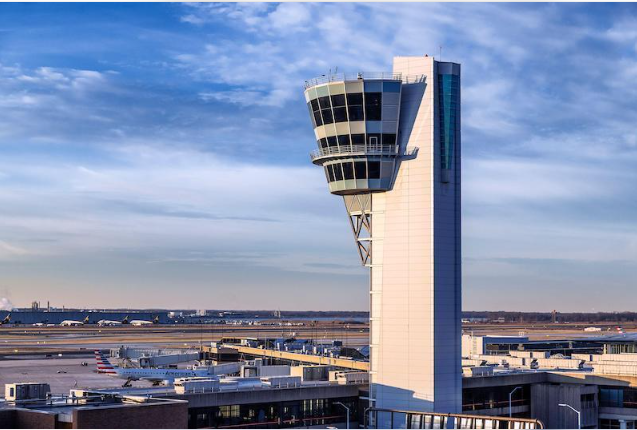
The crisis intensified pressure on Washington to accelerate aviation infrastructure investment.
Following the shutdown, the Trump administration increased its request for air traffic control funding to approximately $50 billion. Transportation Secretary Sean Duffy described the situation as an emergency requiring substantial federal action.
The administration had also outlined a $30.1 billion infrastructure proposal covering air traffic control improvements and airport projects.
Congress previously approved $12.5 billion over five years for aviation modernisation and controller recruitment in 2025.
However, funding alone will not guarantee immediate improvement. Major infrastructure projects require technical coordination, skilled personnel and careful implementation.
Replacing outdated equipment while maintaining daily flight operations presents significant operational risks.
The central challenge is ensuring that new investment produces measurable improvements rather than another cycle of delayed projects and rising costs.
Why Previous Warnings Matter
Friday’s failure did not emerge without warning.
The FAA has faced repeated criticism over outdated equipment, staffing shortages and the slow pace of technological upgrades.
A communications disruption in September affected approximately 9,500 flights after technical problems were compounded by damage to a backup fibre connection.
Such incidents highlight the importance of redundancy. Critical infrastructure should have alternative systems capable of maintaining essential functions when primary equipment fails.
However, redundancy requires more than installing additional cables or servers. Backup systems must be independently reliable, regularly tested and protected against shared vulnerabilities.
The Government Accountability Office has also identified weaknesses in the FAA’s modernisation planning. Poor coordination between projects can increase costs and delay improvements.
The latest shutdown reinforces the need for a comprehensive strategy rather than isolated technical repairs.
A National Problem With International Implications
American aviation is deeply connected to international commerce. Its airports support business travel, tourism, cargo transportation and connections between major global markets.
When the United States experiences a nationwide aviation disruption, the consequences can reach airlines and travellers across multiple continents.
The incident also offers a warning to governments elsewhere. Many countries depend on ageing infrastructure that was designed before today’s levels of digital connectivity and transportation demand.
Modern systems offer greater efficiency, but they can also introduce new dependencies.
A failure in a central communications network can affect numerous facilities simultaneously. This creates risks that individual airports or airlines cannot resolve independently.
Governments must therefore treat infrastructure resilience as an economic priority rather than merely a technical maintenance issue.
THE ABE TAKE
America’s aviation shutdown exposed a contradiction at the centre of modern economic development. The United States operates an extraordinarily advanced aviation industry, yet essential parts of the system supporting it remain dependent on outdated technology.
The consequences are substantial. A communications failure can ground thousands of aircraft, disrupt international travel and impose costs on businesses that have no control over the underlying infrastructure.
The administration’s proposed $50 billion investment reflects the scale of the challenge. However, spending must be accompanied by transparent oversight, coordinated planning and measurable performance improvements.
The deeper lesson extends beyond aviation. Governments cannot build resilient economies while allowing essential infrastructure to deteriorate.
For business leaders, the incident reinforces the importance of contingency planning. For policymakers, it demonstrates why infrastructure maintenance deserves sustained attention before emergencies occur.
America’s flights are gradually returning to normal. The more difficult task is ensuring that another technical failure cannot bring the country’s aviation network to a similar standstill.
ABE MAGAZINE
Understand More. Think Bigger.