







ABE MAGAZINE | GLOBAL MARKETS
October 19, 2026
Global financial markets began the new week with conflicting signals. Asian technology shares weakened as investors questioned whether enormous spending on artificial intelligence infrastructure would translate into sustainable profits, while American stock futures advanced and oil prices retreated. The divergence reveals an increasingly selective investment environment, where confidence in long-term technological growth is being tested against immediate concerns about corporate earnings, energy costs and geopolitical uncertainty.
Asian Markets Reveal Growing Investor Caution
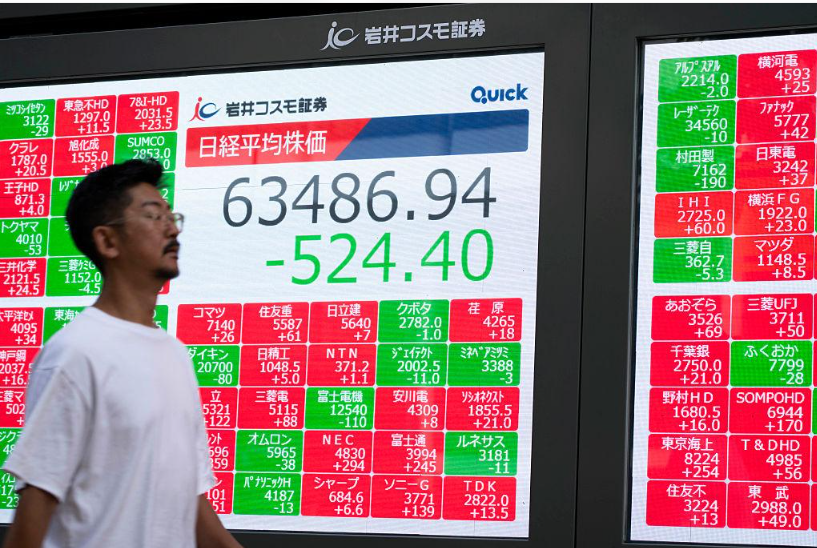
Asian equity markets began Monday under pressure, reflecting concerns about technology valuations and the financial returns expected from major infrastructure investments. Japan’s Nikkei declined approximately 0.7%, while Taiwan’s benchmark market fell around 1.1%, according to Reuters reporting.
The declines were particularly significant because both markets are closely connected to the global technology industry. Japanese manufacturers supply specialized equipment and components used in electronics production, while Taiwan occupies a central position in semiconductor manufacturing.
Weakness in these markets therefore reflects more than local investor sentiment. It provides an indication of how global investors are reassessing the expectations surrounding technology companies and their suppliers.
Over recent years, demand for advanced computing equipment has encouraged significant investment across semiconductor production, data centres and related infrastructure. Companies have committed substantial resources in anticipation of continued demand for increasingly sophisticated digital services.
However, rising investment does not automatically guarantee rising profitability. As spending increases, investors are paying closer attention to whether businesses can generate enough revenue and cash flow to justify their expansion plans.
The Growing Question Around Technology Investment
Technology companies have benefited from expectations that artificial intelligence and advanced computing will create new commercial opportunities across industries. Those expectations have supported demand for semiconductors, cloud infrastructure and specialized computing equipment.
Yet the scale of the investment required is creating new financial questions. Building and operating large data centres involves substantial expenditure on processors, electricity, cooling systems, networking equipment and physical facilities.
For companies purchasing this infrastructure, the challenge is demonstrating that new products and services can produce sufficient returns. For suppliers, the challenge is maintaining strong demand without becoming excessively dependent on a limited number of major customers.
This distinction is becoming increasingly important in financial markets. A company may report strong revenue growth while simultaneously increasing capital expenditure, leaving investors uncertain about how much of that growth will ultimately translate into profits.
The resulting pressure does not necessarily indicate that technology investment has become economically unjustified. Instead, it suggests that investors are demanding more convincing evidence of commercial returns.
Wall Street Responds Differently

While Asian technology shares weakened, American stock futures moved higher in early trading. Nasdaq futures gained approximately 1.3%, reflecting a more positive outlook among some investors ahead of an important week for corporate earnings.
The contrasting performance illustrates how different markets can respond to the same economic environment. Some investors are reducing exposure to companies considered vulnerable to high expectations, while others see opportunities in businesses expected to deliver strong earnings.
Corporate results will play an important role in determining which interpretation proves more convincing.
Companies including Meta and Tesla are expected to attract attention as investors examine spending plans, profitability and the outlook for future growth. Their results may influence sentiment beyond their own shares because major technology companies account for a substantial portion of leading stock-market indexes.
For the broader market, the central issue is whether corporate earnings can support valuations that already anticipate considerable future success.
Falling Oil Prices Offer Some Relief
Energy markets provided another important influence on Monday’s trading. Brent crude declined approximately 1.8% to around $107.83 per barrel, according to Reuters, as investors assessed developments involving American sanctions policy and international oil supplies.
Lower oil prices can provide relief to businesses exposed to fuel and transportation costs. Airlines, shipping companies, manufacturers and logistics operators are particularly sensitive to changes in energy prices because fuel represents an important component of operating expenditure.

Consumers may also benefit if sustained declines eventually translate into lower prices for transportation and other energy-dependent services.
However, a single trading session does not establish a lasting downward trend. Oil markets remain exposed to geopolitical developments, supply disruptions and changes in international demand.
The economic significance of Monday’s decline will depend on whether the movement continues and whether businesses experience meaningful reductions in their actual costs.
Why Energy and Technology Are Connected
Technology investment and energy markets may appear to be separate financial stories, but their relationship is becoming increasingly important.
Large computing facilities require dependable electricity supplies, while expanding digital infrastructure creates additional demand for energy generation, transmission and cooling.
As technology companies increase infrastructure spending, their long-term profitability becomes partly dependent on the availability and cost of energy. Electricity prices, grid capacity and infrastructure development can influence where companies build facilities and how efficiently those facilities operate.
Energy uncertainty can therefore complicate investment decisions even for businesses that do not directly produce or transport petroleum.
For governments, the challenge is balancing industrial growth with reliable and affordable energy supplies. For companies, it involves assessing whether the infrastructure required for expansion can be developed at commercially sustainable costs.
The interaction between technology investment and energy availability is likely to become an increasingly important consideration in corporate strategy.
A Critical Week for Corporate Confidence
The coming days will provide investors with additional information about the strength of corporate earnings and the sustainability of major investment programmes.
Financial markets will examine whether companies are generating sufficient cash flow, maintaining profit margins and providing credible explanations for their spending plans.
Strong earnings could reassure investors that recent infrastructure investments are producing meaningful commercial benefits. Disappointing results, however, could intensify concerns that expectations have moved ahead of actual business performance.
The distinction is particularly important for technology companies whose valuations depend heavily on anticipated future growth.
Beyond the technology sector, businesses will also be watching energy markets and financial conditions. Lower fuel costs may improve operating expectations, while changes in investor confidence can influence financing conditions and capital availability.
The week’s developments will therefore help determine whether markets can maintain confidence despite uncertainty surrounding growth, spending and geopolitical risks.
THE ABE TAKE
Monday’s contrasting market movements illustrate a fundamental principle of investing: economic opportunity and financial return are not always the same thing.
The expansion of advanced computing infrastructure may create important technological capabilities, but companies must still demonstrate that those capabilities can support profitable businesses. Investors are increasingly distinguishing between the promise of innovation and the financial performance required to justify its cost.
At the same time, falling oil prices offer potential relief without eliminating the risks associated with unstable energy supplies. Businesses cannot build durable strategies around the assumption that favourable market movements will continue indefinitely.
For corporate leaders, the broader lesson is the importance of financial discipline. Investment in technology, infrastructure and expansion should be supported by realistic expectations about demand, operating costs and profitability.
For investors, the coming earnings reports will provide an opportunity to evaluate whether major companies are meeting the expectations reflected in their valuations.
The global economy continues to generate opportunities for growth, but financial markets are becoming less willing to reward ambition without evidence.
As the week unfolds, the businesses best positioned to maintain confidence may be those capable of demonstrating not simply how much they are investing, but what those investments are actually delivering.
ABE MAGAZINE
Understand More. Think Bigger.