





ABE MAGAZINE | AFRICAN BUSINESS & INDUSTRIAL DEVELOPMENT
October 23, 2026
Ghana is preparing to fundamentally change how it manages its mineral wealth, with President John Dramani Mahama setting 2030 as the target for ending exports of unprocessed mineral ores. The policy would require a greater share of the country’s natural resources to undergo processing before leaving Ghana, creating opportunities for domestic manufacturing, industrial investment and employment. The announcement reflects a growing movement across Africa to capture more value from minerals that have traditionally been exported in raw form. Yet turning the ambition into a successful industrial strategy will require substantial investment, reliable electricity, effective regulation and confidence from international businesses.
Ghana Sets a New Direction for Its Mineral Industry

Ghana has reaffirmed its intention to end the export of unprocessed mineral ores by 2030, marking a significant proposed change in the country’s approach to mining and industrial development.
President John Dramani Mahama outlined the target during the Mining in Motion conference in Accra and reiterated the government’s broader industrial ambitions at the Financial Times Africa Summit in London.
The policy is intended to shift Ghana away from a business model centred primarily on extracting and exporting natural resources toward one that includes more domestic refining, processing and manufacturing.
Minerals identified in the government’s strategy include bauxite, manganese, iron and lithium. These resources are used in industries ranging from construction and transportation to electronics and battery production.
The government plans to introduce the restrictions gradually, with requirements adapted to individual minerals and supported by new legislation and regulatory measures.
However, the 2030 target should not be confused with a prohibition that has already taken full effect. The necessary legal and industrial arrangements remain under development, and businesses will need time to adjust their operations.
For Ghana, the announcement represents an effort to redefine the relationship between mineral extraction and national economic development.
Why Ghana Wants to Stop Exporting Raw Materials
For decades, many resource-rich African economies have exported minerals in relatively unprocessed forms, leaving a substantial portion of the manufacturing and processing activity to companies operating elsewhere.
The arrangement allows countries to earn export revenue, but it can limit the development of industries that produce higher-value materials and finished goods.
Bauxite, for example, is used to produce alumina, which can then be processed into aluminium. Aluminium is an important material in vehicles, construction, packaging and electrical equipment.
When a country exports bauxite without processing it, much of the subsequent industrial activity occurs outside its borders.
Ghana wants to change that pattern by encouraging companies to build processing facilities locally, develop technical expertise and establish connections with domestic manufacturers.
The objective is not simply to increase the value of exports. It is also to create employment in industries that require engineering, industrial maintenance, transportation, quality control and other specialized services.
If successfully implemented, the strategy could allow Ghanaian businesses to participate in a broader range of activities associated with the mineral industry.
However, higher-value processing does not automatically guarantee greater profitability. The economic benefits will depend on production costs, international demand, energy availability and the competitiveness of domestic facilities.
Aluminium Becomes a Major Industrial Priority
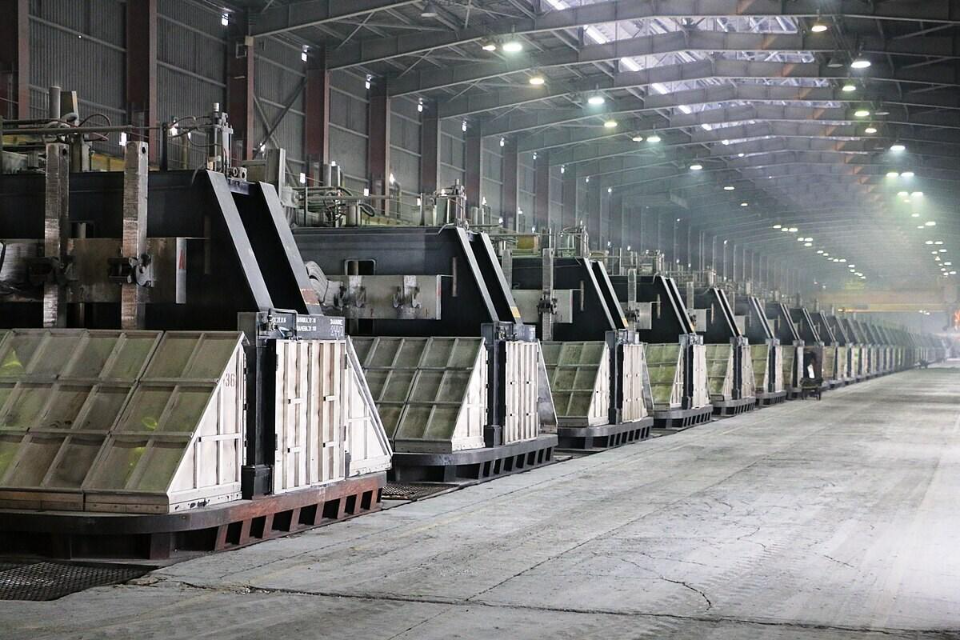
One of the clearest examples of Ghana’s ambitions is its proposed expansion of the aluminium industry.
The government intends to modernize the Volta Aluminium Company, commonly known as VALCO, while developing additional domestic refining capacity.
Ghana possesses bauxite resources, but converting those resources into a more integrated aluminium industry requires facilities capable of producing alumina and supporting downstream manufacturing.
The government’s objective is to connect mineral extraction with processing, smelting and the production of materials that can be used by other industries.
A more developed aluminium value chain could create opportunities for construction-material producers, transport-equipment manufacturers and businesses supplying industrial components.
Nevertheless, aluminium production is highly energy-intensive. Refineries and smelters require dependable electricity supplies, competitive operating costs and significant upfront investment.
Without those conditions, local processing facilities may struggle to compete with established international producers.
The success of Ghana’s aluminium strategy will therefore depend as much on infrastructure and industrial efficiency as on the proposed export restrictions.
Gold and Cocoa Form Part of a Wider Strategy
Ghana’s industrial ambitions extend beyond minerals such as bauxite and manganese.
At the Financial Times Africa Summit, Mahama said that approximately 70% of the country’s gold was being refined domestically and expressed the ambition to increase that share.
The government is also pursuing greater local processing of cocoa, one of Ghana’s most important agricultural exports.
Mahama has set a target for at least half of Ghana’s cocoa beans to be processed domestically, reducing the proportion exported without further transformation.
Cocoa processing can support industries involved in cocoa butter, powder and other ingredients used in food manufacturing.
However, producing processed cocoa ingredients is not the same as capturing the full commercial value associated with branded chocolate and confectionery products.
Moving further along the value chain would require investment in manufacturing, product development, distribution and access to consumer markets.
The common principle behind the gold, mineral and cocoa initiatives is that Ghana wants more economic activity to take place before its resources reach international buyers.
For businesses, that shift could create opportunities in manufacturing, logistics, equipment supply and industrial services.
A Growing African Movement Toward Local Processing
Ghana’s strategy reflects a broader debate across Africa about how resource-rich countries can benefit more directly from their natural wealth.
Governments in several countries are exploring restrictions on raw mineral exports, incentives for domestic processing and new requirements attached to mining licences.
Guinea, a major bauxite producer, has been encouraging investment in alumina refineries, while other African countries are examining ways to expand processing capacity for minerals used in industrial production.
The motivation is understandable. Mineral extraction can generate significant export revenue, but the wider economic benefits may be limited when processing, manufacturing and technological expertise remain concentrated elsewhere.
Building domestic processing industries could create more opportunities for local suppliers and workers while strengthening connections between mining and manufacturing.
Yet the experience of other countries also demonstrates that industrial development cannot be achieved through export restrictions alone.
Businesses must have access to electricity, transport infrastructure, financing and skilled employees.
If processing facilities are too expensive to operate, restrictions could reduce export earnings without creating a competitive alternative.
Ghana’s challenge will be to design policies that encourage investment rather than simply making existing trade arrangements more difficult.
Investors Face New Opportunities and Responsibilities
The proposed policy could significantly influence decisions by international mining companies and investors.
Businesses seeking access to Ghana’s mineral resources may increasingly be expected to support local processing, develop industrial facilities or establish partnerships with Ghanaian enterprises.
The government has indicated that these expectations will be accompanied by efforts to improve infrastructure, financing arrangements and the regulatory environment.
For investors, the opportunity lies in developing industries that serve both domestic and international markets.
Potential areas of investment include mineral refineries, industrial equipment, electricity generation, logistics infrastructure and manufacturing facilities.
However, such projects often require substantial capital and may take years before generating meaningful returns.
Companies will therefore seek clarity about implementation dates, ownership requirements, environmental obligations and the treatment of existing mining agreements.
Predictable regulation will be especially important because the 2030 target extends beyond the current presidential term.
Investors must be confident that the rules governing long-term industrial projects will remain understandable and enforceable even as political leadership changes.
The Electricity Challenge Could Determine Success
Among the largest obstacles facing Africa’s mineral-processing ambitions is the availability of reliable and affordable electricity.
Refineries, smelters and other industrial facilities depend on continuous power supplies. Interruptions can reduce productivity, damage equipment and increase operating costs.
Electricity prices can also determine whether a processing project is commercially viable.
A country may possess valuable mineral deposits but still struggle to attract processing investment if its energy costs are substantially higher than those of competing locations.
The challenge is particularly important for Ghana’s aluminium ambitions because smelting is one of the most electricity-intensive industrial activities.
Investment in generation capacity, transmission infrastructure and dependable industrial power supplies will therefore be essential.
Transport networks, water availability and environmental management will also influence the success of new processing facilities.
The government’s industrial strategy will be tested not only by the number of restrictions introduced, but by whether businesses can operate competitively under the new framework.
THE ABE TAKE
Ghana’s proposed ban on raw mineral exports represents an important attempt to change the economic relationship between Africa’s natural resources and its industrial development.
For generations, many African economies have supplied raw materials to global industries while capturing a smaller share of the economic activity associated with processing and manufacturing.
Ghana is seeking to retain more of that activity within its own borders. The ambition is economically significant because sustainable industrial growth requires more than extracting valuable resources.
However, the success of the strategy will depend on implementation rather than political declarations.
An export ban cannot create a competitive refinery, train engineers or guarantee affordable electricity. Those outcomes require coordinated investment, effective institutions and long-term planning.
The most promising aspect of Ghana’s approach is its recognition that mineral processing must be connected to infrastructure, technical skills and private capital.
For international investors, the message is that access to natural resources may increasingly come with expectations to contribute to local industrial development.
For Ghanaian businesses, the opportunity is to move beyond supporting mining operations and participate more directly in manufacturing and specialized industrial services.
The broader lesson for Africa is that natural-resource wealth becomes more economically transformative when it supports productive industries, skilled employment and competitive businesses.
Ghana’s 2030 target is ambitious. Whether it becomes a turning point will depend on the country’s ability to make domestic processing commercially viable, not merely compulsory.
ABE MAGAZINE
Understand More. Think Bigger.