






ABE MAGAZINE | GLOBAL BUSINESS & LUXURY INDUSTRY
October 23, 2026
The global luxury industry is facing renewed uncertainty after shares in French fashion group Kering plunged approximately 12% on Friday, following disappointing quarterly results from its flagship Gucci brand. The decline has raised questions about whether one of the world’s most recognizable fashion houses can regain its commercial momentum amid weaker Chinese demand, rising economic uncertainty and changing consumer expectations. Although Kering has introduced a restructuring programme intended to restore growth, investors remain concerned about the pace of Gucci’s recovery. The developments highlight a wider challenge facing luxury companies as high prices, geopolitical instability and increasingly cautious consumers reshape the international market for premium goods.
Kering Shares Fall as Investors Question Gucci’s Recovery
Shares in Kering, the French luxury conglomerate behind Gucci, Saint Laurent and Bottega Veneta, fell approximately 12% during Friday’s trading session after the company released its third-quarter financial results.
The decline reflected growing investor concern about the performance of Gucci, which remains central to Kering’s financial prospects and long-term growth strategy.
Kering reported group revenue of €3.345 billion for the three months ending September 2026, broadly unchanged from the previous year on a reported basis but down 1% when adjusted for comparable business conditions.
Gucci generated €1.291 billion in quarterly revenue, representing a 6% comparable decline from the same period in 2025. On a reported basis, its revenue fell 4%.
The results disappointed investors hoping for stronger evidence that Gucci’s extended downturn was approaching an end.
Although Kering has taken steps to strengthen its brands and improve operating efficiency, the latest figures suggest that the company’s recovery will require more time.
For shareholders, the immediate concern is whether management can restore sales growth without undermining the premium positioning that makes luxury businesses commercially valuable.
Gucci’s Struggles Reveal a Changing Luxury Market
Gucci has experienced several years of difficult trading conditions, with the brand struggling to maintain the momentum that once made it one of the strongest growth engines in the luxury industry.
Its difficulties have been particularly noticeable in Asia, where demand from Chinese consumers has historically played an important role in the expansion of European luxury houses.
During the third quarter, Gucci’s directly operated retail network recorded a 9% comparable decline in sales.
The company identified weaker store traffic as a major obstacle, particularly in mainland China and Japan.
The distinction between customer traffic and spending is important. A luxury brand may retain customers willing to purchase expensive products, but declining store visits reduce the number of opportunities to generate sales.
Kering reported improvements in conversion rates, average selling prices and average transaction values across parts of its business. However, these improvements were not sufficient to offset the impact of fewer customers entering its stores.
This suggests that Gucci’s difficulties cannot be resolved through pricing adjustments alone.
The company must also persuade consumers that its products remain distinctive, desirable and worth purchasing in a competitive market.
China’s Economic Challenges Add to the Pressure
China remains one of the most important markets for international luxury brands, making changes in Chinese consumer behaviour particularly significant.
Over the past decade, rising household wealth and demand for internationally recognized fashion labels helped European luxury companies expand their sales.
However, economic uncertainty and changes in consumer confidence have complicated that growth model.
Kering’s latest results indicate that weak demand in mainland China continues to weigh heavily on Gucci.
The luxury sector is also facing concerns about Chinese tax enforcement affecting wealthy consumers, alongside broader uncertainty about discretionary spending.
For luxury companies, this creates a difficult environment because their products are generally purchased with income that consumers can choose to spend or save.
When economic confidence weakens, some customers delay expensive purchases, even if they remain financially capable of making them.
The challenge is particularly important for brands that depend on consumers seeking an occasional luxury purchase rather than customers who spend consistently regardless of economic conditions.
Gucci’s recovery will therefore depend partly on improvements in consumer demand that are outside the company’s direct control.
Kering Accelerates Store Closures and Restructuring

Kering has responded to the difficult market conditions by accelerating a restructuring programme designed to reduce costs and improve the efficiency of its retail operations.
During the first nine months of 2026, the company completed 105 net store closures, exceeding its earlier full-year objective of 100.
Management now expects at least 125 net closures by the end of the year.
The strategy is intended to reduce exposure to underperforming locations while concentrating investment on stores and markets with stronger commercial potential.
Closing stores can reduce operating expenses, but it can also affect employees, landlords and businesses connected to luxury retail districts.
Kering is therefore attempting to balance financial discipline with the need to preserve the international visibility of its brands.
Chief executive Luca de Meo has made Gucci’s recovery a central priority since taking responsibility for the group.
His strategy includes improving product quality, refining pricing, strengthening operational efficiency and developing closer cooperation across Kering’s portfolio of fashion houses.
However, restructuring a luxury business involves more than reducing expenses.
Luxury brands depend heavily on customer perception, creative direction and long-term relationships with consumers.
A successful recovery will require Kering to demonstrate that Gucci can regain its appeal while maintaining the exclusivity associated with the brand.
New Collections Offer Hope, but Results Remain Uncertain
Gucci has been introducing new collections under creative director Demna as part of its efforts to restore consumer interest.
The brand has also been refining its product range and pricing structure to make selected products more attractive to customers without abandoning its luxury identity.
These changes are intended to encourage existing customers to return while attracting a new generation of buyers.
However, the financial results suggest that the transformation remains at an early stage.
The company reported stronger wholesale performance during the quarter, with comparable wholesale revenue increasing significantly from a relatively low comparison base.
Nevertheless, the improvement was not enough to compensate for weaker sales through Gucci’s directly operated stores.
This matters because direct retail sales are an important part of how luxury companies manage their brand image, customer relationships and commercial margins.
The challenge facing Gucci is to translate renewed creative interest into sustained purchasing activity.
Fashion collections can generate attention, but the commercial impact depends on whether consumers are willing to spend.
For investors, the next several quarters will provide a clearer indication of whether Gucci’s new strategy is gaining momentum.
Other Luxury Brands Face Similar Challenges
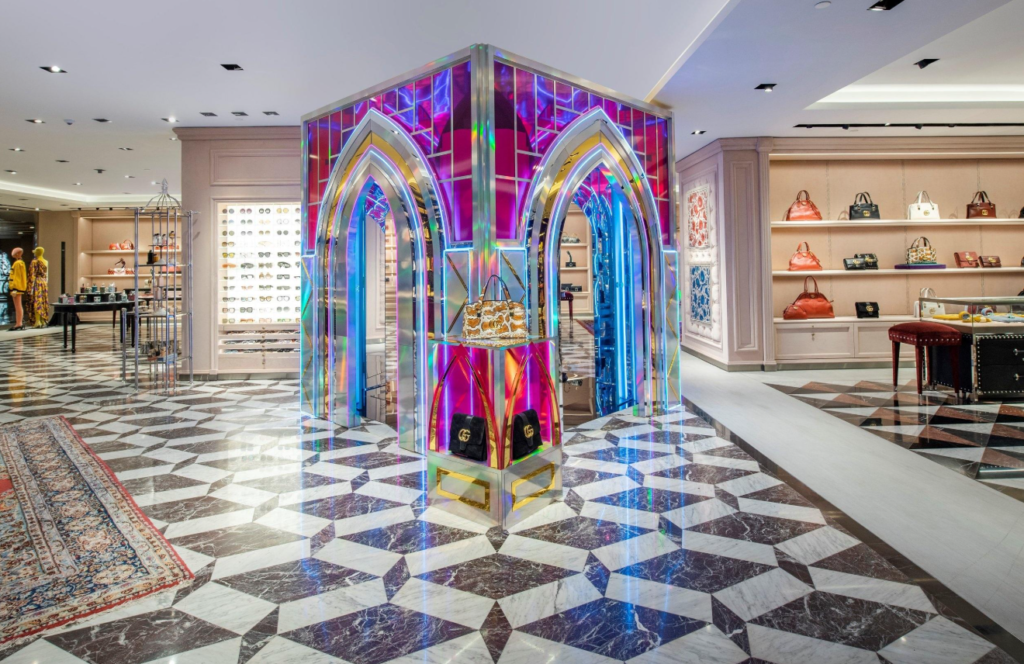
Kering’s difficulties are occurring during a broader slowdown affecting several major European luxury companies.
Shares in LVMH and Hermès also declined on Friday as investors reassessed the sector’s growth prospects.
Hermès, which has traditionally demonstrated strong pricing power and resilient demand, reported its weakest quarterly sales growth since 2020.
Its ready-to-wear division experienced a decline, reflecting the effects of weaker Chinese demand.
The developments suggest that even luxury businesses serving relatively wealthy customers are not completely insulated from changing economic conditions.
Rising energy prices and geopolitical uncertainty have added to concerns about consumer spending.
Political unrest in Paris has also highlighted the potential risks facing luxury retailers in major shopping destinations.
These pressures arrive after years in which several luxury groups benefited from strong demand, international tourism and substantial price increases.
The current environment is forcing companies to reconsider how much further prices can rise without discouraging customers.
For some brands, maintaining growth may require a greater emphasis on product quality, customer experience and more accessible entry-level offerings.
Investors Reconsider the Value of Luxury Companies
The share-price decline at Kering reflects a broader reassessment of how investors value luxury businesses.
Luxury companies have historically attracted premium stock-market valuations because of their established brands, strong margins and ability to charge higher prices.
However, these advantages become less convincing when sales growth slows and investors question the sustainability of demand.
Hermès shares have fallen substantially during 2026, while valuations across the luxury sector have weakened.
For Kering, the challenge is particularly significant because Gucci contributes a large proportion of the group’s revenue and profitability.
The performance of other Kering brands provides some encouragement.
Saint Laurent and Bottega Veneta demonstrated greater resilience during the quarter, while the group’s jewellery division recorded comparable revenue growth of 11%.
Kering Eyewear also achieved comparable growth of 4%.
These businesses offer opportunities for diversification, but they have not yet been sufficient to offset the difficulties at Gucci.
The company’s future financial performance will therefore depend heavily on whether its flagship brand can regain sustained commercial momentum.
THE ABE TAKE
Kering’s sharp share-price decline illustrates an important shift in the global luxury industry: established brand recognition is no longer enough to guarantee commercial growth.
For years, luxury companies benefited from expanding consumer wealth, rising demand in China and the ability to increase prices without significantly weakening customer interest.
The latest results suggest that this business model is facing greater resistance.
Consumers are becoming more selective, while economic uncertainty and international competition are making it harder for brands to depend on continuous price increases.
Gucci’s difficulties demonstrate the importance of balancing exclusivity with commercial relevance.
A luxury brand must maintain its identity and premium positioning, but it must also produce goods that customers genuinely want to purchase.
Kering’s restructuring programme is a necessary response to financial pressure, yet closing stores and reducing costs cannot independently restore consumer enthusiasm.
The company must rebuild demand through product development, creative consistency, customer experience and disciplined pricing.
The broader implications extend beyond Gucci. European luxury houses must adapt to a market in which Chinese consumers are more cautious, geopolitical risks are increasing and investors are less willing to reward uncertain growth prospects.
For Kering, the coming year will be a test of whether management can translate its strategic changes into measurable improvements in sales and profitability.
For the luxury industry, the message is clear: prestige remains valuable, but its long-term commercial strength depends on maintaining consumer trust, product desirability and a convincing reason to buy.
ABE MAGAZINE
Understand More. Think Bigger.