





By ABE Magazine | November 1, 2026
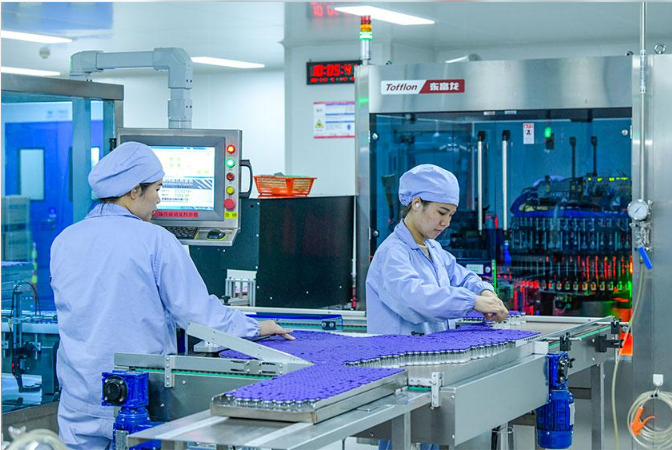
Generic medicine manufacturing is one of the most important yet overlooked industries in global healthcare. Every day, millions of patients depend on affordable treatments for conditions such as diabetes, high blood pressure and infections. Behind these medicines operates a complex international network of pharmaceutical manufacturers, ingredient suppliers, distributors and purchasing organizations.
Many of these products are generic medicines. They contain the same active ingredients as their reference brand-name products and must satisfy applicable regulatory requirements for quality, performance and therapeutic equivalence.
Their lower prices make them indispensable to healthcare systems. Yet behind these affordable medicines operates a complicated international business involving pharmaceutical manufacturers, chemical suppliers, distributors, wholesalers and large purchasing organizations.
The business behind generic medicines is often less visible than the companies developing expensive new treatments. However, it is central to understanding healthcare costs, global manufacturing and the reliability of medicine supplies.
In the United States, generic medicines account for more than 90% of prescriptions dispensed, according to the Food and Drug Administration. Despite their widespread use, they represent less than 13% of prescription drug costs.
That difference demonstrates their importance in reducing healthcare expenditure. It also raises an important economic question.
If generic medicines are so essential, why do the companies producing them sometimes struggle to maintain profitable and reliable manufacturing operations?
The answer lies in a market where low prices, intense competition and complex supply chains create both opportunities and vulnerabilities.
How Generic Medicine Manufacturing Works
A pharmaceutical company that develops a new medicine generally invests substantial resources in research, clinical trials and regulatory approval.
Patent protection and other forms of market exclusivity may allow the company to sell the medicine without direct generic competition for a period.
Once the relevant protections expire, other manufacturers can seek approval to produce generic versions. Generic medicine manufacturing depends on strict quality controls, regulatory approval and efficient production systems.
In the United States, generic manufacturers generally use an abbreviated regulatory pathway. They must demonstrate that their products satisfy the FDA’s requirements, including pharmaceutical equivalence and bioequivalence where applicable.
They do not ordinarily need to repeat the original developer’s complete clinical research program.
This reduces development costs and helps make lower prices possible.
However, generic manufacturing is not a simple matter of copying a formula. Companies must secure suitable ingredients, validate production processes, maintain quality systems and meet regulatory requirements.
The commercial model also differs from that of innovative pharmaceutical companies.
A brand-name drug manufacturer may earn substantial revenue from a protected medicine. Generic manufacturers often compete against several suppliers selling therapeutically equivalent products.
As more competitors enter a market, prices can decline sharply.
For healthcare providers and patients, this competition can create significant savings. For manufacturers, it can reduce the revenue available to support factories, equipment and quality systems.
The resulting tension is central to the economics of generic medicines.
The Companies Behind the World’s Generic Medicines
The global generic pharmaceutical industry includes major companies headquartered in India, Europe, North America and other regions.
Indian manufacturers have become especially important participants in international generic medicine markets.
Companies such as Sun Pharmaceutical Industries, Dr. Reddy’s Laboratories, Cipla, Lupin and Aurobindo Pharma manufacture and market a wide range of pharmaceutical products.
Israel-headquartered Teva Pharmaceutical Industries and Switzerland-headquartered Sandoz are also significant participants in the global market.
These businesses do not all follow identical strategies.
Some focus heavily on conventional generic medicines. Others operate across specialty pharmaceuticals, complex generics, biosimilars and selected branded products.
Their financial performance depends on product portfolios, regulatory approvals, manufacturing efficiency and the markets in which they operate.
The industry also includes smaller manufacturers supplying specific medicines or serving regional markets.
A large number of companies may appear to suggest a highly diversified market. However, the number of businesses selling finished medicines does not necessarily reveal how many factories produce the ingredients used to make them.
That distinction becomes critical when examining the industry’s supply chain.
Who Controls the Ingredients Behind Generic Drugs?
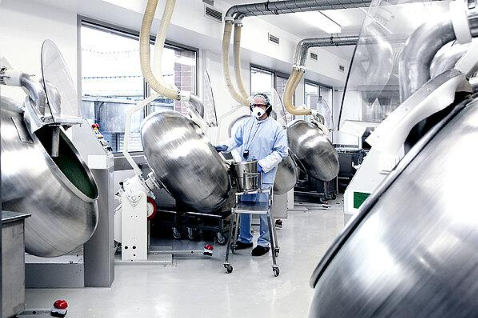
A generic medicine typically begins with an active pharmaceutical ingredient, commonly known as an API.
This is the substance responsible for the medicine’s intended therapeutic effect.
Manufacturing the finished medicine may involve combining the API with other ingredients, processing the formulation and packaging the product for distribution.
In many cases, the company selling the finished medicine does not manufacture its own API.
Instead, it purchases the ingredient from another specialized producer.
These suppliers may be located in different countries from the companies packaging or distributing the final medicine.
Research published in Health Affairs examined facilities producing generic APIs for the American market during 2020 and 2021.
The researchers identified 565 facilities producing 1,379 unique generic APIs across 42 countries.
India, China and Italy were the leading producer countries in the dataset. Only about 14% of the identified APIs were manufactured in the United States.
The study also found substantial concentration in production.
Approximately one-third of APIs were manufactured by a single facility, while another third were produced by only two or three facilities.
These findings reveal an important vulnerability.
A medicine may be sold by several competing pharmaceutical companies while depending on a very small number of upstream ingredient manufacturers.
If one of those facilities experiences a production problem, the consequences can affect multiple finished-drug suppliers.
This means that competition at the pharmacy level does not necessarily guarantee resilience throughout the manufacturing system.
Why Low Prices Can Make Essential Medicines Vulnerable
Competition is one of the principal reasons generic medicines are affordable.
When multiple manufacturers offer equivalent products, purchasers can negotiate lower prices or select less expensive alternatives.
However, sustained price reductions can create problems when manufacturers lack sufficient margins to invest in production capacity and quality improvements.
Factories require continuous spending on equipment, maintenance, trained employees and regulatory compliance.
Sterile injectable medicines can be particularly demanding to manufacture because production requires specialized facilities and strict contamination controls.
If selling prices fall too far, some companies may reduce investment or discontinue products that no longer generate acceptable returns.
Other manufacturers may then face pressure to increase production, sometimes without enough spare capacity to respond quickly.
The FDA identifies manufacturing quality problems as a major cause of drug shortages. Production delays, raw-material disruptions and unexpected increases in demand also contribute.
These problems do not mean generic medicines are inherently unsafe or inferior.
Approved generic medicines must meet applicable quality standards. The concern is whether the commercial system consistently supports the manufacturing capacity needed to maintain supply.
Researchers at the Brookings Institution have argued that intense price competition and concentrated purchasing power can weaken incentives for investment in robust manufacturing operations.
The resulting problem is economic as much as technical.
A medicine can be inexpensive for purchasers while becoming financially unattractive for the companies expected to manufacture it reliably.
The Powerful Buyers Behind Pharmaceutical Pricing
Generic medicine manufacturers do not operate independently of the organizations purchasing their products.
In the United States, wholesalers, pharmacy chains, hospitals and group purchasing organizations play important roles in pharmaceutical distribution.
Some large buyers negotiate purchasing arrangements on behalf of extensive networks of pharmacies or healthcare providers.
These organizations can influence which suppliers receive contracts and the prices manufacturers are willing to accept.
Large-scale purchasing can reduce costs for healthcare systems. It can also place significant pressure on manufacturers competing for contracts.
The relationship becomes complicated when buyers prioritize the lowest available price without fully accounting for manufacturing resilience.
A supplier that maintains additional production capacity or invests heavily in quality systems may incur higher costs than a competitor operating with fewer reserves.
If purchasing decisions fail to recognize those differences, the market may provide limited financial rewards for resilience.
This does not mean large buyers are solely responsible for medicine shortages.
Regulatory issues, manufacturing failures, demand changes and supply-chain disruptions all matter.
Nevertheless, purchasing practices influence the financial environment in which manufacturers make investment decisions.
The question is whether procurement systems can achieve low prices while also supporting dependable supply.
Why Generic Drug Shortages Persist

Medicine shortages are among the clearest signs of stress in pharmaceutical supply chains.
A shortage can occur when production problems, unexpected demand or supplier withdrawals leave insufficient quantities available to meet market needs.
Hospitals may then need to find alternatives, adjust purchasing arrangements or manage limited supplies.
The problem can be especially serious for medicines with few suitable substitutes.
According to reporting on the United States Pharmacopeia’s 2025 Annual Drug Shortage Report, the number of drugs in shortage at year-end declined from 98 in 2024 to 75 in 2025.
However, the duration of shortages increased.
The report found that the average duration of ongoing shortages reached approximately 5.3 years in 2025, compared with 4.3 years in 2024.
Among the 75 drugs in shortage at the end of 2025, approximately 71% were sterile injectable products.
These figures highlight a distinction between the number of shortages and their persistence.
A decline in newly reported shortages does not necessarily mean that longstanding supply problems have been resolved.
Some medicines remain difficult to obtain for extended periods because manufacturers cannot quickly replace lost production capacity.
Establishing or expanding pharmaceutical manufacturing facilities requires capital, technical expertise and regulatory compliance.
A company cannot necessarily respond to a shortage simply by increasing production overnight.
This makes prevention and manufacturing resilience particularly important.
India and China’s Strategic Role in Pharmaceutical Supply Chains
India and China occupy important positions in the international pharmaceutical industry, although their roles vary by product and stage of manufacturing.
India has developed a large pharmaceutical manufacturing sector with extensive experience producing finished generic medicines for domestic and international markets.
China is also an important supplier of pharmaceutical ingredients and chemical intermediates.
However, the geography of pharmaceutical production is more complicated than a simple division between countries producing ingredients and countries producing finished medicines.
Both countries participate in multiple stages of pharmaceutical manufacturing, while producers in Europe, North America and other regions remain important.
The Health Affairs research illustrates how internationalized these supply chains have become.
For importing countries, overseas manufacturing can provide access to lower-cost production and specialized industrial capabilities.
At the same time, reliance on a limited number of suppliers can create exposure to factory disruptions, transportation problems and geopolitical uncertainty.
Governments increasingly view pharmaceutical supply chains as an economic and strategic concern.
However, relocating all manufacturing domestically would involve significant investment and could increase costs.
A more practical objective may be to diversify suppliers, improve visibility into production networks and maintain additional capacity for particularly critical medicines.
The challenge is deciding which products require greater resilience and how that resilience should be financed.
Can Pharmaceutical Manufacturing Become More Resilient?
Improving the reliability of generic medicines requires more than encouraging companies to build additional factories.
Manufacturers need predictable demand, viable pricing and incentives to maintain high-quality production.
Purchasers need better information about supplier reliability and the risks associated with concentrated manufacturing.
Regulators must continue enforcing quality requirements while supporting efficient approval processes.
The FDA has emphasized quality management maturity as one way to encourage stronger manufacturing practices.
It has also introduced initiatives intended to support domestic pharmaceutical manufacturing and improve regulatory efficiency.
However, manufacturing location alone does not guarantee reliability.
A domestic factory can experience quality failures just as an overseas facility can. Effective oversight, technical competence and sound operational management remain essential.
The wider industry may also benefit from greater supply-chain transparency.
If purchasers understand where critical ingredients originate and how many qualified suppliers exist, they can make more informed procurement decisions.
Building resilience will involve costs, but those costs must be weighed against the consequences of prolonged medicine shortages.
The Future of Generic Medicine Manufacturing
The long-term importance of generic medicines is unlikely to diminish.
Healthcare systems face continuing pressure to control expenditure while expanding access to treatment.
Generic competition remains one of the most effective mechanisms for reducing the cost of medicines after relevant patent and exclusivity protections expire.
At the same time, manufacturers are moving into more technically demanding products.
Complex generics, including certain inhalers and injectable formulations, can require specialized development and manufacturing capabilities.
The FDA reported progress in approving generic versions of complex medicines in 2026, reflecting the continuing evolution of the market.
For pharmaceutical companies, these products may offer opportunities beyond conventional low-margin generics.
However, greater technical complexity also creates additional investment requirements and regulatory challenges.
The future of the industry will depend partly on whether manufacturers, purchasers and governments can develop a commercial system that rewards affordability without undermining reliable supply.
That balance will influence the availability of medicines for years to come.
THE ABE TAKE
The generic medicines industry reveals a contradiction at the centre of modern healthcare.
Governments, insurers and patients depend on affordable medicines. Yet the competitive pressure that makes those products inexpensive can also weaken the economics of manufacturing them.
The most important companies in the supply chain are not always the brands appearing on pharmacy shelves.
Manufacturers of active pharmaceutical ingredients, specialized production facilities, distributors and large purchasing organizations all influence whether essential medicines remain available.
The industry therefore cannot be understood simply by examining retail prices or the number of competing pharmaceutical companies.
Its stability depends on the financial incentives supporting production, the concentration of suppliers and the ability of manufacturers to maintain quality over time.
For corporate leaders and policymakers, the broader lesson extends beyond pharmaceuticals.
A supply chain optimized entirely for low prices may become vulnerable when unexpected disruptions occur.
The challenge is not choosing between affordable medicines and reliable manufacturing. It is building a business system capable of delivering both.
ABE MAGAZINE
Understand More. Think Bigger.