




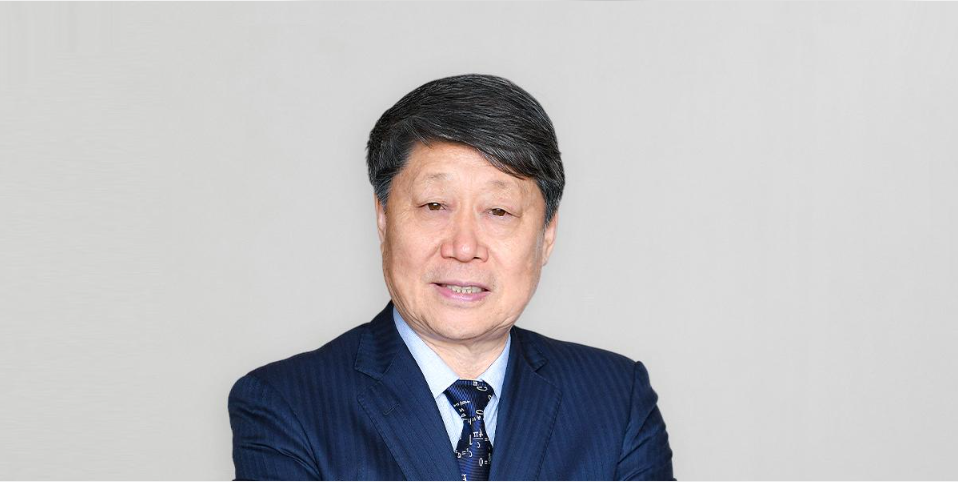
ABE Magazine | ABE Founders | October 31, 2026
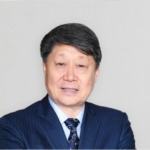
In December 1984, Zhang Ruimin arrived at a struggling refrigerator factory in Qingdao, China. The business was losing money, its products were failing to attract customers, and employee confidence had deteriorated. Few could have imagined that the factory would become the foundation of one of the world’s most recognizable appliance companies.
More than four decades later, the business Zhang helped build has expanded far beyond refrigerators. Haier operates across home appliances, smart-home technology, industrial services and international consumer markets. Its brand portfolio includes Haier, GE Appliances, Fisher & Paykel, Candy and several other businesses.
The transformation represents one of China’s most significant corporate development stories. Yet Zhang’s influence extends beyond the company’s international expansion. His approach to product quality, organizational management and employee responsibility has attracted attention from business schools and management researchers worldwide.
Unlike founders who establish companies around a new invention, Zhang’s achievement began with rebuilding an existing enterprise. He inherited a failing operation and gradually developed the systems, culture and strategy that enabled it to compete internationally.
His career raises an important question for business leaders: How does a company move from struggling to survive to building an organization capable of competing across generations?
A Struggling Factory in Qingdao
Zhang Ruimin was born in 1949 in China’s Shandong province. His early career developed during a period when China’s industrial economy was undergoing substantial change.
Before becoming a prominent business leader, he worked in manufacturing and gained experience in industrial operations. His professional development was shaped by the practical demands of factory management rather than the conventional career path of a corporate executive.
On December 26, 1984, Zhang became director of the Qingdao Refrigerator Factory, the predecessor of Haier Group.
The factory was in serious financial difficulty. According to Haier’s official history, it had accumulated losses of approximately 1.47 million yuan. Products were selling poorly, and employee morale had weakened.
Zhang faced an immediate challenge. The factory needed to improve its products, restore discipline and rebuild consumer confidence. Without those changes, expanding production would achieve little.
His response was to make product quality the foundation of the company’s recovery.
The 76 Refrigerators That Changed Haier’s Culture
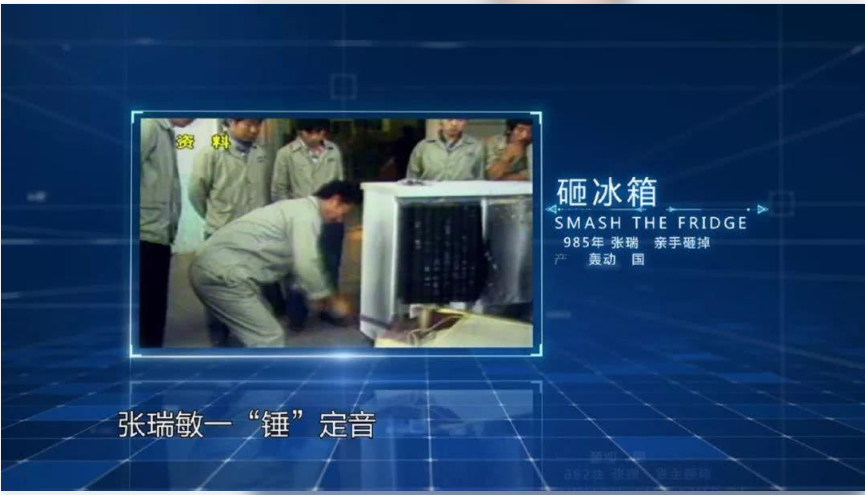
One of the defining events in Haier’s history occurred in 1985.
After receiving complaints about product defects, Zhang investigated quality problems at the factory. The investigation identified 76 refrigerators that failed to meet acceptable standards.
Rather than allowing the appliances to be sold at reduced prices, Zhang ordered their destruction. The incident became widely known as the smashing of 76 defective refrigerators.
At a time when refrigerators were valuable household products in China, the decision carried significant financial and symbolic weight.
Zhang wanted employees to understand that poor quality could not become an acceptable part of the company’s operations. The event was intended to establish a different relationship between the factory, its workers and its customers.
Haier later made the incident a central part of its corporate history.
The lesson was straightforward. A business could not build a lasting brand simply by increasing production. It first had to produce goods that customers could trust.
Building a Brand Before Expanding the Business
During the late 1980s, Zhang concentrated on improving refrigerator manufacturing and establishing Haier’s reputation for reliability.
The company invested in production technology, employee training and quality management. Its relationship with German refrigerator manufacturer Liebherr also helped support technological development during the factory’s early transformation.
By 1986, Haier refrigerators were gaining recognition in major Chinese markets, including Beijing, Tianjin and Shenyang.
This progress created opportunities for expansion. However, Zhang did not immediately pursue unrelated businesses. Haier spent several years developing its refrigerator operations before moving into additional appliance categories.
In December 1991, Haier Group was established following the consolidation of the refrigerator business with other appliance manufacturing operations in Qingdao.
The move marked a new stage in the company’s development. Haier was no longer simply a refrigerator manufacturer. It was becoming a diversified appliance group.
From Chinese Manufacturer to International Competitor
China’s economic expansion created opportunities for domestic manufacturers, but international growth required a different level of competition.
Foreign markets demanded reliable products, established distribution networks and strong customer service. Companies also needed to understand local consumer preferences and regulatory requirements.
Haier gradually expanded into overseas markets while developing manufacturing and distribution capabilities outside China.
Rather than depending entirely on exporting products from Chinese factories, the company increasingly established operations closer to international customers.
This approach became an important part of Haier’s global strategy.
It allowed the business to adapt products to local markets, strengthen distribution and reduce some of the operational challenges associated with serving customers from a single manufacturing base.
For Zhang, international expansion was not simply about selling more appliances. It required Haier to compete with established global brands on quality, innovation and customer experience.
The Acquisition That Changed Haier’s Global Position
One of Haier’s most significant international transactions occurred in 2016.
The company acquired General Electric’s appliance business for approximately $5.4 billion. The transaction gave Haier a much stronger position in the United States and expanded its international manufacturing and distribution network.
GE Appliances was already an established American business with recognized brands, factories and relationships with major retailers.
The acquisition therefore provided more than additional revenue. It gave Haier access to industrial capabilities and customer relationships that would have taken years to develop independently.
However, purchasing an established foreign business also created challenges.
Haier had to manage cultural differences, preserve the value of the GE Appliances brand and coordinate operations across international markets.
The broader lesson was that acquisitions could accelerate expansion, but successful integration required a clear operating strategy.
A Global Portfolio Built Around Local Markets
Haier’s international development continued through a portfolio of businesses serving different markets and customer segments.
Its brands include Fisher & Paykel, associated with premium appliances, and Candy, which has a significant presence in European markets.
The company has increasingly emphasized local product development, manufacturing and commercial operations.
This strategy recognizes that customers in different countries do not necessarily want identical products.
Household sizes, energy requirements, kitchen designs and purchasing habits can vary considerably. A successful international appliance company must therefore balance global scale with local relevance.
Haier’s expansion illustrates how a manufacturer can grow internationally without depending entirely on a single brand or domestic market.
Zhang Ruimin’s Unconventional Management Philosophy
Perhaps Zhang’s most distinctive contribution to business management is the organizational model known as RenDanHeYi.
Introduced in 2005, the model was designed to connect employees more directly with customer needs and business outcomes.
Instead of relying exclusively on traditional management hierarchies, Haier encouraged smaller teams to operate with greater autonomy.
These teams, often described as microenterprises, were expected to respond to customers, develop solutions and take responsibility for their performance.
The approach challenged the conventional assumption that large companies must manage most decisions through centralized authority.
Zhang believed that employees should have opportunities to behave more like entrepreneurs within the organization.
Can Large Companies Operate Like Startups?
The RenDanHeYi model attracted interest because it addressed a familiar corporate problem.
As companies expand, decision-making can become slower. Management layers multiply, communication becomes more complicated, and employees may become disconnected from customers.
Haier’s model attempted to reduce some of these problems by placing responsibility closer to the teams delivering products and services.
Management researchers have examined the approach as an example of organizational innovation.
However, its application also raises difficult questions. Greater employee autonomy requires clear accountability, reliable performance measurement and effective coordination.
A structure that works within Haier may not produce identical results in every organization.
The importance of Zhang’s approach lies partly in his willingness to challenge established management practices rather than assume that traditional corporate structures were permanent.
Haier’s Financial Growth Shows the Scale of the Transformation

The company’s financial results demonstrate how far the business has developed since the struggling factory Zhang inherited in 1984.
According to Haier Group, its worldwide revenue reached approximately 426.8 billion yuan in 2025, equivalent to about $59.8 billion using the company’s reported conversion. Global profit reached approximately 32.2 billion yuan.
The group also reported a worldwide workforce of about 146,000 employees.
These figures describe the broader Haier Group, which operates across several industries and businesses.
Its publicly listed appliance subsidiary, Haier Smart Home, reported separate 2025 revenue of 302.35 billion yuan and net profit attributable to shareholders of 19.55 billion yuan.
The distinction matters because the listed subsidiary’s financial results should not be confused with those of the wider corporate group.
Together, the figures illustrate the scale of the enterprise that emerged from Qingdao.
Leadership Succession and the Future of Haier
In November 2021, Zhang stepped down as chairman of Haier Group and became honorary chairman.
Zhou Yunjie was elected chairman and appointed chief executive officer.
The transition marked an important moment in the company’s development. Haier had to demonstrate that its operating model could continue beyond the leader most closely associated with its transformation.
For any large corporation, succession presents a major test.
A business built around a prominent executive may struggle when leadership changes. Systems, organizational culture and long-term strategy must therefore become strong enough to survive individual careers.
Haier’s succession was presented by the company as part of its broader effort to create a more adaptable organization.
The long-term success of that transition will depend on whether future leaders can preserve the company’s strengths while responding to new technologies, competition and consumer expectations.
What Business Leaders Can Learn From Zhang Ruimin
Zhang Ruimin’s career offers several lessons about corporate transformation.
The first concerns product quality. Haier’s early recovery began with the recognition that customers would not support a business they could not trust.
The second involves disciplined expansion. The company established a stronger position in refrigerators before diversifying into other appliances and international markets.
The third is the importance of organizational adaptability. Zhang repeatedly questioned whether established management practices remained suitable for a changing business environment.
Finally, Haier’s development demonstrates the value of building institutions rather than relying entirely on individual leadership.
The company did not become a global enterprise through a single product launch or acquisition. Its growth resulted from decades of investment, operational improvement, market expansion and organizational experimentation.
THE ABE TAKE
Zhang Ruimin’s story is not simply about the rise of a successful Chinese appliance manufacturer. It is about the transformation of an organization that initially lacked the financial strength, product reputation and operational discipline needed to compete.
His early emphasis on quality established a foundation for customer trust. Later, international expansion and acquisitions helped Haier develop into a multinational business.
Yet his most enduring contribution may be his approach to management.
By encouraging employees to take greater responsibility for customer outcomes, Zhang challenged the traditional structure of large corporations. His ideas remain relevant to businesses struggling with bureaucracy, slow decision-making and changing customer expectations.
Haier’s history also demonstrates that building a global company requires patience. Its development took decades and involved difficult decisions, technological investment and repeated changes in strategy.
For entrepreneurs and executives, the central lesson is that lasting corporate success depends on more than identifying a profitable opportunity.
It requires the ability to build systems, develop people, earn customer trust and adapt as markets change.
Zhang Ruimin inherited a failing factory. His legacy is the creation of a business organization that grew far beyond the products it originally manufactured.
ABE MAGAZINE
Understand More. Think Bigger.