





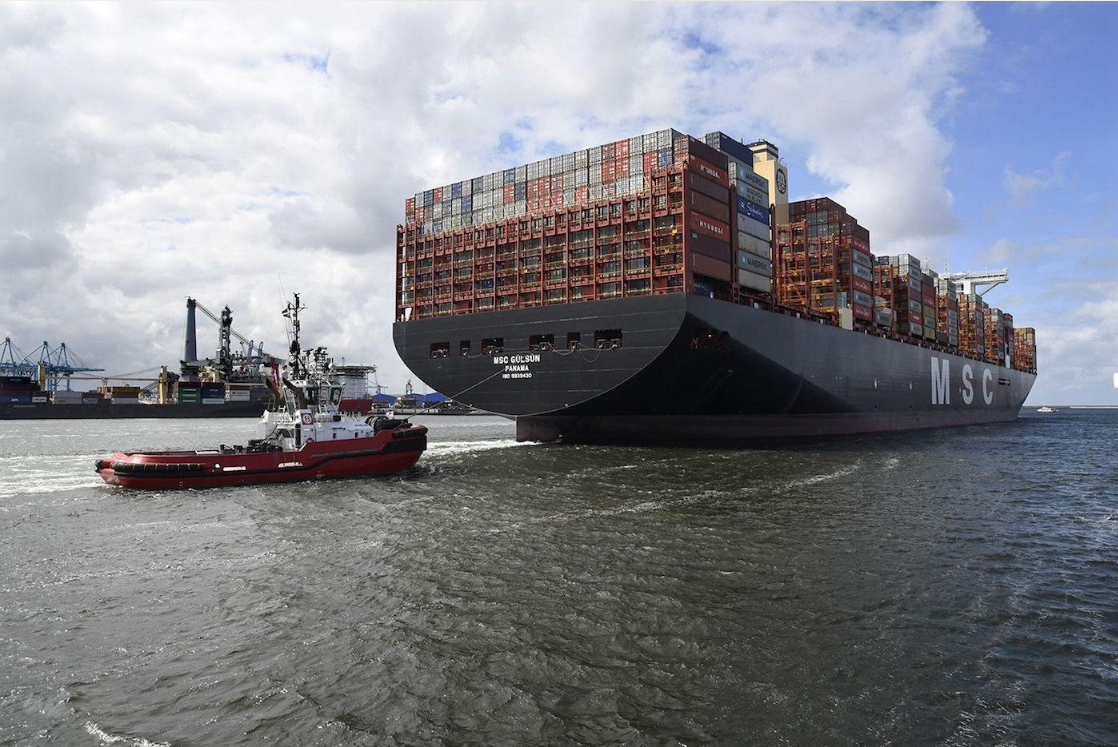
Every day, billions of dollars’ worth of goods move between factories, ports, warehouses and consumers. Yet the companies manufacturing those products are not necessarily the ones exercising the greatest influence over their movement. Behind international trade stands a concentrated network of shipping companies, terminal operators, infrastructure investors and governments. Understanding who controls these networks reveals where economic power increasingly resides.
By ABE Editorial Desk
The Invisible Infrastructure Behind the Global Economy
A smartphone assembled in Asia, a vehicle manufactured in Europe and a shipment of grain exported from South America may have little in common. Yet all depend on international transportation networks that connect producers with customers.
According to UN Trade and Development, more than 80% of global merchandise trade by volume travels by sea. Maritime transportation therefore remains essential to international commerce.
However, the system is far more complicated than a collection of ships moving between countries.
A shipment may depend on several businesses before reaching its destination. Shipping companies provide vessel capacity, terminal operators manage cargo handling, logistics firms coordinate transportation, and governments regulate access to ports and waterways.
Each participant controls a different part of the process.
The result is a global network in which influence depends not only on producing goods but also on determining how efficiently those goods can move.
A Handful of Shipping Giants Control Most Container Capacity
Container shipping provides one of the clearest examples of concentration in international trade.
According to Alphaliner data reported on November 21, 2026, Mediterranean Shipping Company operates approximately 21.6% of global container fleet capacity.
Denmark’s Maersk accounts for approximately 13.5%, while France’s CMA CGM controls around 12.9%.
China’s COSCO Group and Germany’s Hapag-Lloyd complete the five largest operators.
Together, these companies account for approximately 65.6% of the world’s operated container shipping capacity.
This concentration gives major carriers substantial influence over vessel deployment, sailing schedules and the commercial attractiveness of particular routes.
However, market share does not automatically translate into unrestricted pricing power. Shipping rates are also shaped by competition, available capacity, demand and regulatory oversight.
Large shipping companies also cooperate through vessel-sharing arrangements, allowing them to coordinate certain operations without necessarily merging their businesses.
These arrangements can improve efficiency, but they raise important questions about competition and the dependence of smaller businesses on major carriers.
The Power of Ports and Terminal Operators
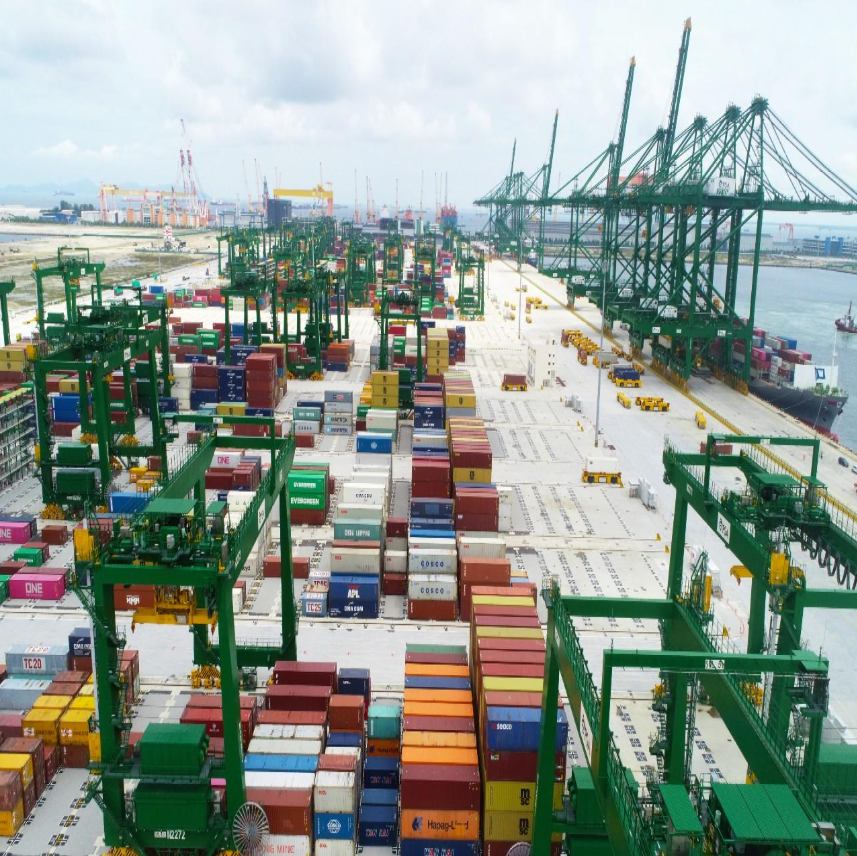
Ships cannot move international trade without access to functioning ports.
Container terminals require extensive investments in cranes, storage facilities, information systems, road connections and railway infrastructure.
Operating these facilities can provide considerable commercial influence.
Major international terminal operators include PSA International, DP World, APM Terminals and Hutchison Ports.
Their operations connect manufacturing centres, international shipping routes and consumer markets.
Yet port ownership and control are not always straightforward.
A national government may own the underlying land while a private company operates the terminal under a long-term concession. Another company may provide cargo-handling services, while customs authorities control the legal movement of goods.
These arrangements create overlapping forms of authority.
Terminal operators can influence efficiency and investment, but governments retain significant powers over security, regulation and market access.
The distinction matters because controlling a port facility is not the same as controlling every shipment passing through it.
Strategic Waterways Create Another Layer of Power
Some of the world’s most important trade routes depend on narrow geographical passages.
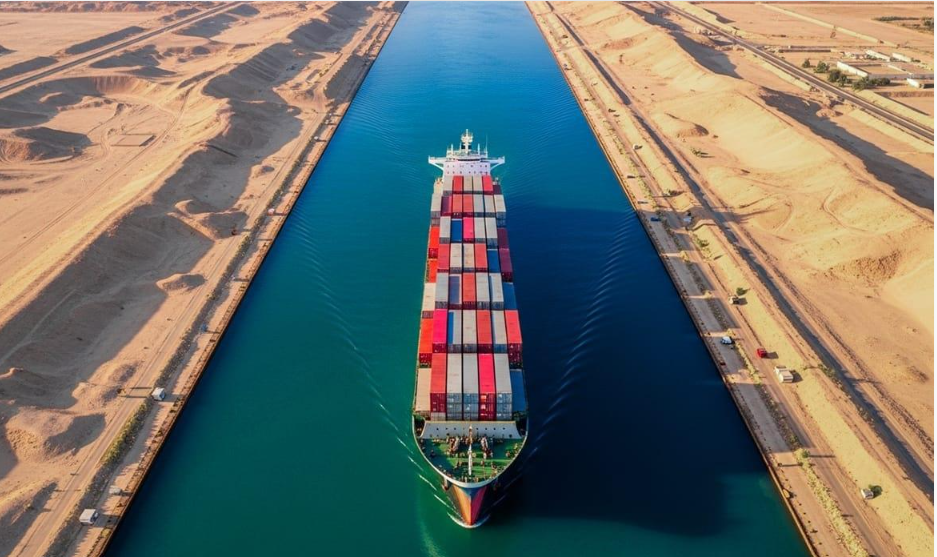
The Strait of Hormuz connects major Gulf energy exporters with international markets. The Suez Canal links the Mediterranean and Red Seas, while the Panama Canal provides an important connection between the Atlantic and Pacific Oceans.
These routes reduce transportation distances and costs.
However, their geographical importance also creates vulnerabilities.
Disruptions can force vessels to travel longer distances, increasing fuel consumption, delivery times and operational expenses.
UNCTAD’s 2025 maritime review documented how disruptions around the Red Sea contributed to longer shipping journeys and volatile freight rates.
Such events demonstrate that economic power is not exercised exclusively by commercial companies.
Governments controlling strategic waterways, military forces operating nearby and authorities responsible for navigation can significantly influence global transportation conditions.
The ability to keep a trade corridor open can be as economically important as the ability to produce the goods moving through it.
Who Owns the Ships Is Not Always Who Controls Them
Another overlooked feature of maritime trade is the separation between vessel ownership and commercial operation.
A shipping company may operate vessels that it does not own.
Independent shipowners frequently lease ships to carriers through charter agreements. The carrier then uses those vessels to provide commercial transportation services.
This arrangement allows shipping companies to expand or adjust capacity without purchasing every ship they operate.
It also means that fleet rankings measure operational influence rather than complete ownership of maritime assets.
The distinction extends to financing.
Banks, leasing companies and institutional investors provide capital for ships, terminals and related infrastructure.
Their investment decisions can influence which projects receive funding and how quickly transportation capacity expands.
However, financial ownership does not necessarily provide direct control over daily shipping operations.
Global logistics power is therefore distributed across operators, asset owners, investors and regulators.
Understanding these relationships is essential when assessing the industry’s concentration.
Developing Countries Face Unequal Bargaining Power
The structure of global shipping creates particular challenges for developing economies.
Many countries depend on international carriers to connect domestic producers with overseas markets.
When freight costs increase, exporters may struggle to remain competitive.
Small businesses are especially vulnerable because they generally ship lower volumes and possess less bargaining power than multinational corporations.
Limited port infrastructure can make the problem worse.
Congestion, inadequate storage facilities and inefficient customs procedures increase costs before goods even leave the country.
For countries seeking to expand manufacturing and agricultural exports, improving logistics can therefore be as important as attracting factories.
Investment in ports, roads, railways and digital customs systems can reduce dependence on inefficient transportation networks.
Nevertheless, infrastructure development requires substantial capital and long-term institutional planning.
The challenge is not simply building new facilities. It is ensuring that those facilities operate efficiently and remain commercially accessible.
The Next Competition Is Over Supply-Chain Intelligence
Physical infrastructure is only one part of the emerging logistics economy.
Shipping companies and logistics providers increasingly rely on digital platforms to track cargo, forecast demand and coordinate transportation.
These systems can provide valuable information about shipment volumes, delivery patterns and operational bottlenecks.
Companies with access to extensive logistics data may be better positioned to optimize routes, reduce delays and improve customer service.
Artificial intelligence could strengthen these capabilities by identifying potential disruptions and supporting more efficient resource allocation.
However, digital integration also creates risks.
Cyberattacks, software failures and incompatible information systems can interrupt transportation even when ships and ports remain operational.
Governments and businesses must therefore consider digital resilience alongside physical infrastructure.
The future of global trade will increasingly depend on who can combine reliable transportation assets with accurate information and effective coordination.
THE ABE TAKE | Control of Trade Is About Access, Not Just Ownership
The world’s supply chains are not controlled by a single company, country or group of investors.
Instead, power is distributed across several interconnected layers.
Shipping companies influence transportation capacity and commercial routes. Terminal operators manage essential infrastructure. Governments regulate borders and strategic waterways. Investors finance the assets that make the system possible.
Digital platforms increasingly influence how these activities are coordinated.
The concentration of container shipping capacity shows that some companies occupy exceptionally powerful positions. Yet their influence remains constrained by competition, regulation and the wider economic environment.
For businesses, this structure creates an important strategic lesson.
Manufacturing a competitive product is not enough if transportation costs, port delays or limited market access prevent that product from reaching customers efficiently.
For governments, the lesson is equally significant. Industrial competitiveness requires investment in the infrastructure and institutions supporting international trade.
The future of economic power will not belong exclusively to those who manufacture the world’s goods. It will also depend on those who can move them reliably, finance the infrastructure and maintain access when global trade faces disruption.
ABE MAGAZINE
Understand More. Think Bigger.