





In Addis Ababa, a Japanese entrepreneur is attempting to solve one of Africa’s most persistent transportation problems. His company, Dodai, is building electric motorcycles and a network of battery-swapping stations designed for drivers whose livelihoods depend on staying on the road. With its Series A financing reaching $16 million in November 2026, the startup faces an important test: Can it turn Ethiopia’s electric-vehicle ambitions into a profitable transportation business?
By ABE Editorial Desk
From Japan to Ethiopia: The Entrepreneur Behind Dodai
When Yuma Sasaki established Dodai in 2021, Ethiopia was not among Africa’s most prominent startup investment destinations.
Investors frequently concentrated on markets such as Nigeria, Kenya, Egypt and South Africa. Sasaki, a Japanese entrepreneur who previously worked at Uber Japan, saw an opportunity in Ethiopia’s growing urban population and transportation needs.
His company began developing electric motorcycles intended to make everyday mobility more affordable and reliable.
Dodai’s name, meaning foundation in Japanese, reflects its ambition to build infrastructure rather than simply sell vehicles.
The startup operates primarily in Addis Ababa, where commercial delivery drivers depend on motorcycles to transport goods and generate income.
Sasaki’s experience in mobility and renewable energy influenced the company’s direction. However, his challenge was not simply introducing a new vehicle.
He needed to build a transportation system capable of operating in a market with limited charging infrastructure, demanding road conditions and significant affordability constraints.
A $16 Million Financing Round Changes the Company’s Position
Dodai reached an important financing milestone on November 16, 2026.
The company announced a $3 million extension to its Series A financing, bringing the round to $16 million.
The latest investment came from Tokyo Gas, through its corporate venture subsidiary Acario, and Singapore-based Kaneto Capital Management.
The extension followed a $13 million financing announced in April, comprising $8 million in equity and $5 million in debt.
Earlier investors included British International Investment, UTokyo Innovation Platform, Nagase and several Japanese investment firms.
The participation of Tokyo Gas is particularly significant because Dodai’s business depends on reliable energy infrastructure.
The Japanese utility brings experience in managing energy systems, while Kaneto Capital provides investment capital suited to longer-term infrastructure development.
However, the funding should not be confused with revenue or profit. The company has not publicly demonstrated that its battery-swapping network is profitable.
The investment gives Dodai resources to expand, but it also increases expectations for operational performance.
Why Battery Swapping Is Central to the Business Model
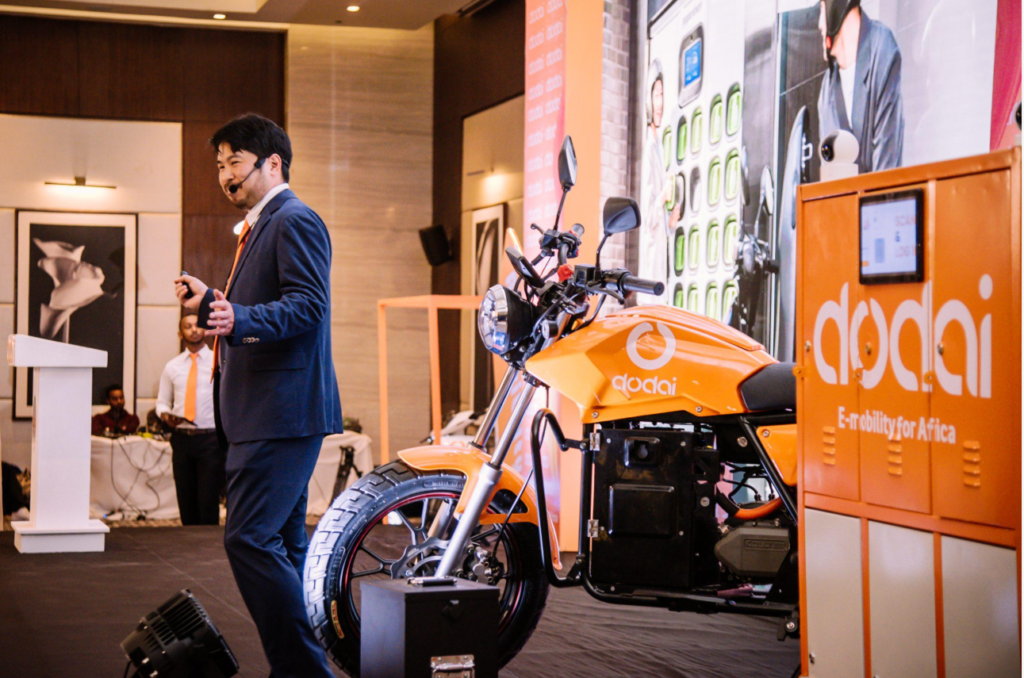
Dodai’s business model addresses a practical problem facing commercial motorcycle riders.
Traditional electric motorcycles can require extended charging periods. For delivery workers, time spent waiting represents lost earning opportunities.
Dodai offers an alternative through battery-swapping stations.
Instead of waiting for a depleted battery to recharge, riders exchange it for a charged replacement and continue working.
The company says the process takes minutes, with many commercial users requiring approximately one swap each day.
This model can reduce downtime and make electric motorcycles more attractive for professional transportation.
However, battery swapping requires substantial infrastructure investment.
Stations need reliable electricity, sufficient battery inventories, maintenance systems and convenient locations.
Dodai must therefore manage two connected businesses: vehicle deployment and energy infrastructure.
Its long-term commercial success will depend on whether revenue from vehicle sales and battery services can support the cost of operating the network.
Ethiopia’s Electric-Vehicle Policy Creates an Opportunity
Government policy has helped create favourable conditions for electric mobility.
In 2024, Ethiopia introduced restrictions on importing conventional internal-combustion vehicles as part of efforts to reduce dependence on imported fuel.
The country also introduced incentives supporting electric-vehicle adoption and local assembly.
These policies have encouraged companies to invest in electric transportation.
Ethiopia’s substantial hydropower resources provide another potential advantage because electricity can offer a lower-cost alternative to imported petroleum.
However, the transition remains challenging.
Electric motorcycles can carry substantial upfront costs for drivers with limited access to financing.
Charging infrastructure remains uneven, and vehicle maintenance requires specialized technical knowledge.
Dodai’s battery-swapping model attempts to address part of this infrastructure problem, but it cannot eliminate every barrier to adoption.
The company’s opportunity is therefore closely connected to the broader development of Ethiopia’s electricity, transportation and financial systems.
More Than 2,000 Motorcycles Deployed
Dodai has moved beyond the earliest stage of product development.
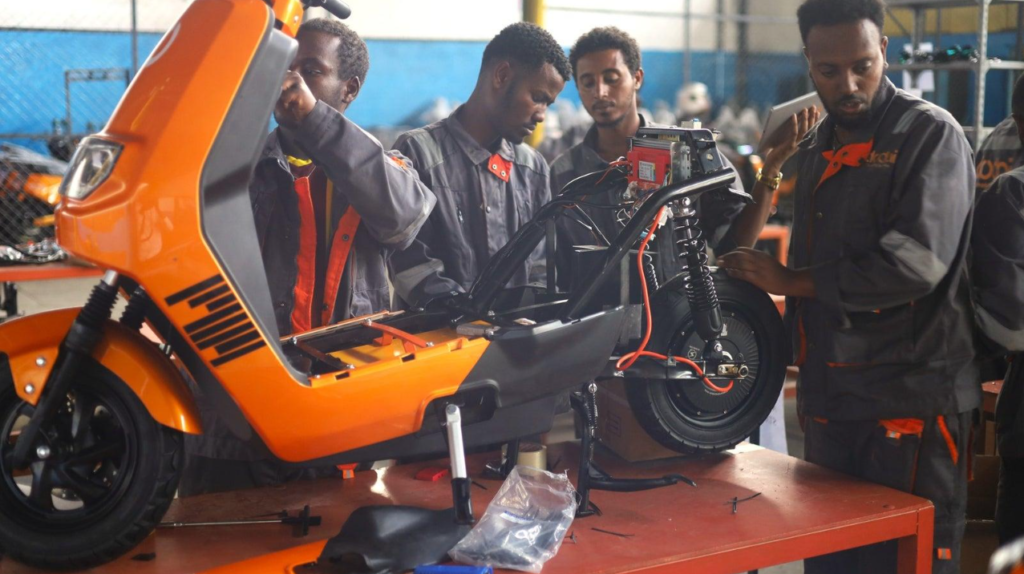
In April 2026, the company reported that it had locally assembled and deployed more than 2,000 electric motorcycles.
By November, Dodai said its workforce had grown to more than 150 employees, approximately 98% of whom were Ethiopian.
These figures suggest that the company is developing a substantial local operating presence.
Local assembly also provides opportunities for technical training, employment and the development of supporting services.
However, deployment figures do not reveal how frequently motorcycles are used or how much revenue the company earns from each customer.
Those details will become increasingly important as investors assess the sustainability of its expansion.
The distinction between vehicles deployed and active, paying customers is particularly important for infrastructure businesses.
Competition Is Emerging Across Electric Mobility
Dodai is not operating without competition.
Ethiopia’s electric-vehicle policies have attracted manufacturers and distributors seeking to participate in the country’s changing transportation market.
Chinese electric two-wheeler manufacturer Yadea and Ethiopian industrial group Belayneh Kinde are among the businesses identified in reporting on the emerging market.
Elsewhere in Africa, companies such as Ampersand in Rwanda and ARC Ride in Kenya are developing electric motorcycle and battery-swapping operations.
These companies demonstrate that the underlying opportunity extends beyond Ethiopia.
However, they also show that battery swapping is becoming an increasingly competitive business model.
Dodai’s potential advantage lies in combining local assembly, commercial customer relationships and its own energy infrastructure.
A dense swapping network could make its motorcycles more convenient for riders and create barriers for new competitors.
Yet those advantages depend on reliable service and disciplined investment.
Expansion Plans Stretch Beyond Addis Ababa
Dodai has outlined ambitious growth targets.
The company aims to reach 3,000 battery-swapping users supported by 30 stations across Addis Ababa within approximately 12 months of its April financing announcement.
Over a three-year period, it is targeting 30,000 users and 1,000 swapping stations.
Its longer-term plans include expansion into African cities such as Abidjan, Kinshasa, Accra and Dar es Salaam.
These are company targets rather than confirmed achievements.
Expanding into new markets will require substantial financing, regulatory approvals, local partnerships and reliable electricity infrastructure.
Customer behaviour may also differ between cities.
A model that works in Addis Ababa will need to be adapted to local transportation economics elsewhere.
For Dodai, the immediate priority remains proving that its existing network can operate reliably and sustainably.
THE ABE TAKE | Dodai Is Building Infrastructure, Not Just Motorcycles
Dodai’s most important business decision may be its choice to build a battery-swapping network alongside its vehicles.
Selling electric motorcycles creates an initial commercial opportunity. Operating the infrastructure that supports those motorcycles could create a longer-term customer relationship.
However, infrastructure businesses face demanding financial requirements.
Stations must be built before they can serve large numbers of customers. Batteries require maintenance and replacement, while the network must remain dependable throughout daily operations.
The $16 million Series A provides capital to pursue this strategy, but funding alone does not establish commercial success.
Dodai must demonstrate that its stations attract sufficient demand, that customers can afford the service and that operating costs remain manageable.
Sasaki’s opportunity is substantial because transportation is essential to urban economic activity.
Yet the company’s future will depend less on the excitement surrounding electric vehicles than on its ability to deliver a reliable service at a competitive price.
Dodai’s greatest potential lies not in replacing petrol motorcycles with electric alternatives, but in building the infrastructure that could make electric mobility economically practical for thousands of African workers.
ABE MAGAZINE
Understand More. Think Bigger.