










ABE MAGAZINE | NEWS O’CLOCK — TECHNOLOGY & GLOBAL MARKETS
Wednesday, October 28, 2026
China’s artificial intelligence ambitions are facing a significant financial test as a sharp decline in technology shares raises questions about the sustainability of one of the world’s most closely watched investment booms. After two years of enthusiasm surrounding semiconductor manufacturing, robotics and AI infrastructure, investors are reassessing whether corporate earnings can justify the extraordinary valuations attached to many Chinese technology companies. The selloff has erased hundreds of billions of dollars in market value, exposing the financial risks of an industry that remains central to China’s long-term economic strategy. Yet the downturn also raises a broader question extending well beyond China: how much of the global AI investment boom is supported by sustainable business performance, and how much depends on expectations of future growth?
A $480 Billion Reversal in China’s Technology Market
China’s artificial intelligence and semiconductor stocks have experienced a dramatic reversal, with the Shanghai Stock Exchange’s STAR 50 index declining approximately 40% in less than four months. According to Reuters reporting published on October 26, the downturn has erased an estimated $480 billion in market value, interrupting a technology-led rally that had attracted considerable attention from domestic and international investors.
The losses extend beyond specialist technology companies. China’s CSI 300 blue-chip index has fallen approximately 20% from its June peak, demonstrating how weakness in previously popular investment sectors can influence broader market confidence.
The reversal is particularly significant because technology companies have become increasingly important to China’s equity markets. Goldman Sachs figures cited by Reuters indicate that AI-related stocks account for approximately 42% of market capitalization and 57% of trading turnover across the mainland A-share and Hong Kong H-share markets.
Such concentration means that changing investor expectations about artificial intelligence can have consequences for portfolios far beyond a small group of specialist technology businesses.
The selloff continued on October 27. Reuters reported that the STAR 50 index was down approximately 1.5% by the midday trading break, while the CSI Semiconductor Index had fallen 2.2% to a six-month low.
These developments illustrate how quickly confidence can change when valuations become increasingly dependent on expectations of sustained growth. Reuters+2
From Investor Enthusiasm to Financial Pressure
China’s technology rally developed alongside expectations of government support, economic stimulus and the country’s ambition to become more self-sufficient in strategically important industries.
Artificial intelligence, advanced semiconductors and robotics have attracted investment because of their potential to influence manufacturing, computing, industrial productivity and national competitiveness. These technologies are not merely consumer products; they are increasingly viewed as foundations of future economic development.
That expectation helped support extraordinary increases in the share prices of several companies.
Chinese robotics manufacturer Unitree attracted intense investor interest when it entered the stock market, with its offering reportedly oversubscribed approximately 8,000 times by retail investors. However, its shares have since fallen by roughly half from their August trading debut.
Semiconductor companies MetaX Integrated Circuits and Moore Threads Technology also experienced substantial enthusiasm during their listings. Their shares initially surged approximately 700% and 400%, respectively, before losing around half their value from July levels.
Memory-chip manufacturer CXMT has meanwhile experienced a decline exceeding 25% over the past month.
These figures demonstrate the difference between enthusiasm for a promising industry and the financial performance necessary to sustain elevated share prices. A company may operate in an economically important sector while still becoming an unattractive investment if its valuation exceeds what future earnings can reasonably support. kathmandupost.com
Why China’s AI Stocks Are Falling

The selloff does not appear to have resulted from one decisive event. Instead, several concerns have combined to weaken investor confidence.
One of the most important is valuation. Reuters reported that the STAR 50 index was trading at approximately 100 times its earnings over the preceding 12 months, down from a peak near 250 times. By comparison, the Nasdaq 100 was trading at approximately 30 times earnings.
Although companies with strong growth prospects can command higher valuations, such substantial differences expose investors to considerable risk if earnings fail to meet expectations.
Demand uncertainty has also become more prominent. Investors are questioning whether the rapid expansion of AI infrastructure will generate sufficient revenue to justify continued spending on advanced chips, computing equipment and related technologies.
Additional pressures include tax obligations affecting investors and concerns about potential restrictions on Chinese technology exports.
The United States has been considering measures that could limit the ability of certain Chinese suppliers to provide equipment to American data centres. Shares in optical-component manufacturers Zhongji Innolight and Eoptolink Technology have fallen approximately 60% from their respective midyear peaks, partly amid these concerns.
It is important to distinguish proposed restrictions from measures already implemented. Nevertheless, the possibility of reduced access to overseas markets can affect expectations about future sales, profitability and investment.
Together, these pressures have encouraged investors to reconsider whether the industry’s financial prospects justify the prices previously paid for its shares. Reuters+1
A Setback for China’s Broader Economic Ambitions
The downturn carries implications beyond the stock market because technology investment occupies an important position in China’s economic development strategy.
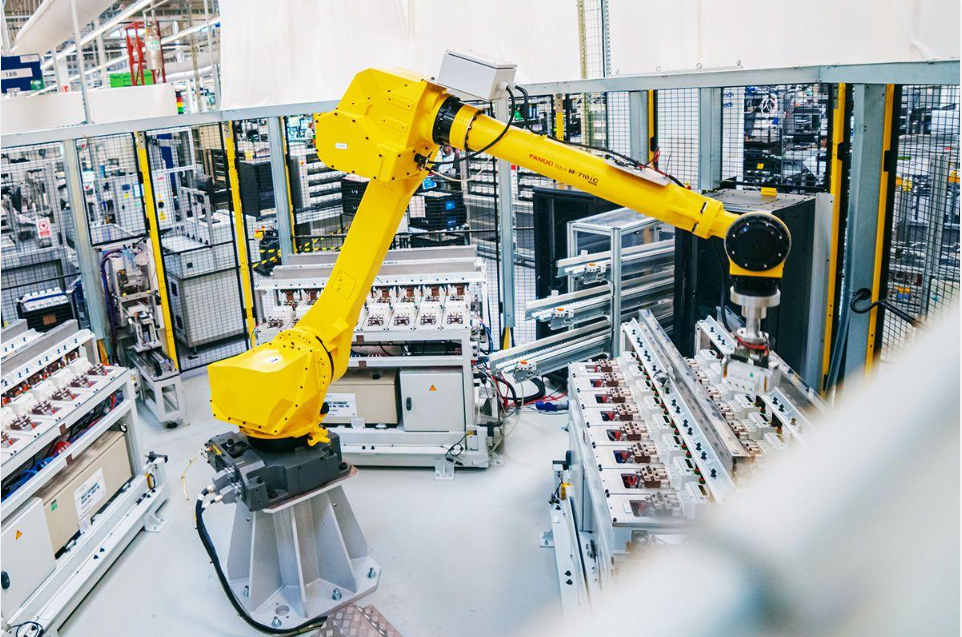
Beijing has sought to encourage domestic investment in advanced industries while improving the stability and attractiveness of the country’s capital markets. A sustained technology-led rally could have helped businesses raise funding, attract investors and expand research and manufacturing capacity.
The selloff threatens to complicate those objectives.
When share prices decline sharply, companies may face less favourable conditions for raising new capital. Potential investors can become more cautious, while businesses considering initial public offerings may delay their plans until market conditions improve.
The consequences can be particularly significant for emerging technology companies that require substantial funding before achieving consistent profitability.
However, falling share prices do not necessarily indicate that China’s technological development has stopped. Semiconductor manufacturing, robotics and AI infrastructure remain strategically important industries, and companies can continue developing products even during periods of financial-market weakness.
The more immediate challenge is whether businesses can attract investment on terms supported by realistic earnings expectations rather than speculative enthusiasm.
Some analysts argue that the correction could ultimately encourage more disciplined investment. Others believe the sector remains expensive and that additional declines are possible.
Both perspectives reflect a central uncertainty: the long-term importance of a technology does not determine the appropriate price of every company associated with it. kathmandupost.com
Global AI Investors Are Watching Closely
China’s technology selloff is attracting international attention because concerns about AI valuations are not confined to Chinese markets.
Across the United States and other major economies, technology companies have committed enormous resources to data centres, semiconductor production and computing infrastructure.
Reuters reported on October 27 that Amazon, Microsoft and Alphabet were preparing to release earnings that would provide an important test of AI-related business performance. Together, the companies had nearly $1.7 trillion in combined business backlog and planned capital spending of as much as $600 billion during 2026.
These figures reflect the scale of investment required to expand the infrastructure supporting artificial intelligence.
The economic question is whether the revenue generated by AI services, cloud computing and related products will eventually justify that spending.
There are important differences between Chinese technology manufacturers and established American technology companies. Their business models, profitability, financing arrangements and exposure to international markets are not identical.
Consequently, China’s market decline does not establish that a similar correction will occur in the United States or elsewhere.
It does, however, demonstrate how quickly valuations can change when investors begin demanding stronger evidence of financial returns.
The next phase of the global AI investment cycle may therefore depend less on announcements about technological capabilities and more on measurable business outcomes. Reuters
The Risks of Competition and Falling Prices
Another concern facing China’s technology industry is the possibility of increasingly intense competition among domestic manufacturers.
As more companies expand semiconductor production and AI-related equipment manufacturing, greater supply could place downward pressure on selling prices.
For customers, stronger competition may eventually reduce the cost of technology. For manufacturers, however, lower prices can create difficulties if production expenses remain high and profit margins narrow.
This distinction matters because revenue growth does not always translate into stronger profitability.
A company may increase production, attract customers and expand market share while still struggling to generate sufficient returns on its investments.
Investors therefore need to assess not only the size of the AI market but also how much of its economic value individual businesses can retain.
The risk of price competition is particularly relevant to capital-intensive industries, where factories, equipment and research programmes require substantial spending before products generate meaningful revenue.
For China’s technology sector, the challenge is to translate industrial capacity and technological progress into financially sustainable businesses.
THE ABE TAKE: The Future of AI Will Be Decided by Economics, Not Enthusiasm
China’s AI stock selloff provides an important lesson about the relationship between technological innovation and financial markets.
A technology can transform the global economy while many of the companies associated with it fail to deliver the investment returns investors expect.
Artificial intelligence may continue improving productivity, accelerating scientific research and changing how businesses operate. None of these possibilities guarantees that every semiconductor manufacturer, robotics company or infrastructure supplier will become consistently profitable.
The distinction between technological potential and investment value is essential.
Financial markets frequently attempt to anticipate future economic developments. This process can help promising companies obtain capital, but it can also encourage investors to pay excessive prices when expectations become disconnected from measurable business performance.
China’s recent experience demonstrates the consequences of that imbalance. Companies that were once valued according to ambitious growth assumptions are now being reassessed against the realities of earnings, competition, international trade restrictions and financing requirements.
The implications extend beyond China.
Governments seeking to develop advanced technology industries must consider whether investment incentives are encouraging durable innovation or excessive speculation. Businesses must demonstrate that technological progress can support sustainable revenues and profits. Investors must distinguish between an industry’s strategic importance and the financial strength of individual companies.
The selloff also presents an opportunity for more disciplined capital allocation. Lower valuations may allow investors to identify companies with stronger financial foundations, although falling prices alone do not establish that an investment represents good value.
Ultimately, the global AI industry is entering a period in which financial results may become increasingly important to market confidence.
The question is no longer simply which companies can develop the most impressive technologies. It is which companies can build durable businesses around those technologies without depending indefinitely on rising valuations and investor enthusiasm.
China’s $480 billion reversal does not mean the AI revolution has ended. It means the financial expectations surrounding that revolution are being tested.
And that distinction may prove decisive for the next stage of global technology investment.
ABE MAGAZINE
Understand More. Think Bigger.