








ABE MAGAZINE | BUSINESS
October 26, 2026
For millions of Canadians, grocery shopping has become an exercise in financial calculation. Households compare prices, follow weekly promotions and reconsider familiar purchasing habits as the cost of food continues to strain budgets. Behind these everyday decisions lies a larger question about the structure of Canada’s grocery industry. A small group of powerful retailers dominates the market, while independent businesses and potential international competitors face considerable obstacles to expansion. As regulators attempt to remove barriers and established chains invest in discount stores, Canada must confront a difficult question: can genuine competition make food more affordable, or will the existing market structure continue to limit consumer choice?
Five Companies Dominate Canada’s Grocery Market
Canada’s grocery industry is among the most important sectors of its consumer economy, yet much of the market is concentrated in the hands of a relatively small number of companies. Loblaw, Empire’s Sobeys businesses, Metro, Walmart and Costco collectively account for approximately three-quarters of Canadian grocery sales, according to federal government figures based on 2023 market-share estimates.
The concentration is not always immediately obvious to shoppers because several major companies operate multiple retail brands. Loblaw owns banners including No Frills, Real Canadian Superstore, Maxi and Fortinos, while Empire operates Sobeys, FreshCo, Safeway and other grocery businesses. Metro operates Metro, Food Basics and Super C, among others. Consequently, consumers visiting stores with different names may still be purchasing groceries from businesses controlled by the same parent company.
Large grocery networks can provide important economic advantages. Their purchasing volumes, distribution systems and established relationships with suppliers can support efficient operations and make products available across extensive geographic areas. However, market concentration also raises questions about how effectively companies compete on price, service and product selection when customers have relatively few independent alternatives.
The Competition Bureau has repeatedly argued that Canada needs stronger grocery competition. Its concern is not simply the number of supermarket signs visible in a community, but whether genuinely independent competitors have a realistic opportunity to enter the market and challenge established businesses.
Food Prices Have Made Competition More Urgent
The debate over grocery competition has intensified because food affordability remains a major concern for Canadian households. In its September 2026 assessment, the Competition Bureau reported that grocery prices increased by approximately 22% between 2022 and 2025, compared with a 13% increase in other consumer prices.
The consequences are particularly serious for lower-income households. Food represents a much larger share of their available resources, leaving less flexibility to absorb higher prices without reducing spending elsewhere. When essential goods become more expensive, families may change the products they purchase, reduce discretionary spending or devote additional time to finding discounts.
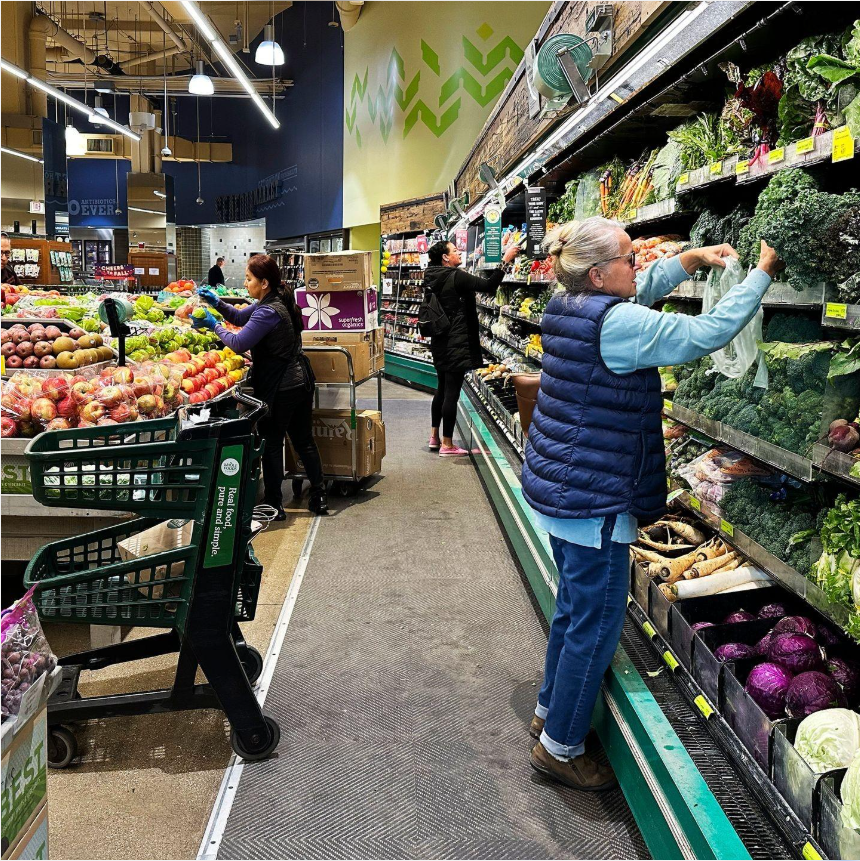
However, grocery inflation cannot be attributed entirely to the concentration of retailers. Food prices are influenced by agricultural production, labour expenses, transportation costs, exchange rates, weather conditions and international supply disruptions. A weaker Canadian dollar can also make imported food and ingredients more expensive.
Competition matters because it influences how businesses respond to those costs. In markets where consumers can easily switch between genuinely independent retailers, companies have stronger incentives to improve efficiency, offer competitive prices and distinguish themselves through service. Where alternatives are limited, consumers may have less bargaining power through their purchasing choices.
Why International Grocery Chains Have Not Rushed Into Canada
One proposed solution has been to attract established international discount supermarkets, particularly companies such as Germany’s Aldi and Lidl. Their business models emphasize operational efficiency, private-label products and competitive pricing, making them potential challengers to traditional grocery chains.
Yet entering Canada is considerably more complicated than opening a few stores. The country’s large geographic area, dispersed population and expensive distribution requirements create significant challenges for retailers seeking to establish a profitable national network. New entrants must also secure commercial property, build supplier relationships, recruit workers and adapt their products to Canadian regulatory requirements.
In 2024, Canadian officials explored attracting international grocery operators, but several potential entrants indicated they were not planning to expand into the country. More recently, industry analysis published in March 2026 suggested that Aldi and Lidl remained unlikely to establish Canadian operations in the near term, largely because of the costs and competitive difficulties involved.
That does not mean foreign entry is impossible. Walmart and Costco demonstrate that international companies can build substantial grocery businesses in Canada. However, their success developed through long-term investment, established business models and the ability to support large distribution networks.
A new competitor would need to identify a commercially sustainable strategy rather than depend entirely on public frustration with grocery prices. Consumer demand for lower prices creates an opportunity, but it does not automatically guarantee that a new supermarket chain can operate profitably.
The Real Estate Barrier That Has Attracted Regulatory Attention
One of the most significant obstacles facing potential grocery competitors is access to suitable commercial property. Supermarkets require locations that offer sufficient space, transportation access and proximity to customers. In communities where attractive retail sites are limited, securing the right property can determine whether a business is able to enter the market.
Canada’s Competition Bureau has identified certain restrictive property arrangements as a barrier to grocery competition. These arrangements can include lease provisions preventing landlords from renting nearby space to competing food retailers or restrictions that limit how commercial properties may be used.
In September 2026, the Bureau reached a legally enforceable agreement with Empire, the parent company of Sobeys, addressing its use of grocery property controls. Under the agreement, Empire committed to stop enforcing certain restrictive covenants and limit its use of exclusivity clauses.
The agreement represents a meaningful regulatory development because it addresses a structural obstacle rather than focusing solely on the prices consumers see on store shelves. Removing restrictions can create opportunities for new businesses to secure locations that might previously have been unavailable.
Nevertheless, access to property is only one part of the challenge. A new retailer must still establish competitive purchasing arrangements, efficient logistics and a sufficiently large customer base. Regulatory reform may open the door to competition, but commercial investment is necessary for businesses to walk through it.
Established Grocers Are Expanding Their Own Discount Networks
While policymakers consider how to encourage new competitors, Canada’s established grocery companies are investing in their existing networks. Discount supermarkets have become particularly important as consumers increasingly prioritize affordability.
In September 2026, Loblaw announced that it expected to invest approximately $2.4 billion in capital expenditures during the year and increase its planned new-store openings to about 75 locations. The company said much of its grocery expansion would focus on discount banners such as No Frills and Maxi.
This strategy reflects the changing behaviour of Canadian consumers. When households become more price-conscious, retailers have incentives to offer lower-cost store formats, private-label products and promotional campaigns. Established businesses can also use their existing distribution infrastructure to expand more efficiently than companies entering the market for the first time.
However, the growth of discount banners owned by existing grocery giants raises an important distinction. More stores can improve accessibility and increase competition between nearby locations, but they do not necessarily increase the number of independent companies controlling the market.
For regulators, the challenge is to encourage meaningful competition without overlooking the potential benefits of investment by established retailers. New discount stores may help consumers, but the long-term health of the market also depends on whether smaller and independent businesses can compete effectively.
Independent Grocers Could Play a Larger Role
Canada’s grocery market includes thousands of independent retailers, ethnic supermarkets, regional chains and specialized food businesses. These companies can provide alternatives to large supermarkets while serving communities with particular cultural, dietary or geographic needs.
Independent grocers often distinguish themselves through product selection, customer relationships and local knowledge. Some specialize in international foods, fresh produce or regional products that may be less prominent in larger supermarket chains. Others compete through convenience, service or targeted pricing.
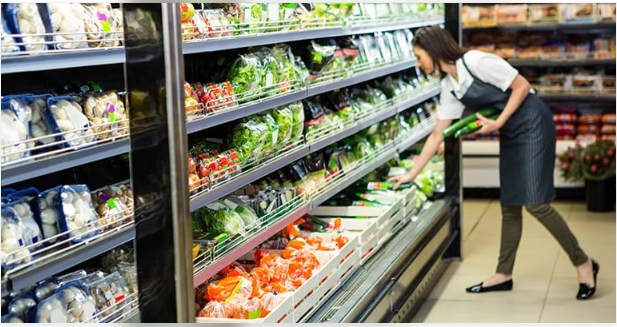
Their ability to expand, however, can be constrained by purchasing costs and distribution arrangements. Large grocery companies generally have greater negotiating power with suppliers because they purchase substantial quantities of products. Smaller retailers may pay more for inventory or rely on wholesale networks connected to larger competitors.
Government policy could help by supporting access to commercial property, encouraging competitive wholesale distribution and reducing unnecessary obstacles to business expansion. The Competition Bureau has also recommended clearer unit pricing, which allows consumers to compare products using consistent measurements rather than relying only on package prices.
The objective should not be to guarantee the success of every new retailer. Instead, it should be to create market conditions in which capable businesses have a fair opportunity to compete and customers can make meaningful choices.
Competition Must Extend Beyond the Supermarket Aisle
The structure of Canada’s food industry involves more than grocery stores. Food producers, processors, distributors, transportation companies and retailers all influence the cost of getting products to consumers.
In June 2026, the Competition Bureau launched a broader examination of competition across the Canadian food supply chain. The initiative recognizes that retail prices may be affected by conditions elsewhere in the industry, including production, processing and distribution.
The Bureau also began examining minimum advertised pricing policies in September. Such policies can restrict how low a retailer may advertise a supplier’s product, potentially making it more difficult for consumers to identify discounts or compare competing offers. The Bureau has not concluded that every such policy is unlawful; its investigation concerns their possible effects on competition.
These developments illustrate why improving grocery affordability requires more than persuading an international chain to open Canadian stores. Stronger competition may depend on changes throughout the system, from the availability of wholesale products to the transparency of prices and the ability of independent businesses to secure retail space.
For consumers, the ultimate test will be practical rather than theoretical. Successful reform should make it easier to find affordable products, compare prices and choose between retailers that genuinely compete for their business.
THE ABE TAKE: Canada Needs More Than New Supermarket Names
Canada’s grocery competition problem cannot be solved simply by attracting a well-known international retailer or encouraging established chains to open additional stores. Both developments could provide benefits, but the deeper issue concerns the conditions under which businesses are able to enter, expand and compete.
Large grocery companies have legitimate advantages arising from investment, experience and economies of scale. Those strengths can improve distribution and availability. Yet a healthy market must also leave room for competitors capable of challenging established practices and introducing different business models.
Recent regulatory action against restrictive property arrangements represents progress, but the effects will take time to become visible. New retailers need access to locations, suppliers, financing and customers before they can influence prices in a meaningful way.
For Canadian households, competition should ultimately be measured through affordability, convenience, product quality and genuine choice. A market that offers several store banners but limited independent ownership may not deliver the same competitive pressure as one in which new businesses can realistically challenge established companies.
The opportunity for Canada is to build a grocery industry where efficiency and innovation determine commercial success rather than the difficulty of entering the market.
New entrants could become part of that transformation. But lasting improvement will require a broader commitment to removing barriers, supporting competitive supply chains and ensuring that consumers—not merely the largest retailers—benefit from the way the industry operates.
ABE MAGAZINE
Understand More. Think Bigger.