






The Hook
Africa is one of the richest continents on Earth.
It produces cocoa.
Coffee.
Gold.
Diamonds.
Oil.
Lithium.
Copper.
Cobalt.
Timber.
Cotton.
Yet many African countries continue to struggle with unemployment, limited industrial growth and low incomes.
How can a continent with so many natural resources still face these challenges?
The answer may not be what Africa produces.
It may be what Africa doesn’t produce.
The Story
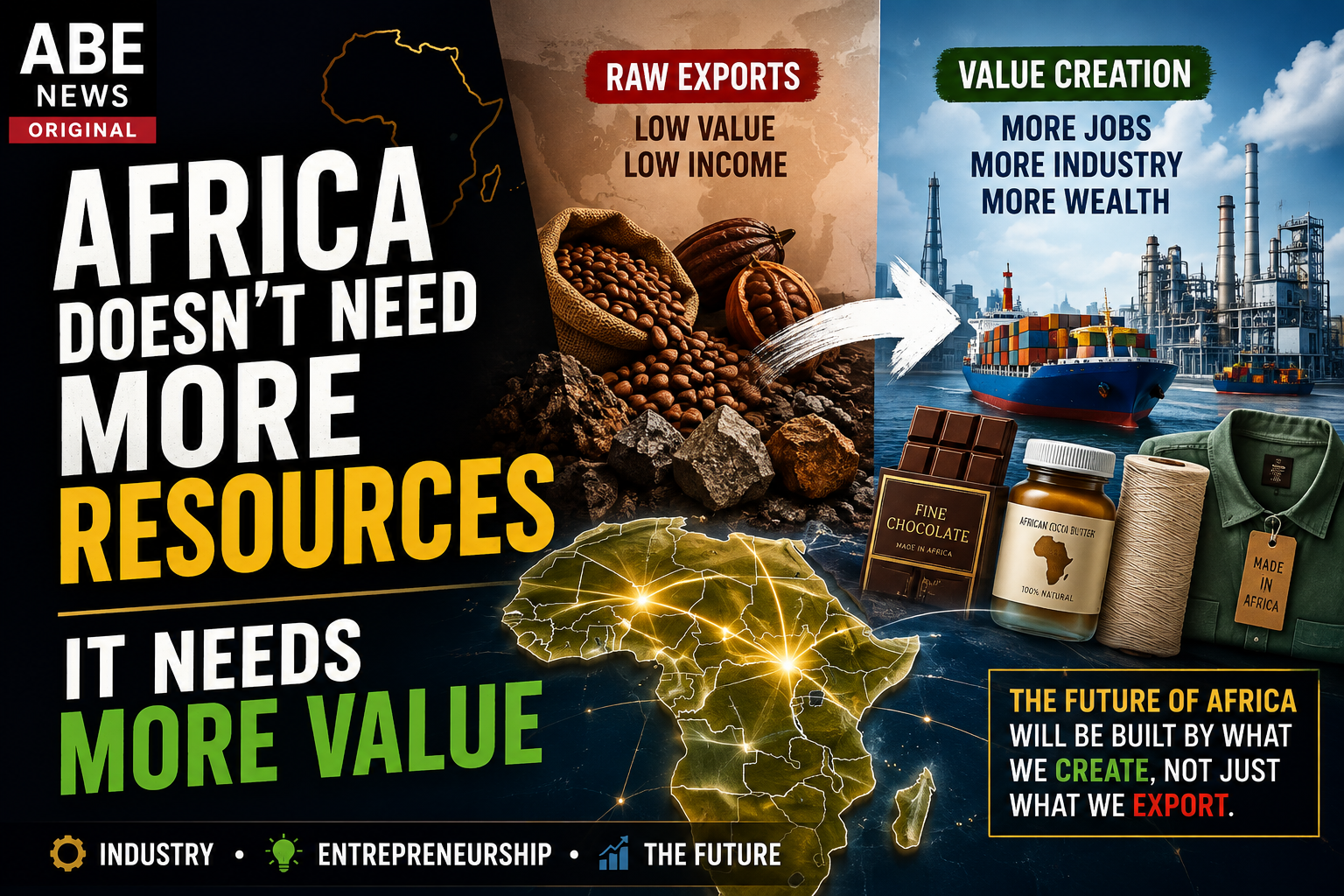
For decades, many African economies have relied on exporting raw materials to the rest of the world.
Cocoa beans are shipped overseas.
Coffee beans are exported before roasting.
Cotton leaves Africa before becoming clothing.
Minerals are exported before becoming batteries, smartphones or electric vehicles.
The raw materials begin their journey in Africa.
But much of the value is created somewhere else.
Where Does The Money Go?
Imagine a cocoa farmer.
The farmer grows cocoa.
The cocoa is exported.
Another company processes it.
Another company manufactures chocolate.
Another company designs the packaging.
Another company sells it in supermarkets around the world.
Each step adds value.
Each step creates jobs.
Each step creates profit.
The country producing the raw cocoa often receives only a small share of the final value.
Value Is More Than A Product
When a country processes its own resources, it doesn’t just earn more money.
It builds industries.
Factories.
Research.
Engineering.
Marketing.
Logistics.
Finance.
Design.
Export expertise.
Every additional stage creates new opportunities for businesses and workers.
This Isn’t Only About Agriculture
The same idea applies across many industries.
Lithium can become batteries.
Timber can become furniture.
Cotton can become fashion brands.
Natural gas can support chemical industries.
Rare minerals can become advanced electronics.
The question isn’t simply what a country exports.
It’s what it chooses to build.
The Opportunity
Africa has one of the world’s youngest populations.
Entrepreneurs are launching new companies.
Technology adoption continues to grow.
Regional trade is expanding.
These trends create an opportunity to move beyond exporting raw materials toward building higher-value industries.
That transition won’t happen overnight.
It requires investment.
Skills.
Reliable infrastructure.
Supportive policies.
And businesses willing to think long term.
Why It Matters
Natural resources can create wealth.
But history shows that lasting prosperity often comes from what countries build around those resources.
Some of the world’s strongest economies became successful not because they had the most raw materials.
They became successful because they transformed those materials into products, brands and technologies that the world wanted to buy.
That lesson remains just as relevant today.
What’s Next?
Across Africa, governments, entrepreneurs and investors are increasingly discussing industrialization, local manufacturing and value-added exports.
The pace will differ from country to country.
Some industries will grow faster than others.
But one question is becoming increasingly important.
Will Africa continue exporting mainly raw materials?
Or will it build more of the industries that transform those materials into finished products?
The answer could shape the continent’s economic future for decades.
THE ABE NEWS TAKE
The future of Africa will not be determined only by what lies beneath its soil.
It will be determined by what its people choose to build above it.
Natural resources are valuable.
But ideas create even greater value.
Factories create value.
Brands create value.
Innovation creates value.
Education creates value.
The countries that combine natural resources with knowledge, entrepreneurship and industrial growth will be the ones that shape the next chapter of Africa’s economy.
Perhaps the greatest resource Africa possesses isn’t cocoa.
Or oil.
Or gold.
It is its people.
And helping them build may become the continent’s greatest competitive advantage.