









The Hook
Every chocolate bar has a story.
For millions of people, it begins on a cocoa farm.
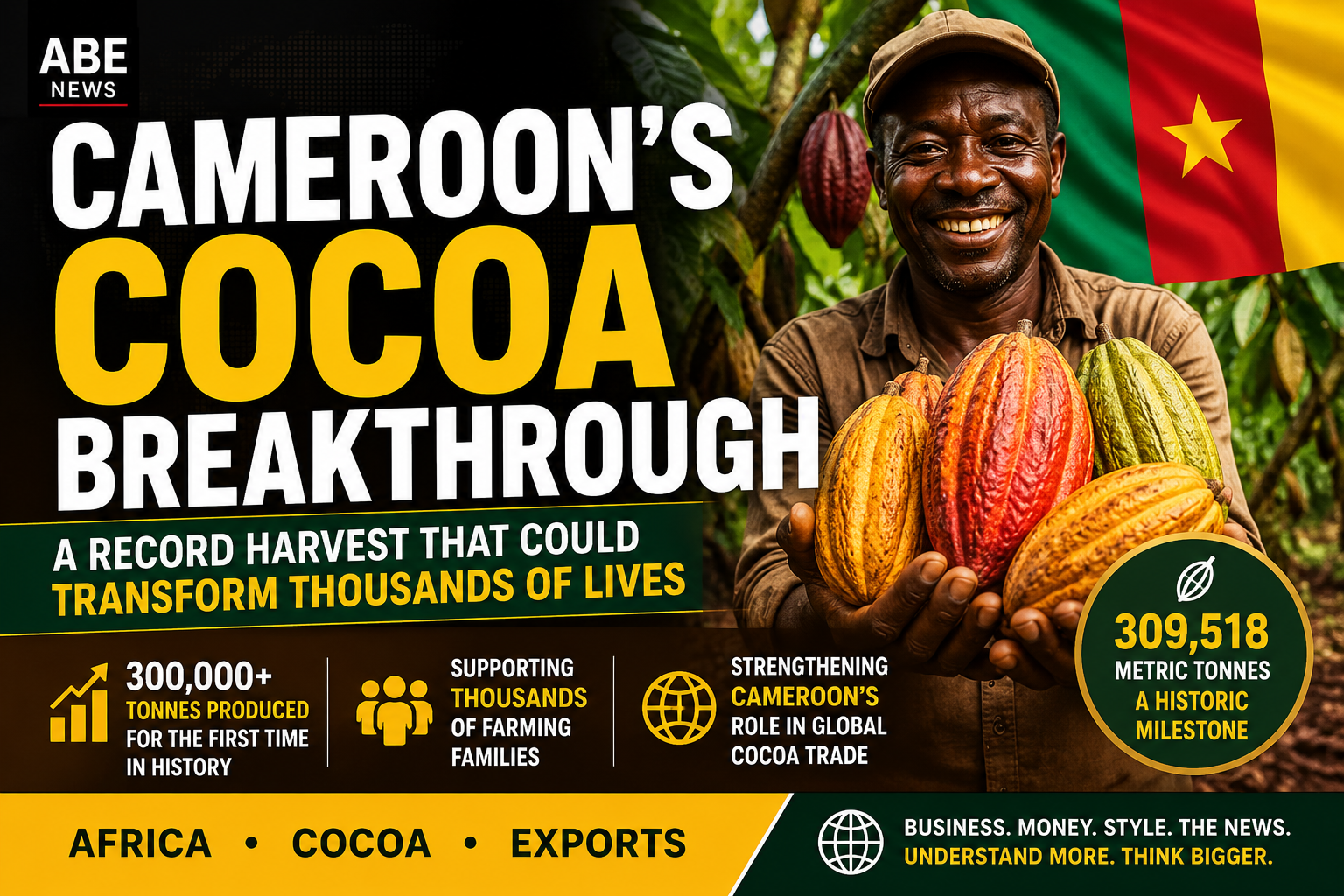
This week, Cameroon reached a milestone that could reshape its agricultural future. For the first time in the country’s history, cocoa production has exceeded 300,000 metric tonnes in a single season—a landmark achievement for one of the world’s leading cocoa producers.
But this isn’t just a farming story.
It’s a story about exports, jobs, rural communities and Africa’s growing role in the global economy.
The Story
Cameroon produced 309,518 metric tonnes of cocoa during the 2024/2025 season, up 16% from the previous season’s 266,710 tonnes. The announcement was made by the country’s Minister of Trade at the official launch of the new cocoa season.
Crossing the 300,000-tonne mark is significant because it has been a long-standing national target.
The increase reflects stronger production, resilient farmers and ongoing efforts to strengthen the country’s cocoa sector.
Why Cocoa Matters
When people think of cocoa, they often think about chocolate.
But cocoa is much bigger than that.
It is one of Cameroon’s most important export crops and provides income for hundreds of thousands of farming families.
The industry supports transport companies, exporters, processors, banks and many small businesses connected to the agricultural supply chain.
When cocoa performs well, entire communities can benefit.
More Than Just Higher Production
Producing more cocoa is important.
But producing more value is even more important.
For many years, African countries exported raw cocoa beans while most of the profits from processing and chocolate manufacturing were earned elsewhere.
Cameroon has been investing in expanding its domestic processing capacity so that more cocoa can be transformed into products such as cocoa butter, cocoa powder and cocoa paste before being exported. That allows more value—and more jobs—to remain inside the country.
Why It Matters
Cameroon’s record harvest comes at an important time for the global cocoa market.
In recent years, weather challenges, crop disease and supply shortages in West Africa have pushed cocoa prices sharply higher.
A stronger harvest from Cameroon helps reinforce its position as one of the world’s major cocoa producers while showing that investment in agriculture can deliver real economic results.
What’s Next?
The next challenge isn’t simply producing more cocoa.
It’s creating more value from every tonne harvested.
That means improving productivity.
Expanding local processing.
Supporting farmers with better technology and training.
And strengthening Cameroon’s position in global agricultural trade.
If those goals are achieved, this record harvest could become more than a statistic.
It could mark the beginning of a new chapter for one of Africa’s most important industries.
THE ABE NEWS TAKE
Great economies are not built only by skyscrapers and technology companies.
They’re also built in fields.
On farms.
And by people whose work often goes unnoticed.
Cameroon’s cocoa milestone is a reminder that agriculture remains one of Africa’s greatest economic strengths.
But the future isn’t just about growing more crops.
It’s about creating more value from them.
The countries that process, innovate and build industries around their natural resources will capture a larger share of global wealth.
For Cameroon, crossing 300,000 tonnes is worth celebrating.
The next milestone should be ensuring that more of the chocolate value chain begins at home.
That’s where long-term prosperity is created.
ABE NEWS
Business. Money. Style. The News.
Understand More. Think Bigger.
Sources
- Reuters — Cameroon surpasses 300,000 metric-ton cocoa target for the first time.
- Government economic bulletin on cocoa production and exports.