






By ABE Editorial Desk
A Major Escalation in Russia’s War Against Ukraine
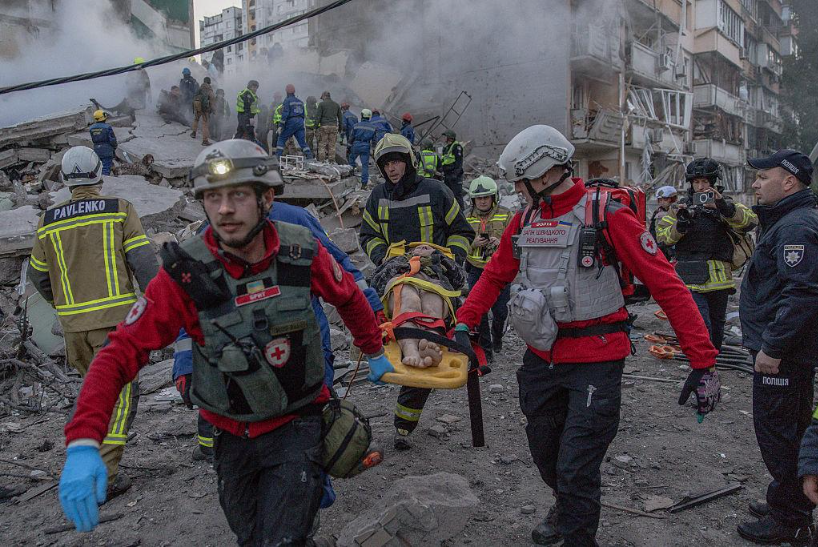
Russia’s Kyiv infrastructure attacks on November 20 marked one of the largest aerial assaults against Ukraine since the full-scale invasion began in 2022. Russian forces launched more than 400 drones and over 110 missiles, including 27 ballistic missiles, according to Ukrainian President Volodymyr Zelenskyy.
The strikes targeted electricity facilities, railway infrastructure and major transportation routes. Ukrainian officials reported at least eight deaths across the country, including six in Kyiv, while dozens of people were injured. The figures remained subject to revision as emergency teams assessed the damage.
Three major bridges crossing the Dnipro River in Kyiv were damaged during the assault. The attacks also disrupted electricity supplies and forced authorities to introduce emergency power restrictions in several regions.
The scale of the operation illustrates how the war is increasingly extending beyond conventional military positions. Transportation networks, electricity systems and essential public services have become central to the conflict’s strategic and economic consequences.
Why Kyiv’s Bridges Have Become Strategic Targets

Kyiv’s geography makes its bridges essential to the functioning of the capital. The Dnipro River divides the city into eastern and western sections, with major residential districts, businesses and government institutions connected through a limited number of crossings.
The November 20 strikes damaged the Podilsko-Voskresenskyi, Darnytskyi and Pivdennyi bridges. Mayor Vitali Klitschko announced traffic restrictions and urged residents to avoid unnecessary journeys by private vehicle.
These crossings support daily commuting, commercial deliveries and the movement of emergency services. Disrupting them can create significant pressure on an urban economy even without destroying the structures completely.
For businesses, transportation delays can increase operating costs and interfere with deliveries. Employees may struggle to reach workplaces, while hospitals and public services face additional logistical challenges.
The strategic importance of these routes also explains why they have become increasingly contested. Russia’s Defence Ministry said its forces targeted bridges used to transport military equipment and supplies.
However, the military use of infrastructure does not remove the obligation to protect civilians under international humanitarian law. Whether a particular attack is lawful depends on the target’s military significance, the anticipated civilian harm and the precautions taken.
Ukraine’s Electricity Network Faces Renewed Pressure

Beyond transportation, the Russian assault placed further strain on Ukraine’s already vulnerable energy infrastructure.
Ukrainian officials reported damage to electricity generation facilities and transmission networks. Emergency outages affected several regions, while power companies worked to stabilize the grid and restore services.
The attacks also affected substations and transmission lines supporting Ukraine’s nuclear power plants and electricity connections with neighbouring European countries. Ukrainian energy authorities said nuclear facilities were forced to reduce generation as the wider electricity network experienced disruptions.
These developments highlight the interconnected nature of modern energy systems. Electricity production depends on functioning transmission networks, substations and distribution infrastructure.
When one component is damaged, the effects can extend far beyond the immediate location. Hospitals, telecommunications networks, water utilities and industrial facilities may all experience interruptions.
For households, electricity shortages can become particularly dangerous during winter. Heating, water pumping and communications systems depend on reliable energy supplies.
The economic consequences are equally significant. Businesses may need expensive backup generators, reduce production or suspend operations while repairs are completed.
The Crimea Bridge and the Escalating Infrastructure Conflict
The November 20 assault followed Ukrainian attacks on the Kerch Bridge, which connects Russia with the Crimean Peninsula that Moscow annexed illegally in 2014.
Earlier in the week, Ukrainian forces struck the bridge repeatedly, damaging its road connection. Russian President Vladimir Putin subsequently warned that Moscow would respond.
The Kerch Bridge carries substantial symbolic and logistical importance for Russia. It provides a transportation connection to occupied Crimea and supports the movement of goods and military supplies.
Ukraine has repeatedly targeted the crossing as part of its broader effort to disrupt Russian military logistics.
The latest exchange demonstrates how infrastructure has become an increasingly important component of both countries’ military strategies.
Ukraine has also intensified operations against Russian refineries, ammunition facilities and other military-support infrastructure. Moscow, meanwhile, has continued attacks on Ukrainian energy facilities and transportation networks.
These operations reflect an effort by both sides to weaken their opponent’s ability to sustain the war. However, their wider consequences can extend into civilian economies and essential public services.
The Economic Cost of Destroying Critical Infrastructure
The financial consequences of infrastructure warfare extend well beyond the immediate cost of rebuilding damaged bridges and power facilities.
Transportation disruptions increase the time and expense required to move goods. Electricity shortages reduce industrial productivity and create uncertainty for businesses considering long-term investments.
Repeated attacks can also make reconstruction more expensive. Infrastructure that has already been repaired may require additional work after subsequent strikes.
For Ukraine, these pressures are particularly serious because the country must maintain essential services while financing military operations and supporting displaced populations.
Businesses face difficult decisions about whether to continue operating, relocate or invest in additional protective equipment. These choices can influence employment, tax revenues and economic recovery.
Infrastructure damage also affects international trade. Ukraine relies on transportation networks to move agricultural products, manufactured goods and imported equipment.
When railways, roads or electricity systems become unreliable, the consequences can spread through supply chains and increase costs for international partners.
The longer the conflict continues, the greater the risk that temporary disruptions become structural economic weaknesses.
Europe Faces New Security and Energy Concerns
The November 20 attacks also carry implications for European security.
Ukraine’s electricity network is connected to the wider European system, making the stability of transmission infrastructure important beyond Ukraine’s borders.
Damage to cross-border electricity connections can complicate emergency energy support and reduce the flexibility available to Ukrainian grid operators.
The strikes also occurred amid renewed diplomatic tensions between Russia and Western governments. European leaders have repeatedly emphasized that any settlement of the war must involve Ukraine and respect its sovereignty.
Poland reported that Russian missiles had landed on its territory during the broader assault. Polish Prime Minister Donald Tusk described the incident as an intentional provocation, raising additional concerns about the possibility of the conflict affecting NATO territory.
Such developments increase the importance of communication between governments and military authorities.
For European countries, the challenge is to support Ukraine’s security while preventing further escalation and protecting regional infrastructure.
THE ABE TAKE | Infrastructure Has Become a Weapon of Economic Pressure
Russia’s Kyiv infrastructure attacks demonstrate that modern warfare increasingly targets the systems that allow societies to function.
Bridges, electricity networks and transportation facilities are not simply physical assets. They connect workers to businesses, hospitals to patients and industries to international markets.
Their destruction can weaken economic activity long after the immediate military operation has ended.
The November 20 strikes also reveal the limitations of viewing the war exclusively through territorial advances and battlefield positions. Even when frontlines change relatively little, attacks on infrastructure can impose substantial economic and humanitarian costs.
For Ukraine, maintaining resilient energy and transportation networks is therefore essential to national security. International support must address not only military requirements but also the protection, repair and modernization of critical infrastructure.
For Russia, the continuing exchange of strikes demonstrates the danger of an escalating campaign against economically important targets. The destruction of essential systems can deepen civilian suffering without necessarily producing a decisive military outcome.
International humanitarian law remains central to assessing these operations. Military objectives cannot justify indiscriminate attacks or disregard for civilian harm.
Ultimately, the conflict’s economic consequences will shape Ukraine’s recovery and Europe’s security environment for years.
The future of Ukraine will depend not only on the outcome of military operations, but also on whether the country can preserve the infrastructure, institutions and economic foundations necessary for national recovery.
ABE MAGAZINE
Understand More. Think Bigger.