





THE ABE HOOK
Fourteen months.
That’s roughly how long it took for the Los Angeles Lakers to go from being valued at $10 billion in one ownership deal to $12.5 billion in another.
Not because the Lakers suddenly discovered a new sport.
Not because basketball changed overnight.
But because owning one of the world’s most recognizable sports franchises has become an extraordinarily valuable business.
And now, another historic Lakers ownership change is underway.
Bob Iger and Joshua Kushner Are Buying the Lakers
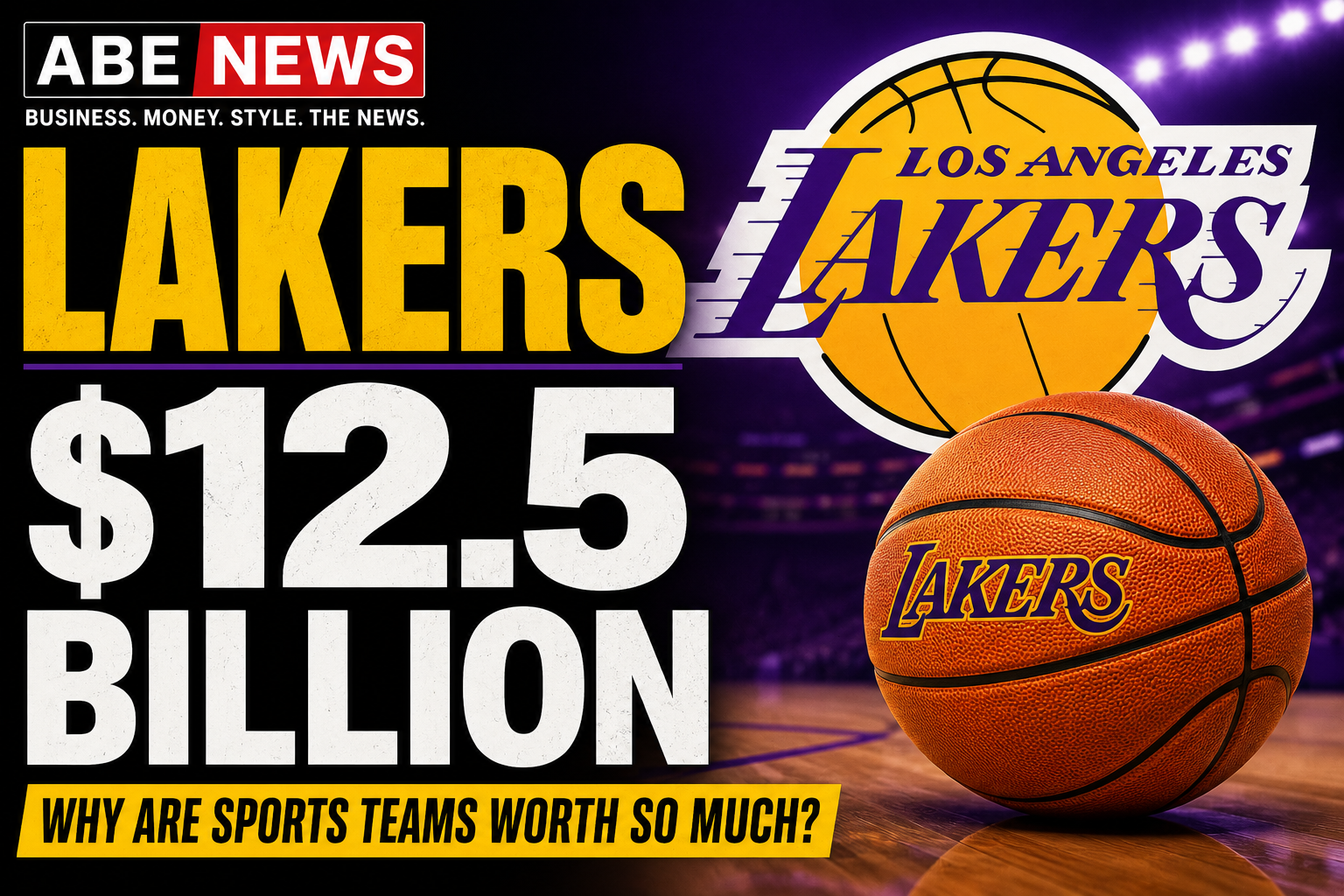
Former Disney CEO Bob Iger and venture capitalist Joshua Kushner are set to purchase the Los Angeles Lakers in a deal valuing the franchise at a record $12.5 billion, according to Reuters.
The transaction still needs approval from the NBA’s Board of Governors and is also subject to due diligence.
For Iger, the sports world isn’t unfamiliar territory.
During his years running Disney, he oversaw a company that owns ESPN and developed extensive relationships with the NBA through major broadcasting agreements. He has also invested in women’s soccer club Angel City FC.
Kushner, meanwhile, is the founder of venture-capital firm Thrive Capital.
Together, they’re preparing to take control of one of the most famous brands in global sports.
But Didn’t Someone Just Buy the Lakers?
Yes.
And that’s what makes this deal especially interesting.
In 2025, billionaire Mark Walter acquired the Lakers’ majority stake from the Buss family in a transaction that valued the franchise at approximately $10 billion.
The NBA unanimously approved that transaction in October 2025.
Now, only about 14 months after Walter’s original agreement, the Lakers are changing hands again.
This time:
$12.5 billion.
That’s a difference of approximately:
$2.5 BILLION.
Sports agent Leigh Steinberg described the speed of the resale as a surprising development when speaking to Reuters.
How Did a Basketball Team Become Worth $12.5 Billion?
This is where the Lakers story becomes a business story.
When someone buys an elite sports franchise, they’re not simply buying players, basketballs and an arena schedule.
They’re buying a scarce global entertainment asset.
The Lakers carry decades of history.
They have won 17 NBA championships and reached the NBA Finals 32 times.
Then there are the names associated with the franchise:
Magic Johnson.
Kareem Abdul-Jabbar.
Kobe Bryant.
Shaquille O’Neal.
LeBron James.
And now Luka Dončić.
Those decades of success created something extremely difficult for a new business to reproduce:
a global fan base.
The Money Goes Far Beyond Tickets
A modern sports franchise can generate money from numerous directions.
Broadcasting and streaming rights.
Sponsorships.
Merchandise.
Premium seating.
Licensing.
International partnerships.
Advertising.
Digital media.
And potentially new commercial opportunities that don’t exist yet.
The NBA itself is also becoming increasingly valuable.
Recent franchise transactions show how quickly prices have climbed.
The Boston Celtics changed ownership in a transaction whose total value could eventually reach $7.3 billion, while Walter’s Lakers purchase valued that franchise at $10 billion.
The numbers have become so large that they are even influencing discussions about NBA expansion.
Commissioner Adam Silver said earlier this year that recent Lakers and Celtics transactions have affected speculation around what new franchises in markets such as Seattle or Las Vegas could be worth.
Scarcity Changes Everything
There are thousands of companies investors can buy.
There are only 30 NBA franchises today.
And there is only one Los Angeles Lakers.
That scarcity matters.
You can’t simply create another Lakers because you have $12 billion.
You can build another basketball organization.
But you can’t instantly reproduce decades of championships, famous players, Los Angeles, celebrity culture and generations of fans.
That makes elite franchises fundamentally different from ordinary businesses.
Their history itself becomes an asset.
THE ABE TAKE
The Lakers’ $12.5 billion deal tells us something bigger about where professional sports is heading.
Sports teams are becoming mega-assets.
For decades, owning a team could look like the ultimate billionaire trophy.
Today, the biggest franchises increasingly resemble global media and entertainment companies with extremely limited supply.
And that’s an important distinction.
A company can have competitors.
Someone can build another clothing company.
Another airline.
Another technology platform.
But nobody can manufacture another 80 years of Lakers history.
That scarcity becomes incredibly valuable when millions of people around the world want sports content and broadcasters, streaming companies, advertisers and sponsors all want access to those fans.
And look at the numbers.
Approximately $10 billion in 2025.
Now $12.5 billion in 2026.
Whether that extraordinary rise continues is impossible to know.
But one thing is becoming increasingly obvious:
The world’s biggest sports teams aren’t just competing for championships anymore.
They’re becoming some of the most valuable entertainment assets money can buy.
— ABE NEWS