








ABE MAGAZINE | NEWS O’CLOCK
China’s Economic Divide: Strong Exports, Weak Consumers and the Limits of Manufacturing-Led Growth
November 16, 2026
By ABE Editorial Desk
China’s factories remain capable of supplying the world with everything from industrial machinery to advanced electronic components. Its manufacturers continue to benefit from international demand, particularly in technology-related industries. Yet within the world’s second-largest economy, consumers are spending cautiously, property investment continues to decline, and businesses face an increasingly difficult domestic market.
This contrast has become one of the defining challenges of China’s economic strategy. New figures released on November 16 show that industrial production grew 4.8% in October compared with a year earlier, while retail sales increased only 0.4%. Both measures fell short of economists’ expectations, suggesting that economic activity entered the final quarter of 2026 with less momentum than policymakers had hoped.
The weakness is not evidence that China’s manufacturing sector has collapsed. Rather, it reveals an economy whose industrial capabilities are advancing faster than its domestic purchasing power. That imbalance has implications extending well beyond China’s borders, influencing international trade, corporate competition and the direction of global investment.
The Numbers Behind China’s Economic Divide
According to China’s National Bureau of Statistics, industrial production increased 4.8% year on year in October, slowing from 5.5% in September. Economists surveyed by Reuters had expected growth of approximately 5.3%, making the latest result weaker than anticipated.
Consumer spending presented an even more concerning picture. Retail sales increased only 0.4% from a year earlier, compared with 1.1% growth in September and market expectations of 0.8%. The disappointing result came despite a major national holiday period that ordinarily provides opportunities for retailers, restaurants and tourism-related businesses.
Investment data reinforced the slowdown. Fixed-asset investment declined 8.1% during January–October compared with the corresponding period in 2025, a sharper contraction than the 7.2% fall recorded during the first nine months. Property investment fell 21.6% over the first ten months, underscoring the continued difficulties facing the real estate sector.
However, the industrial figures also reveal important differences within manufacturing. Equipment manufacturing grew 10.6% in October, while high-technology manufacturing expanded 17.6%. These sectors substantially outperformed overall industrial production, demonstrating that parts of China’s economy continue to experience rapid expansion.
The result is an economy moving at different speeds. Advanced manufacturers benefit from technological investment and external demand, while many domestic businesses operate in an environment of subdued consumption and declining property-related activity.
Why Chinese Consumers Are Holding Back

Consumer spending depends not only on income but also on confidence about future financial security. Households are more willing to purchase discretionary goods when they believe employment is stable, property values are secure and economic prospects are improving.
China’s prolonged property downturn has weakened that confidence. Housing represents an important component of household wealth, and falling property prices can make homeowners feel financially less secure even when their regular incomes remain unchanged. This can encourage precautionary saving and reduce spending on non-essential purchases.
Labour-market uncertainty adds another complication. Although the surveyed urban unemployment rate declined to 5.1% in October from 5.2% in September, that improvement does not necessarily capture every concern households have about earnings, job quality or future opportunities.
Weak spending can also create a difficult cycle for businesses. When consumers reduce purchases, retailers and service providers may postpone expansion, limit hiring or compete more aggressively on price. Those decisions can reinforce the uncertainty that initially encouraged households to save.
Beijing has introduced measures intended to support consumption and investment, including assistance for homebuyers and targeted credit policies. Yet the October figures suggest that restoring consumer confidence will require more than short-term incentives.
The challenge is rebuilding households’ willingness to spend consistently, rather than encouraging temporary purchases through individual policy programmes.
The Export Engine Continues to Deliver
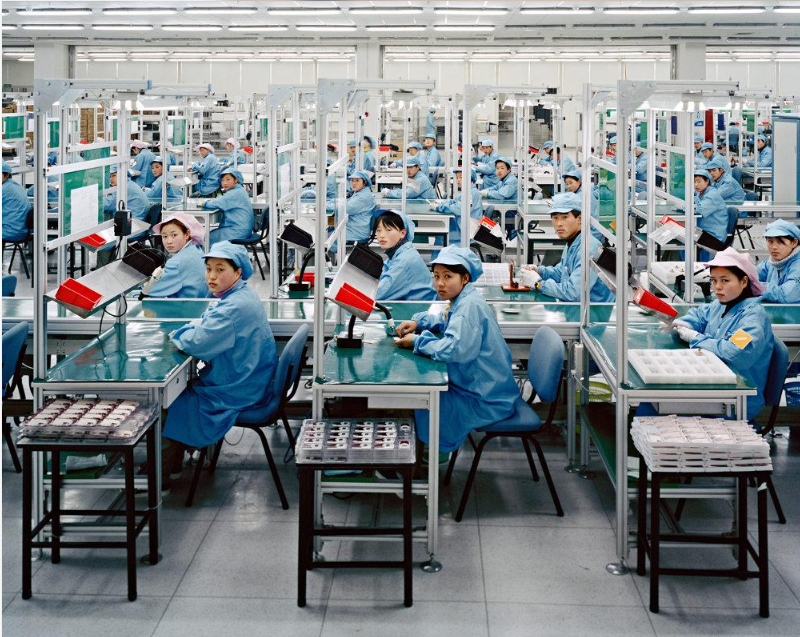
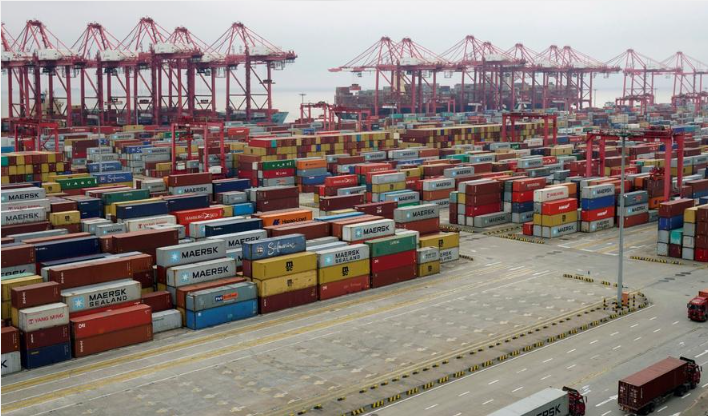
China’s domestic difficulties contrast with the resilience of its export-oriented industries. International demand for advanced electronics, machinery, vehicles and technology-related equipment has helped sustain manufacturing activity despite weaker spending at home.
This performance reflects decades of investment in industrial infrastructure, supply chains, manufacturing expertise and technological capabilities. Chinese producers operate within extensive networks of suppliers, transport systems and specialised factories that can be difficult for international competitors to replicate quickly.
The expansion of artificial intelligence infrastructure has provided another source of demand. Global investment in computing facilities and related technology has increased opportunities for manufacturers supplying electronic components, electrical equipment and other industrial products.
For Chinese businesses operating in these sectors, international customers can compensate for limited domestic growth. Export revenue supports production, employment and investment, allowing successful manufacturers to expand even when household consumption remains subdued.
However, dependence on overseas markets introduces vulnerabilities. Export growth depends partly on economic conditions in other countries, trade policies and the willingness of foreign customers to continue purchasing Chinese products.
An economy can benefit enormously from international demand, but it cannot control that demand. If global investment slows or trade restrictions intensify, manufacturers may face pressure at the same time that domestic consumers remain financially cautious.
The Risks of Producing More Than the Domestic Market Can Absorb
China’s industrial strength creates an important strategic question: what happens when manufacturing capacity grows faster than domestic demand?
Businesses operating in competitive industries must find customers for their products. When local demand is insufficient, exporting becomes an attractive solution. Companies with efficient production systems may be able to offer competitive prices internationally, increasing their market share.
For importing countries, access to competitively priced goods can benefit consumers and businesses. Lower equipment costs may support investment, while affordable manufactured products can reduce expenses for households.
But the same development can create pressure on domestic producers elsewhere. Industries facing intense competition from Chinese imports may struggle to maintain profitability, employment and investment. Governments can respond through tariffs, trade investigations or industrial support programmes.
This dynamic helps explain why China’s economic imbalance is not exclusively a domestic concern. Its manufacturing strategy influences international competition and can intensify disagreements over trade practices, industrial subsidies and market access.
The risk is not that exports are inherently harmful. International trade remains an important source of economic efficiency and growth. The concern is whether sustained reliance on foreign demand can compensate for structural weakness in domestic consumption without creating additional international tensions.
A more balanced Chinese economy could potentially reduce some of these pressures by allowing a larger share of production to be absorbed through household and business spending at home.
The Property Market Remains a Major Obstacle
China’s property sector continues to influence the broader economy because housing is connected to household wealth, construction employment, local government finances and demand for industrial materials.
The latest figures show property investment declining 21.6% during the first ten months of 2026. New home prices also continued falling in October, according to official data released alongside the broader economic indicators.
These developments have consequences beyond property developers. Construction activity supports demand for steel, cement, household appliances, furniture and other products. When development slows, businesses across those supply chains can experience weaker orders.
The property downturn can also affect local government finances and the ability to support infrastructure investment. This creates additional challenges for policymakers attempting to stimulate economic activity without increasing financial vulnerabilities.
Government support may help stabilise certain areas of the market, but rebuilding confidence requires households and investors to believe that conditions are becoming more predictable.
Until that confidence improves, the property sector is likely to remain an important constraint on domestic demand.
Can Technology-Led Manufacturing Sustain Growth?
China’s strong performance in high-technology manufacturing provides a potential foundation for future growth. Advanced industrial production can improve productivity, create specialised employment and strengthen the country’s position in global supply chains.
The National Bureau of Statistics reported that production of 3D printing devices, lithium-ion batteries and industrial robots increased substantially in October. These figures indicate continued investment in technologically sophisticated manufacturing capabilities.
However, technological progress and broad-based economic prosperity are not automatically the same thing. An industry can become more productive without generating equivalent increases in household spending, particularly when employment patterns, income distribution and business profitability change.
The long-term challenge is ensuring that industrial upgrading contributes to stronger domestic economic activity. Higher productivity can support rising incomes, but the benefits must reach households and businesses sufficiently to stimulate demand.
A manufacturing strategy that generates impressive output while leaving consumers financially cautious may struggle to deliver balanced growth.
The policy question is therefore not whether China should continue developing advanced industries. It is how those industries can contribute to an economy that depends less heavily on external demand.
What China’s Slowdown Means for the Global Economy
China’s economic performance matters because its industries are deeply connected to international trade and investment. Changes in Chinese demand can influence commodity exporters, multinational corporations, logistics providers and manufacturers operating across different continents.
Countries supplying raw materials and industrial inputs may be affected by weaker Chinese construction and investment. Meanwhile, companies competing with Chinese manufacturers may face increasing pressure if exporters seek additional customers abroad.
For multinational consumer businesses, sluggish domestic spending presents another challenge. Companies that once expected China’s expanding middle class to generate consistently strong growth must assess whether their products, pricing and investment strategies remain appropriate.
Financial markets will also monitor Beijing’s response. Policymakers may introduce further measures to support domestic demand, although economists differ over the likely scale and timing of additional stimulus.
China’s third-quarter economy expanded 4.5% from a year earlier, and analysts continue to expect the country to approach its annual growth objective of approximately 4.5% to 5%. The economy therefore remains capable of significant expansion, even as its underlying composition raises concerns.
The question for international businesses is whether that growth becomes more balanced or continues relying heavily on manufacturing and exports.
THE ABE TAKE
China’s latest economic figures reveal a fundamental contradiction. The country has developed formidable industrial capabilities, particularly in advanced manufacturing, yet domestic consumption remains too weak to provide comparable momentum.
This is not simply a problem of disappointing retail sales. It reflects deeper questions about household confidence, property wealth, employment prospects and the distribution of economic opportunity.
China’s export success has helped protect overall growth, but it also reduces the immediate pressure to address domestic weaknesses. When overseas demand remains strong, policymakers can meet economic targets without necessarily achieving a substantial recovery in household spending.
That approach carries risks. External demand is vulnerable to global economic conditions and trade restrictions, while prolonged weakness in domestic consumption can constrain businesses that depend on Chinese customers.
The most important measure of China’s economic progress may therefore become less about how much its factories can produce and more about how confidently its households can participate in the economy.
For the rest of the world, the consequences are significant. A China that increasingly relies on exports will shape international competition differently from one supported by stronger domestic consumption.
The country’s next economic challenge is not proving that it can manufacture at scale. It has already demonstrated that ability. The challenge is translating industrial strength into a more balanced and durable source of prosperity.
ABE MAGAZINE
Understand More. Think Bigger.