








ABE | OCTOBER 8, 2026
The global economy is entering a period of extraordinary contradiction. At a time when governments are struggling with mounting debt, businesses are facing expensive borrowing, and households remain exposed to rising energy costs, the world is committing enormous sums to a technological future whose economic rewards have yet to be fully realised. Artificial intelligence promises to transform productivity, reshape industries and create new sources of wealth. But financing that transformation is becoming increasingly complicated.
This tension is emerging as one of the defining questions facing the global economy. The enthusiasm surrounding artificial intelligence has encouraged investment in data centres, semiconductors, electricity networks and computing infrastructure. Yet those ambitions are unfolding against a backdrop of geopolitical uncertainty, fragile energy supplies and public finances already under considerable strain. The result is an economy in which expectations of future prosperity are rising alongside the cost of achieving it.
The contradiction became particularly evident this week as International Monetary Fund Managing Director Kristalina Georgieva warned of the combined pressures facing global growth. The concern is not simply that the world faces several economic challenges at once. It is that these challenges increasingly influence one another, creating difficult choices for governments, investors and businesses.
AN ECONOMY PULLED IN OPPOSITE DIRECTIONS
Artificial intelligence has become one of the most powerful forces shaping investment decisions across the global economy. Technology companies are expanding computing capacity, infrastructure providers are preparing for greater electricity demand, and investors are searching for businesses positioned to benefit from a potentially transformative technological shift. The underlying expectation is that AI will eventually enable companies to operate more efficiently, increase output and unlock economic opportunities that are difficult to measure today.
Yet technological progress does not eliminate the physical and financial requirements needed to produce it. Data centres require substantial electricity supplies, advanced cooling systems and sophisticated equipment. Semiconductor manufacturing depends on complex international supply chains, while the construction of supporting infrastructure requires materials, labour and long-term financing. The scale of these commitments means that the AI boom is not simply a story about software or digital innovation. It is also a story about energy, industrial capacity and access to capital.
These requirements become more consequential when the wider economy is experiencing pressure. Higher energy prices can increase the cost of manufacturing and transportation, while elevated interest rates make investment more expensive. Companies may therefore find themselves pursuing opportunities created by artificial intelligence while simultaneously managing rising operating costs. The economic benefits of new technology may be substantial, but the financial burden of developing and deploying it arrives first.
THE RETURN OF ENERGY AS AN ECONOMIC CONSTRAINT
Energy has long influenced the direction of global economic growth, but its importance becomes especially visible during periods of geopolitical disruption. Oil and natural gas remain central to transportation, manufacturing and electricity generation in many economies. When supplies are threatened or prices rise sharply, the consequences can extend far beyond energy producers and consumers.
Businesses facing higher fuel and transportation costs may attempt to pass those expenses to customers, potentially contributing to inflation. Households spending more on essential goods and services have less disposable income available for other purchases, weakening demand across parts of the economy. Governments may face pressure to provide relief, even as their own budgets become increasingly constrained.
The effects are also unevenly distributed. Energy-producing countries may benefit from higher export revenues, while import-dependent economies face deteriorating trade balances and greater pressure on consumers and businesses. Developing economies with limited fiscal resources can be particularly exposed, especially when energy costs rise alongside the cost of servicing foreign-currency debt.
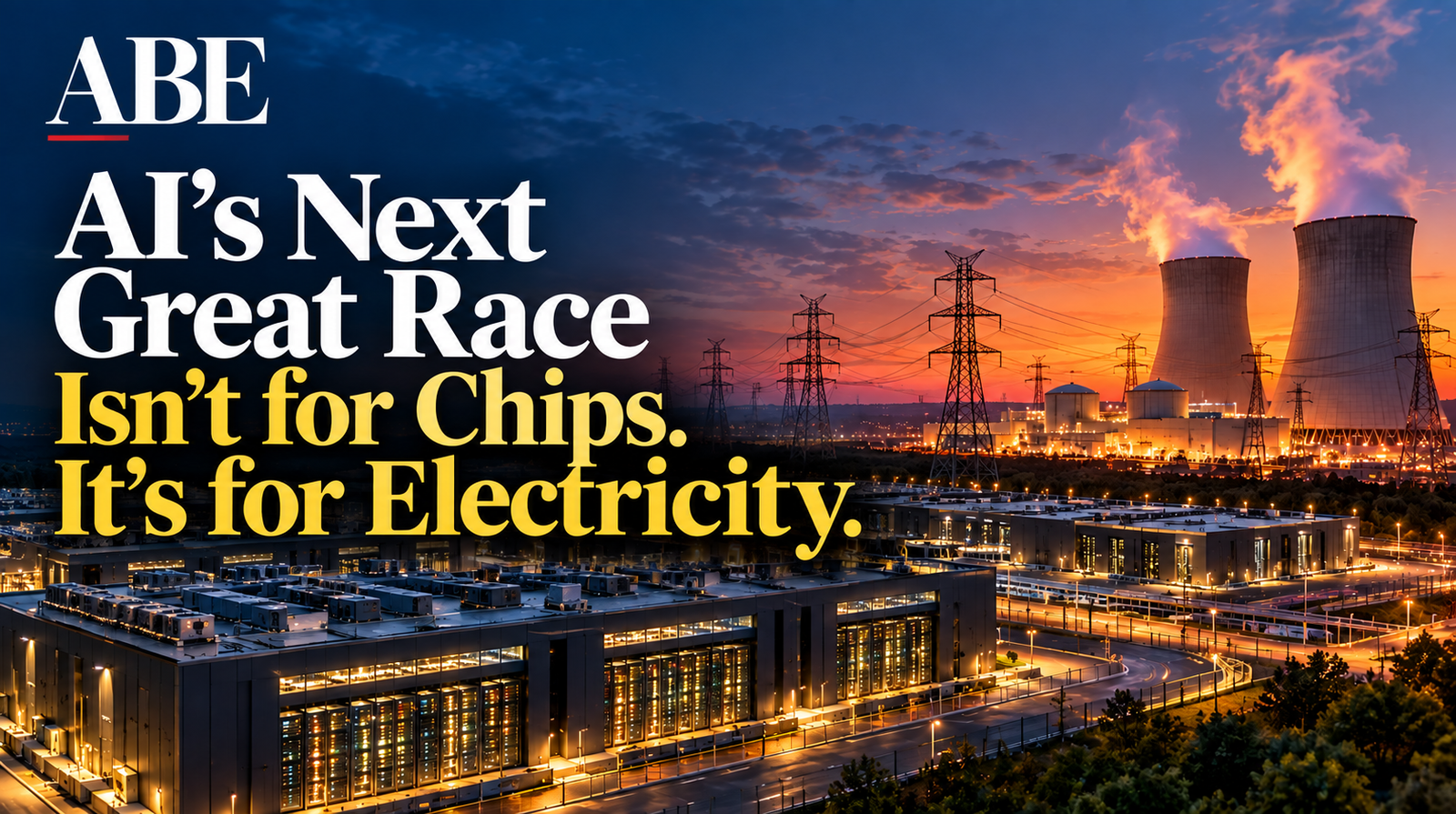
The growing electricity requirements associated with artificial intelligence add another dimension to this challenge. Countries seeking to attract investment in advanced computing infrastructure must ensure that their power systems can support additional demand without undermining affordability or reliability for existing industries and households. In this environment, access to dependable and competitively priced energy may become an increasingly important factor determining where the next generation of technological investment takes place.
THE DEBT BURDEN BEHIND THE GROWTH AMBITIONS
While technology companies are preparing for future expansion, governments are confronting financial obligations accumulated over years of borrowing. Public debt has increased substantially across many economies, reflecting spending during economic crises, pandemic-related support measures, infrastructure commitments and persistent budget deficits.
The IMF has warned that global public debt could exceed the value of annual global economic output before the end of the decade. Such projections do not mean that every government faces an immediate financial crisis, but they highlight the growing importance of debt sustainability, particularly when borrowing costs remain elevated.
Higher interest payments can gradually reduce the resources available for other priorities. Governments must balance debt servicing against demands for education, healthcare, infrastructure and economic development. For countries seeking to participate in the next technological expansion, these competing demands are especially difficult. Building modern electricity systems, strengthening digital infrastructure and developing a skilled workforce require sustained investment, yet the capacity to finance those improvements may be narrowing.
Financial markets also play an important role in this process. When investors demand higher yields on government bonds, borrowing can become more expensive throughout the economy. Businesses may reconsider expansion plans, households may face higher lending costs, and investors may become less willing to pay elevated valuations for companies whose profits are expected far into the future.
This creates a fundamental challenge for the artificial intelligence boom. The technology may eventually support faster economic growth, but the investment required to develop it must be justified in a financial environment where capital is no longer inexpensive.

WHO WILL BENEFIT FROM THE NEXT ECONOMIC EXPANSION?
The promise of artificial intelligence is frequently discussed in global terms, but the benefits of technological progress are rarely distributed equally. Countries possessing advanced infrastructure, reliable electricity, substantial investment capital and highly skilled workers are better positioned to attract the industries emerging around AI.
Others risk remaining primarily consumers of technologies developed elsewhere, even as they experience the broader economic consequences of higher energy demand and shifting international investment flows. This possibility raises important questions for developing economies seeking to move beyond dependence on raw materials, low-value manufacturing or imported technology.
The challenge is not simply whether artificial intelligence will become widely available. It is whether countries can build the economic foundations necessary to use it productively. Education, infrastructure, institutional capacity and access to affordable financing will influence how effectively businesses and workers can adapt.
For policymakers, this means that participation in the AI economy cannot be reduced to announcing technological ambitions. Sustainable gains will depend on investment in the systems that allow innovation to translate into employment, productivity and higher living standards.
The world may therefore be approaching a period in which technological progress accelerates while differences in economic capacity become more visible. Whether that divide narrows or widens will depend partly on decisions being made today.
THE NEXT TEST FOR GLOBAL MARKETS
Financial markets are increasingly required to assess two competing possibilities. One is that artificial intelligence will deliver productivity improvements significant enough to support corporate earnings, encourage investment and strengthen economic growth. The other is that expensive energy, elevated borrowing costs and fiscal pressures will limit the pace at which those benefits can be realised.
Both possibilities can exist simultaneously. Technological innovation does not guarantee immediate economic stability, just as economic uncertainty does not necessarily prevent transformative investment. The central question is whether businesses and governments can manage the transition without allowing financial expectations to move too far ahead of measurable results.
Investors will therefore be watching more than announcements of new data centres or ambitious spending commitments. The ability of companies to generate sustainable returns, the direction of energy prices, the cost of financing and the strength of consumer demand will all influence the economic outlook.
For governments, the task is equally demanding. Maintaining price stability, managing debt and encouraging productive investment are interconnected objectives. Neglecting one can make the others more difficult to achieve.
The world is not choosing between artificial intelligence and economic stability. It is attempting to pursue both under increasingly demanding conditions.
🔴 THE ABE TAKE
The most important question surrounding the artificial intelligence boom is no longer whether the technology has the potential to transform the global economy. That possibility is increasingly evident. The more consequential question is whether the world is building the economic conditions necessary to turn that potential into lasting prosperity.
There is a danger in confusing the scale of investment with the scale of achievement. Billions spent on computing infrastructure may demonstrate confidence in the future, but expenditure alone is not proof of productivity, profitability or economic progress. Those outcomes must eventually be measured in the performance of businesses, the creation of sustainable opportunities and improvements in living standards.
The same principle applies to government economic policy. Countries cannot rely on the promise of future technological growth to compensate indefinitely for weak public finances, unreliable energy systems or insufficient investment in education and infrastructure. Innovation can strengthen an economy, but it cannot permanently substitute for the foundations that allow an economy to function effectively.
ABE believes the next phase of global economic competition will be shaped not simply by who invests the most in artificial intelligence, but by who can integrate technological ambition with financial discipline, energy security and broad-based economic development. The countries and businesses that succeed will be those capable of translating technological possibility into measurable value.
The world is preparing for an extraordinary future. But the strength of that future will depend on how responsibly it manages the economic realities of the present.
ABE — Understand More. Think Bigger.