





By ABE Magazine | October 31, 2026
The global luxury industry is entering a more demanding period as major fashion houses confront weaker consumer spending, economic uncertainty and changing expectations among wealthy shoppers. After years of expansion, some of the world’s most recognizable luxury brands are discovering that reputation and exclusivity no longer guarantee consistent sales growth.
Recent financial results from LVMH, Kering and Hermès reveal a market moving at different speeds. Some brands continue to attract strong demand, particularly from wealthy customers. Others are struggling to maintain momentum as shoppers reconsider expensive purchases.
China’s economic slowdown has added pressure to the industry. Meanwhile, demand in the United States and Europe has provided support for several companies. The result is an increasingly uneven market where brand identity, product quality and customer loyalty are becoming more important.
The central question facing luxury executives is whether the industry can restore sustainable growth without weakening the exclusivity that makes its products desirable.
LVMH’s Latest Results Reveal a Divided Luxury Market
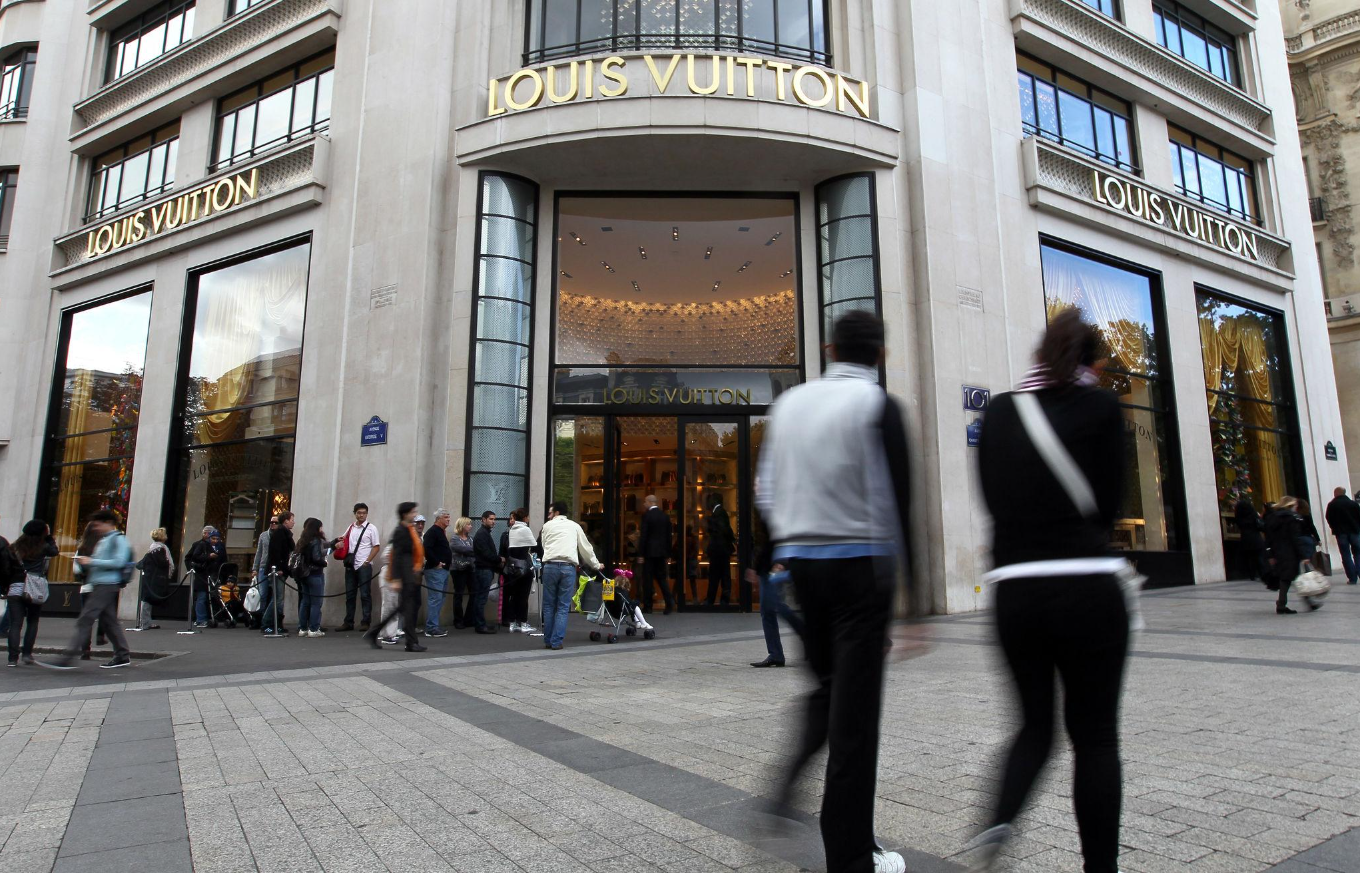
LVMH, the French group behind Louis Vuitton, Christian Dior, Tiffany & Co. and several other luxury brands, remains one of the industry’s most influential companies. Its financial performance provides an important indication of global demand for high-end products.
On October 12, LVMH reported revenue of €57.1 billion for the first nine months of 2026. Organic revenue increased by 2%, although reported revenue declined because of currency movements and other adjustments.
The group’s third-quarter performance showed a clear difference between its businesses. Fashion and leather goods recorded a 5% decline in organic revenue compared with the same quarter in 2025.
That division includes some of LVMH’s most valuable brands. Its performance matters because handbags, clothing and leather accessories have historically contributed significantly to the group’s earnings.
Other divisions performed better. Watches and jewelry achieved 6% organic growth during the quarter, while selective retailing increased by 8%. The figures demonstrate that weakness in luxury fashion does not necessarily extend to every high-end product category.
China Remains a Major Challenge for Luxury Brands
China has long been a major source of growth for the global luxury industry. Rising household wealth, expanding consumer spending and growing interest in international fashion brands helped transform the country into a crucial market.
However, weaker consumer confidence has changed the outlook. Problems in China’s property market and broader economic uncertainty have made some shoppers more cautious.
LVMH identified softer demand in China as a factor affecting its fashion and leather goods business during the third quarter. The company also reported better momentum in the United States, Europe and Japan.
These differences highlight a central challenge for international luxury companies. Their growth increasingly depends on managing several markets with different economic conditions and consumer expectations.
Brands that previously relied heavily on Chinese demand may need to strengthen their presence elsewhere. Yet expanding into other markets cannot always compensate for a prolonged slowdown in such an important economy.
Gucci’s Struggles Put Pressure on Kering
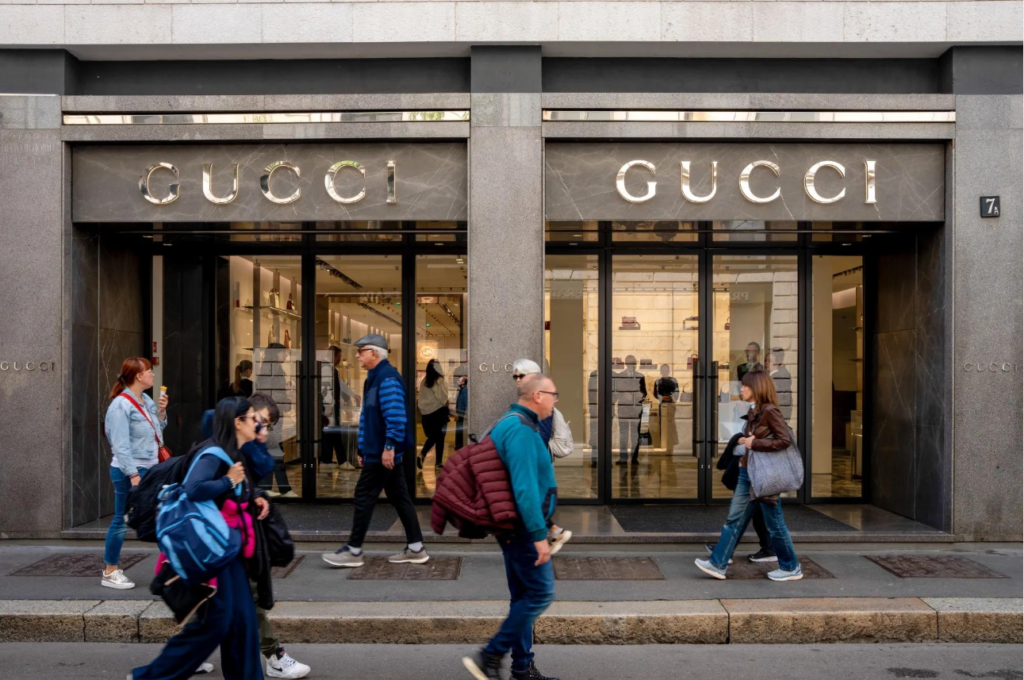
Kering, the French luxury group that owns Gucci, Saint Laurent, Bottega Veneta and Balenciaga, faces its own challenges.
On October 22, the company reported third-quarter revenue of €3.35 billion. Sales were stable on a reported basis but declined by 1% on a comparable basis.
Gucci remained a major source of weakness. The brand generated €1.29 billion in quarterly revenue, representing a 6% comparable decline from the previous year.
Sales through Gucci’s directly operated retail network fell by 9% on a comparable basis. Kering attributed part of the weakness to lower store traffic, particularly in mainland China and Japan.
Gucci’s performance is especially important because the brand has historically played a central role in Kering’s business. A sustained recovery would strengthen the group’s ability to invest in other brands and improve its overall financial performance.
Kering Is Rebuilding Its Brand Strategy
Kering has made restoring Gucci’s appeal a major priority. Its strategy includes improving product quality, refining prices and introducing new collections designed to strengthen customer interest.
The company is also working to improve store performance and manage its retail network more efficiently.
During the first nine months of 2026, Kering completed 105 net store closures. The company subsequently increased its planned number of net closures for the full year.
However, the group’s difficulties are not shared equally across its portfolio. Kering reported stronger momentum at Saint Laurent, Bottega Veneta and Brioni. Its jewelry and eyewear businesses also recorded growth.
This contrast suggests that the luxury industry is not experiencing a uniform decline. Individual brands are performing differently depending on their products, customer relationships and ability to remain desirable.
For Kering, the challenge is rebuilding Gucci while preserving the momentum of its stronger businesses.
Hermès Demonstrates the Strength of Exclusivity
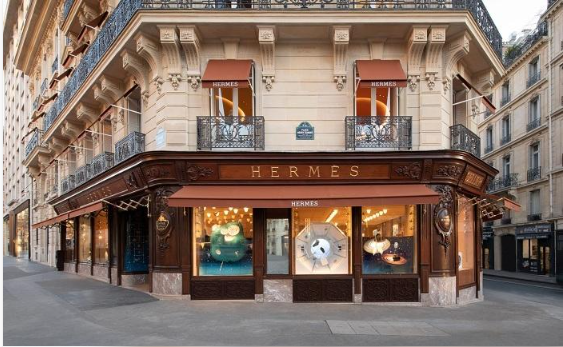
While some luxury companies are struggling, Hermès has shown greater resilience.
The French fashion house reported revenue of €12.3 billion for the first nine months of 2026. Sales increased by approximately 6% at constant exchange rates compared with the previous year.
Third-quarter revenue reached €4.1 billion, representing growth of 4.3% at constant exchange rates.
Its leather goods and saddlery division performed particularly well. Revenue in that category increased by 10.8% at constant exchange rates during the quarter.
Hermès is known for its carefully managed production, craftsmanship and selective distribution. Products such as its Birkin and Kelly handbags have helped establish a reputation built around scarcity and long-term desirability.
The company’s performance suggests that the most established luxury brands can retain customer demand even during uncertain economic periods.
However, Hermès is not completely insulated from market conditions. Its third-quarter growth slowed compared with the previous quarter, while demand remained uneven across regions and product categories.
Why Luxury Consumers Are Becoming More Selective
The difference between Hermès and some competitors reflects a broader change in consumer behaviour.
Luxury shoppers are increasingly evaluating whether expensive products justify their prices. Brand reputation remains important, but consumers also consider craftsmanship, originality and long-term value.
This is particularly relevant for customers who purchase luxury products occasionally rather than regularly.
During periods of economic uncertainty, these shoppers may delay buying expensive handbags, clothing or accessories. Wealthier customers with greater financial flexibility may continue spending, especially on highly sought-after products.
A June 2026 study by McKinsey and The Business of Fashion highlighted the importance of understanding luxury consumers in the United States and China. It examined how expectations around value, exclusivity and desirability differ between these markets.
For luxury companies, understanding those differences will be essential to maintaining customer loyalty.
The Global Luxury Market Still Has Growth Opportunities
Despite recent difficulties, the long-term outlook for luxury remains more complex than a simple industry downturn.
Research published through the Bain-Altagamma luxury market study in June projected growth of 2% to 4% in the global personal luxury goods market during 2026 under its base-case scenario.
That forecast implied a market worth approximately €365 billion to €373 billion. However, the outlook depended on economic conditions, geopolitical developments and consumer demand.
The research also identified differences between product categories and regions. Luxury experiences, including hospitality and fine dining, were expected to perform better than some traditional product categories.
This shift creates opportunities for companies capable of offering more than expensive merchandise.
Luxury Experiences Are Becoming More Important
High-end hotels, restaurants, travel services and personalized shopping experiences are increasingly important parts of the luxury economy.
For some wealthy consumers, exclusive experiences offer greater appeal than purchasing additional physical products.
Luxury brands have responded by investing in distinctive stores, hospitality partnerships and customer experiences. These initiatives can strengthen relationships with existing customers while attracting new audiences.
However, expanding into experiences also requires careful financial management. Large retail projects and hospitality investments can increase operating costs without guaranteeing higher profits.
The companies most likely to succeed will be those that balance innovation with the brand identity and financial discipline that support long-term growth.
What Comes Next for the World’s Luxury Giants?
The latest results from LVMH, Kering and Hermès reveal three different positions within the global luxury market.
LVMH benefits from a broad portfolio that includes fashion, jewelry, beauty and retail. This diversification helps reduce its dependence on any single product category.
Kering faces a more difficult restructuring challenge, particularly at Gucci. Its ability to restore the brand’s appeal will be an important factor in future performance.
Hermès continues to demonstrate the advantages of strong customer loyalty, selective distribution and a distinctive product strategy.
Yet all three companies face similar external pressures. Consumer confidence, economic growth, currency movements and geopolitical uncertainty will continue influencing luxury spending.
The industry must also consider how much further prices can rise before customers begin questioning the value of expensive products.
For executives, the next stage of growth may depend less on aggressive expansion and more on strengthening product quality, customer relationships and operational efficiency.
THE ABE TAKE
The global luxury industry is experiencing a period of adjustment rather than a complete collapse in demand.
Recent financial results demonstrate that even the most recognizable brands cannot rely indefinitely on reputation, rising prices and expansion into new markets. Consumers are becoming more selective, while economic uncertainty is exposing differences between companies.
LVMH’s diversified business provides resilience, but its fashion division faces pressure. Kering must rebuild Gucci’s appeal, while Hermès continues to benefit from a business model built around craftsmanship and controlled availability.
These developments reveal an important lesson about the economics of luxury. Exclusivity is valuable only when consumers believe that the product, experience and brand justify the premium.
The industry’s future will depend on more than attracting wealthy customers. Companies must protect their identities, maintain financial discipline and respond to changing expectations without sacrificing the qualities that made them successful.
For the world’s luxury giants, the next era of growth may be defined not by how much they sell, but by how effectively they preserve the value of what they create.
ABE MAGAZINE
Understand More. Think Bigger.