








The final week of October brought renewed uncertainty to global financial markets as concerns over artificial intelligence spending triggered a sharp technology selloff, major corporations faced growing pressure to justify investment costs, and central banks confronted difficult decisions over interest rates and economic stability.
From Wall Street to China’s technology sector, investors increasingly questioned whether the billions of dollars being committed to artificial intelligence infrastructure would generate returns quickly enough to support elevated company valuations. At the same time, corporate restructuring, semiconductor manufacturing and monetary policy developments revealed how deeply the technology boom is influencing the wider economy.
The week illustrated a significant shift in investor sentiment. Artificial intelligence remains central to the growth strategies of some of the world’s largest companies, but financial markets are becoming more demanding about profitability, cash flow and the sustainability of long-term investment.
1. Wall Street’s Technology Selloff Raises Questions About the AI Boom
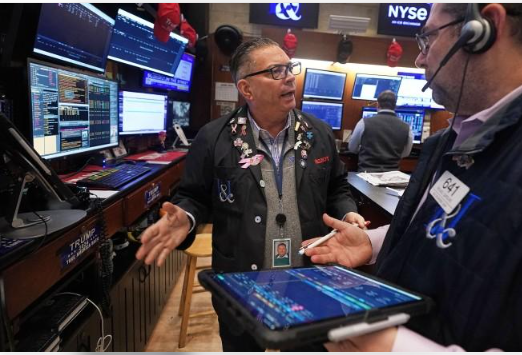
U.S. financial markets ended October under considerable pressure as disappointing corporate forecasts and concerns about artificial intelligence investment triggered a broad selloff in technology shares.
On Friday, October 30, the Nasdaq Composite declined approximately 2.9%, while the S&P 500 fell 1.8% and the Dow Jones Industrial Average lost 1.1%. The Nasdaq finished the week down approximately 2%, reflecting growing unease among investors about the enormous financial commitments required to expand AI infrastructure.
Semiconductor companies experienced particularly severe losses. Intel shares plunged nearly 29% following disappointing financial guidance, while Nvidia and Advanced Micro Devices also declined sharply.
The downturn demonstrated how closely major financial indexes have become connected to expectations surrounding artificial intelligence. Companies involved in semiconductor manufacturing, cloud computing and advanced data processing have attracted significant investment, but their valuations increasingly depend on assumptions about future demand and profitability.
The latest market reaction suggests that investors are beginning to distinguish more carefully between the technological potential of artificial intelligence and the financial returns that companies can realistically generate from it.
2. Big Tech Faces Pressure to Justify Massive AI Investments
Artificial intelligence remained one of the defining themes of the corporate earnings season, with Amazon, Alphabet, Microsoft and other technology companies facing questions about their expanding investment commitments.
Over recent years, technology companies have allocated substantial resources to data centres, advanced semiconductor chips, cloud infrastructure and software development. These investments are intended to support rapidly expanding demand for artificial intelligence applications across business operations, research and consumer services.
However, building the infrastructure required to support AI systems involves enormous upfront costs. Companies must purchase expensive computing equipment, expand electricity and cooling capacity, secure land and facilities, and maintain highly specialized technical workforces.
Amazon’s latest earnings highlighted this challenge. Despite strong business performance in important divisions, investors expressed concern about capital expenditure and cash flow as the company continued expanding its AI infrastructure.
Alphabet also faced pressure after reporting disappointing results in its advertising business and increased cash outflows linked to investment spending.
The broader concern is not necessarily that artificial intelligence lacks commercial potential. Rather, investors are questioning how quickly companies can convert that potential into sustainable revenue and profitability.
As the technology industry enters another phase of expansion, financial discipline is becoming increasingly important.
3. Federal Reserve Holds Interest Rates as Economic Pressures Persist
The Federal Reserve’s October monetary policy decision added another layer of uncertainty to the global business environment.
The U.S. central bank maintained its benchmark interest rate, reflecting the challenge of balancing economic growth against persistent inflation risks and changing financial conditions.
Interest rates remain one of the most important influences on business investment. Higher borrowing costs can make it more expensive for companies to finance expansion, purchase equipment, develop infrastructure and manage existing debt.
These pressures are particularly significant for capital-intensive industries such as artificial intelligence, semiconductor manufacturing and energy infrastructure.
For technology companies committing billions of dollars to long-term projects, even relatively small changes in financing costs can influence profitability and investment decisions.
The Federal Reserve’s position also carries implications beyond the United States. International investors closely monitor American monetary policy because changes in U.S. interest rates can influence global capital flows, currency markets and financing conditions.
For businesses and households, the continuing challenge is maintaining financial stability while navigating uncertain economic conditions.
4. China’s AI Stock Selloff Highlights the Risks of Elevated Valuations
China’s technology sector also experienced substantial market pressure during October, raising questions about the sustainability of rapid investment in artificial intelligence and semiconductor companies.
Technology-related shares had previously benefited from expectations surrounding China’s efforts to strengthen domestic computing capabilities, expand semiconductor manufacturing and compete in advanced artificial intelligence.
However, growing concerns about valuations and future earnings contributed to a sharp reversal in market sentiment.
The downturn highlighted the vulnerability of technology businesses whose share prices depend heavily on expectations of future growth rather than established profitability.
For investors, China’s experience reinforces an important lesson: technological progress does not guarantee financial success for every company participating in a rapidly expanding industry.
Geopolitical restrictions, access to advanced semiconductor equipment, competition and the cost of research and development remain important challenges.
Although China continues to pursue technological self-sufficiency, the financial performance of individual companies will depend on their ability to commercialize innovation and sustain demand.
The developments also demonstrate that uncertainty surrounding artificial intelligence investment is not confined to American financial markets.
5. Microsoft Offers Voluntary Buyouts as Technology Companies Reassess Costs

Microsoft’s decision to offer voluntary buyouts to approximately 60,000 eligible employees became another important development during the week.
The programme, announced on October 26, was designed to help the company manage costs and adjust its workforce while continuing substantial investment in artificial intelligence infrastructure.
Eligible employees in participating teams across several countries, including the United States, Canada, the United Kingdom and India, were offered the opportunity to leave the company voluntarily under the programme.
The initiative does not mean that all 60,000 employees will leave Microsoft. Nevertheless, it reflects the growing pressure facing major technology companies to balance operational expenses with ambitious investment plans.
Microsoft has continued investing heavily in AI computing infrastructure, cloud services and software integration as competition intensifies across the technology industry.
The restructuring also raises broader questions about employment and the changing nature of work.
As companies adopt automation and increasingly sophisticated software systems, they may reassess how teams are organized, which skills are required and where financial resources should be concentrated.
For employees, the transition could create new opportunities in emerging technical fields while introducing uncertainty in established roles.
6. ASML Highlights the Economic Importance of Semiconductor Manufacturing
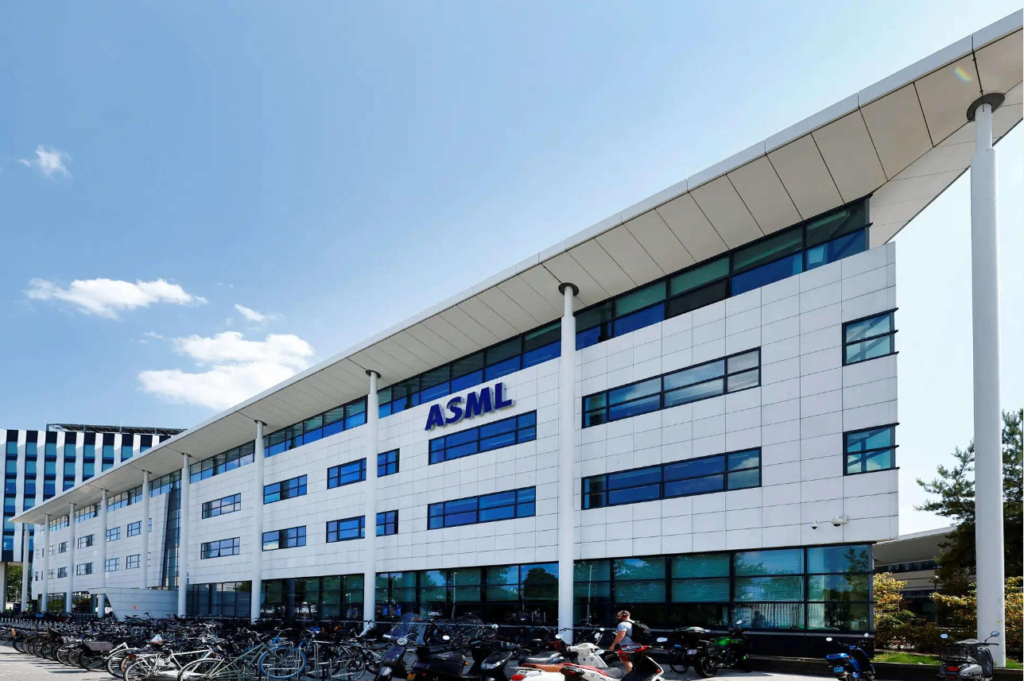
While technology shares faced volatility, developments in the Netherlands demonstrated the growing economic influence of semiconductor manufacturing.
According to an analysis by economists at ING, Dutch semiconductor equipment manufacturer ASML could directly account for as much as 1.6% of the Netherlands’ economy in 2026, compared with approximately 1.3% in 2025.
ASML occupies a critical position in the global semiconductor supply chain because its advanced manufacturing equipment supports the production of chips used in artificial intelligence, computing and other high-technology industries.
The company’s economic contribution extends beyond its own operations. Its activities support suppliers, research institutions, engineering firms and highly skilled employment throughout the Netherlands.
Growing global demand for advanced computing has strengthened the importance of semiconductor manufacturing, making companies such as ASML strategically significant to governments and technology businesses.
However, the ING analysis also warned about the risks of increasing economic dependence on a single major company.
Changes in global semiconductor demand, geopolitical restrictions and supply chain disruptions could have wider consequences for the Dutch economy.
The development illustrates both the opportunities and vulnerabilities created when a country’s economic performance becomes closely connected to a rapidly expanding technology industry.
THE ABE TAKE
The final week of October demonstrated that the global artificial intelligence boom is entering a more financially demanding phase.
For several years, investors rewarded companies that demonstrated technological ambition, expanded computing capabilities and positioned themselves as leaders in artificial intelligence. Increasingly, however, markets are asking whether these investments can deliver sustainable financial returns.
The selloff on Wall Street, Microsoft’s workforce restructuring and the growing importance of semiconductor manufacturing all reflect different aspects of the same transformation.
Artificial intelligence is reshaping corporate investment, employment, national economies and international competition. Yet technological leadership alone does not guarantee financial stability or long-term profitability.
The Federal Reserve’s decision to maintain interest rates also reinforced the importance of financial conditions in determining how quickly businesses can expand and how effectively they can manage large investment commitments.
For investors, the central challenge is distinguishing companies with sustainable competitive advantages from those whose valuations depend primarily on expectations.
For business leaders, the priority is balancing innovation with financial discipline, operational efficiency and responsible capital allocation.
The companies that successfully translate artificial intelligence investment into meaningful revenue, stronger productivity and durable profitability are likely to emerge as the long-term winners.
The next chapter of the AI economy will be defined not simply by how much companies spend, but by how effectively they turn that spending into lasting value.
ABE MAGAZINE
Understand More. Think Bigger.