






ABE MAGAZINE | CANADA & FINANCIAL MARKETS
November 9, 2026 | ABE Magazine Business Desk
Canada’s central bank is confronting an increasingly complicated economic environment as persistent inflation, higher energy prices and a weakening labour market pull monetary policy in different directions. After raising its benchmark interest rate to 2.5% in October, the Bank of Canada must now determine whether further tightening is necessary to control rising prices without placing additional pressure on businesses and households. The challenge has become more pronounced following new employment figures showing that Canada’s unemployment rate reached 6.7% in October, reinforcing concerns about the economy’s ability to sustain growth while borrowing costs remain elevated.
Why the Bank of Canada Raised Interest Rates
On October 28, the Bank of Canada increased its target overnight rate by 25 basis points, from 2.25% to 2.5%, marking its first interest rate increase since July 2023. The decision reflected growing concern that higher energy prices could spread into other parts of the economy, making inflation more persistent than previously anticipated. Although economic growth had performed better than expected during the middle of the year, policymakers remained concerned about the effects of international instability on domestic prices.
The central bank reported that consumer price inflation had remained near 3% since April, while its October projections indicated that inflation could reach approximately 3.5% by the end of 2026. Higher oil prices, transportation expenses and imported production costs have created additional financial pressure for businesses, many of which have absorbed rising expenses rather than immediately passing them on to customers. However, prolonged cost increases could eventually encourage companies to raise prices, making inflation more difficult to control.
The decision illustrates the limits of monetary policy when inflation originates partly from international supply disruptions. Higher interest rates can moderate borrowing, investment and consumer spending, but they cannot directly increase global oil production or resolve geopolitical conflicts. The Bank’s concern is that allowing these pressures to persist without a policy response could eventually influence broader pricing decisions and inflation expectations.
Canada’s Labour Market Sends a Different Economic Signal

The latest employment figures have complicated the outlook. Statistics Canada’s Labour Force Survey, released on November 6, showed that national employment was essentially unchanged in October, while the unemployment rate increased by 0.2 percentage points to 6.7%. The rise was partly associated with more people entering the labour market and searching for work, rather than a substantial increase in layoffs. Nevertheless, the figures indicate that finding employment remains difficult for many Canadians. Statistics Canada
The employment report revealed that fewer than one in five unemployed Canadians in September had found work by October, considerably below the comparable pre-pandemic average. Nearly one-quarter of unemployed people had been searching for work for at least 27 weeks, highlighting the persistence of unemployment even as the broader economy continued to expand. Young Canadians were particularly affected, with unemployment among those aged 15 to 24 rising to 13.7%.
Regional differences also demonstrate the uneven nature of Canada’s economic performance. Ontario and Alberta both recorded unemployment rates of 7.3%, while Quebec’s rate declined to 5.7%. Employment in wholesale and retail trade fell by approximately 29,000 positions, contrasting with gains in construction and educational services. These developments suggest that businesses are responding differently to changing demand, operating costs and investment conditions.
The Growing Pressure on Businesses and Household Finances

Interest rates influence the Canadian economy through several channels, including commercial lending, mortgages, consumer credit and corporate investment. When borrowing becomes more expensive, businesses may reassess expansion plans, delay equipment purchases or reduce reliance on debt financing. Smaller companies can be particularly sensitive to these changes because they often have fewer financing alternatives and less flexibility to absorb rising expenses.
For households, the consequences depend on individual borrowing arrangements. Canadians with variable-rate loans or mortgages may experience more immediate changes in financing costs, while those with fixed-rate mortgages generally face the effects when their loans come up for renewal. Higher borrowing expenses can reduce disposable income and weaken consumer demand, potentially affecting businesses in retail, hospitality and other consumer-facing industries.
The broader financial environment is also becoming more difficult to navigate. Statistics Canada reported that 29.7% of Canadians aged 15 and older lived in households experiencing difficulty meeting financial needs in October, compared with 27.7% a year earlier. Although these challenges cannot be attributed solely to interest rates, they demonstrate how inflation, employment uncertainty and household expenses can combine to weaken financial resilience. Statistics Canada
Global Energy Prices and Trade Uncertainty Complicate the Outlook
Canada’s monetary policy challenges are closely connected to developments beyond its borders. The continuing conflict in the Middle East has contributed to elevated energy prices, increasing costs for transportation, manufacturing and household consumption. Meanwhile, trade tensions with the United States have created uncertainty for Canadian exporters and businesses dependent on cross-border supply chains.
In its October Monetary Policy Report, the Bank of Canada projected economic growth of 1% in 2026, followed by 2% in both 2027 and 2028. The central bank also expected inflation to average approximately 3% in 2027 before returning to its 2% target around the middle of 2028. These forecasts indicate that policymakers anticipate a gradual adjustment rather than an immediate return to more stable economic conditions.
Trade disruptions introduce another complication because they can simultaneously weaken economic activity and increase prices. Tariffs may reduce demand for Canadian exports while raising costs for imported materials and finished products. This combination leaves policymakers with limited room for manoeuvre: lowering interest rates could support economic activity but risk reinforcing inflation, while further increases could restrain prices at the expense of investment and employment.
The December Interest Rate Decision Becomes a Critical Test
The Bank of Canada’s next scheduled interest rate announcement is December 9, 2026. By then, policymakers will have additional economic information to assess whether inflationary pressures are spreading and whether labour market conditions are deteriorating. The central bank has indicated that further rate increases remain possible, although officials have emphasized the need to proceed cautiously given the uncertainty surrounding the economic outlook.
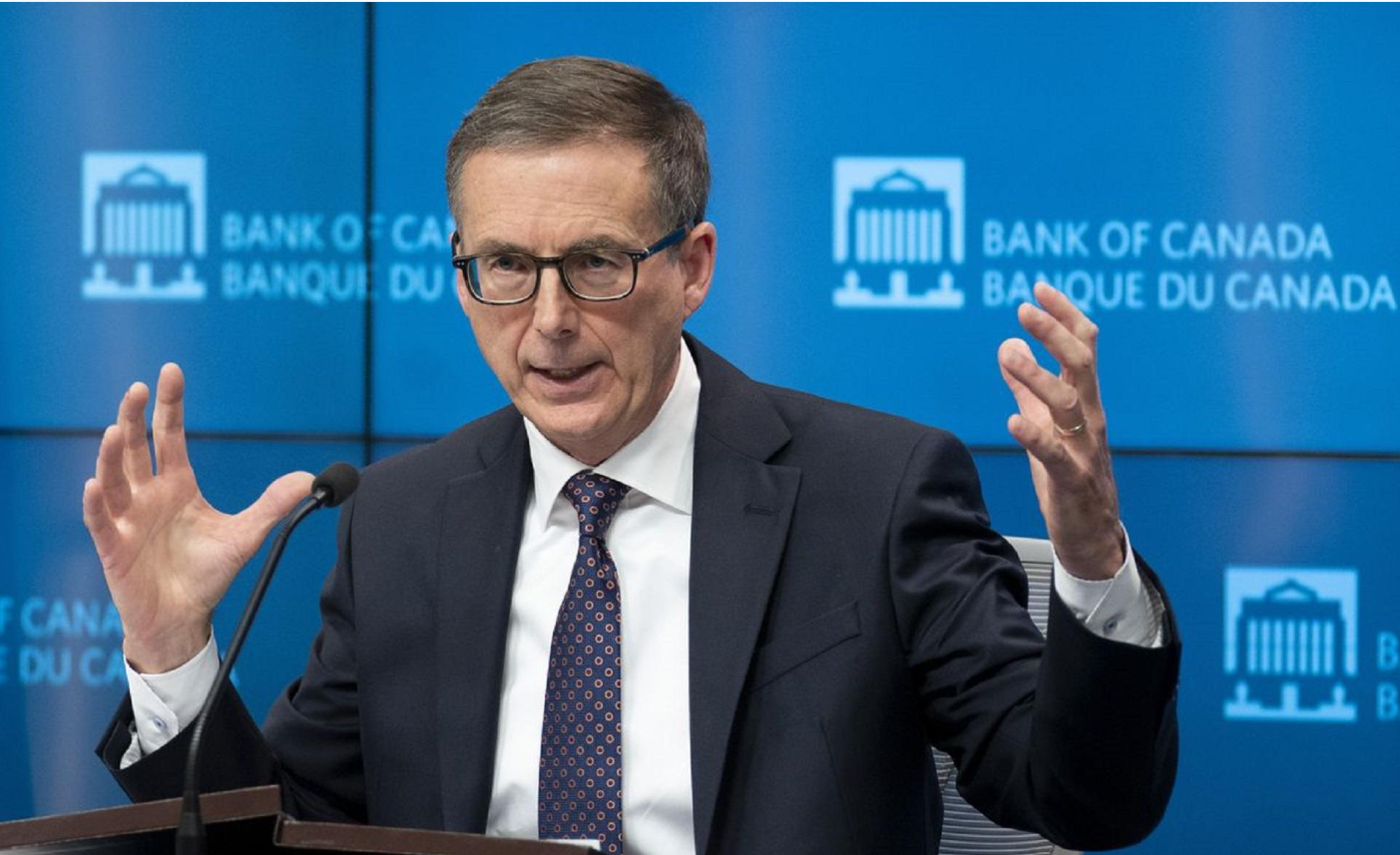
Governor Tiff Macklem explained following the October decision that policymakers had considered both maintaining the existing rate and increasing it. The argument for holding was that inflation pressures remained concentrated in energy-related categories, while the case for tightening reflected the risk that elevated costs would become more widespread. This distinction will remain central to the Bank’s assessment of whether additional intervention is justified.
For financial markets, the decision will influence expectations about borrowing costs, bond yields and the Canadian dollar. Businesses and investors will also be examining whether the central bank can maintain confidence in price stability without significantly weakening domestic demand. The challenge is not simply choosing an appropriate interest rate, but determining how much economic restraint is necessary when inflation and employment are moving in conflicting directions.
THE ABE TAKE: Canada’s Economic Stability Requires More Than Interest Rate Adjustments
The Bank of Canada’s current dilemma reveals a broader weakness in relying on monetary policy to manage economic challenges that extend beyond domestic demand. Interest rates remain an essential instrument for controlling inflation, but their effectiveness becomes more complicated when rising prices originate from global energy markets, trade disruptions and supply-chain pressures. A central bank can influence spending and borrowing, yet it cannot directly resolve the international conditions responsible for many of these costs.
The growing divergence between inflation and employment also raises questions about the distribution of economic pressure. Businesses with strong financial positions may be able to withstand prolonged uncertainty, while smaller companies and heavily indebted households face more difficult adjustments. If borrowing costs remain elevated while hiring weakens, the consequences could extend beyond slower consumption to reduced business investment and fewer opportunities for younger workers.
Canada’s longer-term economic resilience will therefore depend on more than the Bank of Canada’s next decision. Improvements in productivity, infrastructure, domestic competition and international trade diversification can help businesses manage costs and strengthen economic capacity. These measures cannot replace monetary policy, but they can reduce the extent to which future economic stability depends on adjustments to interest rates alone.
The central question heading into December is whether inflation can be contained without undermining the recovery in employment and investment. A cautious policy approach may be justified by the uncertainty surrounding both risks, but caution must be supported by a clear assessment of changing economic conditions. For Canada, sustainable growth will ultimately require a balance between price stability, productive investment and the financial capacity of businesses and households to participate in the economy.
ABE MAGAZINE
Understand More. Think Bigger.