









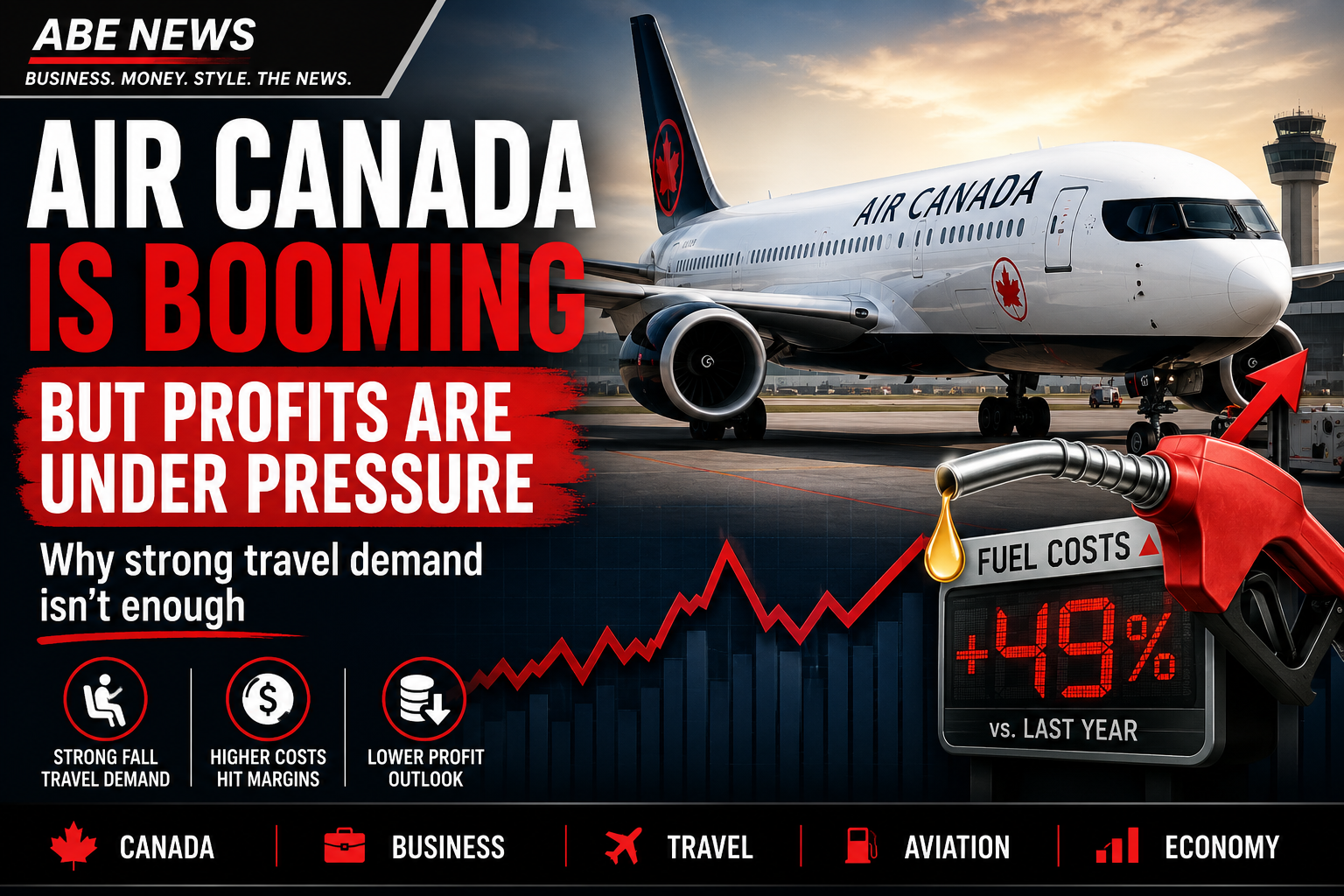
Air Canada is preparing for what could be one of its strongest fall travel seasons in years.
Corporate travellers are returning. Premium travel remains strong. Passengers are still willing to fly.
Normally, that sounds like the perfect environment for an airline.
But there is a problem.
Even with strong demand, Air Canada is expecting less profit than it previously hoped.
The reason comes down to one of the airline industry’s biggest expenses: fuel.
And Air Canada’s situation shows something important about business.
More customers don’t always mean more profit.
Air Canada Is Expecting a Strong Fall
Air Canada says demand from corporate travellers is helping create expectations for a particularly strong fall travel season.
That’s important.
Business travel can be especially valuable to airlines because corporate passengers often purchase higher-priced tickets, travel more frequently and use premium cabins.
Air Canada has also benefited from strength in premium travel, higher fares and efforts to control other expenses.
The demand side of the business, therefore, isn’t the biggest problem.
The cost side is.
The Fuel Problem
Airlines require enormous amounts of jet fuel to keep their networks operating.
That makes changes in energy prices extremely important.
Air Canada’s fuel expenses jumped 49% compared with the same period a year earlier during the second quarter.
The airline now expects jet fuel to average around C$1.38 per litre in the third quarter and C$1.29 in the fourth quarter.
Earlier assumptions had been much lower.
Geopolitical instability and disruptions affecting global oil supplies and shipping routes have contributed to the pressure.
For Air Canada, that means strong passenger demand is colliding with a much more expensive operating environment.
Why Strong Demand Doesn’t Guarantee Strong Profits
This is where the story becomes bigger than Air Canada.
Revenue and profit are not the same thing.
Imagine an airline sells more tickets and brings in more money.
That’s good.
But at the same time:
Fuel becomes more expensive.
Aircraft maintenance costs rise.
Employee costs increase.
Airport and operating expenses continue.
If those costs rise quickly enough, they can consume much of the additional revenue.
That’s why a company can have plenty of customers and still face pressure on its profits.
Air Canada Lowered Its Profit Expectations
Air Canada has restored its annual adjusted core profit forecast after previously suspending its outlook.
But the new expectations are lower.
The airline now expects adjusted core profit of approximately C$2.9 billion to C$3.2 billion for 2026.
Before its earlier forecast was suspended, Air Canada had expected approximately C$3.35 billion to C$3.75 billion.
Its expected free cash flow has also been reduced.
That doesn’t mean Air Canada expects a bad year.
Instead, it shows how significantly higher costs can change the financial outlook of even a business experiencing healthy customer demand.
Why Corporate Travel Matters
One encouraging part of the story is the continued strength of corporate travel.
Business travel suffered heavily during the pandemic as companies adopted video meetings and remote work.
For a time, there were serious questions about whether corporate travel would ever completely recover.
But businesses still need employees to meet customers, attend conferences, negotiate deals and manage international operations.
Strong corporate demand heading into the fall suggests business travel continues to play an important role in the aviation economy.
For airlines with large business networks, that can be particularly valuable.
What This Could Mean for Travellers
Passengers should pay attention to the cost side of this story too.
When fuel becomes more expensive, airlines have several ways to respond.
They can reduce expenses elsewhere.
They can adjust flight capacity.
They can change routes.
And when demand is strong enough, they can attempt to charge higher fares.
That doesn’t mean every increase in fuel prices automatically produces more expensive tickets.
But persistent cost pressure makes cheap airfare more difficult for airlines to offer while protecting their margins.
There’s Another Big Air Canada Story
Air Canada’s financial strategy extends beyond selling airline tickets.
The company has also announced a major investment involving Aeroplan, its loyalty business.
An investor group is taking a 25% non-controlling interest in Aeroplan through a C$2.5 billion investment, valuing the loyalty program at approximately C$10 billion.
That is significant.
Frequent-flyer programs have evolved into valuable businesses of their own.
Members earn points through flights, credit cards, shopping and partnerships, creating an ecosystem that extends far beyond the aircraft.
For Air Canada, unlocking some of Aeroplan’s value provides additional capital that can help strengthen its finances.
The Bigger Picture
Air Canada’s situation captures one of the most difficult realities of running an airline.
The company can control many things.
It can improve service.
It can sell premium seats.
It can manage routes.
It can build loyalty programs.
It can control some expenses.
But it cannot control global energy markets.
A geopolitical event thousands of kilometres away can increase fuel prices and suddenly change the economics of flying an aircraft between Toronto and Vancouver.
That’s why airlines are especially exposed to events happening far beyond the airports they serve.
What’s Next?
The fall travel season will provide an important test.
Air Canada believes demand will remain strong, particularly among corporate travellers.
Now investors will be watching whether that demand is strong enough to offset higher operating costs.
Fuel prices will remain one of the biggest variables.
If energy costs ease, Air Canada’s margins could receive some relief.
If they remain elevated, the airline may continue facing the unusual situation it finds itself in today:
plenty of passengers, but expensive planes to fly.
THE ABE NEWS TAKE
Air Canada’s story is a useful reminder that business success isn’t measured only by how many customers walk through the door.
What matters is what remains after the bills are paid.
An airline can fill its planes and still face financial pressure if the cost of operating those planes rises faster than revenue.
And that lesson extends far beyond aviation.
Restaurants can be packed while food costs rise.
Retailers can sell more products while shipping expenses increase.
Factories can receive more orders while energy and material costs climb.
Growth matters.
But profitable growth matters more.
For Air Canada, strong travel demand is certainly good news.
The bigger question is how much of that demand the airline can turn into profit.
ABE NEWS
Business. Money. Style. The News.
Understand More. Think Bigger.