








ABE Magazine | Business & Retail | October 10, 2026
The Canadian fashion retailer is expanding rapidly across the United States, delivering stronger profits and attracting investors. But behind its remarkable quarterly results lies a more complicated story about brand loyalty, digital growth and the economics of expansion.
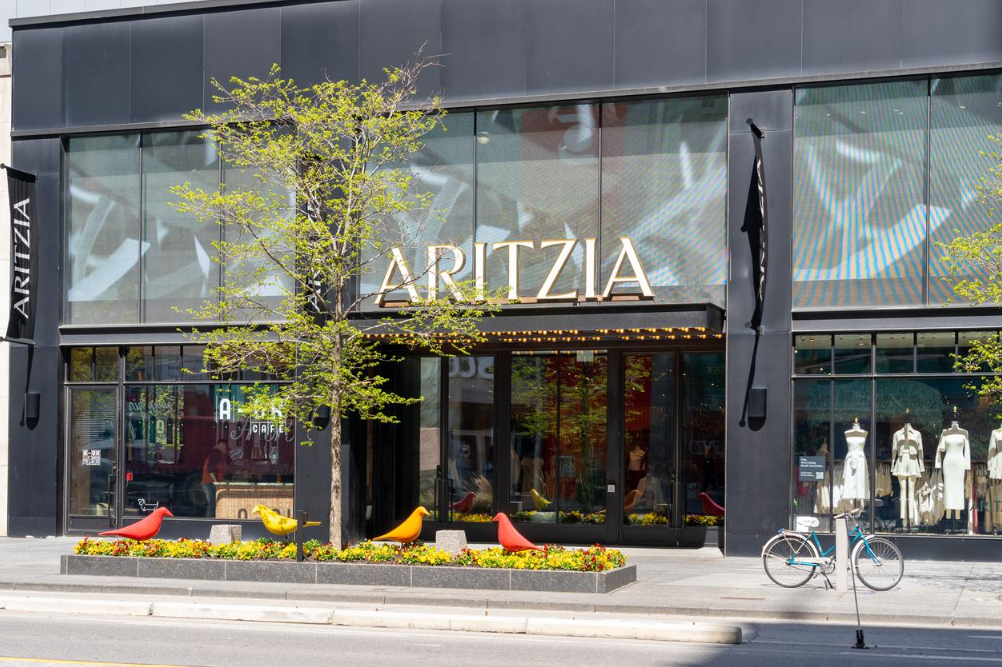
VANCOUVER, CANADA — At a time when many businesses are confronting uncertain consumer spending, rising operating costs and an increasingly competitive retail environment, Canadian fashion company Aritzia is moving in a different direction.
The Vancouver-based retailer reported a 44.1% increase in quarterly revenue, reaching approximately C$1.17 billion, while comparable sales rose 34.5%.
Investors responded enthusiastically. Aritzia shares surged on the Toronto Stock Exchange on Friday, October 9, following the company’s earnings announcement the previous evening.
The results raise an important question: How is a Canadian fashion retailer achieving such rapid growth, and can that momentum last?
A Quarter That Exceeded Expectations
Aritzia’s second-quarter fiscal 2027 results, covering the period ended August 30, 2026, revealed significant growth across its operations.
Revenue climbed from C$812.1 million a year earlier to C$1.17 billion.
Net income increased to C$201.7 million, compared with C$66.3 million in the same quarter last year. Adjusted earnings per diluted share reached C$1.31, exceeding analysts’ expectations of approximately C$1.05.
The company also reported adjusted earnings before interest, taxes, depreciation and amortization (EBITDA) of C$246.2 million, almost double the previous year’s figure.
These results suggest that Aritzia is doing more than opening additional stores. It is generating stronger sales from its existing business while improving operating profitability.
That combination is particularly important for retailers. Opening new stores can increase revenue, but sustained growth becomes more convincing when established locations are also attracting additional spending.
Aritzia’s 34.5% comparable-sales increase indicates substantial growth beyond the contribution of new locations.
The United States Is Becoming Aritzia’s Growth Engine
One of the most significant developments is the company’s growing dependence on the American market.
Aritzia generated C$779.4 million in U.S. revenue during the quarter, representing a 60.3% increase from the previous year.
The United States now accounts for approximately 66.6% of its total revenue.
By comparison, Canadian revenue increased 19.8% to C$390.4 million.
For a company founded in Vancouver, this represents an important transformation.
Aritzia is no longer simply a Canadian fashion retailer with an international presence. Its growth strategy increasingly depends on winning customers in the much larger American market.
That expansion creates opportunities, but it also changes the risks facing the company.
The United States offers a larger customer base and significant potential for new stores. However, it also brings intense competition, expensive retail locations, changing consumer preferences and exposure to U.S. trade policy.
Aritzia’s challenge will be to preserve its brand identity while expanding its operations at scale.
Digital Sales Are Becoming Just as Important as Stores
Physical retail remains central to Aritzia’s business, but its digital operations are growing even faster.
Digital revenue increased 67.7% to C$402.9 million, representing approximately 34.4% of quarterly sales.
Meanwhile, revenue from physical retail increased 34.1% to C$766.9 million.
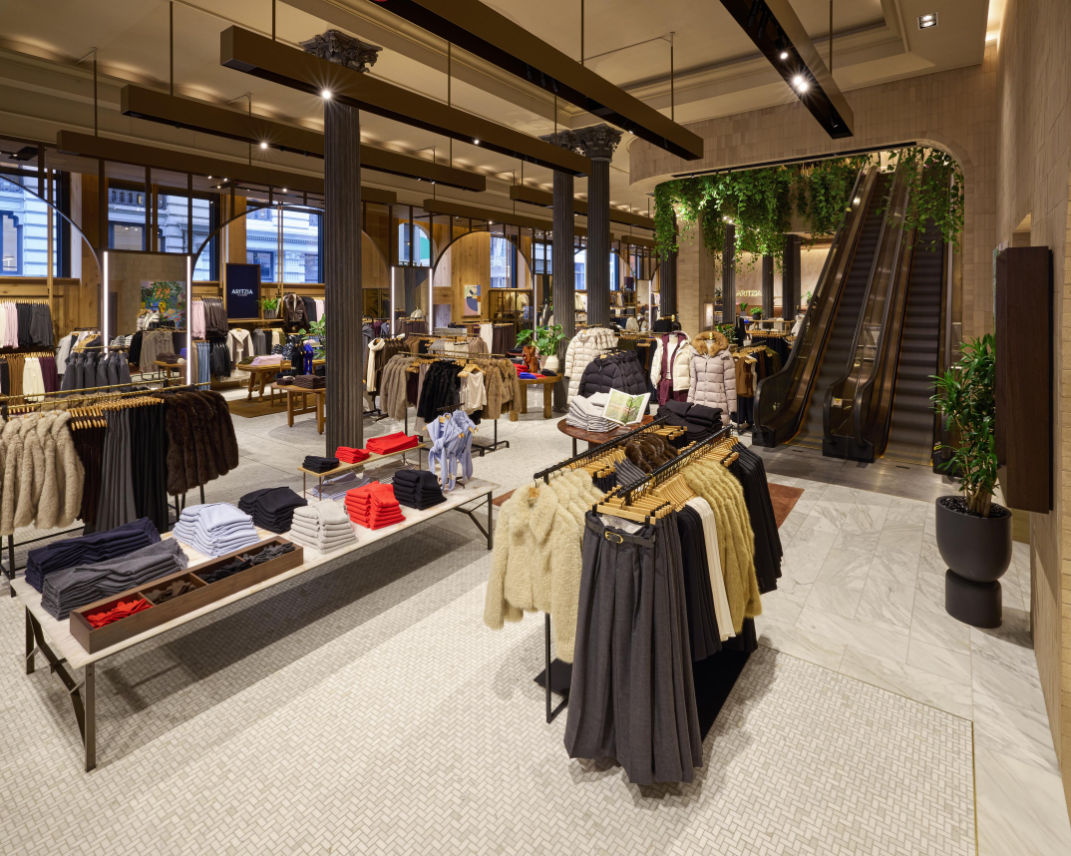
The company’s strategy combines boutiques, online shopping, mobile technology and marketing to create multiple ways for customers to interact with its brands.
Aritzia has also invested in a mobile application and expanded its digital marketing activities.
This matters because modern retail competition is no longer simply about where customers buy products.
It is about how frequently customers engage with a brand, how easily they can discover new products and whether the shopping experience encourages them to return.
Physical stores can introduce consumers to the brand, while digital channels make repeat purchases more convenient.
The relationship works in both directions.
For Aritzia, that combination appears to be contributing to stronger customer engagement and sales growth.
The Profit Numbers Deserve a Closer Look
Despite the impressive earnings, one detail deserves particular attention.
Aritzia’s reported gross profit included approximately C$97.4 million in tariff refunds.
These refunds contributed to the company’s reported gross profit margin of 57.1%.
Excluding the benefit of those refunds, its adjusted gross profit margin was 48.7%, compared with 43.8% a year earlier.
This distinction matters.
The reported figure reflects a significant financial benefit that should not automatically be treated as recurring operating performance.
However, the adjusted figure still shows meaningful improvement.
In other words, Aritzia’s profitability did not improve solely because of the refunds. The company also benefited from operational changes, including improved initial merchandise margins, better management of markdowns and greater efficiency as revenue expanded.
For investors, understanding the difference between temporary financial benefits and sustainable business improvements is essential.
A company can report extraordinary earnings in one quarter without necessarily being able to repeat every component of those earnings.
The more important question is whether its underlying operations are becoming stronger.
Why Investors Reacted So Strongly
Aritzia’s shares rallied sharply on October 9 after the earnings release.
The positive reaction reflected more than the company’s latest quarterly performance.
Management also raised its revenue outlook for fiscal 2027.
Aritzia now expects full-year revenue between C$4.78 billion and C$4.88 billion, compared with its previous forecast of C$4.55 billion to C$4.75 billion.
That represents expected annual growth of approximately 29% to 32%.
For investors, an improved forecast can be particularly influential because stock prices reflect expectations about future performance, not merely past results.
A company that exceeds forecasts and raises its outlook gives investors new information about its growth potential.
But stronger expectations can create their own pressure.
As a company’s valuation rises, investors may become less forgiving of slower growth, weaker margins or disappointing earnings.
Aritzia’s next challenge is therefore not simply to maintain a successful business. It is to deliver results strong enough to justify the confidence now being placed in its future.
Can Aritzia Maintain Its Momentum?
Aritzia’s performance demonstrates that consumer demand is not uniform across the retail industry.
Even when households face economic uncertainty, some brands can outperform competitors by offering products customers value and experiences that encourage loyalty.
However, rapid expansion introduces complications.
New stores require investment, staffing and inventory. Digital operations require technology and logistics infrastructure. Marketing costs can rise as companies compete for attention.
The company’s American expansion also increases its exposure to a market where consumer preferences can change quickly.
Fashion retailers face another challenge: products that are popular today may not remain equally desirable tomorrow.
Maintaining growth therefore requires more than increasing the number of boutiques.
Aritzia must continue to understand its customers, manage inventory carefully, control expenses and protect the appeal of its products.
Its upcoming Investor Day on October 27 will provide another opportunity for management to explain how it intends to sustain that growth.
What Other Canadian Businesses Can Learn
Aritzia’s development offers a broader lesson about Canadian entrepreneurship and business expansion.
A company does not necessarily need to abandon its origins to become internationally competitive.
But successful expansion requires more than entering a larger market.
It demands a business model capable of attracting customers, operating efficiently and adapting to new competitive conditions.
Aritzia’s growth also highlights the importance of connecting physical operations with digital technology.
For businesses across retail and other consumer industries, the distinction between online and offline commerce is becoming less meaningful.
Customers increasingly expect the same brand to serve them across multiple channels.
The businesses that coordinate those experiences effectively may be better positioned to build lasting relationships with consumers.
THE ABE TAKE
Aritzia’s remarkable quarter tells two stories.
The first is about growth.
A Canadian fashion company has expanded its reach, strengthened its digital operations and established the United States as its largest market.
The second is about financial discipline.
Its reported earnings benefited from tariff refunds, making it important to distinguish temporary gains from the improvements generated by the underlying business.
Both stories matter.
Strong revenue growth can attract attention, but sustainable profitability is what ultimately determines whether expansion creates long-term value.
Aritzia’s success should not be measured only by how much its shares rose after one earnings announcement.
It should be measured by whether the company can continue attracting customers, expanding profitably and preserving its competitive position as expectations increase.
The real achievement is not growing quickly. It is building a business capable of remaining successful after the excitement surrounding its growth begins to fade.
ABE Magazine — Understand More. Think Bigger.
Sources and further reading
- Aritzia — Official Q2 Fiscal 2027 Financial Results (October 8, 2026), Aritzia Investor Relations.
- The Wall Street Journal — Aritzia Raises Sales Outlook (October 2026).
- Reuters — Canadian stocks and Aritzia’s October 9 market reaction.
- The Maple Markets — Aritzia tariff refunds and margins (October 2026).