








ABE MAGAZINE | BUSINESS & ECONOMY | OCTOBER 10, 2026
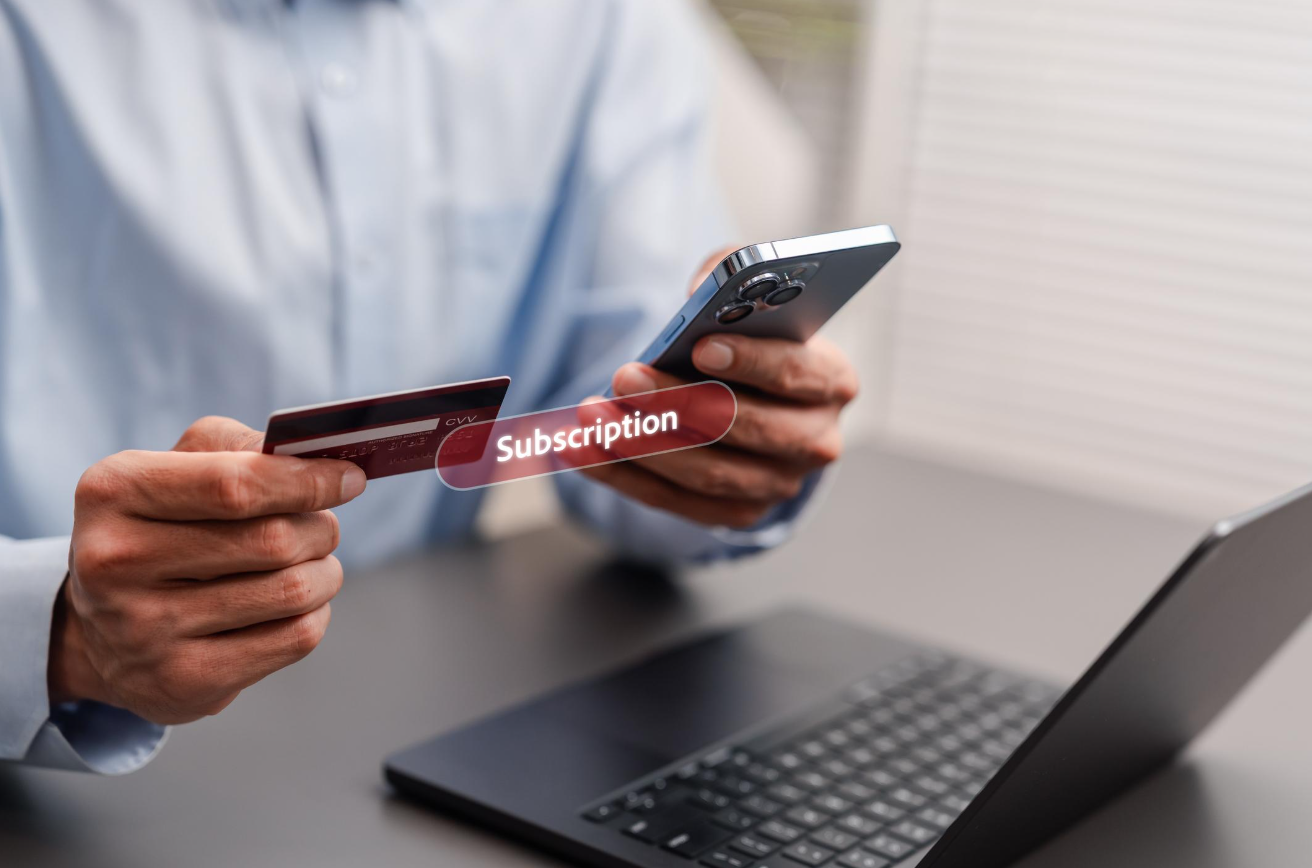
From entertainment and software to cars, groceries and everyday services, subscriptions have transformed how businesses earn money and how consumers spend it. But as ownership gives way to recurring payments, are we gaining convenience—or quietly surrendering financial control?
The Price of a Convenient Life
There was a time when buying something usually meant owning it. A customer purchased a music album, brought it home and listened to it for as long as they wished. A computer program came with a licence that might remain usable for years. A newspaper arrived at the doorstep, and a gym membership was one of the relatively few expenses paid every month.
Today, the relationship between consumers and businesses looks increasingly different. Music is streamed. Software is rented. Films are accessed through monthly memberships. Cloud storage expands through paid plans. Even features in some vehicles can be activated through recurring payments.
The transaction no longer necessarily ends when the customer receives the product. Instead, the relationship continues—and so does the bill.
For businesses, subscriptions offer an attractive proposition: predictable revenue, ongoing customer relationships and opportunities to expand services over time. For consumers, they promise convenience, lower initial costs and access to products that might otherwise require substantial upfront spending.
But beneath these benefits lies an important economic change. We are moving from an economy in which people frequently paid to own products toward one in which they increasingly pay to maintain access.
That shift is changing how companies grow, how households budget and how society understands ownership itself.
How the Subscription Became a Business Strategy
Subscriptions are not a modern invention. Newspapers, magazines, insurance companies and membership organizations have relied on recurring payments for generations.
What changed was the arrival of digital technology. Internet connectivity allowed businesses to deliver products continuously rather than through individual physical purchases. Automated payments made recurring billing easier. Cloud computing allowed software companies to host applications remotely and update them without requiring customers to purchase new versions.
The result was a business model that could be applied to an extraordinary range of industries. One of the clearest examples is Adobe. The company moved its major creative applications toward Creative Cloud subscriptions, replacing the traditional model in which customers purchased expensive software licences and periodically bought upgrades.
For Adobe, subscriptions created a more continuous revenue relationship. For customers, they lowered the initial cost of accessing professional software and provided regular updates. Yet the change also meant that continued access to many tools depended on continued payment.
Similar transformations occurred throughout the technology industry. Microsoft expanded its subscription offerings through Microsoft 365. Streaming companies replaced individual media purchases with access to digital libraries. Software businesses increasingly offered their products as services delivered over the internet.
The subscription was no longer merely a payment option. It became a central part of corporate strategy.
Why Investors Love Recurring Revenue
Imagine two businesses. The first sells a product for $120. The customer pays once and may never return. The second charges $10 per month. If the customer remains subscribed for a year, the company collects the same $120.
The total revenue is identical over that period, but the businesses operate differently. The first must repeatedly find customers willing to make new purchases. The second can potentially generate future revenue from existing customers without requiring another purchasing decision each month.
This makes recurring revenue attractive to businesses and investors. A company with a stable subscription base can estimate future income more easily, plan investments and evaluate how much it can afford to spend acquiring customers.
But the predictability is conditional. Customers can cancel. Competitors can offer better prices. Economic pressure can force households to reduce discretionary spending.
Subscription companies therefore pay close attention to several measurements:
- Monthly recurring revenue (MRR): Revenue generated from recurring subscriptions each month.
- Customer churn: The proportion of customers who cancel during a given period.
- Customer acquisition cost (CAC): The cost of attracting a new paying customer.
- Customer lifetime value (LTV): The estimated financial value a customer generates over the relationship.
These measurements help businesses understand whether their growth is sustainable. A company can report rising subscription revenue while spending excessively to attract customers or losing subscribers almost as quickly as it gains them. Recurring revenue is valuable, but it is not automatically profitable. The business still needs to deliver enough value to justify the next payment.
The Psychology of Small Payments
Consider a consumer deciding whether to purchase a $240 software package. The price is immediately visible. The buyer may compare alternatives, postpone the purchase or decide the expense is unnecessary.
Now imagine the same service offered for $20 per month. The second price may feel easier to accept. The customer does not need to commit $240 at once. The immediate financial sacrifice appears smaller.
Yet after twelve months, the payments total the same amount. After three years, the subscription costs $720—assuming the price never changes.
This does not mean the subscription is necessarily a bad choice. The customer may receive updates, support and additional features that justify the ongoing expense. But the way the price is presented can influence how people evaluate it.
Small recurring charges may attract less attention than large one-time purchases, particularly when payments happen automatically. A subscription can become part of the background of everyday spending.
The customer may continue paying not because they actively decide each month that the service is worthwhile, but because no new decision is required. Automatic payment can make consumption easier while making spending less visible.
When Convenience Becomes a Financial Burden
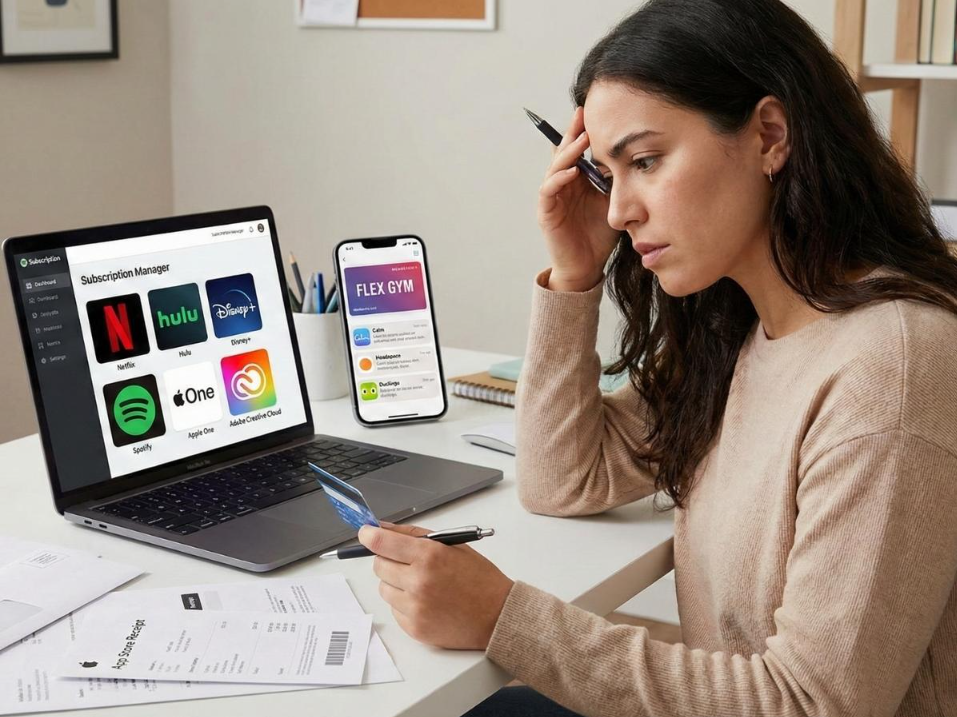
Individually, many subscriptions appear affordable. A music service might cost little more than a meal. Cloud storage might seem insignificant compared with rent. A productivity application might be justified as a useful investment.
But households rarely purchase only one recurring service. As subscriptions accumulate, their combined cost can become substantial.
Consider an illustrative monthly budget: $18 for video streaming, $12 for music, $4 for cloud storage, $25 for software, $15 for a fitness app, $12 for news and magazines, and $20 for other memberships. Together, that is $106 a month, or $1,272 a year. These are hypothetical amounts, not survey findings about a typical household.
The difficulty is not always that consumers cannot afford any individual subscription. It is that multiple payments compete for the same limited income. Rent, food, transportation and utilities already create recurring financial obligations.
When discretionary services also become recurring expenses, households may have less flexibility than their monthly income initially suggests. This can become particularly noticeable during periods of economic uncertainty.
A person who loses income can stop making new purchases. Existing subscriptions, however, may continue until they are actively cancelled. The convenience of automatic billing becomes less appealing when financial circumstances change.
Are We Losing the Meaning of Ownership?

The subscription economy raises a question that extends beyond household budgets. What does it mean to own something in a digital economy?
When a consumer buys a physical book, the book remains available even if the bookstore closes. When someone purchases a piece of furniture, continued use does not generally depend on a monthly payment to the manufacturer.
Digital subscriptions operate differently. Customers often purchase access to a service rather than permanent ownership of its contents.
A streaming platform can remove a film from its catalogue. A software company can change the features included in a plan. A service can increase prices, modify its terms or discontinue a product.
Consumers may retain their accounts while losing access to particular content or capabilities. This is not necessarily unreasonable. Subscription companies must pay for infrastructure, licensing, maintenance and ongoing development.
But the economic relationship has changed. The customer may have fewer rights over the product than the experience of using it initially suggests.
This is particularly important for professionals and businesses that depend on subscription software. A designer whose work relies on a specific application may find it difficult to cancel without disrupting projects. A small business that stores its records in a cloud service may face significant costs when switching providers.
These dependencies can create what economists and business strategists describe as switching costs. A service becomes harder to leave not merely because customers enjoy it, but because leaving creates inconvenience, expense or operational risk.
The difference between loyalty and dependence deserves careful attention.
The Business Incentive to Keep Customers Paying
In traditional retail, a business earns revenue when someone purchases a product. In subscription businesses, companies must also persuade customers to remain.
This can create positive incentives. A company that depends on renewals has a reason to improve its service, fix problems and provide continuing value.
But the same incentive can encourage less consumer-friendly practices. Some services make joining easy but cancelling difficult. Others rely on confusing renewal terms, complicated account settings or promotional prices that increase after an introductory period.
These practices are often associated with dark patterns: interface designs that steer users toward decisions they might not otherwise make.
Not every subscription company uses such techniques, and many offer transparent pricing and straightforward cancellation. Still, the incentive is clear. When revenue depends on how long a customer remains subscribed, preventing cancellation can become financially attractive.
That creates a potential conflict between a company’s desire to retain customers and a consumer’s right to leave. Regulators have increasingly examined subscription billing, automatic renewals and cancellation practices.
The broader principle is simple: a recurring payment should reflect an ongoing choice, not merely the difficulty of ending a relationship.
Why Businesses Cannot Rely on Subscriptions Alone
The popularity of recurring revenue has sometimes encouraged companies to treat subscriptions as an almost universal solution. But not every product is well suited to a monthly payment.
Customers may resist subscriptions for products they use only occasionally. They may prefer a one-time purchase when the product requires little ongoing maintenance. They may also become frustrated when basic functionality is separated into additional paid tiers.
For businesses, subscriptions create obligations as well as opportunities. A company must continue providing value after the initial sale.
If its product stops improving, competitors may attract customers. If prices rise too quickly, subscribers may reconsider whether the service remains worthwhile.
A subscription business can therefore be vulnerable to the very behaviour that makes the model attractive: customers regularly evaluating whether a service deserves a place in their budget.
The companies most likely to succeed over time are not necessarily those that charge the most recurring fees. They are those that consistently provide value customers are willing to pay for.
A More Deliberate Way to Subscribe
The subscription economy does not require consumers to reject recurring services. For many people, subscriptions provide excellent value.
A student may access software that would otherwise be unaffordable. A family may enjoy a wide library of entertainment without purchasing individual titles. A small business may use powerful technology without maintaining its own servers.
The challenge is to distinguish useful access from habitual spending. Consumers can benefit from periodically reviewing their recurring payments, identifying services they rarely use and comparing the total annual cost with available alternatives.
They should also consider what happens if they cancel. Will important files remain accessible? Can information be exported? Does the company offer a lower-cost plan? Would a one-time purchase be more economical?
These questions encourage a more complete understanding of value. A $15 monthly service is not necessarily cheap because the payment is small. A $300 one-time purchase is not necessarily expensive because the upfront price is large.
The relevant comparison depends on how long the product will be used, what it provides and what alternatives are available.
THE ABE TAKE
The subscription economy represents one of the most significant changes in the relationship between modern businesses and their customers. It has made powerful tools more accessible, reduced upfront costs and allowed companies to provide services that continuously improve. Those benefits are real.
But the model also creates a world in which access increasingly depends on uninterrupted payment. Consumers can find themselves maintaining dozens of financial relationships, each individually modest but collectively expensive.
Businesses, meanwhile, gain more predictable revenue while facing pressure to keep customers paying. The fundamental question is not whether subscriptions are good or bad. It is whether they create lasting value for the people who use them.
Convenience should make life easier, not make financial decisions invisible.
And ownership should not disappear from the economy simply because recurring payments are more attractive to businesses. The strongest subscription companies will be those that earn renewals through usefulness, transparency and trust—not those that make cancellation inconvenient.
For consumers, the lesson is equally important. The cost of a subscription is not just the amount charged this month. It is the total commitment over time, the alternatives surrendered and the degree of control retained.
In an economy increasingly built around access, the ability to decide what is worth paying for may become an important form of financial independence.
ABE MAGAZINE
Understand More. Think Bigger.