









ABE MAGAZINE | SATURDAY ABE ORIGINALS | OCTOBER 10, 2026
Governments make laws. Corporations influence economies. Financial institutions move capital, and technology platforms shape how billions of people receive information. But in a world where power is distributed across so many institutions, who actually determines the direction of society?
An ABE Original Essay | Politics, Economics & Society
Every society has people who appear to hold power. Presidents stand behind podiums. Prime ministers announce policies. Chief executives oversee enormous corporations. Central bankers make decisions that influence financial markets.
Their authority is visible, measurable and often accompanied by impressive titles. But visibility should not be confused with control.
A president may promise economic prosperity, yet cannot directly command businesses to invest. A government may introduce new legislation, only to discover that financial markets, courts or public opposition can limit its ambitions. A corporation may possess enormous wealth, yet remain dependent on regulations, customers and infrastructure it does not control.
Power, it seems, is rarely concentrated in one place. It moves through institutions, relationships, economic incentives and systems that most people encounter every day without fully understanding.
This raises a question that is both ancient and remarkably modern: Who truly shapes the world — those who govern it, those who finance it, or those who influence how people understand it?
The Difference Between Authority and Power
Authority and power are closely related, but they are not identical. Authority is the recognized right to make decisions. Power is the ability to influence what happens.
A government may have the legal authority to regulate an industry. But a large company might possess the resources, expertise and political access to influence how those regulations are written.
Likewise, a central bank may have authority over monetary policy, but its decisions operate through a financial system shaped by commercial banks, investors, businesses and households.
The distinction matters because much of modern society is governed through interactions between institutions rather than commands issued by a single leader.
Consider a simple example. A government wants to encourage the construction of affordable housing. It introduces incentives and announces ambitious targets. But the outcome depends on property developers, lenders, local authorities, construction costs, available land and consumer demand.
The government can influence these conditions. It cannot independently control all of them. The same principle applies to energy, employment, healthcare and technology.
The power to announce a decision is not always the power to determine its consequences.
Money: The Power to Make Possibilities Real
Money is among the most influential instruments of power because it determines which ideas receive the resources necessary to become reality.
An entrepreneur may have an innovative concept, but without financing, the idea may never develop beyond a proposal. A government may have ambitious infrastructure plans, but without sufficient revenue or borrowing capacity, those plans may remain unfinished.
An organization with access to capital can hire talent, purchase technology, expand operations and survive periods of uncertainty. This gives financial institutions and investors substantial influence over economic development.
Banks decide which borrowers meet their lending standards. Investment funds allocate capital across industries. Shareholders can influence corporate strategies, while creditors may impose conditions on organizations seeking financing.
None of this means financial institutions secretly control every government or business. Their power is substantial but constrained by law, competition, risk, public policy and economic conditions.
Nevertheless, access to capital can influence which industries grow, which companies survive and which communities attract investment.
The ability to finance an opportunity is often almost as consequential as the ability to create it.
Yet money has limitations. A wealthy corporation cannot guarantee that customers will purchase its products. Investors cannot eliminate uncertainty. Governments with substantial resources can still struggle to deliver effective public services.
Financial power expands possibilities, but it does not eliminate the complexity of human decisions.
Corporations: Institutions That Outlive Their Leaders
Modern corporations are among the most durable institutions in society. Political leaders come and go. Executives retire. Technologies change. But large companies can survive across generations, adapting their strategies while retaining valuable infrastructure, brands and market relationships.
Their influence extends beyond the products they sell. A major employer can shape the economic future of a community. A dominant supplier can influence the costs faced by thousands of smaller businesses. A technology company can establish standards that determine how other organizations operate.
Corporate decisions may therefore affect people who have never purchased a product from the company making them.
Consider how global supply chains operate. A manufacturer’s decision to relocate production may influence employment in one country, shipping activity in another and consumer prices elsewhere. The decision may be made inside a boardroom, but its consequences can cross borders.
This is one reason governments devote considerable attention to competition law, labour protections and corporate accountability.
Private companies can create enormous public benefits, including innovation, employment and economic growth. They can also accumulate influence that becomes difficult to challenge when markets lack meaningful competition.
The issue is not whether corporations should possess power. Economic activity requires organizations capable of making decisions and investing resources. The more important question is how that power is balanced by competition, democratic institutions and public accountability.
Technology: The Power to Shape What We Notice

Historically, powerful institutions often controlled physical resources: land, armies, factories and transportation networks. Today, control over information has become another major source of influence.
Technology platforms determine how enormous quantities of information are organized, recommended and distributed. Search engines influence which websites people discover. Social media platforms decide how content appears in users’ feeds. Recommendation systems can affect which videos, products and ideas receive attention.
These systems do not necessarily dictate what people believe. Individuals interpret information differently, and their choices are influenced by personal experience, education, social relationships and culture.
But platforms can influence the environment in which those choices are made. An idea repeatedly placed before an audience has a greater opportunity to become familiar than one that remains difficult to discover.
This creates a subtle form of power. It does not require issuing direct orders. It operates by influencing visibility, attention and access.
A political movement, business or public figure may struggle to reach an audience without the digital infrastructure through which modern communication takes place.
At the same time, technology can weaken traditional concentrations of power. Independent journalists can publish without owning printing presses. Small businesses can reach international customers. Ordinary citizens can organize campaigns and challenge powerful institutions.
Digital technology can both distribute influence and concentrate it. That contradiction is one of the defining features of our era.
Governments: Powerful, but Never Entirely Independent
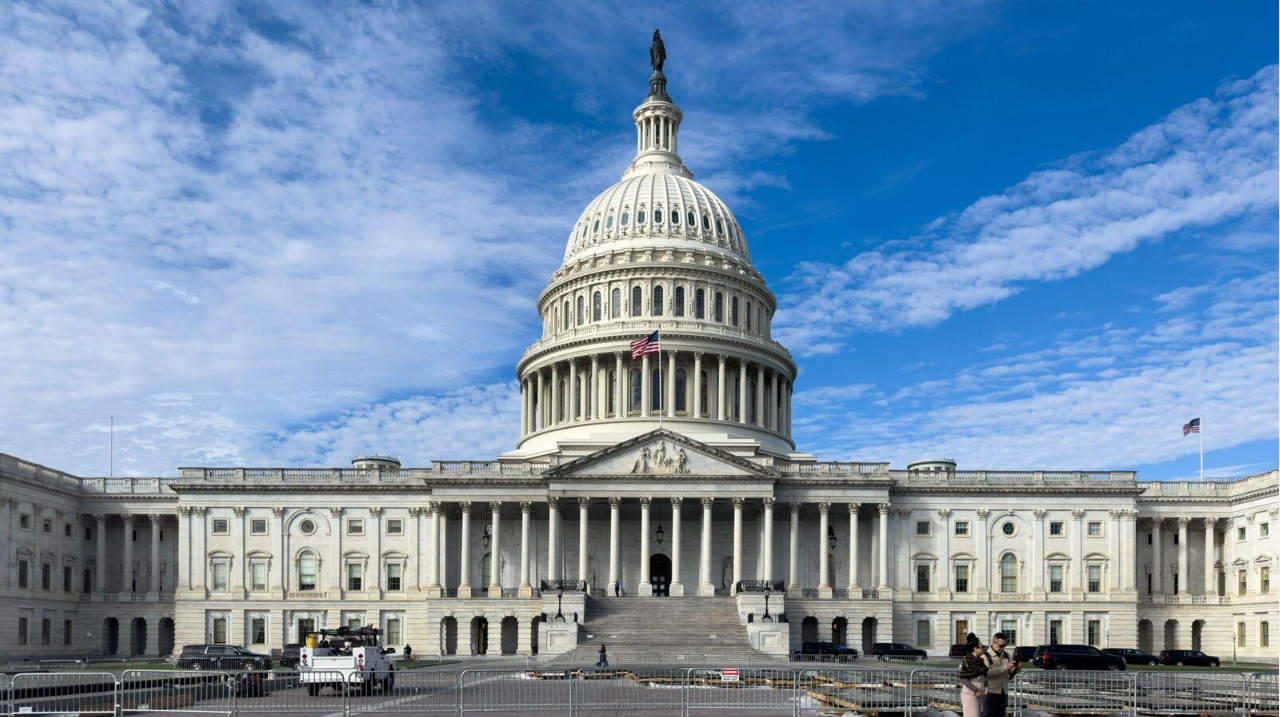
It would be a mistake to interpret the influence of corporations and financial institutions as evidence that governments have become powerless.
States possess capabilities that private organizations generally do not. They can establish laws, collect taxes, enforce contracts, regulate markets and provide public services. They can negotiate international agreements and exercise legitimate coercive authority within their jurisdictions.
These powers remain fundamental to modern society. A company may possess greater financial resources than a small country, but it does not automatically possess the legal authority of that country’s government.
Governments also shape the conditions under which private power operates. Competition laws can restrict monopolistic behaviour. Financial regulations can limit certain risks. Tax systems influence how resources are distributed, while public investment can support industries that private markets might otherwise neglect.
Yet governments face constraints of their own. Democratic leaders must consider voters, legislatures, courts and constitutional limits. Public institutions operate within budgets and administrative capacities. International commitments may restrict domestic policy choices.
In authoritarian systems, formal political power may be more concentrated, but leaders still depend on institutions, economic performance and relationships with influential groups.
The relationship between government and private power is therefore neither one of complete independence nor complete domination. It is an ongoing negotiation. And the outcome depends heavily on the strength, transparency and accountability of the institutions involved.
The Power of Ideas: Who Determines What Society Accepts?
Not every form of influence requires money, political office or control over technology. Ideas can change societies.
Religious movements, philosophical traditions, scientific discoveries and political theories have transformed how people understand authority, morality and human rights.
The abolition of slavery, expansion of democratic participation and development of modern labour protections were shaped by complex struggles involving ideas, institutions, economic interests and organized movements.
These changes were not produced by ideas alone. They required people willing to organize, challenge established practices and translate principles into laws and institutions.
Nevertheless, ideas provided frameworks through which existing arrangements could be questioned. This reveals another dimension of power.
Those who influence how society defines a problem may also influence which solutions appear reasonable.
Consider public debates about poverty. If poverty is understood primarily as a consequence of individual decisions, policy discussions may emphasize personal responsibility and behavioural change. If it is understood primarily through structural barriers, attention may shift toward education, wages, housing and economic opportunity.
Both individual circumstances and structural conditions can matter. But the framework through which an issue is presented influences which explanations receive attention.
Language, therefore, is not simply a tool for describing the world. It can shape how people interpret it. That does not mean every disagreement is manipulation. It means that critical thinking requires examining not only the answers being offered, but also the assumptions behind the questions.
When Institutions Become Dependent on One Another
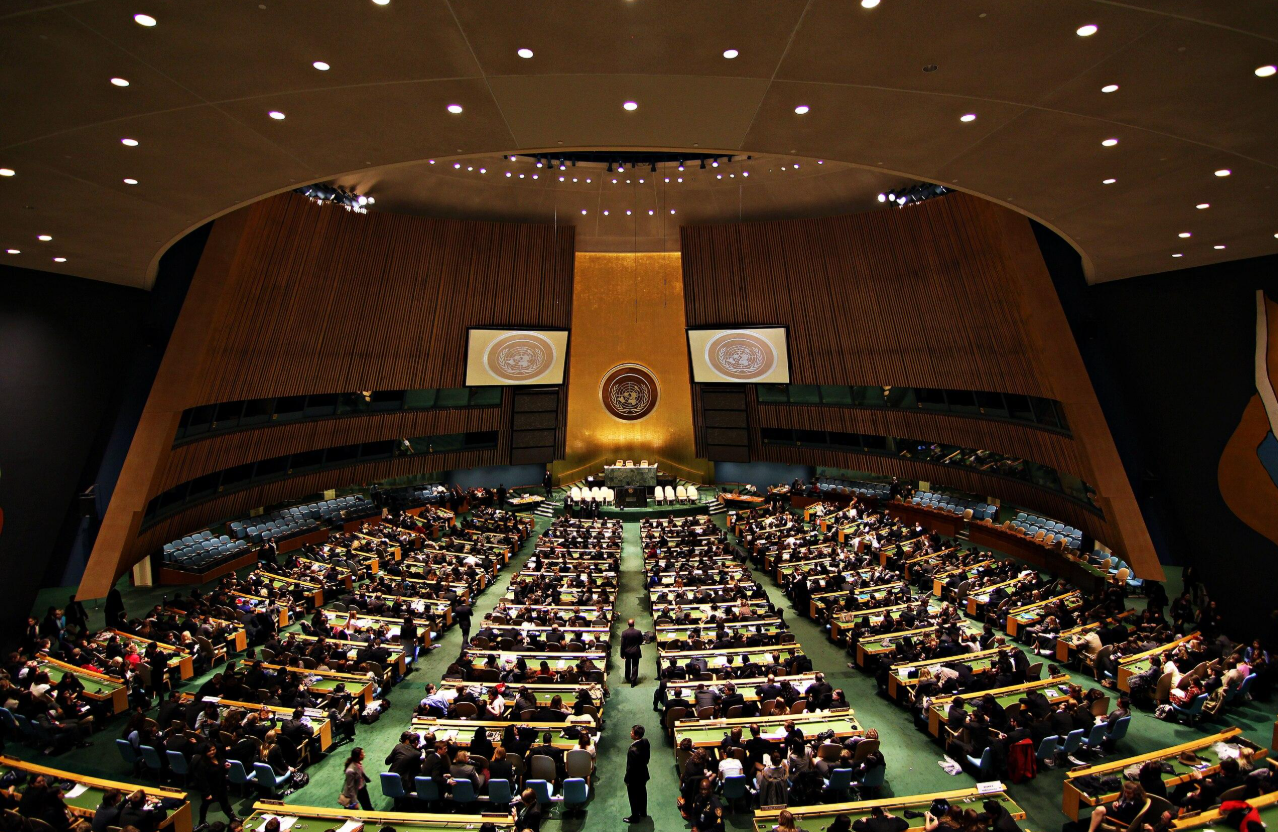
One of the most overlooked characteristics of modern power is interdependence.
A large technology company may rely on government protection of intellectual property, public infrastructure and access to international markets. Governments may rely on private companies to develop essential technologies, build infrastructure and create employment.
Financial institutions depend on legal systems, regulatory credibility and economic stability. Media organizations depend on audiences, distribution networks and revenue.
Each institution possesses certain advantages while remaining vulnerable in other areas. This helps explain why power is rarely absolute.
A corporation can influence government policy, but government decisions can fundamentally alter its business model. A political leader can shape regulation, but cannot guarantee economic growth. An influential media organization can attract public attention, but cannot ensure that every audience accepts its interpretation.
Power becomes particularly significant when one institution controls something that others cannot easily replace. This may be a critical technology, essential infrastructure, access to financing or an important channel of communication.
The greater the dependence, the greater the potential influence. Yet dependence can change. New technologies emerge. Competitors enter markets. Political coalitions shift. Public expectations evolve.
Institutions that appear untouchable in one generation may struggle to remain relevant in the next. History offers repeated reminders that influence is not permanent.
Can Ordinary People Still Shape the World?
Discussions about power often focus on institutions so large that individuals appear insignificant. It is easy to conclude that meaningful decisions belong exclusively to politicians, executives and wealthy investors.
But this overlooks an important feature of social change. Institutions depend on human participation.
Businesses need customers and employees. Democratic governments require public legitimacy. Media organizations need audiences. Social movements depend on people willing to organize and act.
An individual acting alone may have limited influence over a national economy. Millions of individuals changing their behaviour, however, can alter markets, political priorities and cultural expectations.
This does not mean collective action is easy or that every campaign succeeds. Organizing people requires coordination, resources, leadership and persistence. Structural inequalities can make participation more difficult for some groups than others.
Still, ordinary people are not entirely outside systems of power. They help sustain those systems through their work, consumption, political participation and social relationships. They can also challenge them.
The important distinction is between having influence and having equal influence. Modern societies provide many opportunities for participation, but those opportunities are not distributed evenly.
Wealth, education, institutional access and social position can affect whose concerns receive attention. Recognizing this inequality is essential to understanding power without assuming that everyone is powerless.
The Greatest Power May Be the Ability to Set the Agenda
Imagine two people participating in a debate. One is allowed to argue for or against a proposal. The other decides which proposals can be discussed in the first place.
Both have influence. But the second person possesses an additional advantage: the ability to define the boundaries of the conversation.
This is known in political and social theory as agenda-setting power. It helps explain why influence cannot be measured solely by examining visible decisions.
An institution may shape outcomes by determining which questions receive attention, which alternatives are considered and which possibilities remain outside mainstream discussion.
In politics, this can involve deciding which issues receive legislative priority. In business, it may involve determining which technologies attract investment. In media, it can involve deciding which developments deserve prominent coverage.
Agenda-setting does not guarantee control over the final outcome. But it can influence the range of outcomes that people seriously consider.
This is particularly important in an information-rich society. When millions of stories compete for attention, the ability to influence what becomes visible is itself valuable.
And when certain assumptions become so familiar that they are rarely questioned, power may operate without appearing to do so.
The challenge for citizens is therefore not merely to evaluate the arguments placed before them. It is also to ask what alternatives might be missing.
The Danger of Searching for a Single Hidden Controller
There is something psychologically appealing about the belief that one individual or organization secretly directs world events.
Complex systems are difficult to understand. A single powerful actor offers a simpler explanation. Economic crises, political conflicts and technological disruptions can appear more comprehensible when attributed to one deliberate plan.
But simplicity is not necessarily accuracy. Modern societies are shaped by competing interests, institutional constraints, unintended consequences and decisions made by millions of people.
Even powerful organizations regularly experience failures they did not anticipate. Businesses misjudge markets. Governments implement policies with unexpected effects. Investors lose money. Political movements fail to achieve their objectives.
These outcomes are difficult to reconcile with the idea of a perfectly coordinated system controlled by a single authority.
That does not mean powerful individuals never coordinate or that corruption and concealed influence do not exist. They do, and such conduct deserves investigation supported by evidence.
But serious analysis requires distinguishing documented influence from speculation.
The question should not be, Who secretly controls everything? A more productive question is: Which institutions possess influence over a particular decision, how do they exercise it, and who can hold them accountable?
That approach produces a clearer understanding of power because it examines mechanisms rather than relying on suspicion.
A World Governed by Systems, Not Simply Individuals
Perhaps the most important lesson is that modern power is increasingly embedded in systems.
Financial markets, legal institutions, digital networks, international trade and political structures connect organizations whose decisions affect one another.
A single person may occupy a powerful position within one of these systems. But the system itself can shape what that person is able to accomplish.
A central banker cannot determine every price in an economy. A chief executive cannot guarantee that a new product will succeed. A president cannot independently control the behaviour of every institution within a country.
Power operates through relationships. It can be exercised directly through laws and commands, economically through resources and incentives, culturally through ideas, or technologically through control over infrastructure and information.
These forms of influence overlap. Understanding them requires more than identifying the richest people or the most prominent leaders.
It requires examining how institutions interact, where dependencies exist and how decisions become possible.
The world is not governed by one invisible hand operating with perfect coordination. It is shaped by multiple centers of power, sometimes cooperating, sometimes competing and frequently producing consequences that none of them intended.
And that may be the most important reason to study power carefully. Because the less visible its mechanisms become, the more difficult it is for society to hold them accountable.
THE ABE TAKE
We often mistake visibility for power. We assume that the person delivering the speech, signing the agreement or announcing the decision must be the person who determines the outcome.
But modern power is more complicated.
Governments establish rules. Financial institutions allocate capital. Corporations organize economic activity. Technology platforms influence access to information. Ideas shape what societies consider acceptable.
None operates entirely independently. And none possesses complete control.
The greatest danger is not necessarily that one institution controls the world. It is that influence can become so deeply embedded in ordinary systems that people stop questioning how decisions are made.
A society cannot hold power accountable if it does not understand where that power comes from. This makes public education, independent journalism, institutional transparency and critical thinking essential.
Citizens do not need to believe that every powerful organization is acting against their interests. But neither should they assume that authority guarantees wisdom, wealth guarantees competence or influence guarantees legitimacy.
Power should not be judged only by what it can accomplish, but by the responsibility with which it is exercised and the accountability to which it is subjected.
The most important question is not simply who holds power. It is who benefits from its exercise, who bears its consequences and who has the ability to challenge it.
ABE Magazine — Understand More. Think Bigger.