








ABE NEWS | THURSDAY, AUGUST 20, 2026
America just crossed a number that is difficult to even imagine:
$40 TRILLION.
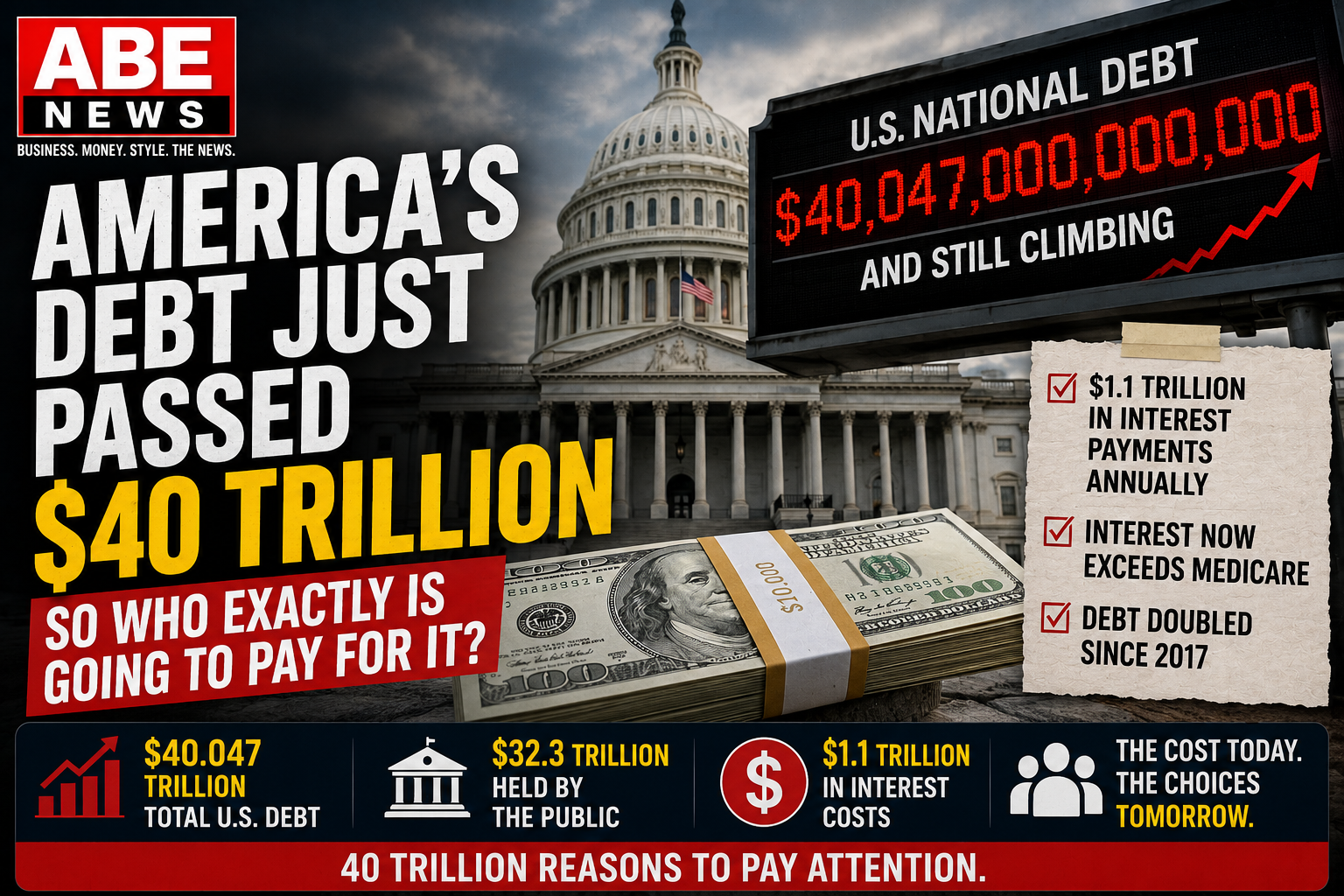
The U.S. national debt officially reached $40.047 trillion, according to the Treasury Department. Of that, about $32.3 trillion is debt held by the public, while another $7.8 trillion is held within government accounts.
Forty trillion dollars doesn’t mean the United States suddenly has a $40 trillion bill due tomorrow. Governments constantly issue new debt, repay maturing debt and refinance what they owe.
But the milestone matters because America’s debt is growing quickly — and the cost of carrying it is becoming increasingly difficult to ignore.
How Did America Get to $40 Trillion?
The debt has more than doubled in less than a decade. It stood at about $19.95 trillion in January 2017.
Part of the enormous increase came from emergency spending during the COVID-19 pandemic. But that isn’t the whole explanation. Years of federal spending exceeding tax revenue, combined with tax and spending policies under both Republican and Democratic administrations, have continued adding to the total.
America also has expensive long-term commitments. Social Security, Medicare, Medicaid and veterans’ programs account for a large share of federal spending, while an aging population is increasing pressure on retirement and healthcare programs.
And then there’s something governments cannot simply wish away:
Interest.
The U.S. is now spending roughly $1.1 trillion on interest on its borrowing. During the first ten months of fiscal 2026, interest costs even surpassed Medicare spending, making debt service the federal government’s second-largest expenditure behind Social Security.
That’s where $40 trillion starts becoming more than an impressive-looking number.
Every dollar spent servicing old debt is a dollar that cannot simultaneously fund another government priority without additional taxes, spending cuts or — ironically — more borrowing.
The Bond Market Is Sending a Message
This week’s timing makes the milestone especially interesting.
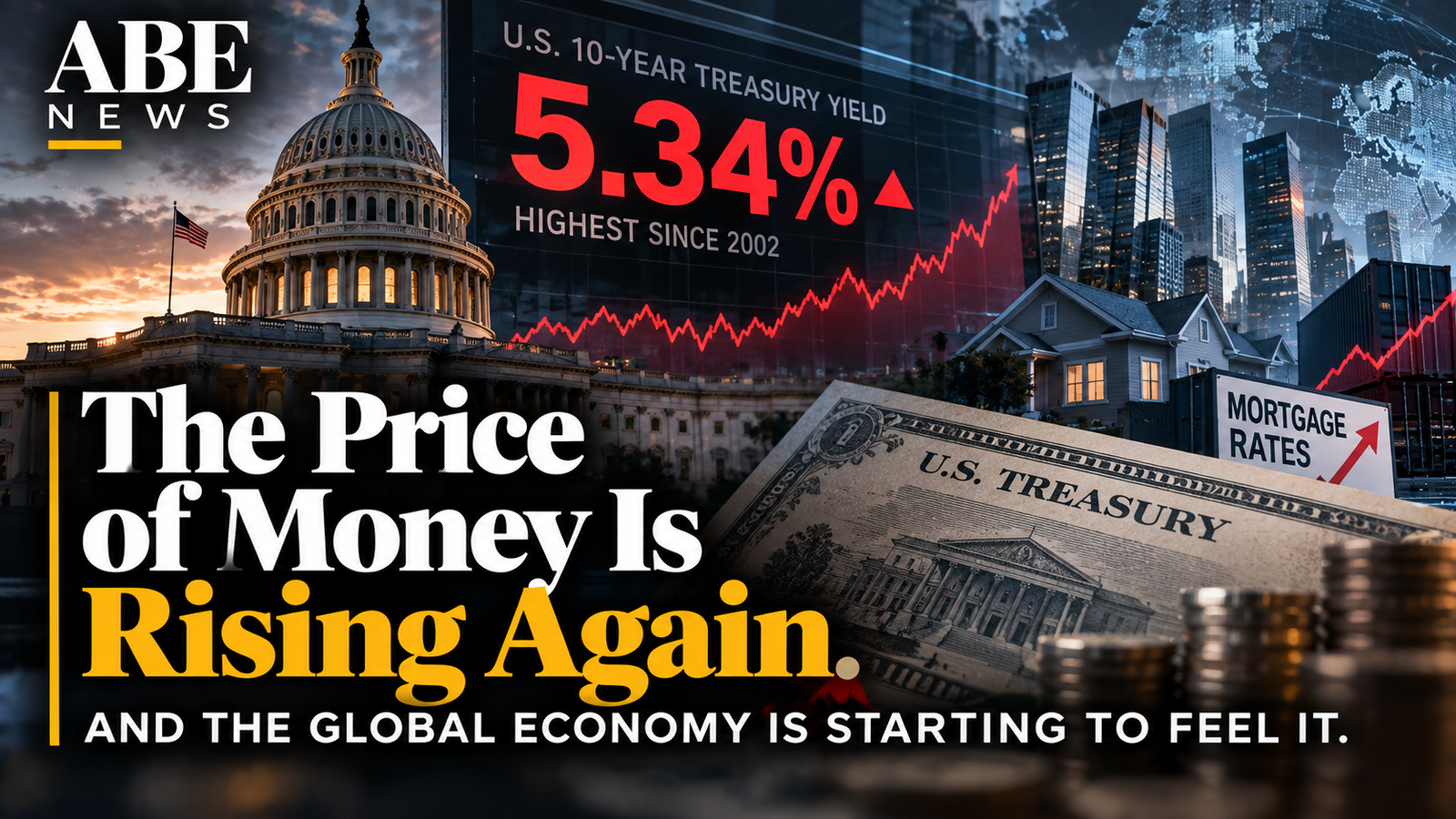
Long-term U.S. Treasury yields recently reached their highest levels in almost two decades as investors demanded greater returns for lending to the government.
On Wednesday, Treasury Secretary Scott Bessent responded by doubling planned buybacks of Treasury securities with maturities between 10 and 30 years to at least $4 billion per operation. The move helped bring long-term yields down.
But buying back older bonds doesn’t erase America’s $40 trillion debt.
The government still needs financing.
And that’s where this can eventually reach ordinary households.
Treasury yields influence borrowing costs throughout the economy. When long-term government borrowing becomes more expensive, rates on mortgages, car loans and business financing can also face upward pressure.
So a debt problem in Washington doesn’t necessarily remain in Washington.
It can eventually show up when somebody tries to finance a house or when a company decides whether a new factory is worth building.
So Who Actually Pays the $40 Trillion?
This is where the headline question needs a careful answer.
There won’t be a day when the government sends every American a bill for their portion of $40 trillion.
Sovereign debt doesn’t normally work that way.
Instead, the burden can appear gradually.
Taxpayers finance interest payments through government revenue. Future governments can raise taxes or reduce spending elsewhere. Continued borrowing can push interest expenses even higher, and higher government borrowing can compete with businesses for available capital.
Future taxpayers can therefore inherit part of today’s fiscal choices.
But there’s also an important distinction between a serious long-term fiscal problem and saying America is about to go bankrupt.
Those aren’t the same thing.
The United States still has enormous economic capacity and issues debt in its own currency. Investors continue buying Treasury securities. And some analysts argue that today’s high bond yields reflect high interest rates generally rather than an imminent government-debt crisis.
The real concern is the direction.
If debt keeps growing faster than the government’s ability to service it, more of the federal budget gets consumed simply paying for previous borrowing.
That’s when the choices become increasingly uncomfortable.
Raise taxes?
Cut spending?
Reform entitlement programs?
Borrow even more?
Every option has economic and political consequences.
🔴 THE ABE NEWS TAKE
The scariest thing about $40 trillion isn’t that someone has to write a $40 trillion cheque.
Nobody does.
It’s that debt can slowly reduce a government’s room to maneuver.
When an emergency arrives — a recession, pandemic, war or financial crisis — governments need the ability to respond.
But the more money already committed to servicing yesterday’s borrowing, the harder tomorrow’s choices become.
America took decades to reach its first $1 trillion of federal debt.
Now it moved from $39 trillion to $40 trillion in less than five months.
That’s the number worth thinking about.
Not simply:
How much does America owe?
But:
How quickly is that number growing — and how much will it cost to keep carrying it?
Because $40 trillion isn’t the end of the story.
Without major changes to taxes, spending or economic growth, it’s simply the latest milestone on a meter that is still running.
ABE NEWS
Business. Money. Style. The News.
Understand More. Think Bigger.