








By ABE Magazine | October 30, 2026
Africa’s technology startup ecosystem is attracting renewed investor interest, but a growing question is emerging across the continent’s entrepreneurial landscape: can investment capital alone create businesses capable of surviving, expanding and generating sustainable profits? From financial technology companies in Lagos to clean-energy ventures in Nairobi and software businesses in Cape Town, African entrepreneurs are developing solutions for markets with considerable economic potential. Yet despite increasing access to financing, many startups continue to face structural challenges involving infrastructure, operating costs, fragmented markets and limited access to long-term capital.
According to Partech’s 2025 Africa Tech Venture Capital Report, African technology companies raised approximately $4.1 billion in equity and debt financing during 2025, representing a 25% increase from the previous year and the strongest annual funding performance since 2022. Equity investment reached $2.4 billion, while debt financing climbed to a record $1.6 billion. Although these figures suggest renewed confidence in the continent’s technology sector, the recovery was uneven, with Kenya, South Africa, Egypt and Nigeria accounting for 72% of total capital raised. The concentration illustrates how investment opportunities remain heavily influenced by established technology hubs, leaving entrepreneurs in smaller markets facing greater difficulty attracting financial support.
Investment Is Returning, but Business Sustainability Remains the Challenge

The recovery in startup financing marks an important development following the sharp decline in global venture capital activity that began in 2022. Rising interest rates, economic uncertainty and reduced investor appetite for risk forced many technology companies to reconsider expansion strategies built around continuous fundraising. African startups were particularly exposed because much of their financing originated outside the continent, making them vulnerable to changes in international investment conditions. Research published by the International Finance Corporation in May 2025 estimated that approximately 80% of African firms’ startup funding came from foreign investors, highlighting the limited depth of domestic venture capital markets.
The latest investment figures also reveal a change in how African technology businesses are being financed. Debt funding increased by 63% in 2025, substantially faster than the 8% rise in equity investment. This shift suggests that financing is becoming more diversified, particularly among companies with established operations and more predictable revenue. However, borrowing introduces its own obligations, including interest payments and repayment schedules, which can place additional pressure on businesses without reliable cash flow. For entrepreneurs, attracting investors remains important, but the ability to retain customers, control expenses and build commercially viable operations is increasingly central to long-term success.
Infrastructure and Fragmented Markets Complicate Expansion
One of the greatest obstacles facing African startups lies beyond the availability of investment capital. Businesses operating across the continent frequently encounter differences in electricity reliability, transportation infrastructure, payment systems, regulatory requirements and consumer purchasing power. These conditions can increase operating costs and complicate efforts to expand beyond a company’s original market. The IFC has noted that unreliable electricity remains a significant constraint across Africa, while fragmented distribution networks and the absence of formal delivery addresses in some communities create additional difficulties for digital commerce and logistics businesses.
Such challenges are particularly relevant for startups attempting to build regional or continent-wide operations. A financial technology platform that succeeds in one country may need additional regulatory approvals, banking partnerships and payment integrations before entering another. Similarly, an e-commerce company may develop a strong digital platform but struggle to deliver products efficiently where transportation networks and addressing systems remain underdeveloped. These difficulties demonstrate why a successful business model cannot simply be replicated across different African markets without substantial adaptation. Investment can support expansion, but infrastructure, local knowledge and operational discipline ultimately determine whether that expansion becomes sustainable.
A More Diverse Startup Economy Is Beginning to Emerge
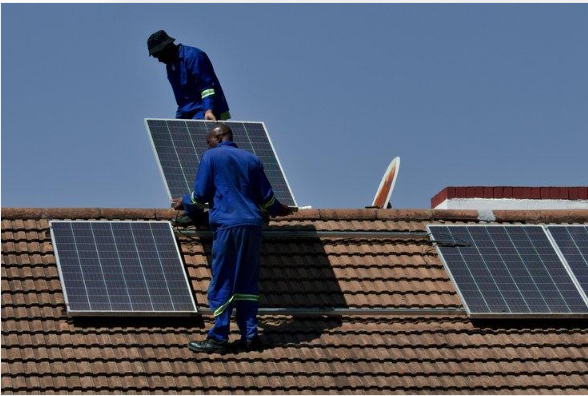
Despite these obstacles, Africa’s startup landscape is gradually extending beyond its traditional concentration in financial technology. Partech reported that fintech remained the largest sector for equity investment in 2025, attracting approximately $769 million. However, clean technology, healthcare technology and enterprise software also recorded substantial funding activity, with equity investment reaching approximately $550 million, $215 million and $238 million respectively. The diversification reflects growing interest in businesses addressing practical economic needs, including energy access, healthcare delivery, productivity and services for smaller enterprises.
The shift presents opportunities for entrepreneurs developing solutions to problems that conventional infrastructure and institutions have not fully addressed. Mobile financial services have already demonstrated how technology can expand access to essential services, while emerging companies in agriculture, energy and logistics are attempting to improve efficiency across industries central to African economies. Nevertheless, attracting investment is only one stage in building a successful enterprise. Businesses must demonstrate that customers are willing and able to pay for their services, that revenue can support operating expenses and that growth can be maintained without an indefinite dependence on external financing.
THE ABE TAKE
Africa’s startup economy has reached a stage where the amount of capital raised should no longer be treated as the primary measure of entrepreneurial success. Investment announcements can generate excitement, but they do not necessarily reveal whether a company has developed a sustainable business model or established a lasting competitive advantage. The more meaningful indicators are increasingly found in customer retention, revenue quality, operational efficiency and the ability to solve genuine market problems at a cost customers can afford.
For Africa’s technology sector to mature, entrepreneurs will need more than access to international investors. Stronger domestic capital markets, reliable infrastructure, effective regulation and commercially disciplined leadership will be equally important. The continent’s entrepreneurial potential remains considerable, but its long-term success will depend less on producing the next headline-grabbing fundraising round and more on building companies capable of delivering lasting economic value.
ABE MAGAZINE
Understand More. Think Bigger.