








ABE NEWS | FRIDAY, AUGUST 21, 2026
Bitcoin is suddenly moving again.
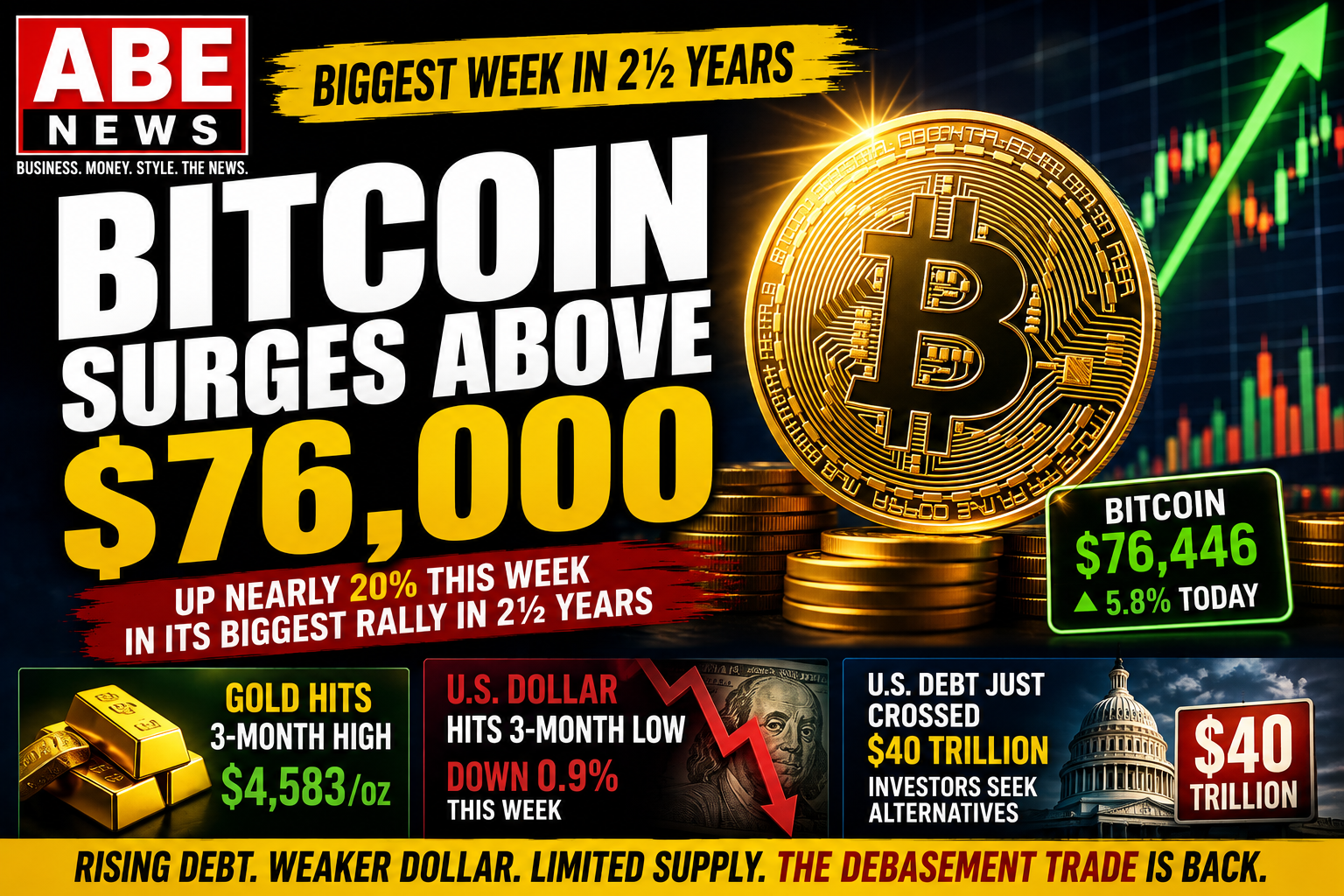
The world’s largest cryptocurrency surged above $76,000 on Friday, reaching its highest level in more than two months and putting it on course for a gain of roughly 20% this week — its strongest weekly performance in about two and a half years, according to Reuters.
But Bitcoin isn’t moving alone.
Gold is surging. The U.S. dollar is falling. Long-term government bond yields remain elevated. And America’s national debt has just crossed $40 trillion.
Put those pieces together, and Friday’s cryptocurrency rally starts looking like something bigger than another burst of Bitcoin speculation.
Some investors are increasingly asking a much older question:
What happens to the value of money when governments keep borrowing enormous amounts of it?
Bitcoin and Gold Are Telling a Similar Story
Bitcoin was trading around $76,446 in Reuters’ Friday market snapshot, up almost 6% on the day. Meanwhile, gold climbed to roughly $4,583 an ounce, touching its highest level in nearly three months.
The U.S. dollar moved in the opposite direction. The dollar index was down almost 0.9% for the week and had touched a three-month low.
That combination has revived a phrase increasingly heard on Wall Street:
The “debasement trade.”
The idea is relatively simple. If investors become worried that government borrowing, inflation or monetary policy could gradually reduce the purchasing power of traditional currencies, some look for assets whose supply cannot easily be expanded.
Gold has played that role for thousands of years.
Bitcoin is attempting to become its digital equivalent.
Bitcoin’s maximum supply is programmed at 21 million coins. Governments cannot simply decide to create another 50 million Bitcoin to finance spending.
That doesn’t make Bitcoin stable — far from it. Its price can rise or fall dramatically in a short period.
But scarcity is one reason some investors treat it as a potential alternative when confidence in traditional currencies weakens.
And right now, America is giving those investors plenty to think about.
America Just Crossed $40 Trillion
Earlier this week, U.S. federal debt officially passed $40 trillion for the first time.
The number itself doesn’t mean the United States is suddenly unable to pay its bills. America remains the issuer of the world’s dominant reserve currency, and U.S. Treasury securities remain central to the global financial system.
The concern is the direction.
Interest charges alone are running at roughly $1.2 trillion this year, while the federal budget deficit remains above 6% of GDP. Investors have become increasingly concerned about how much debt Washington will continue issuing and how expensive financing that debt could become.
Those concerns contributed to a sharp selloff in long-term Treasury bonds this week.
Treasury Secretary Scott Bessent responded by expanding government purchases of longer-dated Treasuries in an effort to improve conditions in the bond market. But the relief proved short-lived, with yields beginning to rise again.
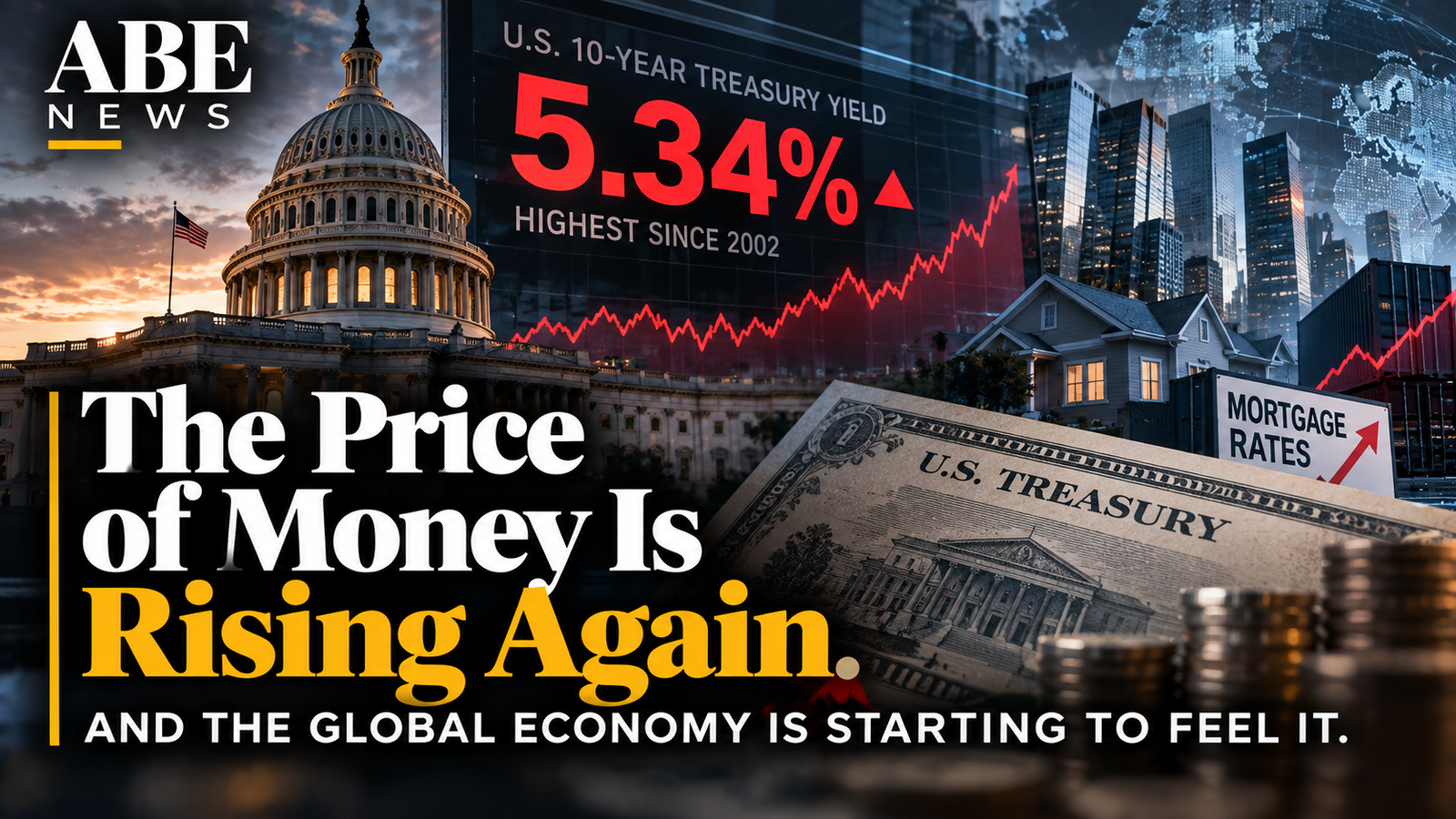
The 30-year Treasury yield was around 5.27% Friday, while the 10-year yield was approximately 4.73%.
And that’s where the Bitcoin story connects to the debt story.
If investors become concerned about America’s fiscal position and the future purchasing power of the dollar, they may diversify some of their wealth into other assets.
That doesn’t mean everyone is abandoning the dollar.
It means alternatives become more attractive.
And this week, two of the biggest beneficiaries have been gold and Bitcoin.
There’s More Behind Bitcoin’s Rally Than Debt
It would be too simplistic, however, to say America’s $40 trillion debt caused Bitcoin to jump 20%.
There are several forces at work.
Demand for U.S. spot Bitcoin exchange-traded funds has strengthened dramatically. From Monday through Thursday, those ETFs attracted approximately $1.6 billion in net inflows, including about $606 million on Thursday alone — their strongest single day since May.
That matters because ETFs allow investors to gain exposure to Bitcoin through conventional brokerage and investment accounts without directly holding the cryptocurrency themselves.
Crypto markets have also received political support from Washington. President Donald Trump urged Congress this week to move forward with long-delayed cryptocurrency legislation, while regulators continue working on rules that could give the industry greater clarity.
So Friday’s rally is being powered by a mixture of institutional demand, regulatory optimism, dollar weakness and concerns about government debt.
Bitcoin isn’t simply moving because crypto traders suddenly became excited again.
Large pools of conventional investment money are participating too.
But Bitcoin Is Still Bitcoin
A 20% weekly gain looks fantastic when you’re already invested.
It can also encourage people to forget how volatile cryptocurrencies can be.
Bitcoin has repeatedly experienced enormous rallies followed by equally dramatic declines. Unlike a bond, it doesn’t pay interest. Unlike a profitable company, it doesn’t generate earnings. And unlike gold, its history as a globally recognized store of value is measured in years rather than centuries.
That means the debate over Bitcoin’s true economic role remains unresolved.
Is it digital gold?
A speculative technology asset?
A currency?
A hedge against government debt?
Or some combination of all four?
Markets haven’t completely decided.
But something interesting is happening: Bitcoin is increasingly reacting to the same macroeconomic forces that move traditional financial markets.
Government borrowing matters.
Interest rates matter.
The dollar matters.
Inflation matters.
Institutional investment flows matter.
That makes Bitcoin much harder to dismiss as an isolated corner of the internet.
🔴 THE ABE NEWS TAKE
The biggest story this week isn’t simply that Bitcoin went above $76,000.
It’s that Bitcoin and gold are rising together while the dollar is weakening and investors are questioning America’s fiscal direction.
That tells us something about confidence.
Money works partly because people believe it will preserve enough purchasing power to remain useful tomorrow.
When that confidence becomes less certain, people search for alternatives.
For thousands of years, that alternative was gold.
Now Bitcoin wants a seat at the same table.
America’s $40 trillion debt doesn’t prove the dollar is collapsing. It doesn’t mean Bitcoin will replace traditional money, and it certainly doesn’t guarantee Bitcoin’s price will keep rising.
But it does raise an uncomfortable question that investors increasingly cannot ignore:
If governments can keep creating more debt, where do you store wealth that governments cannot create more of?
Gold has one answer.
Bitcoin has another.
And this week, investors have been buying both.
ABE NEWS
Business. Money. Style. The News.
Understand More. Think Bigger.