






ABE MAGAZINE | GLOBAL ECONOMY
October 19, 2026
China’s economy has delivered a stronger-than-expected third quarter, offering reassurance that the world’s second-largest economy remains capable of expanding despite trade tensions and a prolonged property downturn. Yet behind the headline growth figure lies a striking imbalance: factories and exporters are performing considerably better than the domestic consumer market. The divide raises questions not only about China’s economic recovery but also about the companies and countries increasingly dependent on Chinese demand.
Growth Returns, but the Numbers Tell Different Stories
China’s economy expanded by 4.5% in the third quarter of 2026 compared with the same period a year earlier, according to figures released Monday by the National Bureau of Statistics. The result exceeded economists’ expectations of 4.4% and improved on the second quarter’s 4.3% expansion. Across the first nine months of the year, the economy grew by 4.6%, keeping Beijing within reach of its annual growth target of approximately 4.5% to 5%.
The figures suggest that China’s economy has retained considerable resilience despite pressures from international trade disputes and domestic financial uncertainty. Industrial production increased by 5.5% in September compared with a year earlier, reflecting the continued strength of manufacturing and export-oriented industries.
Consumer spending presents a different picture. Retail sales rose by just 1.1% in September, while fixed-asset investment declined by 7.2% over the first nine months of the year. These figures point to an economy in which production continues to advance even as household demand and investment remain restrained.
The distinction matters because economic growth driven largely by production and exports is vulnerable to changes in overseas demand. A more balanced expansion would require Chinese households and domestic businesses to become stronger contributors to economic activity.
Factories Remain the Engine of Expansion
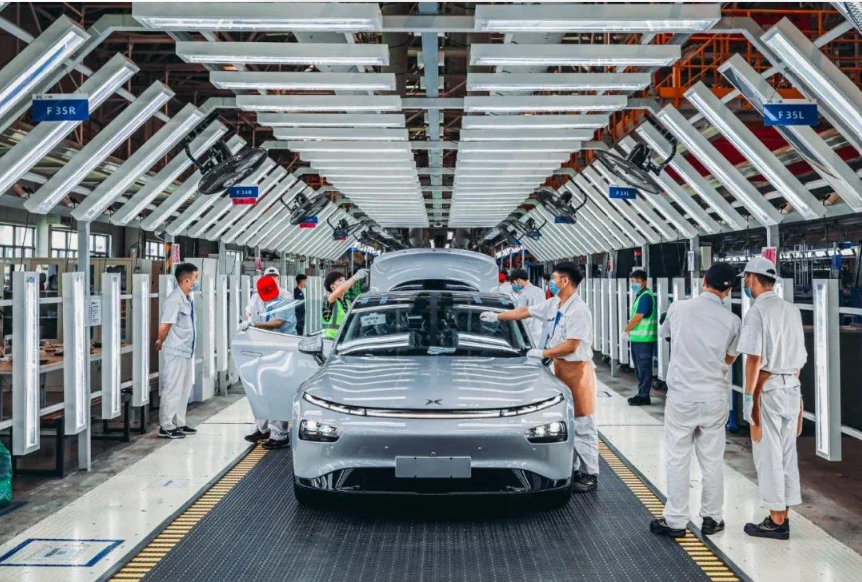
China’s manufacturing sector continues to demonstrate the advantages of its extensive industrial infrastructure, established supplier networks and growing technological capabilities. The country remains an important producer of electronics, electric vehicles, renewable-energy equipment and other goods serving international markets.
Government support for advanced manufacturing has reinforced that position, encouraging investment in industries considered strategically important for future economic competitiveness. High-technology production has consequently become a significant source of momentum even as traditional sectors experience weaker demand.
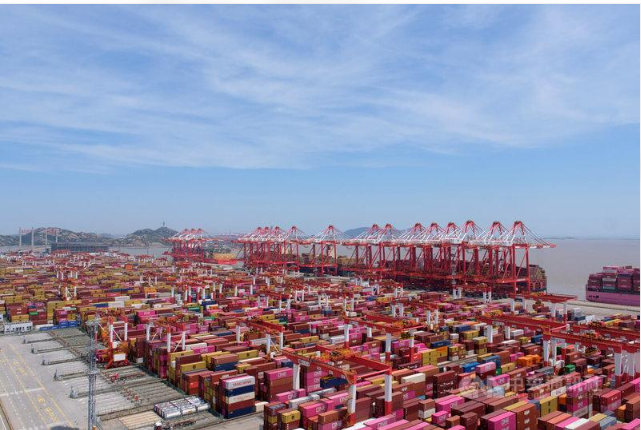
Exports have also helped compensate for sluggish domestic consumption. Chinese manufacturers have continued seeking customers overseas, generating substantial trade surpluses and maintaining production activity despite uncertainty surrounding the global economy.
However, the strategy carries risks. Growing export volumes can provoke complaints from trading partners concerned about competition, industrial subsidies and the effect of Chinese products on domestic manufacturers. Trade restrictions or weaker overseas demand could therefore create additional challenges for an economy already struggling to strengthen household spending.
Why Chinese Consumers Are Still Cautious
One of the most persistent obstacles to China’s recovery is its troubled property market. Housing has historically represented an important component of household wealth, making falling property values a significant concern for consumers.
When households become uncertain about the value of their assets or their future income, they may prioritize savings over discretionary purchases. That behaviour can weaken demand for consumer goods, restaurants, travel and other services, even when the broader economy continues to grow.
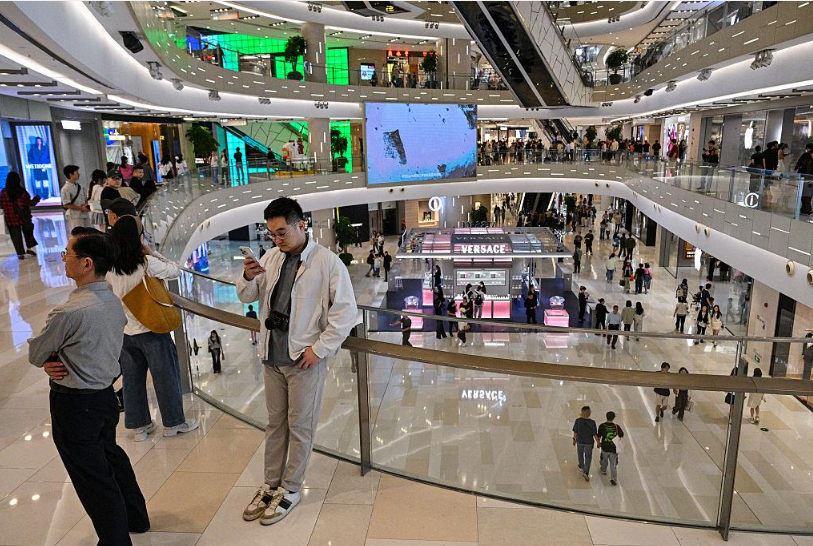
The latest figures reflect this unevenness. While some categories, including communications equipment, have recorded stronger sales, overall retail spending remains subdued. The National Bureau of Statistics reported that retail sales of consumer goods increased by only 1.1% over the first nine months of 2026.
This does not mean that Chinese consumers have stopped spending. Instead, it suggests that spending patterns are increasingly selective and that improvements in industrial output have not produced an equally strong recovery in household confidence.
For policymakers, rebuilding that confidence may prove more difficult than stimulating factory production. Consumers need reasons to believe that their incomes, employment prospects and financial security will improve before they commit to substantially higher spending.
The Consequences Extend Far Beyond China
China’s economic performance carries implications for companies and governments across the world. For commodity-exporting economies, Chinese industrial activity remains an important source of demand for raw materials, metals and energy. Continued manufacturing growth can therefore support exporters even when domestic Chinese consumption remains weak.
Consumer-facing businesses face a different environment. International luxury brands, automobile manufacturers and retailers have long regarded China as an important growth market. A cautious consumer sector complicates sales forecasts and may force companies to reconsider pricing, store expansion and investment strategies.
European manufacturers face another challenge: stronger Chinese production can intensify competition in international markets. Businesses that once viewed China primarily as a manufacturing partner or major customer increasingly encounter Chinese companies as competitors.
Across Asia, the effects are equally significant. Regional suppliers benefit from China’s industrial networks, but their prospects depend on whether Chinese production continues expanding and whether trade restrictions disrupt established commercial relationships.
The global significance of China’s recovery therefore depends on more than its headline GDP growth. What matters is which sectors are expanding, where demand originates and whether that expansion generates opportunities or additional competition for international businesses.
The Challenge Facing Beijing
China’s policymakers must balance several objectives that do not always reinforce one another. Supporting advanced manufacturing can strengthen exports and technological competitiveness, but it cannot fully replace household demand as a source of sustainable growth.
Efforts to stabilize the property market may help restore confidence, although the sector’s difficulties cannot necessarily be resolved through short-term stimulus. Measures encouraging consumption could support domestic businesses, but their effectiveness will depend on how households assess their financial circumstances.
The latest growth figures provide Beijing with some breathing room. Stronger-than-expected output reduces immediate pressure for sweeping intervention, yet the weakness in consumption and investment suggests that structural challenges remain.
The question is whether policymakers can transform industrial resilience into a recovery that households experience more directly.
THE ABE TAKE
China’s third-quarter performance demonstrates that an economy can grow at a respectable pace while still struggling with important weaknesses beneath the surface. Strong factories, competitive exports and expanding high-technology industries are genuine economic strengths. They are not, however, substitutes for confident consumers and a healthy domestic investment environment.
For international businesses, the mistake would be to interpret China’s 4.5% growth as evidence that every part of its economy is recovering at the same speed. Companies selling industrial components may encounter opportunities that look very different from those facing luxury retailers or property developers.
The larger issue concerns the sustainability of China’s economic model. An expansion supported heavily by manufacturing and foreign customers can continue delivering impressive output, but it also increases exposure to trade tensions and changes in global demand.
China’s next phase of growth will depend not simply on how much its factories can produce, but on whether its households feel secure enough to purchase more of what those factories and businesses create.
Until that balance improves, the country’s economic recovery will remain stronger on the production line than at the checkout counter.
ABE MAGAZINE
Understand More. Think Bigger.