









Tuesday, November 24, 2026
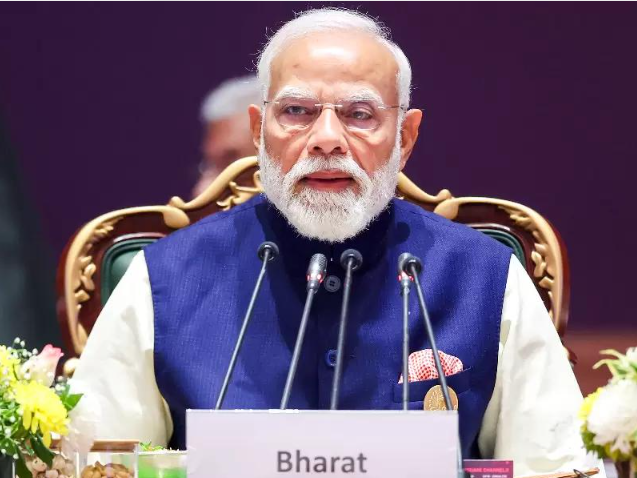
India’s economy continues to expand, and many of its largest companies are reporting stronger earnings. Yet an increasingly important question is emerging: How much of that prosperity is reaching workers? Prime Minister Narendra Modi’s challenge to business leaders has brought wages, employment and the distribution of corporate gains to the centre of India’s economic debate.
By ABE Editorial Desk
A Challenge to India’s Corporate Leaders
At a gathering of the Federation of Indian Chambers of Commerce and Industry (FICCI) in New Delhi on November 19, Prime Minister Narendra Modi delivered an unusually direct message to India’s business community.
After years of corporate tax reductions, regulatory reforms and investment incentives, he questioned whether companies had done enough to increase salaries and create employment.
His remarks highlighted a growing concern about the relationship between corporate profitability and broader economic development.
India has spent years promoting manufacturing, infrastructure investment and business expansion. Yet strong company earnings do not automatically translate into higher household incomes.
The issue is particularly significant for a country with a large young population seeking stable, productive employment.
Modi’s intervention has therefore opened a wider discussion about what successful economic growth should deliver.
The Numbers Behind the Profit-Wage Divide
The available data suggests that corporate earnings have grown considerably faster than employee compensation in important parts of India’s economy.
According to government figures cited by Reuters, factory profits increased by approximately 17% annually between the 2020–21 and 2024–25 financial years.
Employee compensation grew by approximately 13.5% annually over the same period, while employment expanded by less than 7%.
These measures describe different aspects of business performance and should not be treated as directly interchangeable.
Nevertheless, they illustrate why policymakers are questioning whether profitability is generating sufficient employment opportunities.
A separate study cited by The Indian Express estimated that aggregate after-tax profits among Nifty 500 companies increased from approximately ₹6.51 lakh crore in 2020–21 to ₹18.10 lakh crore in 2025–26.
That represents substantial earnings growth among major listed businesses.
However, profitability varies considerably between companies and sectors. Strong aggregate results do not mean every business has equal capacity to raise wages.
Why Companies Are Not Hiring Faster
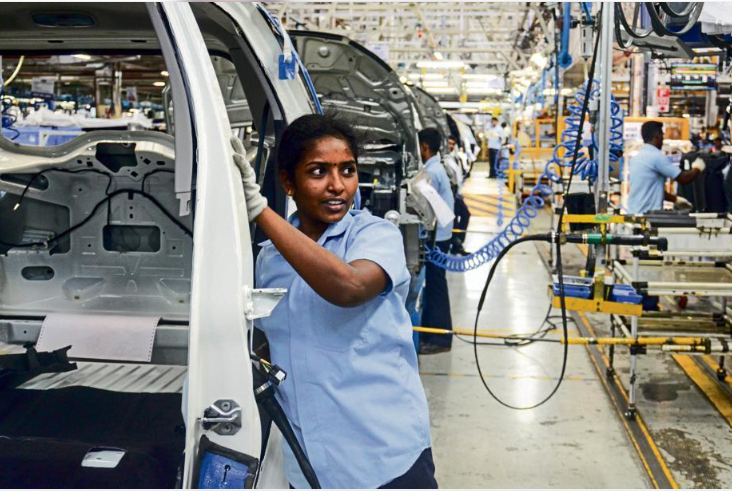
One explanation lies in the relationship between investment, productivity and demand.
Businesses generally expand their workforces when they expect additional employees to generate sufficient revenue.
If consumer demand remains uncertain, companies may prefer to preserve cash, improve productivity or invest selectively rather than undertake large-scale hiring.
Automation and technological improvements can also allow businesses to increase output without expanding employment at the same rate.
These developments are not necessarily negative.
Higher productivity can strengthen competitiveness and support long-term economic growth.
The challenge emerges when productivity improvements and stronger profits are not accompanied by sufficient opportunities for workers.
India’s manufacturing ambitions depend on attracting investment, developing skills and expanding production.
Yet investment decisions are influenced by infrastructure, export demand, financing costs and expectations about future consumption.
Tax reductions alone cannot guarantee that businesses will expand employment.
The Consumer Demand Problem

Wages are more than a cost for businesses. They are also an important source of consumer purchasing power.
When households earn more, they can spend more on goods and services.
That spending supports businesses across retail, transportation, housing, hospitality and other industries.
Weak income growth can produce the opposite effect.
Consumers may postpone discretionary purchases, reduce spending or become more dependent on borrowing.
Businesses facing uncertain demand may then delay investment and hiring, reinforcing the original problem.
This relationship helps explain why India’s wage debate extends beyond questions of corporate responsibility.
It is also a debate about the foundations of sustainable economic expansion.
The government has introduced measures intended to support household consumption, including income-tax relief and changes to indirect taxation.
However, the effectiveness of such measures depends partly on how households respond and whether businesses increase investment.
Corporate Tax Cuts Face Renewed Scrutiny
India’s corporate tax policy is central to the current discussion.
In 2019, the government introduced a reduced corporate income-tax rate of 22% for eligible domestic companies, subject to specified conditions.
The objective was to improve competitiveness, encourage investment and strengthen India’s attractiveness as a manufacturing destination.
Lower taxes can increase the funds businesses retain for investment.
However, those funds may also be used to repay debt, accumulate reserves or distribute returns to shareholders.
The economic consequences depend on how companies allocate the additional capital.
Modi’s comments suggest that policymakers are increasingly interested in the outcomes of business incentives rather than their introduction alone.
Still, the relationship between tax policy and employment is complex.
Businesses also respond to global demand, financing conditions, infrastructure quality and regulatory uncertainty.
Evaluating the effectiveness of corporate tax reductions therefore requires examining investment and employment over time, not simply comparing profits before and after a policy change.
What Businesses Say About the Pressure
Corporate executives face competing demands.
Investors expect companies to maintain profitability and manage costs. Employees seek better compensation and career opportunities. Governments want stronger investment, tax revenue and employment.
These priorities can reinforce one another, but they do not always align in the short term.
Reporting by Mint indicates that some corporate executives interpreted Modi’s remarks as a warning that future requests for additional concessions could face greater scrutiny.
Businesses may respond by emphasizing the investments, employment and productivity improvements they have already delivered.
That response deserves examination.
A company investing heavily in new facilities may contribute to long-term employment even if its immediate payroll growth is limited.
Equally, a profitable business with weak investment and stagnant compensation may face legitimate questions about how it uses its financial resources.
The challenge for policymakers is distinguishing between these situations.
Why the Debate Matters Beyond India
India’s economic trajectory carries international significance.
The country is an important consumer market, manufacturing destination and participant in global supply chains.
Its ability to create productive employment will influence domestic demand and its attractiveness to international businesses.
Multinational companies considering investment in India must evaluate not only tax incentives and labour costs but also infrastructure, workforce skills and purchasing power.
A larger, more prosperous consumer base could create opportunities for both Indian and foreign companies.
However, persistent gaps between economic expansion and household income growth could constrain those opportunities.
The debate also reflects a broader challenge facing developing and advanced economies alike.
Technological progress and capital investment can increase corporate earnings without generating employment at the same pace.
The question is how economies translate those gains into wider improvements in living standards.
THE ABE TAKE | Growth Must Be Measured Beyond Corporate Earnings
India’s debate over corporate profits and wages highlights a fundamental distinction between business success and economic development.
Profitable companies are essential to investment, innovation and competitiveness.
But rising profits alone cannot demonstrate that economic growth is delivering sufficiently broad benefits.
Employment quality, real wages, productivity and household purchasing power also matter.
At the same time, governments should not assume that every company can increase wages or hiring at the same rate. Businesses operate under different financial and competitive conditions.
The more useful question is whether India’s economic framework encourages productive investment while creating opportunities for workers to participate in the gains.
That requires reliable infrastructure, workforce development, competitive markets and policies that support sustainable demand.
For corporate leaders, stronger employee compensation can be more than a response to political pressure. When supported by productivity and profitability, it can contribute to stronger consumer markets and long-term business growth.
India’s next economic test is not simply whether its companies can earn more. It is whether the country’s expanding economic capacity can create better opportunities for the people whose work sustains that growth.
ABE MAGAZINE
Understand More. Think Bigger.