







ABE MAGAZINE | GLOBAL FINANCIAL MARKETS
October 21, 2026
Global stock markets moved higher on Wednesday as a promising start to the corporate earnings season helped restore confidence following weeks of volatility. From Seoul and Tokyo to major European exchanges, investors welcomed evidence that companies are continuing to generate profits despite elevated energy costs and uncertainty surrounding technology investment. Yet the recovery remains uneven. Behind the improving market sentiment are questions about whether corporate earnings can sustain high share valuations, whether governments can manage mounting borrowing pressures, and how businesses will respond to an increasingly unpredictable global economy.
Corporate Earnings Give Markets a Reason to Recover
Global equities recorded modest gains on Wednesday as early corporate earnings results provided investors with a welcome source of reassurance. According to LSEG data cited by Reuters, approximately 86% of S&P 500 companies that had reported results exceeded analysts’ earnings expectations, although only around 13% of the index had released figures.
The early performance suggests that many large businesses are maintaining profitability despite an environment characterized by high energy prices, uncertain borrowing costs and shifting consumer demand. For investors concerned that recent market valuations have become disconnected from economic fundamentals, stronger earnings offer evidence that corporate performance remains resilient.
However, the relatively small proportion of companies reporting means it is too early to draw conclusions about the entire earnings season. Results from major technology, manufacturing and consumer businesses will provide a clearer picture of whether profitability is improving across industries or concentrated among a smaller group of companies.
The distinction matters because financial markets often respond not only to reported profits but also to management expectations about future growth. Companies delivering strong earnings while warning about rising costs or weaker demand may still struggle to maintain investor confidence.
Asian Markets Lead Wednesday’s Recovery
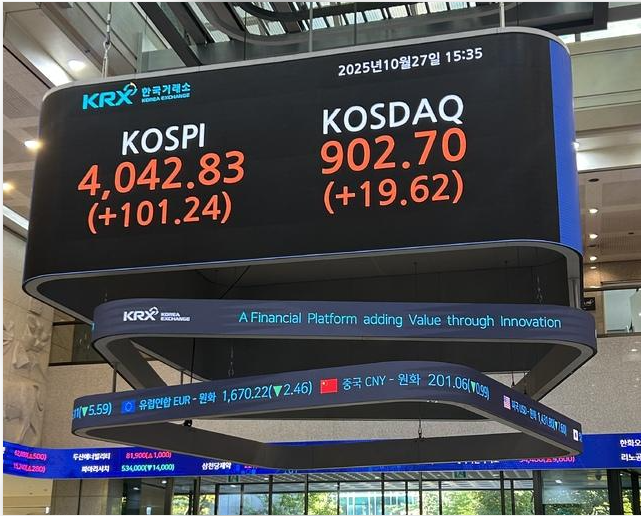
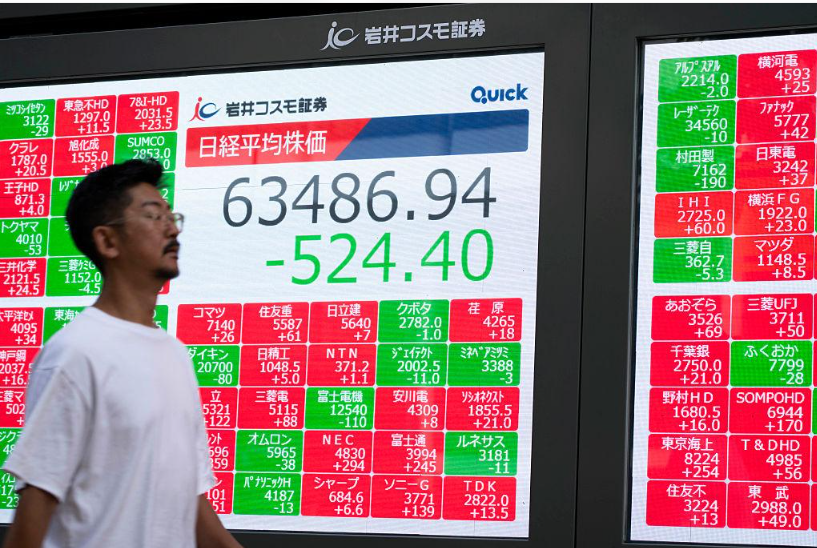
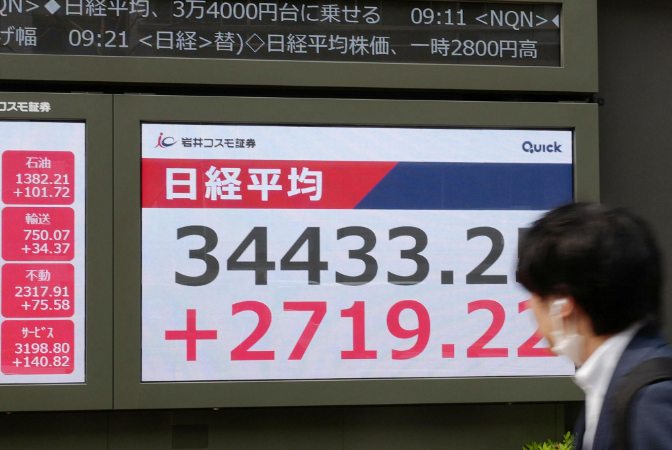
Asian stock markets were among the strongest performers during Wednesday’s session. South Korea’s Kospi advanced more than 3%, while Japan’s Nikkei gained almost 1%. The broader MSCI index of Asia-Pacific shares outside Japan also moved higher, reflecting renewed interest in regional equities.
South Korea’s performance was particularly notable because the country’s stock market is closely connected to semiconductor manufacturing, electronics and other technology industries. Recent volatility in technology-related shares has created uncertainty about how investors should value companies exposed to rapid infrastructure expansion.
Japan’s market benefited from improved sentiment and fresh trade figures. Government data showed that Japanese exports increased by 16.7% in September compared with a year earlier, supported by automobiles and computer-related products.
The export figures demonstrate the continued importance of international demand to Japan’s manufacturing economy. Yet imports also rose substantially, partly because of higher energy costs, highlighting the financial challenges facing countries dependent on overseas fuel supplies.
For Asian manufacturers, the outlook therefore remains mixed. Strong technology demand can support production and exports, but energy expenses and changing global investment expectations continue to influence profitability.
The Technology Investment Debate Is Far From Over
Despite Wednesday’s market recovery, concerns about technology spending remain an important influence on investor behaviour.
Companies developing advanced computing infrastructure have committed substantial resources to data centres, semiconductor equipment and supporting energy systems. These investments are intended to meet demand for increasingly sophisticated digital services, but their financial returns remain under scrutiny.
The pressure became particularly visible in Australia, where data centre operator NextDC experienced a severe share-price decline after reducing its revenue expectations and delaying future developments.
The reaction illustrated how quickly investors can reassess companies when projected growth fails to materialize. A business may operate in a rapidly expanding industry and still encounter financial difficulties if its spending commitments exceed near-term commercial opportunities.
Other technology businesses experienced stronger investor interest, demonstrating that the market is not rejecting the sector as a whole. Instead, investors appear increasingly focused on distinguishing companies with convincing revenue prospects from those whose valuations depend heavily on expectations.
Upcoming corporate results will help determine whether technology companies can justify continued investment and maintain confidence in their long-term profitability.
Europe’s Recovery Faces a Different Challenge

European stock markets also moved higher on Wednesday, but the region faces additional economic pressures.
France has become a particular focus of concern following widespread political unrest and renewed uncertainty about public finances. French government bond yields have risen sharply as investors reassess the risks associated with the country’s fiscal position.
Higher government borrowing costs can influence the wider economy by affecting financing conditions, investor confidence and expectations about future public spending. Businesses may face a more difficult environment if financial uncertainty persists.
The consequences are already visible in parts of the consumer sector. French supermarket operator Carrefour reduced its financial guidance amid disruption associated with the unrest, contributing to a sharp decline in its share price.
Nevertheless, European economic conditions are not uniformly negative. Some investors remain encouraged by corporate earnings and signs that the euro-area economy is maintaining growth despite elevated energy prices.
The contrasting developments highlight the importance of distinguishing regional political risks from the financial performance of individual businesses.
Energy Prices Remain a Global Concern
Oil prices continued to influence financial markets as Brent crude moved back above $110 a barrel following a brief decline earlier in the week.
Elevated energy prices affect industries differently. Oil producers may benefit from stronger revenues, while airlines, logistics operators, manufacturers and other fuel-intensive businesses face additional operating costs.
For countries that depend heavily on imported energy, higher prices can also place pressure on trade balances and consumer purchasing power. Japan’s latest trade figures illustrate how rising import costs can offset some of the benefits generated by stronger exports.
The uncertainty surrounding international energy supplies creates difficulties for corporate planning. Businesses making decisions about investment, transportation and pricing must consider the possibility that costs could change substantially over relatively short periods.
Consequently, stronger corporate earnings may support financial markets without eliminating the economic risks associated with energy volatility.
What Investors Will Watch Next
The next stage of the earnings season will be important in determining whether Wednesday’s recovery can continue.
Major corporate results will provide insight into technology investment, consumer spending and the ability of businesses to maintain margins despite higher operating costs. Investors will also monitor government bond markets, particularly in countries experiencing fiscal or political instability.
For companies seeking financing, changes in bond yields and market confidence can influence the cost of raising capital. For households, financial-market developments may eventually affect borrowing conditions, employment prospects and consumer confidence.
The global economy is therefore entering a period in which corporate profitability, public finances and energy security are becoming increasingly interconnected.
THE ABE TAKE
Wednesday’s recovery demonstrates that strong corporate earnings remain one of the most powerful sources of confidence in financial markets. When businesses deliver profits above expectations, investors have a tangible reason to reconsider concerns about economic weakness and market valuations.
Yet the improvement should not be mistaken for the disappearance of risk. Technology investment remains expensive, energy prices continue to threaten operating margins, and political uncertainty is placing pressure on government borrowing costs in parts of Europe.
For investors, the most important distinction is between companies generating sustainable financial returns and those relying primarily on expectations of future growth.
For business leaders, the lesson is equally significant. Expanding revenue and investing in new opportunities matter, but long-term resilience depends on controlling costs, managing financial exposure and maintaining profitability through uncertain conditions.
Global markets have found some encouragement in the opening stages of earnings season. Whether that confidence develops into a sustained recovery will depend on what companies report next and whether their results justify the optimism returning to international exchanges.
ABE MAGAZINE
Understand More. Think Bigger.