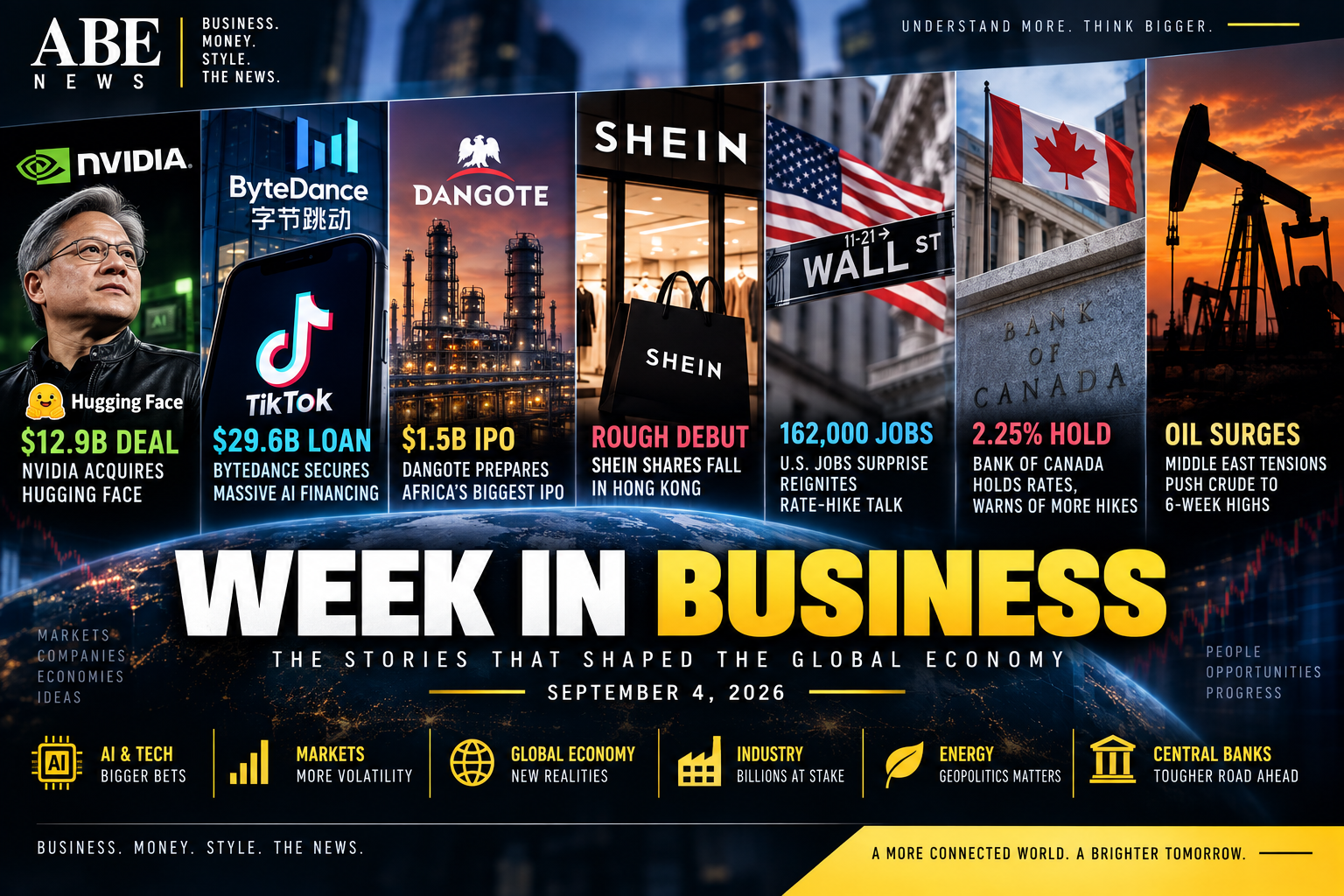










ABE MAGAZINE | FRIDAY’S WEEK IN BUSINESS
October 16, 2026
From India’s remarkable technology-stock rebound to Europe’s struggle with energy costs, the global business landscape delivered sharply contrasting developments this week. International financial leaders warned that economic resilience was becoming harder to sustain, while companies, investors and governments reconsidered where to direct capital. Across Asia, Europe, Africa and the Americas, the central challenge was increasingly clear: economic growth continues, but the ability to finance it, sustain it and benefit from it is becoming more uneven.
The Global Economy Faces a Test of Resilience
The International Monetary Fund’s annual meetings in Bangkok provided the backdrop for a consequential week in international business. On October 14, IMF Managing Director Kristalina Georgieva warned that the global economy’s ability to absorb repeated shocks was approaching its limits.
Higher energy costs, persistent inflation and mounting debt have increased pressure on governments and businesses. At the same time, investment in advanced computing and related infrastructure continues supporting economic activity, particularly in Asian economies connected to semiconductor supply chains.
These competing forces explain why global economic performance remains difficult to assess through a single headline. Some industries are attracting substantial investment while others struggle with financing costs, expensive inputs and uncertain demand.
The week’s defining question was whether corporate earnings and international investment could continue supporting growth as economic conditions became more demanding.
Asia: India’s Technology Companies Stage a Remarkable Rebound
India delivered one of the week’s most striking corporate-market developments.
Shares in major Indian information technology companies surged after stronger-than-expected quarterly results encouraged investors to reconsider the sector’s prospects. Reuters reported that the Nifty IT index had risen approximately 10.4% during the week, putting it on course for its strongest weekly percentage gain in nearly eighteen years.
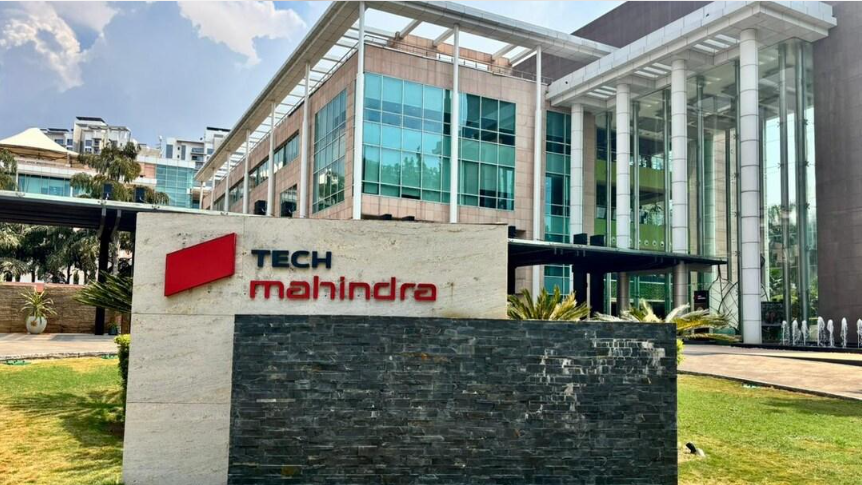
Tech Mahindra and Wipro were among the companies attracting renewed attention after reporting better-than-expected revenue. Shares in Infosys and Tata Consultancy Services also benefited from improving sentiment.
The rebound was significant because India’s outsourcing industry has faced concerns about how artificial intelligence could change demand for traditional technology services. Stronger earnings offered evidence that established providers could continue securing business while adapting their operations.
Nevertheless, the sector remained substantially below its level at the beginning of the year. The rally represented renewed investor confidence, not proof that its longer-term challenges had disappeared.
Europe: Corporate Earnings Improve as Energy Costs Threaten Industry
European markets offered a different picture of business resilience.
On Friday, the STOXX 600 was on course for its strongest weekly performance since June, supported by encouraging corporate earnings and a recovery in technology shares following earlier volatility.
However, European governments continued confronting the effects of elevated energy costs and international competition.
At an October 15 summit, European Union leaders debated industrial competitiveness, the cost of energy, budget priorities and trade relations with China. Differences emerged over how to protect businesses facing expensive electricity and fuel while maintaining environmental and fiscal commitments.
The discussions illustrated a central challenge for European manufacturers. Companies competing internationally must manage production costs that can be influenced by geopolitical disruptions, domestic energy policy and access to affordable capital.
Stronger corporate earnings may improve investor confidence, but they do not remove the structural pressures facing energy-intensive industries.
The Middle East: Energy Disruptions Affect Businesses Far Beyond the Region
The continuing conflict in the Middle East remained an important influence on global commercial conditions.
Disruptions to energy infrastructure and transportation have contributed to higher prices for refined fuels, creating different outcomes across industries.
Some refining businesses have benefited from stronger margins as diesel and jet fuel supplies tightened. Airlines, freight operators and manufacturers, however, have faced rising operating expenses.
The consequences extend to importing economies in Asia, Europe and Africa, where energy costs influence transportation, industrial production and consumer prices.
This uneven impact demonstrates how geopolitical developments can create financial gains for certain companies while imposing substantial costs on others.
For business leaders, the week’s energy developments reinforced the importance of diversified suppliers, reliable transport networks and contingency planning.
Africa: Critical Minerals Investment Moves Up the Global Agenda
Africa’s position in international investment received renewed attention during the IMF and World Bank meetings.
On October 16, World Bank President Ajay Banga announced an ambition to increase the institution’s critical-minerals financing business fivefold over five years. The bank identified twenty countries with which it could potentially develop partnerships.
The initiative is relevant to mineral-producing economies, including several African countries seeking to expand investment in resources used in electrical equipment, batteries and industrial manufacturing.
However, increased financing does not automatically translate into broad economic development. The benefits depend on whether projects generate local employment, infrastructure improvements, processing capacity and sustainable commercial activity.

The announcement also reflects a wider change in global industrial strategy. Governments and companies increasingly view access to critical minerals as an important consideration in manufacturing competitiveness and supply-chain security.
For African economies, the opportunity is to negotiate investments that support domestic industries rather than relying exclusively on raw-material exports.
Latin America: Debt and Productivity Return to the Forefront
Latin America’s economic outlook became another important subject during the international financial meetings.
On October 16, the IMF urged governments across the region to strengthen public finances and improve productivity while external conditions remained relatively supportive.
The fund projected growth of 2.3% for Latin America and the Caribbean in 2026 and 2.5% in 2027, reflecting a moderate expansion rather than a major acceleration.
The warning matters for companies operating in the region. Public debt pressures can limit infrastructure spending, while weak productivity growth constrains wages, business competitiveness and long-term investment.
At the same time, the region’s agricultural and commodity exporters remain important participants in changing international trade networks, including growing commercial connections with Asian markets.
Latin America’s challenge is to convert those opportunities into more durable economic growth through investment, infrastructure and stronger domestic businesses.
Global Business: The Competition for Capital Is Intensifying
Beyond individual regions, this week’s developments highlighted a significant transformation in international business finance.
A Financial Times analysis published on October 16 described how companies are restructuring not only their physical supply chains but also the financial systems used to move payments and working capital.
International businesses increasingly need to manage cash across currencies, subsidiaries and banking networks while responding to higher financing costs.
The World Bank’s critical-minerals initiative, India’s technology earnings and Europe’s industrial-policy debates all reflect the same underlying competition: attracting and deploying capital where it can generate sustainable returns.
For smaller businesses, access to finance remains a particular challenge. Even when international demand exists, companies may lack the credit or liquidity needed to expand production and fulfil orders.
The ability to manage capital effectively is therefore becoming an important competitive advantage across industries and regions.
Who Benefited, Who Faced Pressure, and What Comes Next
Indian technology exporters emerged among the week’s notable beneficiaries as earnings helped restore investor confidence. Selected European companies also gained support from encouraging financial results, while businesses positioned to benefit from critical-minerals investment attracted renewed policy attention.
The pressures were equally visible. Energy-intensive manufacturers, fuel-dependent transport operators and heavily indebted economies faced difficult financial conditions. Companies relying on expensive borrowing also confronted greater scrutiny from investors.
Next week, attention will turn to additional corporate earnings, energy-market developments and the consequences of policy discussions at the international financial meetings.
Investors will be watching whether company profits can justify current valuations. Governments will face decisions about industrial competitiveness, debt and investment, while businesses will continue adjusting their financing and supply chains.
THE ABE TAKE
This week’s most important lesson is that global economic resilience is not the same as universal prosperity.
India’s technology rebound demonstrated the importance of corporate earnings, while Europe’s energy challenges revealed the difficulties facing industrial competitiveness. Africa’s investment opportunities and Latin America’s productivity concerns showed how access to capital and economic structure influence long-term growth.
The companies and economies best positioned for the coming years may be those capable of turning investment into sustained productivity, rather than relying on temporary market enthusiasm or favourable commodity prices.
For business leaders, financial discipline, diversification and reliable access to capital are becoming increasingly important. For governments, attracting investment must be accompanied by policies that allow businesses and workers to benefit from it.
The world economy remains interconnected, but its opportunities are distributed unevenly. Understanding those differences is essential to understanding where global business is heading.
ABE MAGAZINE
Understand More. Think Bigger.