








Trade negotiations between Canada and the United States have entered one of their most important stages in months.
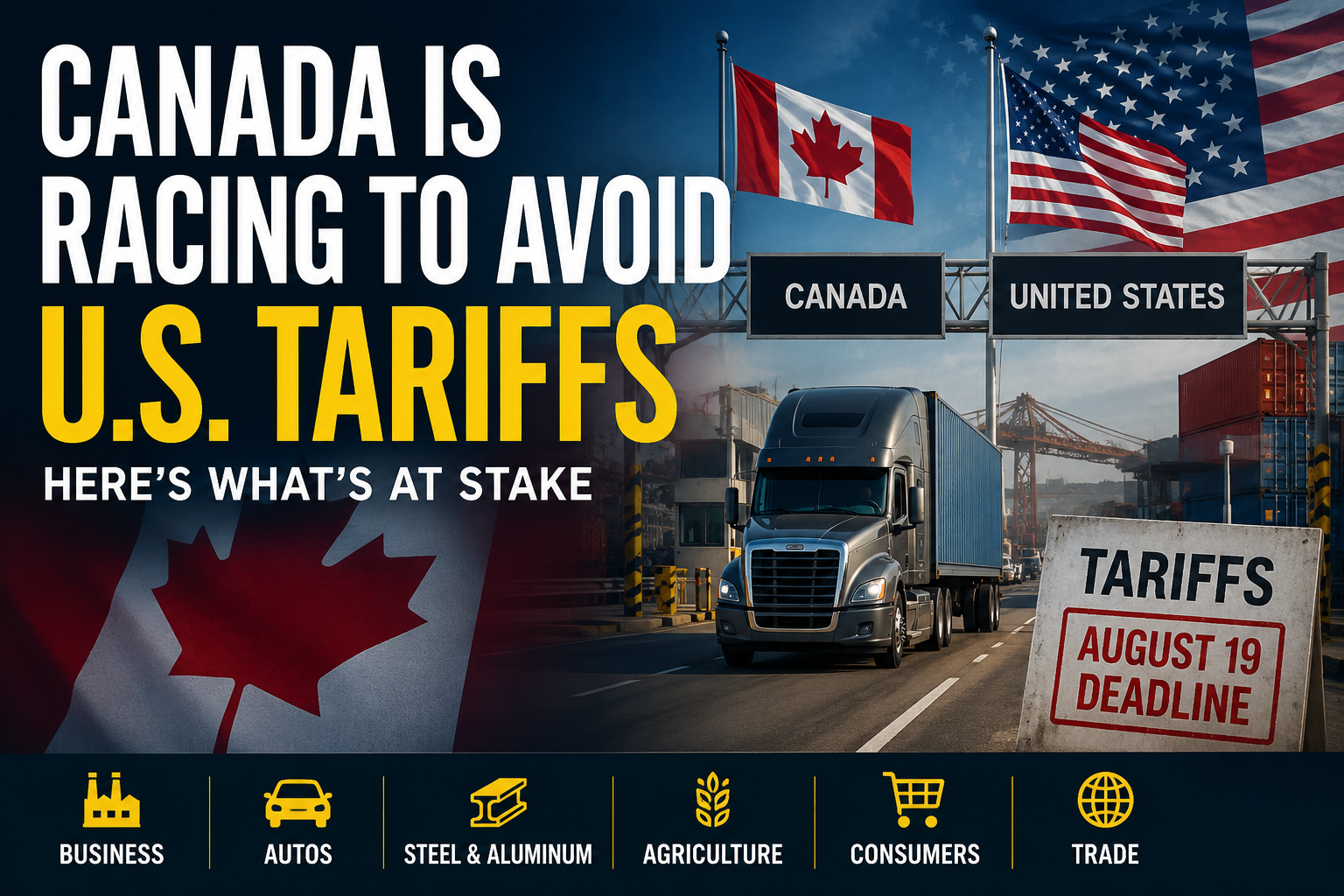
With a August 19 deadline approaching, officials from both countries are meeting daily in an effort to avoid a new round of U.S. tariffs that could affect billions of dollars in cross-border trade. The outcome could have significant consequences for manufacturers, farmers, exporters, and consumers on both sides of the border.
At first glance, this may appear to be another political negotiation.
It isn’t.
It is a business story with the potential to influence supply chains, production costs, prices, and one of the world’s largest trading relationships.
Why These Trade Talks Matter
Canada and the United States are each other’s largest trading partners.
Every day, goods worth billions of dollars cross the border, supporting industries such as automotive manufacturing, steel, aluminum, agriculture, energy, and retail.
When tariffs increase, businesses often pay more to import or export products. Those additional costs can reduce profits, disrupt supply chains, or eventually be passed on to consumers through higher prices.
What’s Being Negotiated?
According to Reuters, Canada is considering several trade concessions in exchange for relief from existing U.S. tariffs and to prevent additional tariffs scheduled for August 19.
The discussions reportedly include:
- Possible changes to tariffs on U.S.-made automobiles.
- Canada’s dairy quota system.
- The return of American alcoholic beverages to store shelves in some Canadian provinces.
- Reducing existing U.S. tariffs on Canadian steel and aluminum as part of a broader agreement.
Negotiators from both countries are meeting every day ahead of the deadline, although officials have cautioned that no agreement is guaranteed.
Why Businesses Are Watching Closely
For many companies, tariffs are more than government policy.
They directly affect operating costs.
Manufacturers may pay more for imported materials.
Exporters could become less competitive.
Retailers may face higher inventory costs.
Automotive companies, steel producers, agricultural exporters, and logistics firms are among the sectors most exposed if additional tariffs take effect.
Businesses also value certainty.
Even the possibility of new tariffs can delay investment decisions, hiring plans, and long-term contracts.
What This Means for Canadian Consumers
Although negotiations happen between governments, their effects can eventually reach households.
If businesses face higher import costs, consumers could experience higher prices on some vehicles, building materials, food products, and other imported goods.
Not every tariff leads directly to higher prices, but prolonged trade disputes often increase costs somewhere along the supply chain.
The Bigger Picture
The current negotiations are about more than avoiding one round of tariffs.
They also reflect the broader effort to stabilize one of the world’s most important trading relationships while discussions continue over the future of the United States-Mexico-Canada Agreement (USMCA).
For businesses operating across North America, the outcome could influence investment decisions, production strategies, and cross-border trade for months to come.
What’s Next?
The next few days will be critical.
Negotiators are expected to continue meeting daily before the August 19 deadline.
If an agreement is reached, some existing tariffs on Canadian steel and aluminum could be eased while new tariffs are avoided.
If talks fail, additional U.S. tariffs could take effect, increasing pressure on businesses and potentially leading to further Canadian responses.
THE ABE NEWS TAKE
Trade disputes are often presented as political battles.
In reality, they are business stories.
Every tariff changes the economics of making, moving, and selling products.
For business leaders, the question isn’t simply whether Canada and the United States reach a deal.
It’s whether companies can continue planning with confidence in an environment where trade rules can change quickly.
Stable trade relationships don’t just benefit governments.
They help businesses invest, create jobs, and keep products moving across borders.
That is what’s truly at stake.
ABE NEWS
Business. Money. Style. The News.
Understand More. Think Bigger.