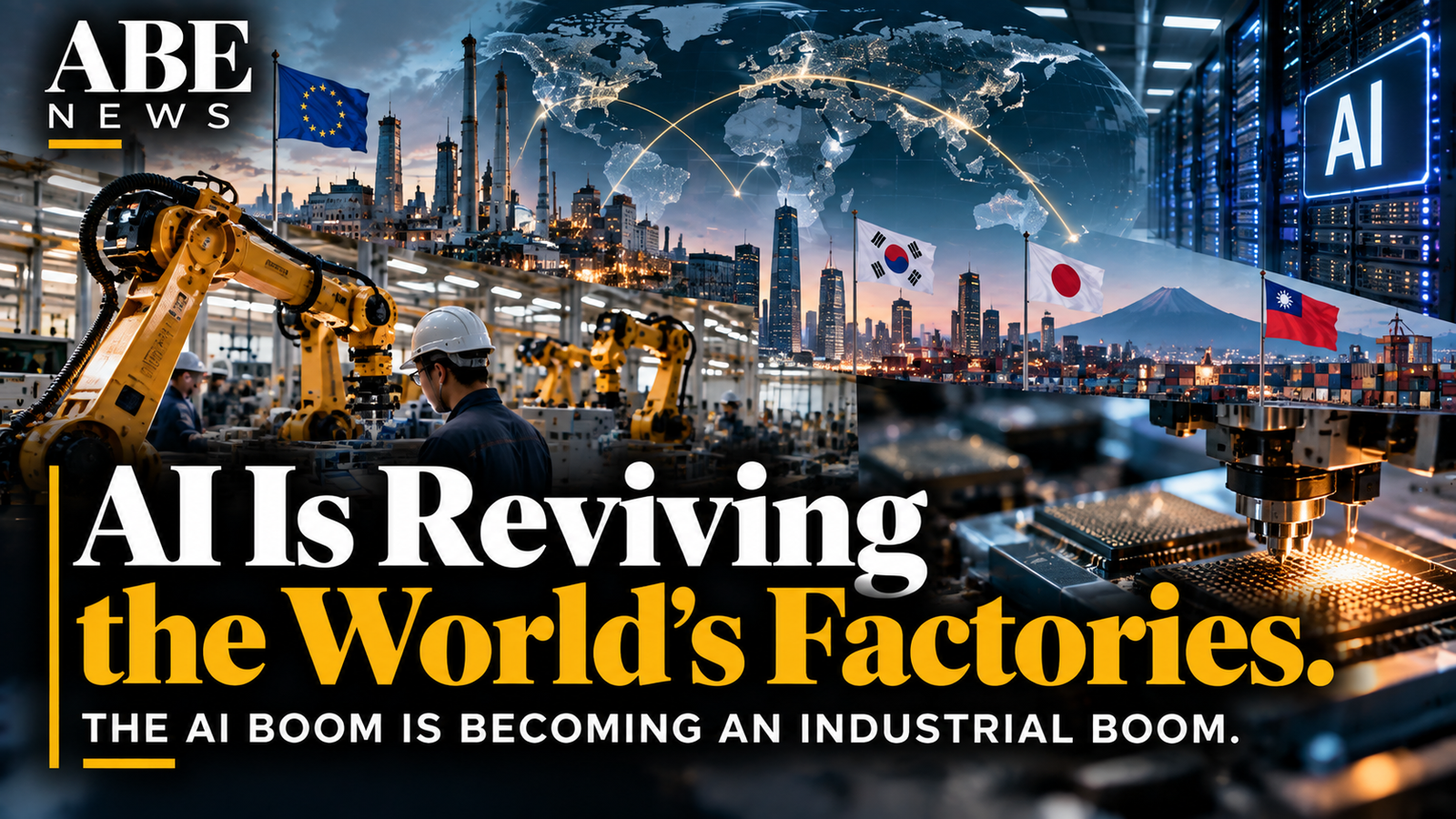









Artificial intelligence is entering a new phase.
For the past few years, companies raced to build smarter AI models. Now, the race is shifting toward something even bigger: building the infrastructure that will power the next generation of AI.
That shift became even clearer this week after Nvidia announced partnerships with six of the world’s largest financial institutions to help raise more than $500 billion for AI infrastructure projects.
At first glance, this may sound like another technology announcement.
It isn’t.
It is one of the clearest signs yet that Wall Street now sees artificial intelligence as one of the biggest long-term investment opportunities in the global economy.
Why $500 Billion Matters
Half a trillion dollars is an enormous amount of money.
To put it into perspective, it is larger than the annual economic output of many countries.
Instead of funding one company or one product, the money is expected to support the construction of AI infrastructure—including data centres, high-performance computing systems, networking equipment and the computing power needed to train and run increasingly advanced AI models.
Demand for AI computing has exploded as businesses across industries adopt artificial intelligence.
Building that infrastructure, however, requires enormous amounts of capital.
Nvidia believes traditional financing alone is no longer enough.
Wall Street Is Joining the AI Race
The initiative brings together some of the biggest names in global finance.
Apollo, BlackRock, Blackstone, Brookfield, Goldman Sachs and KKR have signed agreements with Nvidia to develop financing platforms that can channel large amounts of private capital into AI infrastructure projects.
Rather than simply lending money, these firms are helping create investment vehicles designed specifically for AI computing.
It represents a new relationship between finance and technology.
Instead of only investing in AI companies, investors are now investing in the infrastructure that makes AI possible.
Nvidia Is Becoming More Than a Chip Company
For years, Nvidia has been known as the company behind the graphics processors that power many of the world’s most advanced AI systems.
But this latest announcement shows the company expanding beyond hardware.
It is helping build the financial ecosystem needed to support future AI growth.
The goal is to make AI computing more accessible to enterprises, governments, cloud providers and AI developers while creating long-term investment opportunities for institutional investors.
In other words, Nvidia is no longer just supplying the AI revolution.
It is helping finance it.
Why Businesses Should Care
Artificial intelligence is no longer a technology story.
It is becoming a business story.
Companies across healthcare, banking, manufacturing, retail, logistics, education and energy are increasingly relying on AI to improve productivity, reduce costs and develop new products.
As demand grows, so does the need for faster computing power.
That means the companies building AI infrastructure could become just as important as the companies creating AI software.
Businesses that adopt AI earlier may gain significant competitive advantages, while those that delay could find themselves struggling to keep pace in an increasingly technology-driven economy.
What This Means for Investors
The announcement also reflects a broader change in how investors think about artificial intelligence.
Rather than viewing AI as a short-term technology trend, many large financial institutions now see it as a long-term infrastructure opportunity.
Just as previous generations invested heavily in railways, electricity, telecommunications and the internet, today’s investors are increasingly directing capital toward the digital infrastructure expected to support future economic growth.
That does not mean every AI investment will succeed.
But it does suggest that institutional investors believe demand for AI computing will continue growing for years.
What This Means for Africa
Africa is still in the early stages of large-scale AI infrastructure development.
However, global investment in AI could create new opportunities for African startups, universities, cloud providers and technology companies.
Access to more affordable AI computing may eventually help businesses across the continent develop local AI solutions in healthcare, agriculture, financial services and education.
At the same time, countries without strong digital infrastructure risk falling further behind as the global AI economy expands.
The challenge for many African governments will be creating the conditions needed to attract investment while developing the skills required for an AI-driven future.
The Bigger Picture
Artificial intelligence is no longer simply about creating smarter chatbots.
It is becoming one of the world’s largest infrastructure investments.
Roads powered industrial economies.
The internet powered the digital economy.
AI infrastructure could become the foundation of the next economic era.
The companies building that foundation—and the investors financing it—may shape global business for decades to come.
THE ABE NEWS TAKE
The biggest technology revolutions are never just about technology.
The internet wasn’t only about websites.
It transformed commerce.
Cloud computing wasn’t only about servers.
It changed how businesses operate.
Artificial intelligence is following the same path.
Today’s story isn’t about Nvidia.
It’s about where the world’s money is going.
When Wall Street commits hundreds of billions of dollars to building AI infrastructure, it sends a powerful signal.
Artificial intelligence is no longer a future industry.
It is becoming part of the global economic system.
For business leaders, entrepreneurs and investors, the question is no longer whether AI will reshape industries.
The question is how quickly it will happen—and who will be ready when it does.
ABE NEWS
Business. Money. Style. The News.
Understand More. Think Bigger.