







The Spanish beauty conglomerate’s proposed acquisition of Parfums de Marly and Initio reveals how luxury businesses are using acquisitions to expand their influence, strengthen profitability and secure long-term growth.
By ABE Editorial Desk | ABE Magazine
November 28, 2026
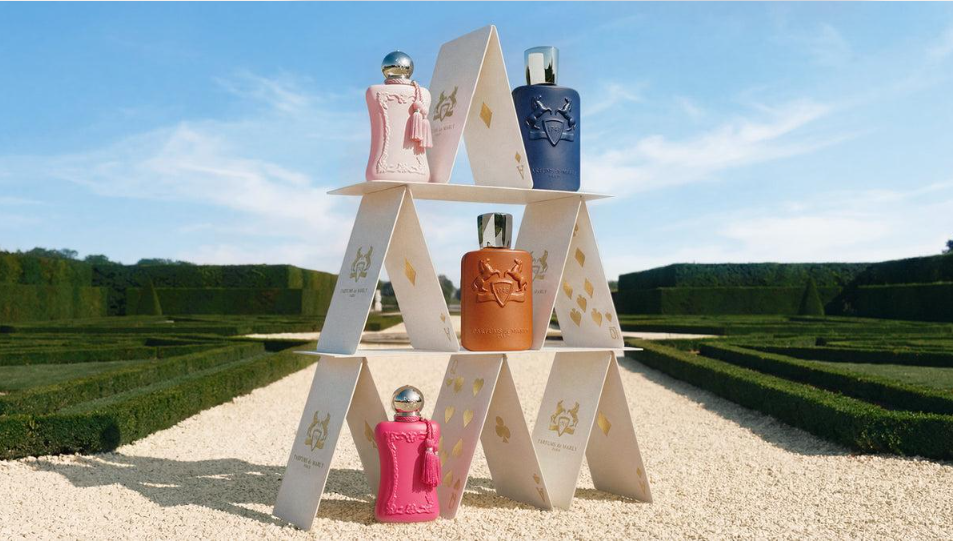
The global luxury fragrance industry is entering another period of corporate consolidation as established beauty groups compete to acquire distinctive independent brands. Spanish beauty conglomerate Puig announced on Friday that it had entered into agreements to purchase a 75% stake in Artessence Group, the parent company of Parfums de Marly and Initio Parfums Privés. The proposed €1.2 billion transaction would give Puig control of two luxury fragrance houses with growing international influence. Beyond the immediate financial implications, the deal illustrates how entrepreneurial creativity can become a valuable corporate asset.
For Puig, the acquisition represents an opportunity to deepen its presence in premium perfumery rather than pursue expansion across unrelated industries. For private equity firm Advent International, it offers an opportunity to realize returns from a business that has expanded considerably since its investment in 2023. Meanwhile, founder Julien Sprecher would retain an economic interest in the enterprise he helped establish. The transaction brings together three distinct approaches to building wealth: entrepreneurship, private investment and corporate ownership.
From an Independent Perfumer to a Global Luxury Business
Julien Sprecher established Parfums de Marly in 2009, drawing inspiration from the traditions of French perfumery during the eighteenth century. Rather than competing primarily through affordability or mass-market distribution, the company developed its identity around craftsmanship, distinctive fragrances and premium positioning. Initio Parfums Privés followed in 2015 with an emphasis on the relationship between fragrance, emotion and sensory experience.
The commercial strength of these businesses lies partly in their ability to offer consumers an alternative to more widely distributed designer perfumes. Their identities appeal to customers seeking individuality and exclusivity. This positioning creates opportunities to command premium prices while reducing reliance on the enormous sales volumes required by mass-market competitors.
Building a recognizable fragrance house, however, requires more than developing attractive products. International distribution, retail partnerships, marketing and access to capital become increasingly important as a company expands. The evolution of Artessence demonstrates how entrepreneurial businesses can benefit from institutional investment without immediately abandoning their original identity.
How Private Equity Accelerated the Business

Advent International became the majority shareholder in Artessence in 2023. Its involvement introduced additional financial and operational resources that supported the company’s international expansion. According to Advent, sales have approximately tripled during its ownership period, while the brands have established a presence in around 70 countries.
This growth illustrates the commercial logic behind private equity investment. Rather than simply acquiring companies and waiting for their valuations to increase, successful investment firms can strengthen management, improve distribution and accelerate expansion. These improvements can make an enterprise more attractive to larger strategic buyers.
For Advent, the proposed sale represents the next stage of that investment cycle. The firm would transfer ownership to a corporation with an established fragrance business and the resources to support further growth. However, the actual financial return on its investment cannot be determined from the announced purchase price alone.
Why Puig Is Betting on Premium Fragrances
Puig has developed an extensive beauty and fashion portfolio that includes established names such as Rabanne, Carolina Herrera, Byredo and Penhaligon’s. Its expansion strategy reflects a belief that brands with distinctive identities can create sustainable value when supported by international distribution and specialist expertise. Adding Parfums de Marly and Initio would strengthen its position within the premium segment of the fragrance industry.
The acquisition also supports Puig’s ambition to exceed €8 billion in annual revenue by 2032. Management is seeking growth through a combination of existing brand development and selective acquisitions. Buying established fragrance businesses provides a faster route into attractive market segments than developing entirely new brands internally.
There are nevertheless risks associated with this strategy. Acquisitions can become expensive when multiple investors compete for desirable businesses. Management must therefore ensure that future growth and profitability justify the capital committed to expansion.
The Economics Behind the €1.2 Billion Transaction
Artessence expects to generate between $420 million and $440 million in revenue during its financial year ending March 2027. Forecast earnings before interest, taxes, depreciation and amortization range from $180 million to $190 million. At the midpoint of these projections, the implied EBITDA margin is approximately 43%.

Such a margin helps explain the strategic attraction of premium fragrance businesses. Strong brand recognition and pricing power can create considerable financial value relative to sales. However, EBITDA is not equivalent to net profit or free cash flow, and projected earnings remain dependent on the company’s future performance.
The financial appeal of luxury fragrances also extends beyond individual purchases. Customers may develop long-term relationships with particular fragrances or brands, creating opportunities for repeat sales and complementary product launches. The challenge is maintaining that loyalty without weakening the exclusivity that initially attracted consumers.
Why the Founder Is Retaining Ownership
Under the proposed arrangement, Julien Sprecher would retain a 25% interest through his holding company. The structure also provides mechanisms through which Puig could eventually acquire the remaining shares, with additional payments linked to business performance. This creates a financial incentive for both parties to pursue sustainable expansion.
Retaining an ownership position can be particularly valuable when a founder’s creative judgment remains important to the company’s identity. A complete departure immediately following an acquisition could create uncertainty among employees, customers and commercial partners. Continued founder involvement may therefore help preserve institutional knowledge during the transition.
The arrangement demonstrates that entrepreneurs do not necessarily have to choose between retaining complete independence and selling their entire business. Partial acquisitions can provide access to capital, expertise and international networks while allowing founders to participate in future value creation. The effectiveness of such arrangements ultimately depends on governance and the alignment of shareholder interests.
The Challenge of Preserving Exclusivity
Puig’s greatest challenge may be balancing commercial expansion with the distinctive character of its new fragrance houses. Luxury consumers often value products precisely because they are not perceived as ordinary or universally available. Excessive distribution or aggressive product expansion could undermine the reputation that supports premium pricing.
This creates a fundamental tension within the luxury industry’s acquisition model. Conglomerates purchase independent brands because of their individuality, yet their natural commercial ambition is to expand those businesses. Successful ownership requires understanding which activities benefit from corporate scale and which should remain under the control of individual brand teams.
Puig intends to maintain a meaningful degree of operational autonomy for Artessence following completion. Whether this approach succeeds will depend on management’s ability to grow the brands without compromising their creative and commercial identities.
THE ABE TAKE | Building Wealth Through Brand Ownership
The proposed Artessence acquisition demonstrates how intellectual property, customer loyalty and creative differentiation can become significant economic assets. Julien Sprecher built businesses around a distinctive entrepreneurial vision, Advent helped accelerate their commercial development, and Puig now seeks to incorporate them into a larger corporate portfolio. Each stage represents a different contribution to enterprise value.
For entrepreneurs, the lesson is that building a valuable company requires more than generating revenue. Strong management, recognizable brands, effective distribution and sustainable profitability can transform a business into an attractive acquisition target. Founders who understand these elements are better positioned to negotiate ownership transitions that protect their interests.
For Puig, the ultimate measure of success will not be the size of its acquisition portfolio, but its ability to preserve the commercial characteristics that made those businesses valuable. In luxury, the most powerful corporate strategy may be knowing how to expand a brand without making it ordinary.
Understand More. Think Bigger.