










From a tiny shop in Nottingham to an international fashion house spanning five continents, Sir Paul Smith has built a career around individuality, craftsmanship and creative independence. His latest recognition in London and expansion in New York demonstrate the enduring influence of a designer who has never been afraid to challenge convention.
By ABE Editorial Desk | ABE Magazine
Friday, November 27, 2026
A Lifetime of British Style
At 80, Sir Paul Smith remains one of the most distinctive personalities in British fashion. On November 5, the designer received the Freedom of the City of London during a ceremony at Guildhall. The honour recognizes his contribution to British design, entrepreneurship and cultural life. It also celebrates a career that has demonstrated how individual creativity can develop into an internationally recognized business.
Smith’s achievements are particularly remarkable because his fashion house has maintained its independence for more than five decades. According to the City of London Corporation, the brand now reaches over 50 countries through approximately 1,700 distribution points. Its collections extend beyond traditional menswear into womenswear, accessories and homeware. Despite this expansion, the designer’s personality remains central to the company’s creative identity.
From Nottingham to the International Fashion Stage
Paul Smith’s journey began far from the luxury boutiques of London and Paris. He opened his first shop in Nottingham in 1970, operating from a modest space measuring approximately three metres by three metres. The business gave him an opportunity to develop his understanding of clothing, customer preferences and personal style. What began as a small retail venture eventually became the foundation of an international fashion house.
The opening of his first London shop in Covent Garden in 1979 marked an important step in that development. London provided access to a diverse creative community shaped by music, art, photography and design. These influences helped distinguish Smith’s approach from more conventional fashion traditions. His work gradually developed an identity that was unmistakably British without being restricted by traditional expectations.
The growth of the business illustrates the importance of consistency in fashion entrepreneurship. Rather than abandoning his original identity as the company expanded, Smith developed a recognizable creative language. Customers could encounter different collections while still identifying the personality behind them. That continuity remains a valuable advantage in an industry characterized by rapidly changing trends.
The Art of Making Classic Fashion Unexpected
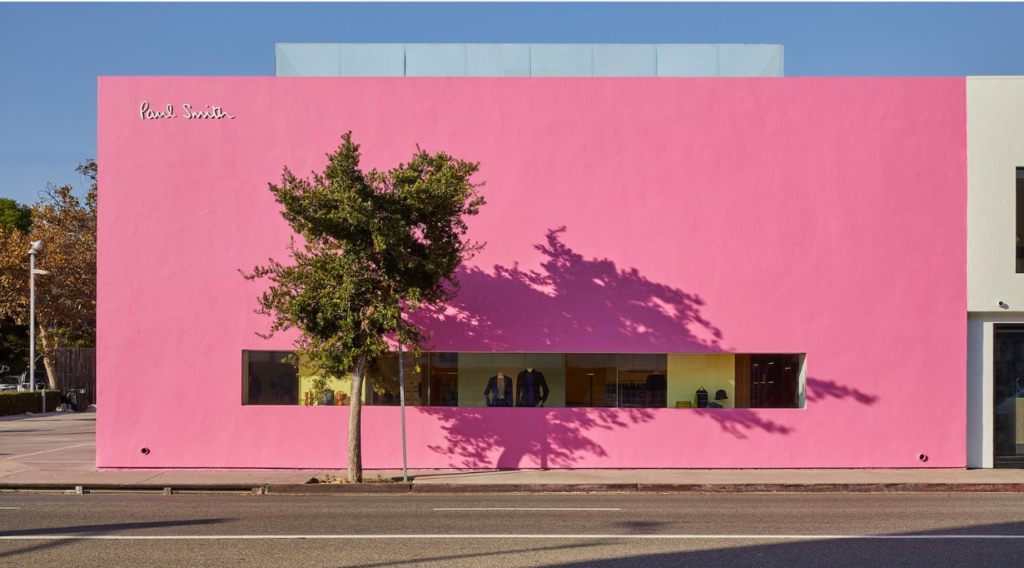
Paul Smith’s designs demonstrate that traditional clothing does not have to be predictable. His approach combines the structure of British tailoring with unexpected colours, patterns and playful details. A conventional jacket might contain a distinctive lining, while a formal shirt can introduce unusual combinations of colour. These elements allow customers to express individuality without abandoning the elegance of classic clothing.
This balance distinguishes Smith from designers whose work depends primarily on dramatic seasonal transformations. His collections often occupy the space between formal sophistication and creative freedom. The result is clothing that can remain relevant beyond a particular fashion season. That versatility has helped establish the brand’s identity among customers who appreciate both craftsmanship and personal expression.
His philosophy also challenges the idea that luxury must always communicate seriousness or social status. Humour and curiosity are visible throughout his work, giving sophisticated clothing a more approachable character. Luxury becomes a means of expressing personality rather than simply displaying purchasing power. In an increasingly standardized fashion environment, that distinction carries considerable cultural value.
Bringing British Elegance to Madison Avenue

The opening of Paul Smith’s new flagship on Madison Avenue in October represents another chapter in the brand’s American expansion. The designer hosted a celebration on November 18, bringing together figures from fashion, entertainment and the arts. The Manhattan store draws inspiration from Smith’s London residence rather than following the appearance of a conventional luxury boutique. Its interior combines clothing with art, furniture and objects reflecting his personal interests.
The decision reveals an important aspect of Smith’s retail philosophy. A fashion boutique can communicate the designer’s worldview through its architecture, atmosphere and carefully selected objects. Customers are invited to experience a creative environment rather than simply browse merchandise. This approach can strengthen the emotional relationship between consumers and a fashion house.
Physical retail also remains strategically important despite the growth of online shopping. Customers purchasing tailored clothing often value the opportunity to examine fabrics, evaluate fit and receive personal advice. A distinctive flagship can provide experiences that digital platforms struggle to reproduce. For Paul Smith, the Madison Avenue expansion reinforces the connection between fashion, craftsmanship and personal service.
The Price of Remaining Independent
Unlike many European luxury houses, Paul Smith has avoided becoming part of a major luxury conglomerate. Independence has allowed the company to preserve a creative identity closely connected to its founder. It can pursue design decisions and long-term priorities without necessarily following the strategic demands of a larger corporate group. However, independence does not remove the financial pressures associated with operating an international fashion business.
The Financial Times reported that the company recorded turnover of £181.2 million and a pre-tax loss of £16.7 million for the financial year ending June 2025. These figures reveal a more challenging commercial picture behind the brand’s cultural success. Maintaining international retail operations requires considerable investment, particularly when consumer demand becomes uncertain. The company’s recovery strategy includes strengthening direct sales, developing its digital business and restructuring wholesale operations.
Smith’s experience demonstrates that creative achievement and financial sustainability are separate challenges. A recognizable brand can attract loyal customers while still facing operational difficulties. Independent fashion businesses must manage expansion carefully because they may lack the financial resources available to major luxury groups. Preserving creative freedom requires an economically sustainable foundation.
Preparing the Next Generation of British Designers
Smith’s influence increasingly extends beyond his own collections. In 2020, he established the Paul Smith Foundation to support emerging creative professionals. Its initiatives help designers develop the commercial knowledge needed to turn artistic ability into sustainable careers. This recognizes a fundamental challenge in fashion: creative talent alone does not guarantee business success.
The foundation supports programmes that provide mentorship, professional training and access to studio facilities. These resources can help independent designers overcome some of the barriers associated with establishing a fashion business. Young entrepreneurs often struggle to balance product development with financing, marketing and distribution. Experienced industry figures can provide valuable guidance during those early stages.
THE ABE TAKE | Individuality Is a Luxury in Itself
Sir Paul Smith’s career offers an important lesson for an industry increasingly influenced by corporate consolidation and global trends. A fashion house does not necessarily need to reinvent its entire identity every season to remain relevant. It can instead develop a consistent philosophy while finding new ways to express it. Smith’s combination of craftsmanship, wit and curiosity demonstrates the enduring value of that approach.
Nevertheless, the company’s recent financial difficulties show that independence requires more than creative conviction. International expansion must be supported by disciplined management, healthy margins and a clear understanding of consumer demand. The challenge for Paul Smith is preserving the personality that made the brand distinctive while adapting its operations to a changing luxury market. Its next chapter will test whether those objectives can remain complementary.
The designer’s greatest legacy may ultimately extend beyond the clothing bearing his name. His career demonstrates that fashion can be sophisticated without becoming predictable, and commercially ambitious without abandoning individuality. In an industry where imitation often follows success, maintaining an original identity is itself an achievement.
Sir Paul Smith built a global fashion house by refusing to make elegance ordinary. His story reminds us that true style is not simply about following established rules, but knowing when to reinterpret them.
Understand More. Think Bigger.