










The German business empire behind Lidl and Kaufland is expanding beyond traditional retail, investing billions in digital infrastructure and positioning itself as a European alternative to American technology giants.
By ABE Editorial Desk | ABE Magazine
November 28, 2026
Schwarz Group built its international reputation by selling affordable groceries to millions of consumers. Today, the German retail empire is pursuing an ambition that extends far beyond supermarket shelves. Through its technology division, Schwarz Digits, the company is developing a digital infrastructure business capable of competing in an industry traditionally dominated by American corporations. Its expansion demonstrates how established enterprises can transform internal capabilities into entirely new sources of commercial value.
Speaking this week, Schwarz Digits chief executive Christian Mueller outlined a cloud computing strategy centered on customer flexibility and technological independence. The company is targeting organizations concerned about becoming permanently dependent on individual technology providers. For Schwarz Group, the opportunity is not simply to participate in another growing industry. It is to establish ownership of infrastructure that could become increasingly important to the European economy.
The Business Empire Behind Lidl
Schwarz Group’s commercial foundations were established in the German wholesale and grocery industries. Under the leadership of Dieter Schwarz, the enterprise developed into an international retail powerhouse through Lidl and Kaufland. Its success depended on disciplined cost management, efficient distribution, competitive pricing and a willingness to invest in long-term expansion.
Unlike many publicly traded retail corporations, Schwarz Group operates under a privately controlled ownership structure. This provides a different environment for making major strategic investments. Although privately controlled enterprises still face financial constraints, their management can pursue long-term projects without responding to the same quarterly market expectations as listed companies.
The group’s activities now extend across retail, manufacturing, environmental services and technology. This diversification reflects a broader corporate philosophy in which developing internal capabilities can reduce dependence on external suppliers. When those capabilities become sufficiently advanced, they can also create independent commercial opportunities.
Turning an Internal Problem Into a Business Opportunity

Schwarz Group’s entry into cloud computing originated partly from the need to manage its own technological requirements. International retailers depend on complex systems to coordinate inventory, logistics, financial transactions, customer information and commercial operations. As these systems become increasingly interconnected, control over digital infrastructure becomes strategically important.
Developing internal technology can allow a large corporation to manage operational risks more effectively. However, the financial investment required becomes more attractive when those capabilities can also be sold to external customers. Schwarz Group recognized that other European businesses faced similar concerns about data security and dependence on technology suppliers.
Through its STACKIT cloud platform, Schwarz Digits has turned infrastructure development into a commercial service. Companies can access computing resources without constructing and maintaining every component independently. The transition illustrates how a business expense can evolve into a revenue-generating enterprise when management identifies demand beyond its original operations.
A €5.6 Billion Investment in Digital Infrastructure
In August 2026, Schwarz Group announced plans to invest as much as €5.6 billion in a data centre development near Rostock in northern Germany. Construction is scheduled to begin in 2027, with the facility expected to reach a capacity of 240 megawatts by 2033. Longer-term expansion could substantially increase that capacity, although such development would depend on future requirements and investment decisions.
The scale of the proposed investment reveals the financial commitment required to compete in digital infrastructure. Data centres depend on substantial energy supplies, specialized equipment, sophisticated cooling systems and reliable network connections. These facilities also require continuous maintenance and modernization as computing technology advances.
For Schwarz Group, infrastructure ownership represents a departure from the economics of traditional retail. Supermarkets depend on frequent customer transactions and efficient merchandise distribution. Cloud services can generate recurring commercial revenue through ongoing demand for computing and storage capabilities. Combining these business models could diversify the group’s sources of income over time.
Challenging the Power of Established Technology Companies
Amazon, Microsoft and Google have established extensive positions in the international cloud computing market. Their advantages include substantial financial resources, global infrastructure, established customer relationships and sophisticated software ecosystems. Challenging these corporations requires considerably more than constructing competing data centres.
Schwarz Digits is seeking differentiation through a commercial model that allows customers greater freedom to change technology providers. Its leadership argues that businesses should be able to migrate between platforms without becoming excessively dependent on proprietary systems. This approach could appeal particularly to organizations seeking greater control over their technological operations.
The strategy reflects a broader lesson in corporate competition. Smaller market participants do not always need to replicate every advantage possessed by established leaders. Instead, they can identify weaknesses in prevailing business models and build services around customer concerns that larger competitors may not fully address.
Building an International Technology Ecosystem
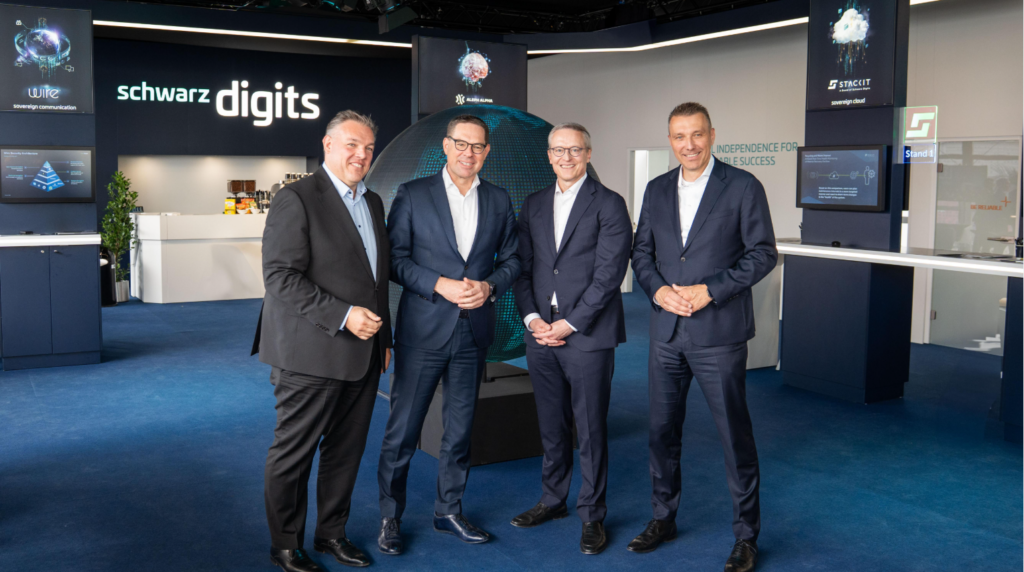
Schwarz Group’s ambitions extend beyond providing computing capacity. Its technology division has established relationships with enterprise software companies and infrastructure specialists to expand the services available through its cloud platform. These partnerships are important because customers increasingly require integrated technology solutions rather than isolated computing resources.
In September, Schwarz Digits announced the commercial availability of an offering that allows businesses to operate SAP enterprise software on its European cloud infrastructure. Earlier this month, it also announced a preliminary collaboration with French computing specialist Bull. The proposed partnership aims to develop European-controlled computing systems combining infrastructure, hardware and software capabilities.
These arrangements demonstrate the importance of cooperation when entering industries dominated by powerful incumbents. Schwarz Group can contribute infrastructure and commercial resources while specialist partners provide complementary technological expertise. Building such an ecosystem may allow the company to compete more effectively than attempting to develop every capability independently.
The Risks of Expanding Beyond Retail
Despite Schwarz Group’s considerable commercial experience, success in grocery retail does not guarantee success in cloud computing. Technology infrastructure requires different management capabilities, investment cycles and competitive strategies. Established cloud providers also possess considerable advantages that cannot easily be overcome through financial investment alone.
The group must generate sufficient customer demand to justify its growing infrastructure commitments. It must also continuously improve service reliability, software compatibility and cybersecurity. Excessive investment ahead of commercial demand could reduce returns, while insufficient technological development could weaken its competitive position.
Diversification becomes valuable when new activities complement a company’s existing strengths. It becomes dangerous when management enters unfamiliar industries without understanding their commercial requirements. Schwarz Group’s experience operating large international businesses provides a foundation, but its technology division must ultimately demonstrate its own sustainable economic performance.
THE ABE TAKE | Building an Empire Beyond Its Original Industry
The transformation of Schwarz Group offers a valuable lesson about how business empires evolve. Successful corporations do not necessarily remain confined to the industries in which their founders originally established them. Over time, internal expertise, financial resources and operational experience can create opportunities in entirely different markets.
Schwarz Group’s expansion is particularly interesting because it concerns the ownership of infrastructure rather than simply the introduction of another consumer brand. Infrastructure businesses can become essential to the operations of other enterprises, creating commercial relationships that extend beyond individual transactions. Establishing such a position requires patience, disciplined investment and a clear understanding of long-term customer needs.
The company’s ability to challenge established technology giants remains uncertain. Nevertheless, its strategy demonstrates that the next generation of influential technology businesses may not emerge exclusively from traditional technology companies. Some may develop within established commercial empires that recognize the strategic value of capabilities they already possess.
Understand More. Think Bigger.