




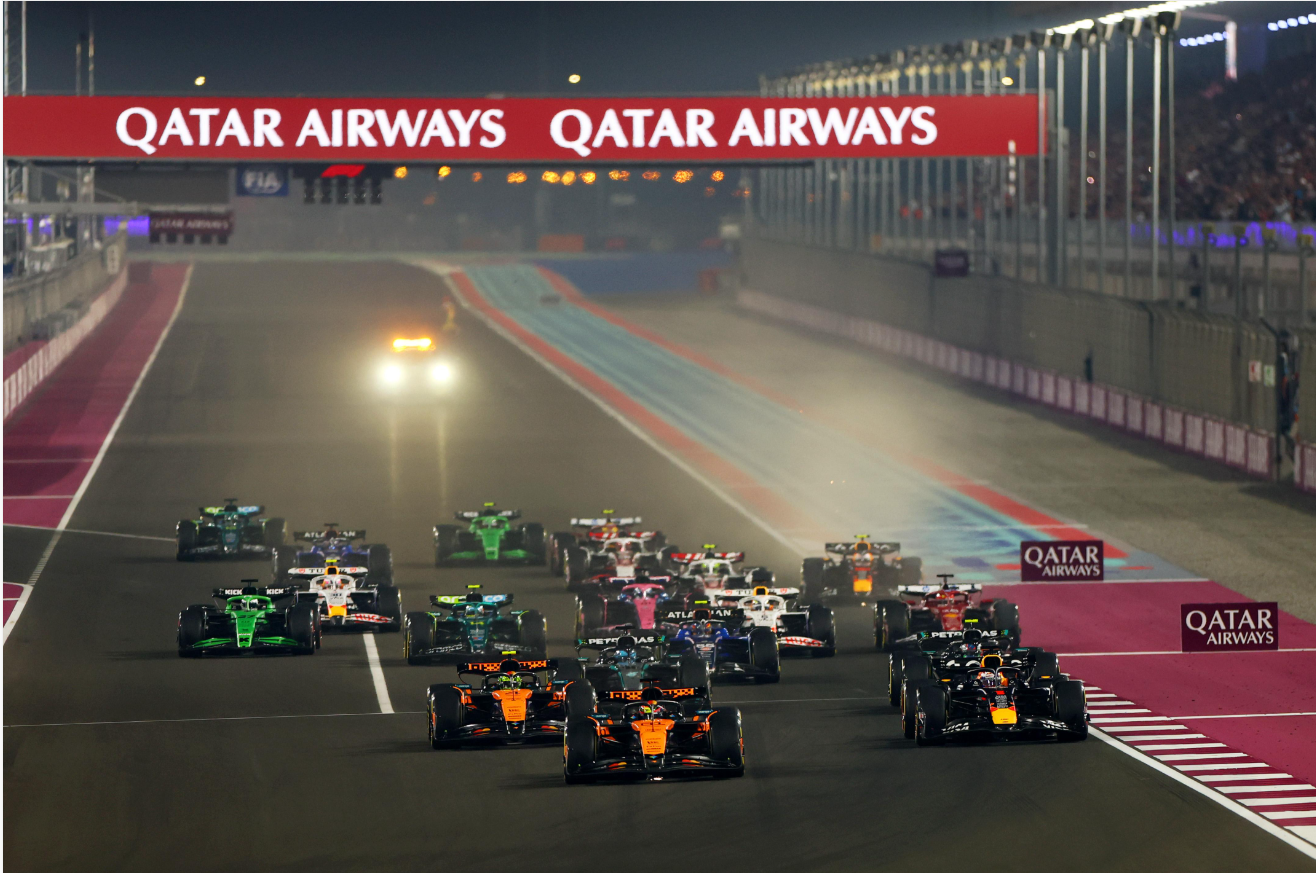
Formula 1 returns to Qatar this weekend, bringing international attention to a country that has made professional sport a central element of its economic ambitions. Beyond the competition at Lusail International Circuit lies a complex relationship between commercial investment, tourism, national influence and geopolitical uncertainty.
By ABE Editorial Desk | ABE Magazine
Friday, November 27, 2026
Formula 1 Returns to the Middle East
The 2026 Qatar Grand Prix begins today at Lusail International Circuit, marking the penultimate round of the Formula 1 season. Drivers will compete across 57 laps on Sunday, November 29, at the 5.419-kilometre circuit outside Doha. Although the drivers’ and constructors’ championships have already been decided, competition remains intense for the remaining positions. However, the significance of the weekend extends considerably beyond the championship standings.
The event proceeds following uncertainty surrounding regional conflict, which had threatened its place on the racing calendar. Formula 1 had reportedly identified Italy’s Imola circuit as a potential alternative before confirming the Qatar race. The situation demonstrates how international sporting organizations must navigate geopolitical developments alongside their commercial commitments. For Qatar, successfully hosting the event represents another opportunity to reinforce its position within global sport.
How Qatar Became a Global Sporting Destination
Qatar’s involvement in Formula 1 forms part of a broader effort to establish the country as an international destination for professional sport. Having hosted its first Grand Prix in 2021, Qatar subsequently secured a long-term agreement that extends through 2032. The arrangement provides the country with recurring exposure to international audiences rather than relying exclusively on individual sporting occasions. This continuity is particularly valuable for a nation seeking to diversify its economy.
The strategy became especially visible during the 2022 FIFA World Cup, when Qatar attracted international attention through its investment in stadiums, transportation and hospitality infrastructure. Formula 1 offers a different but complementary opportunity. Unlike the World Cup, which takes place every four years in different locations, an annual Grand Prix can generate repeated visitor activity and international media coverage. It also attracts audiences with interests in technology, engineering, luxury and high-performance automotive brands.
These investments align with Qatar’s wider ambitions to develop industries beyond oil and natural gas. International sporting events can support hospitality, aviation, retail and entertainment businesses while improving the country’s visibility as a tourism destination. Nevertheless, attracting international attention is only one component of successful economic diversification. The longer-term challenge involves converting that attention into sustainable commercial activity.
The Commercial Machine Behind Formula 1
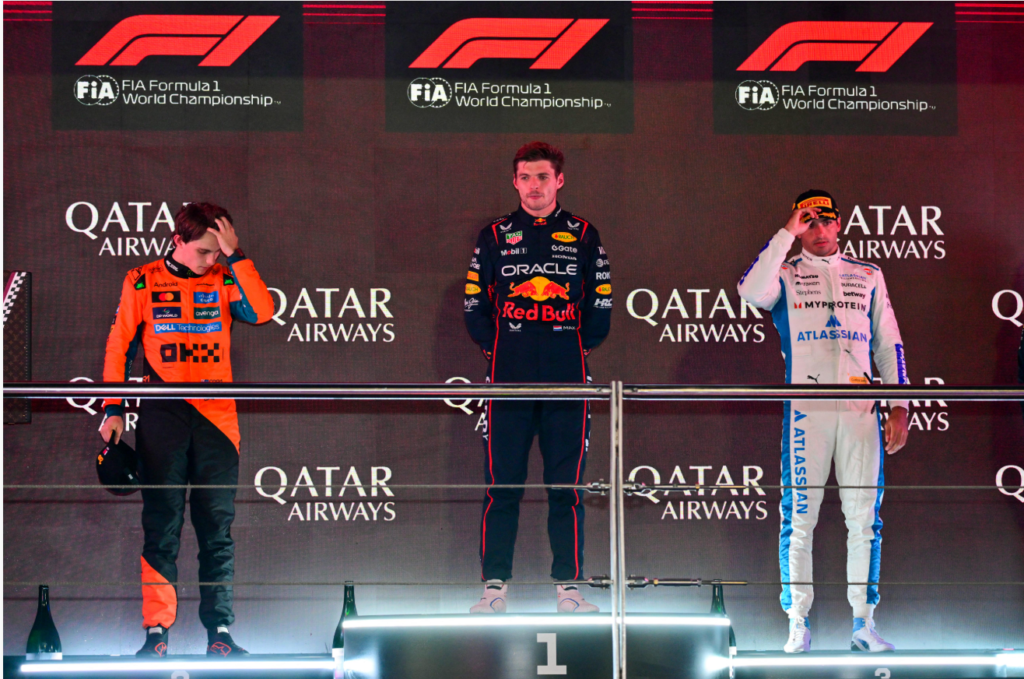
Modern Formula 1 operates as a sophisticated international entertainment business. Its commercial structure includes broadcasting agreements, corporate sponsorships, race promotion arrangements and premium hospitality services. These activities allow the competition to generate revenue from audiences far beyond those physically attending a race. For host countries, the attraction lies partly in gaining access to this established commercial ecosystem.
The Qatar Grand Prix demonstrates how several industries can participate in a single sporting event. Qatar Airways serves as the title sponsor, connecting the competition with the country’s international aviation identity. Telecommunications company Ooredoo Qatar has also established a partnership with Lusail International Circuit for its 2026 Formula 1 and MotoGP events. The agreement includes investments in network capacity and connectivity designed to improve services for spectators and event operations.
Broadcasting represents another important component of this commercial structure. Regional broadcaster beIN SPORTS holds exclusive Formula 1 broadcasting rights across 24 Middle Eastern and North African markets until 2033. Its coverage extends beyond traditional television through streaming platforms and programming designed for younger audiences. These arrangements demonstrate how sporting competitions can support long-term commercial relationships across multiple industries.
When Motorsport Meets Geopolitical Risk
The uncertainty surrounding this year’s Qatar Grand Prix highlights one of the vulnerabilities of Formula 1’s international expansion. The championship depends on moving teams, equipment and personnel between numerous countries within a tightly organized calendar. Regional conflicts can disrupt transportation networks, create security concerns and complicate event planning. These risks are particularly significant when sporting competitions operate across several continents.
Maintaining alternative venues can provide organizers with greater flexibility when unexpected disruptions occur. Nevertheless, relocating a Grand Prix involves considerably more than changing the location of a sporting fixture. Local businesses, sponsors, broadcasters and spectators may have already made substantial financial commitments. Cancellation or relocation can therefore create consequences throughout the commercial network supporting the event.
Qatar’s sporting investments also remain part of a wider debate about the relationship between international competition and national reputation. Supporters argue that major sporting events encourage tourism, international exchange and economic development. Critics question whether such investments can divert attention from concerns involving human rights and political accountability. Formula 1 must navigate these competing perspectives while maintaining its obligations to participants, commercial partners and audiences.
Beyond the Circuit: Tourism and Luxury Hospitality

The Qatar Grand Prix is designed to offer visitors more than a weekend of motorsport. Tourism initiatives surrounding the event highlight cultural attractions, entertainment programmes and other sporting activities across the country. Hotels, restaurants and transportation providers can benefit when international visitors extend their stays beyond the race itself. This broader economic activity helps explain why countries compete to host prestigious sporting events.
Formula 1 is particularly attractive to businesses operating within premium hospitality and luxury markets. Corporate entertainment packages, exclusive experiences and international sponsorship arrangements create opportunities to engage affluent audiences and business decision-makers. The sport provides a setting in which commercial relationships can develop alongside entertainment. Its appeal therefore extends into industries that might otherwise have little direct connection to professional racing.
However, the economic success of hosting Formula 1 cannot be measured by international visibility alone. Governments must consider infrastructure expenses, operating costs and the financial commitments associated with maintaining a position on the calendar. The long-term benefits depend on whether sporting investments create meaningful opportunities for domestic businesses and sustainable employment. Without transparent financial information, the overall return on these investments remains difficult to establish.
THE ABE TAKE | Formula 1 Has Become More Than a Race
The Qatar Grand Prix illustrates the transformation of professional motorsport into an international platform for commerce and national influence. Racing remains the foundation of Formula 1, but its economic importance increasingly extends into aviation, hospitality, broadcasting and telecommunications. Host countries are investing not only in sporting entertainment but also in opportunities to strengthen their global commercial relationships. Qatar’s continued participation demonstrates the importance it places on this strategy.
Nevertheless, the geopolitical uncertainty surrounding this year’s race provides a reminder that international expansion carries considerable risks. Commercial agreements cannot eliminate the consequences of regional instability, and successful sporting events cannot independently guarantee economic diversification. Formula 1’s long-term growth will depend on balancing financial opportunities with operational resilience and responsible engagement with host countries.
For Qatar, the real measure of success will extend beyond Sunday’s chequered flag. Its sporting investments must ultimately contribute to a more sustainable and diversified economy. International recognition can open important doors, but the lasting value lies in what a country builds after the spectators have returned home.
Formula 1 may be decided on the racetrack, but the competition to capture its economic and cultural influence extends far beyond it.
Understand More. Think Bigger.