







ABE NEWS | SEPTEMBER 18, 2026
For much of the past two years, the dominant question hanging over global markets was how quickly central banks would cut interest rates. This week offered a very different answer to where monetary policy may be heading.
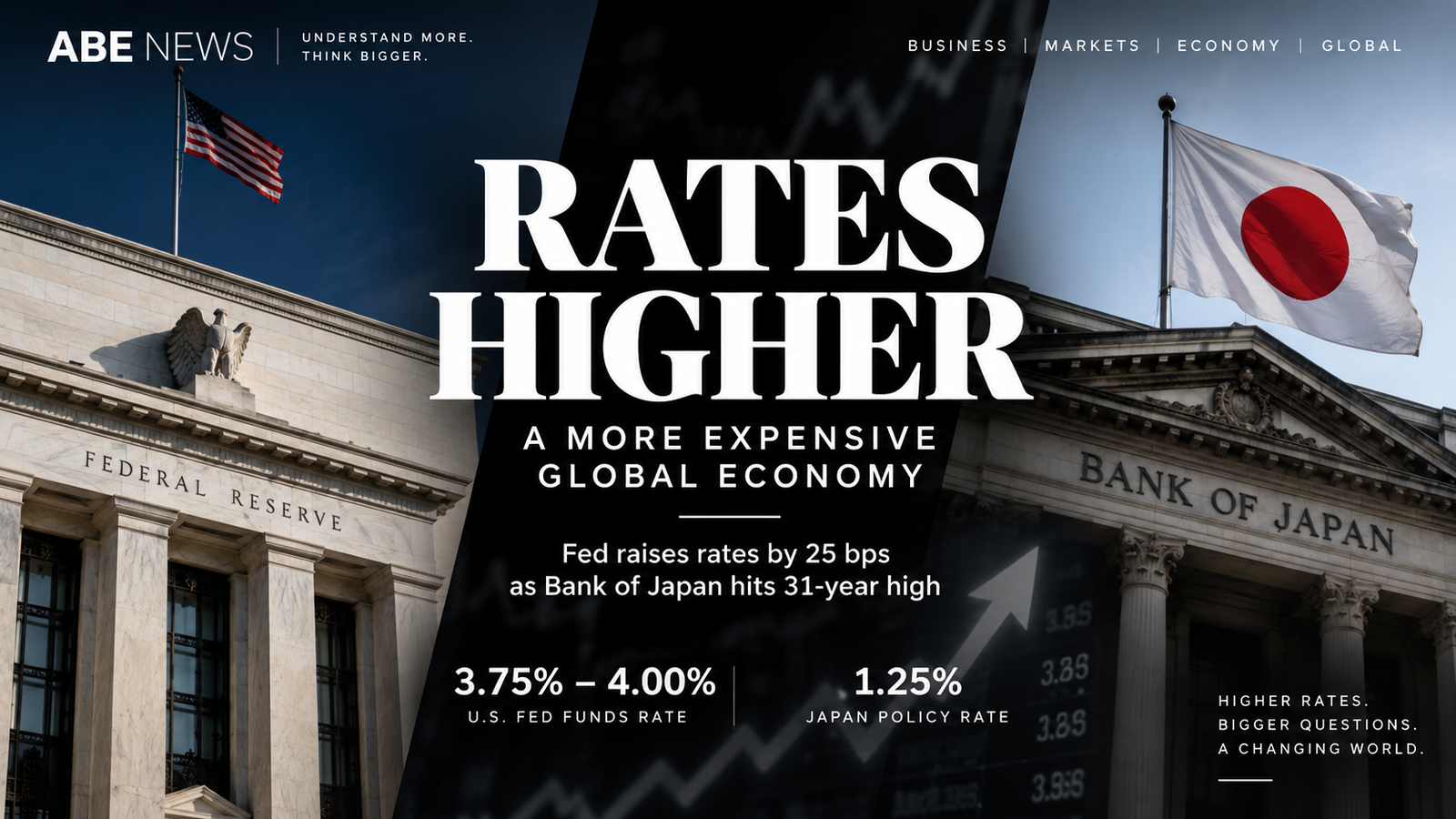
The Federal Reserve raised its benchmark interest-rate target by a quarter percentage point to 3.75%–4.00% on Wednesday, marking its first increase in more than three years. Two days later, the Bank of Japan raised its policy rate to 1.25%, the highest level in 31 years. Together, the moves underscore a renewed challenge for the global economy: inflation has proved difficult enough that some of the world’s most important central banks are tightening policy again.
THE FED CHANGES DIRECTION
The Federal Reserve’s decision represented a significant change in the direction of U.S. monetary policy. The Federal Open Market Committee voted unanimously to raise the federal funds target range by 25 basis points, saying inflation remained elevated while economic activity continued to expand at a solid pace.
The Fed said domestic spending had remained resilient, productivity growth was strong and capital investment robust, while unemployment had changed little. But inflation remains the central problem. The central bank said the increase would support a more timely return to its 2% inflation objective.
The Fed’s latest economic projections help explain the concern. Policymakers’ median projection puts PCE inflation at 3.7% for 2026, compared with the Fed’s longer-run 2% objective. The projections also point to a median federal funds rate of 4.1% at the end of 2026.
That matters because investors had spent much of the previous period thinking about when borrowing costs would fall. The conversation is increasingly shifting toward how long rates may remain elevated — and whether additional tightening could still be necessary.
JAPAN JOINS THE TIGHTENING PUSH
The shift is not confined to the United States.
The Bank of Japan raised its policy rate by a quarter percentage point to 1.25% on Friday, its highest level in 31 years. The move reflects Japan’s increasingly difficult balancing act between inflation, the yen and the wider economy.
Japan spent decades associated with ultra-low interest rates and efforts to generate inflation rather than suppress it. That makes the current environment especially significant. Higher import and energy costs have added pressure, while policymakers are also watching the yen and domestic price dynamics.
Yet the currency weakened after the BOJ’s decision, illustrating that raising rates does not automatically resolve Japan’s broader economic challenges. Investors are also trying to determine how aggressively the central bank is prepared to tighten from here.
ENERGY IS COMPLICATING THE INFLATION FIGHT
Behind the renewed tightening is a problem central banks cannot directly control: energy.
Oil prices have remained above $100 a barrel amid geopolitical and supply concerns, adding another source of inflationary pressure to economies already dealing with elevated prices. Higher energy costs can travel through an economy quickly — from transportation and manufacturing to electricity, food distribution and household budgets.
That creates an uncomfortable policy equation. Central banks can raise interest rates to restrain demand and prevent inflation from becoming entrenched, but they cannot produce additional barrels of oil or eliminate geopolitical supply disruptions.
The result is a risk that policymakers may need to keep monetary conditions restrictive even as expensive energy places additional pressure on consumers and businesses.
THE ERA OF EASY MONEY LOOKS FURTHER AWAY
The significance of this week’s decisions extends well beyond Washington and Tokyo.
Interest rates influence mortgages, business loans, government borrowing, corporate investment, currencies and asset valuations. When major central banks move toward tighter policy, the effects travel through global capital markets.
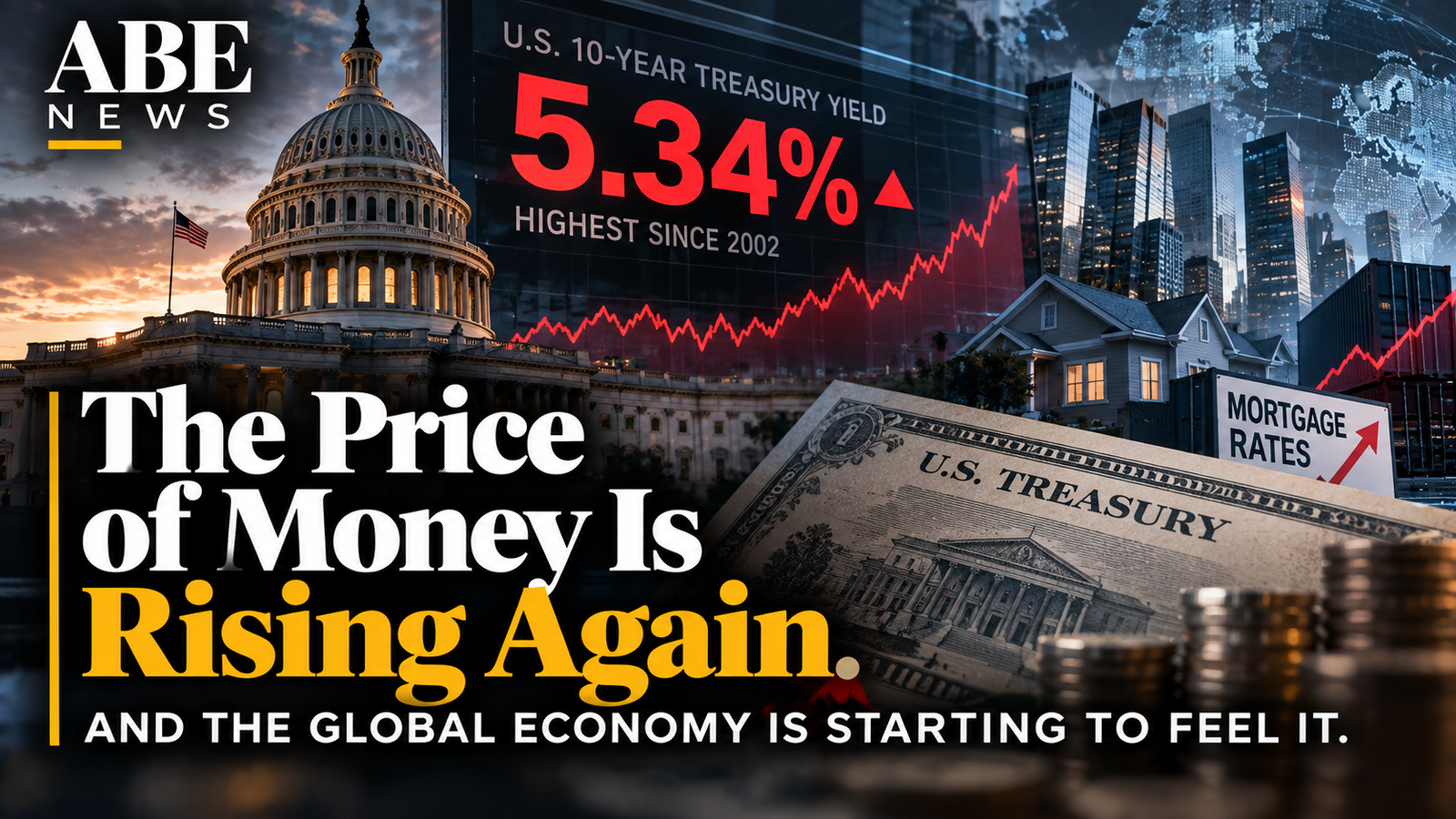
Government bond yields have already reflected some of that repricing. U.S. benchmark Treasury yields moved above 5% during a volatile week in which investors weighed inflation, energy prices and the prospect of additional rate increases.
For companies, a higher-for-longer rate environment changes the economics of expansion. Projects financed cheaply during the low-rate era become more expensive. Highly leveraged businesses face greater refinancing costs. Investors may demand stronger profits and cash flows when safer assets offer more attractive returns.
For households, the transmission can be equally direct. Higher borrowing costs affect mortgages, credit and other financing decisions, while persistent inflation continues to erode purchasing power.
A GLOBAL POLICY RESET MAY BE TAKING SHAPE
The Federal Reserve and Bank of Japan are not operating in isolation. Reuters reported that central banks globally are confronting renewed inflation pressure, with the European Central Bank also tightening while the Bank of England has warned that additional increases could become necessary.
This does not necessarily mean the world is returning to the extraordinary tightening cycle that followed the pandemic inflation shock. Economic conditions differ across countries, and future decisions will depend on incoming inflation, employment, growth and energy data.
But the direction of the debate has changed.
The central question is no longer simply when interest rates will return to the unusually low levels that shaped much of the previous decade. Policymakers and markets are increasingly confronting the possibility that the neutral level of interest rates may be higher, inflation shocks may occur more frequently, and geopolitical developments may play a larger role in monetary policy.
🔴 THE ABE NEWS TAKE
The bigger story is not one Federal Reserve meeting or one Bank of Japan decision. It is the possibility that the assumptions underpinning the global economy are changing.
For years, businesses, governments and investors operated in a world where cheap capital could often be treated as a normal condition. Inflation appeared manageable, globalization helped contain costs, and central banks frequently had room to support economies when growth weakened.
That environment looks less dependable today.
Energy shocks, geopolitical instability, changing trade relationships and persistent price pressures are making inflation more difficult to control. If those forces remain part of the economic landscape, central banks may have less freedom to deliver the low interest rates markets became accustomed to.
The question to watch is therefore larger than whether the Fed or BOJ raises rates again at its next meeting. It is whether the world is entering a period in which capital is structurally more expensive — and what businesses, consumers, governments and investors will have to change if it is.
ABE NEWS
Business. Money. Style. The News.
Understand More. Think Bigger.