










ABE MAGAZINE | TECHNOLOGY & BUSINESS
October 13, 2026
Semiconductors have become essential to modern industry, global trade and national security. As governments spend billions to secure production and manufacturers race to expand capacity, the struggle for control of advanced chips is reshaping the balance of economic power.
The Industry at the Centre of the Global Economy
For decades, semiconductors were largely understood as components of computers, smartphones and electronic equipment. Today, their importance extends far beyond consumer technology. Chips power vehicles, telecommunications networks, industrial machinery, financial infrastructure and military systems. Their production has consequently become a strategic concern for governments seeking to protect economic competitiveness and reduce dependence on foreign suppliers.
The scale of the industry’s expansion illustrates its growing importance. According to the Semiconductor Industry Association, worldwide semiconductor sales reached approximately $159.7 billion in August 2026, an increase of more than 144% compared with the same month a year earlier. The extraordinary growth reflects demand for computing infrastructure and increasingly sophisticated electronic systems, although such rapid expansion also raises questions about how long investment can continue at its present pace.
What was once principally a commercial industry is now an arena of international economic competition. The countries capable of designing, manufacturing and supplying advanced semiconductors possess influence over industries that will shape future productivity and technological development.
Taiwan’s Extraordinary Position
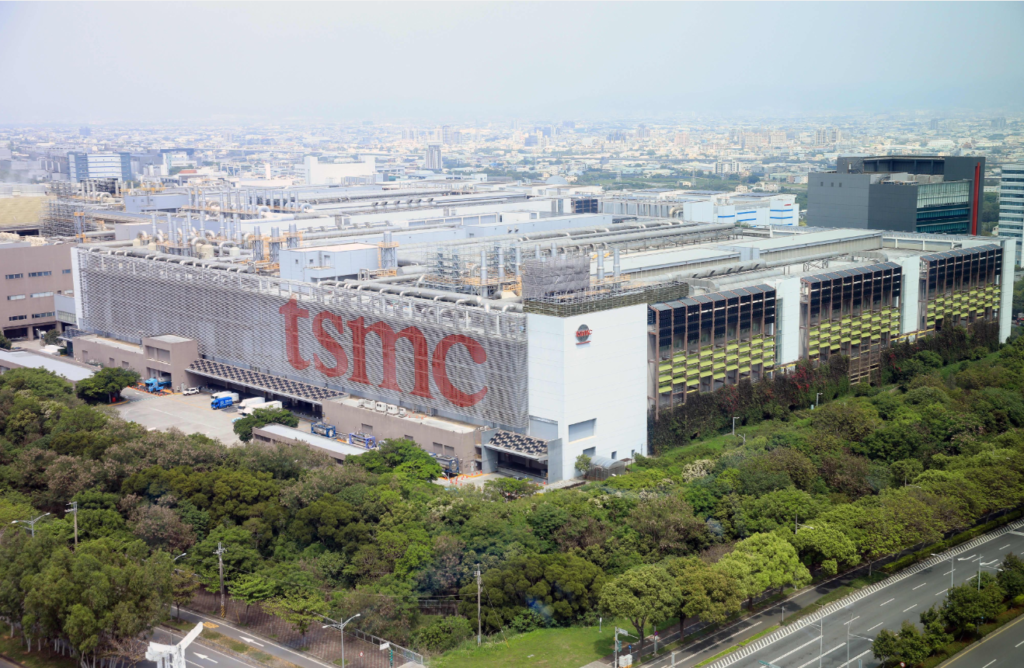
Taiwan occupies a particularly important position in the semiconductor industry through Taiwan Semiconductor Manufacturing Company, better known as TSMC. The company manufactures advanced chips designed by major technology businesses, making it a central supplier within the global electronics industry. Its production capabilities are difficult to replicate because advanced chipmaking requires enormous investment, highly specialized equipment and years of accumulated expertise.
The company’s recent financial performance demonstrates the strength of global demand. TSMC reported record third-quarter revenue of approximately $46.7 billion, representing growth of around 50% compared with the previous year. Taiwan’s broader export economy has also benefited, with September exports reaching a record $87.2 billion.
Yet Taiwan’s importance creates a vulnerability for the wider world. Concentrating critical manufacturing capabilities in a geographically sensitive region means that disruptions could affect companies and economies far beyond the island. This concern has encouraged governments and manufacturers to pursue additional production capacity elsewhere, even when expanding into new locations involves substantial expense.
Governments Are Investing in Industrial Independence
The United States has made domestic semiconductor production a major industrial priority. In July, TSMC announced an additional $100 billion investment in Arizona, bringing its planned American investment to approximately $265 billion. The expansion is intended to strengthen advanced manufacturing capacity and reduce the risks associated with relying heavily on overseas production.
Japan is pursuing a similar ambition through Rapidus, a government-backed chipmaker seeking to establish advanced semiconductor manufacturing capabilities. With substantial state support, the company hopes to compete in a market dominated by established international producers. Its challenge, however, extends beyond constructing factories. It must also attract customers, develop technical expertise and demonstrate that its production processes can operate reliably at commercial scale.
These investments represent a significant change in industrial policy. Governments are increasingly prepared to support strategically important industries rather than relying entirely on private investment and international trade. Their objective is not simply to create jobs, but to ensure that essential technologies remain available during periods of geopolitical or economic disruption.
China’s Challenge to Established Chipmakers
China’s semiconductor ambitions have become another defining feature of the global competition. Restrictions on the export of advanced American technology have encouraged Chinese companies to accelerate the development of domestic alternatives. The resulting market changes demonstrate how trade controls can reshape competition, sometimes in ways that extend beyond their original intentions.
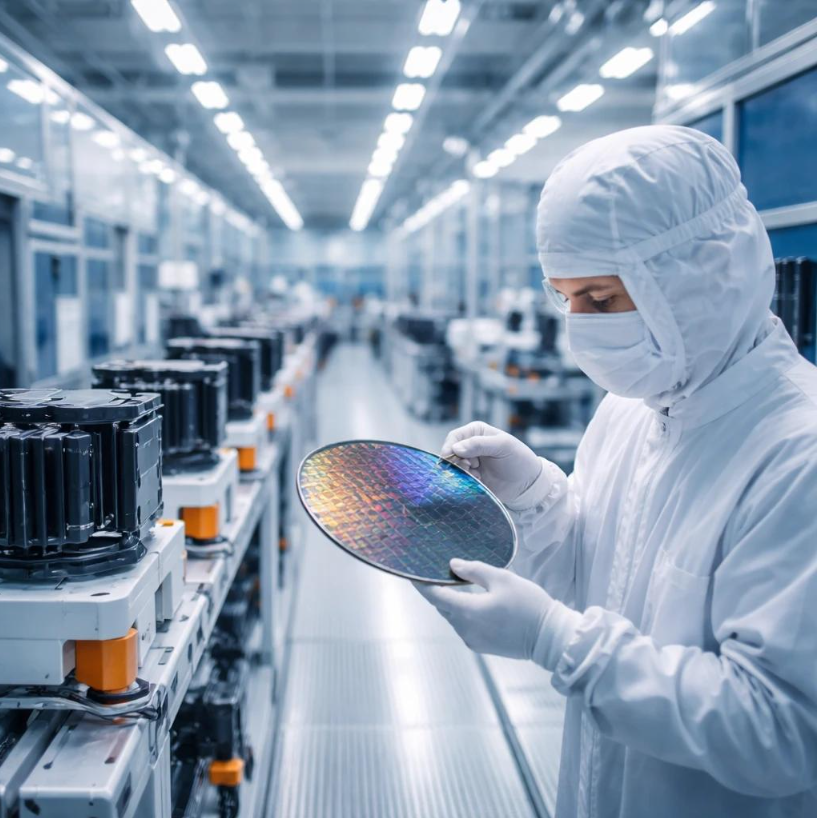
According to research reported by Reuters, Nvidia’s share of China’s data-centre accelerator market fell to approximately 34% in the first half of 2026. Huawei, meanwhile, reached an estimated 28% share as Chinese customers increasingly adopted locally supplied processors. Other domestic manufacturers also expanded shipments, reflecting a broader effort to reduce reliance on imported technology.
Nevertheless, market share does not tell the entire story. Producing competitive chips at scale requires manufacturing equipment, software, advanced packaging, memory components and access to sophisticated production processes. China has made progress in several areas, but the wider semiconductor supply chain remains deeply interconnected. Replacing one foreign supplier does not necessarily eliminate dependence on international technology.
The Economic Cost of Greater Security
The pursuit of semiconductor independence presents an uncomfortable economic trade-off. Global chip production became highly specialized because different countries and companies developed expertise in particular stages of the process. That system helped manufacturers achieve efficiency, scale and technological progress. Recreating every part of the supply chain within national borders could increase costs and reduce some of those advantages.
Recent cooperation between TSMC and GlobalFoundries illustrates a more practical alternative. Under a reported $2 billion agreement, GlobalFoundries will manufacture important chip-packaging components in New York for TSMC. The arrangement strengthens American production capacity while preserving cooperation between companies with different technical strengths.
For governments, the challenge is therefore to distinguish resilience from complete self-sufficiency. Diversifying suppliers and manufacturing locations can reduce exposure to disruption. Attempting to reproduce an entire global industry domestically, however, may prove financially inefficient and technologically unrealistic.
THE ABE TAKE
The global semiconductor race is fundamentally a struggle over economic influence. Countries that secure access to advanced chips will be better positioned to develop industries, attract investment and protect critical infrastructure. Yet the pursuit of that advantage could also undermine the international cooperation that made semiconductor technology so successful.
Taiwan’s manufacturing strength, America’s investment ambitions, Japan’s industrial revival and China’s domestic expansion all demonstrate the strategic importance of chips. None, however, can be understood independently of the wider network of equipment suppliers, designers, manufacturers and customers that supports the industry.
The countries most likely to succeed will not necessarily be those that attempt to produce everything themselves. They will be those that combine domestic capability with reliable international partnerships, technical expertise and commercially sustainable investment. In the semiconductor industry, economic power will depend as much on managing interdependence as on reducing it.
ABE MAGAZINE
Understand More. Think Bigger.