





ABE MAGAZINE | AFRICA • BUSINESS & ECONOMY
October 12, 2026
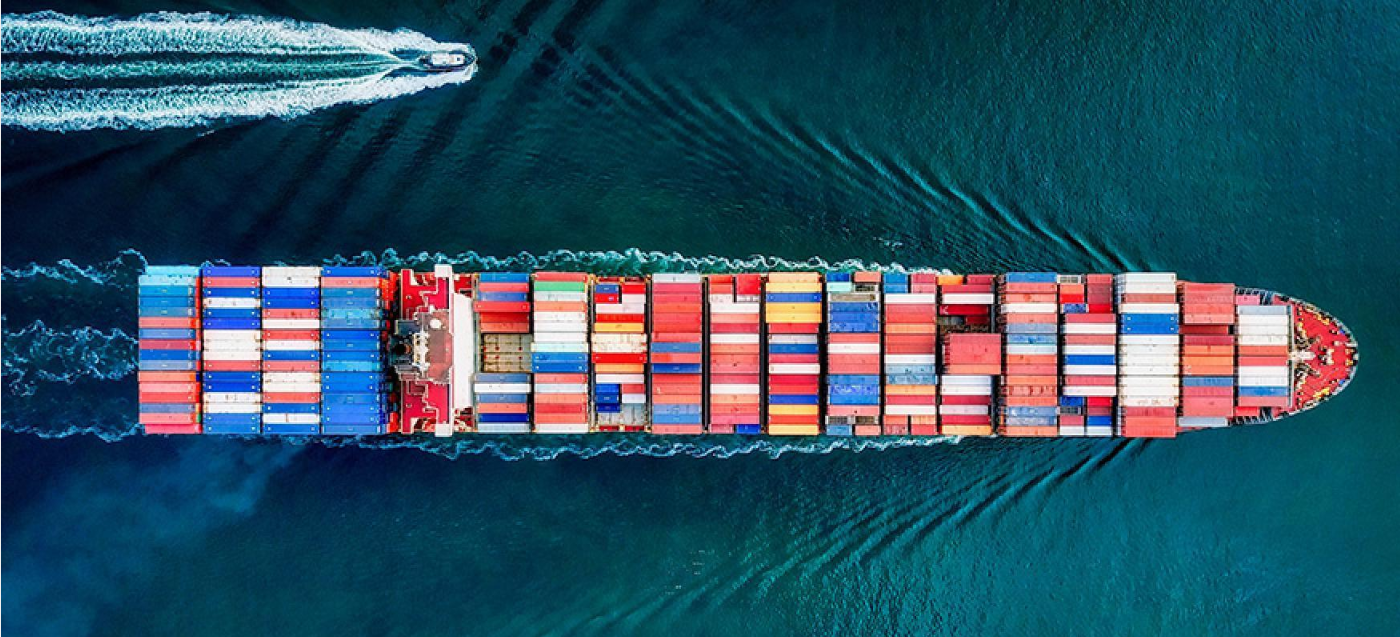
Ethiopia’s new precious-metals refinery represents more than an industrial investment. It reflects a growing ambition across Africa to move beyond exporting raw materials and capture more of the economic value generated by the continent’s natural resources.
A New Chapter for Ethiopia’s Gold Industry
For generations, Africa has occupied an important position in the global supply of natural resources. Gold, copper, cobalt, diamonds and other valuable commodities have helped support industries, financial markets and manufacturing economies around the world.
Yet a longstanding question remains: how much of the wealth generated by these resources stays in the countries where they originate?
Ethiopia is attempting to address that question through a new investment in precious-metals processing.
On October 10, 2026, Prime Minister Abiy Ahmed inaugurated the National Precious Metals Refinery at the Bole Lemi Special Economic Zone in Addis Ababa.
The facility, developed through a partnership between Ethiopian Investment Holdings and Sam Precious Metals, represents an initial investment of approximately $50 million.
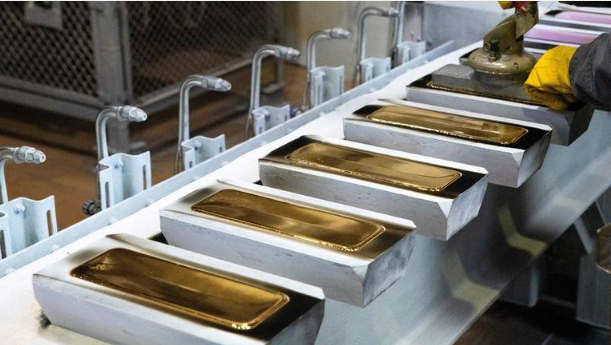
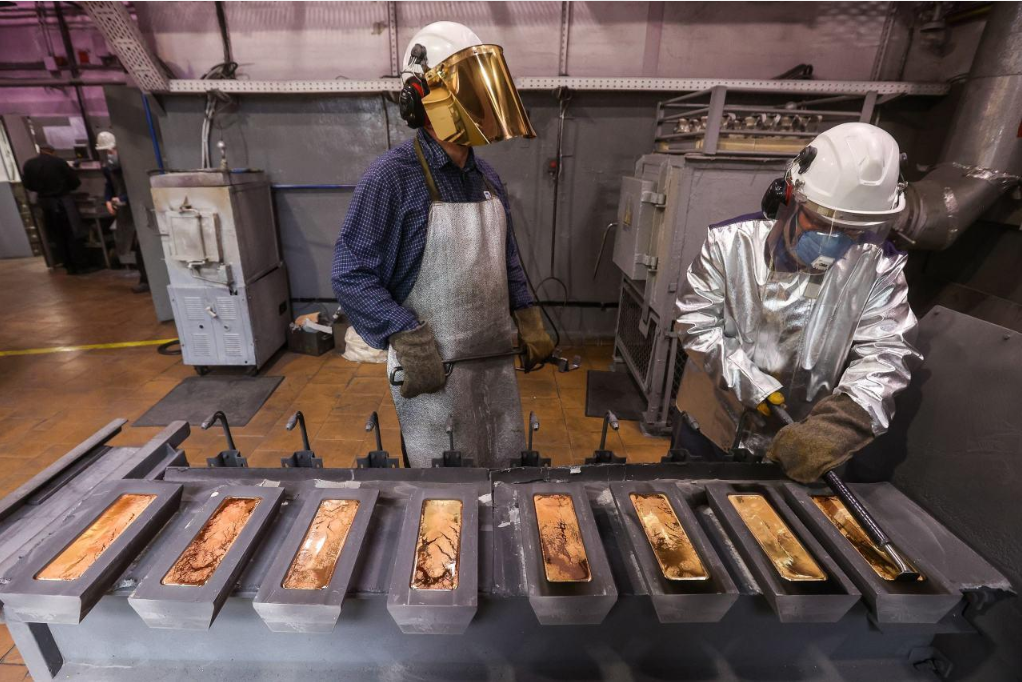
It is designed to provide refining, testing, casting and other services associated with precious metals.
The Ethiopian government has presented the project as a step toward strengthening domestic industrial capacity, improving the country’s position in the international gold market and attracting business from neighbouring economies.
But the refinery’s importance extends beyond Ethiopia.
It forms part of a wider African effort to transform natural resources into more substantial sources of industrial development, employment and long-term economic opportunity.
Why Exporting Gold Is Not the Same as Building a Gold Industry
Gold is one of the world’s most valuable commodities. It is used in jewellery, electronics, investment products and the reserves of central banks.
For resource-producing countries, gold exports can generate significant foreign-exchange earnings.
However, exporting gold and developing a competitive gold industry are two different economic activities.
A country may possess substantial mineral resources and still depend on foreign companies for processing, certification, trading and the production of finished products.
This means that important parts of the commercial value chain can develop outside the country where the resource was originally extracted.
Refining offers an opportunity to change that arrangement.
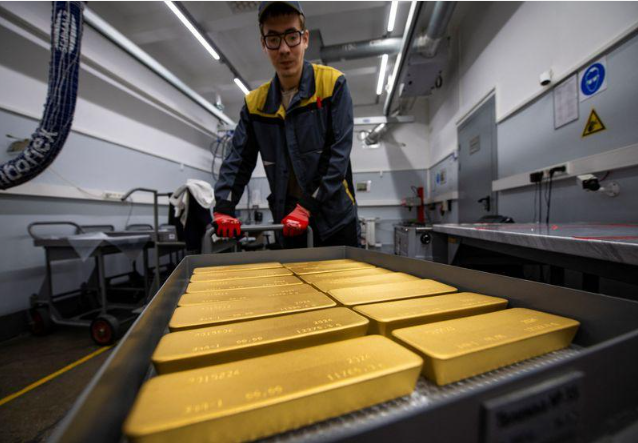
A precious-metals refinery tests the composition of metals, removes impurities and produces material that meets specified quality standards. Depending on its capabilities, it may also manufacture bars and provide services to mining companies, traders and financial institutions.
These activities require specialized machinery, technical knowledge, quality control and trained workers.
They can also create demand for transportation, security, equipment maintenance and other supporting businesses.
For Ethiopia, establishing these capabilities domestically could help retain a greater share of the commercial activity associated with its gold production.
Nevertheless, the economic benefits should not be exaggerated.
Refining does not automatically generate large profits. Its financial contribution depends on processing volumes, service fees, operating costs and the competitiveness of the facility.
The real opportunity lies in developing a sustainable industry around an existing natural resource.
Gold’s Growing Importance to Ethiopia’s Economy
Gold has become an increasingly important source of foreign exchange for Ethiopia.
Government figures reported in October 2026 indicate that gold exports generated approximately $5.6 billion during the preceding year.
For an economy that requires foreign currency to purchase imported machinery, fuel, industrial equipment and other essential goods, those earnings are significant.
However, dependence on commodity exports creates vulnerabilities.
International gold prices fluctuate. Production can be affected by operational difficulties, security conditions and investment decisions. Export earnings may also be concentrated among a limited number of businesses and economic activities.
Developing domestic processing capacity offers one possible way to broaden the industry’s contribution.
Rather than relying exclusively on the value of extracted gold, Ethiopia could earn additional revenue by providing refining and related commercial services.
The refinery could also support efforts to formalize parts of the gold trade by providing recognized testing and processing facilities.
But achieving those objectives will require the confidence of producers and buyers.
Mining companies and traders must believe that the refinery offers reliable services, competitive prices, secure transactions and internationally acceptable quality standards.
Without that commercial trust, the facility may struggle to attract sufficient business.
A $50 Million Investment With Regional Ambitions
The National Precious Metals Refinery has been established as a joint venture.
Ethiopian Investment Holdings reportedly controls 51% of the project, while Sam Precious Metals holds the remaining 49%.
This arrangement combines Ethiopian participation with international investment and technical expertise.
Government announcements indicate that the facility has a designed processing capacity exceeding 600 tonnes of precious metals annually at full operation.
That figure represents stated capacity across precious metals, not confirmed annual gold production or actual current throughput.
The distinction matters.
Industrial facilities are often announced with ambitious production targets, but their eventual economic contribution depends on how much demand they attract and how efficiently they operate.
Ethiopia also wants the refinery to serve customers beyond its borders.
By providing refining and certification services to neighbouring countries, the government hopes to position Addis Ababa as a regional centre for precious-metals processing.
If successful, this would create an additional source of revenue independent of Ethiopia’s own mining output.
However, becoming a regional refining centre requires more than physical infrastructure.
The country must compete with established international refining businesses that already possess commercial relationships, technical certifications and reputations developed over many years.
Ethiopia’s success will depend on whether its refinery can meet those standards consistently.
Africa’s Longstanding Value-Addition Challenge
Ethiopia’s project reflects a much larger economic debate taking place across Africa.
The continent possesses substantial natural resources, yet many countries continue to depend heavily on exporting commodities in raw or lightly processed forms.
These exports generate income, but they do not always create the broad industrial development associated with processing and manufacturing.
The difference can be significant.
When resources are processed domestically, countries may develop new technical skills, support local suppliers and expand the range of economic activities connected to their natural wealth.
Economists and policymakers often describe this strategy as value addition.
The objective is to move further along the production chain rather than relying primarily on extraction.
For example, copper-producing countries may seek to develop more domestic metal processing. Cocoa-producing economies may invest in grinding and chocolate manufacturing. Mineral-rich countries may pursue refining and specialized industrial production.
The underlying ambition is similar: retain more economic activity within national borders.
But value addition is not automatically profitable.
Processing facilities require dependable electricity, skilled workers, transportation infrastructure, financing and access to competitive markets.
Some industries also benefit from economies of scale that make processing more efficient in established international centres.
Governments must therefore distinguish between projects that can become commercially competitive and those that depend indefinitely on expensive subsidies or protection.
The goal should not simply be to process everything domestically.
It should be to build industries capable of creating sustainable economic value.
Can Ethiopia Become East Africa’s Gold Refining Hub?
One of the refinery’s most ambitious objectives is to attract gold from other African countries.
Rather than depending entirely on domestic production, Ethiopia wants to offer refining, certification and other services to mining companies across the region.
Prime Minister Abiy Ahmed has argued that neighbouring countries should be able to process their gold within Africa instead of sending it to established refining centres overseas.
This would create a different economic opportunity.
Ethiopia could earn revenue from processing gold mined elsewhere, while developing technical expertise and commercial relationships across East Africa.
Its geographic position, aviation connections and industrial development ambitions could support that strategy.
However, regional competitiveness cannot be established through government announcements alone.
International gold buyers require confidence in purity standards, traceability, regulatory compliance and the reliability of refining services.
The refinery will need to demonstrate that it can meet those expectations while offering competitive processing costs.
It must also secure a consistent supply of gold.
The announced annual processing capacity is substantially larger than Ethiopia’s own reported gold production volumes, meaning regional supply could become essential if the facility is to operate close to its designed capacity.
The coming years will reveal whether the refinery can attract sufficient business to support its ambitions.
The Importance of African Ownership
Another important aspect of the project is its ownership structure.
Ethiopia’s majority stake means that a substantial portion of the refinery’s ownership remains within the country.
This could allow Ethiopia to participate directly in the financial returns generated by the facility.
But domestic ownership is only one measure of economic benefit.
A project may be majority-owned locally while still depending heavily on imported equipment, foreign technical expertise or external financing.
The more meaningful question is whether the investment helps develop local capabilities over time.
That includes training Ethiopian technicians, building relationships with domestic suppliers and creating opportunities for local businesses.
Transparent financial reporting will also be important.
Publicly available information about processing volumes, operating performance and financial returns would help establish whether the project is delivering the economic benefits promised at its inauguration.
The Challenge of Turning Natural Wealth Into Prosperity
Africa’s natural resources provide significant economic opportunities, but resources alone do not guarantee prosperity.
Countries must develop institutions, infrastructure, skills and businesses capable of converting those resources into productive economic activity.
This requires more than investment in individual facilities.
Reliable electricity is essential for industrial operations. Transportation networks must connect production sites to markets. Financial institutions must provide access to capital. Educational systems must prepare workers for specialized employment.
Governments must also create predictable business environments that encourage investment and commercial competition.
Without these foundations, even ambitious industrial projects can struggle.
For Ethiopia, the gold refinery could become a foundation for additional economic activity.
It could support jewellery production, precious-metals trading, specialized logistics and technical services.
But these possibilities remain dependent on the facility’s actual commercial performance.
The refinery’s opening is a milestone, not the conclusion of Ethiopia’s industrial development effort.
What Other African Economies Can Learn
Ethiopia’s investment offers several lessons for other resource-producing economies.
First, domestic processing can create opportunities to retain more commercial activity within national borders.
Second, international partnerships can provide access to capital, technology and specialized expertise that may be difficult to develop independently.
Third, industrial development must be supported by competitive infrastructure, trained workers and reliable commercial institutions.
Perhaps most importantly, the success of value addition should be measured by economic results rather than the number of facilities constructed.
A processing plant that operates below capacity, requires permanent financial support or fails to attract customers may deliver limited benefits.
By contrast, a commercially successful facility can encourage further investment, develop specialized skills and support the growth of related industries.
For African economies, the challenge is to move from resource ownership toward sustained industrial competitiveness.
That transition requires patience, disciplined investment and clear economic priorities.
THE ABE TAKE
Ethiopia’s new gold refinery represents an important shift in how African countries are thinking about their natural resources.
For too long, the debate surrounding Africa’s mineral wealth has focused primarily on how much the continent produces and how much those resources are worth on international markets.
Those questions matter, but they are incomplete.
The more important issue is how much lasting economic value African economies can build around the resources they possess.
Ethiopia is attempting to answer that question by investing in refining capacity, technical expertise and regional commercial opportunities.
The ambition is significant, but the results are not yet guaranteed.
A refinery does not automatically create prosperity. It must attract customers, operate competitively, develop skilled workers and generate sustainable financial returns.
Nor should African governments assume that processing every commodity domestically is always the most economically sensible approach.
The objective should be to identify opportunities where local production can create genuine competitive advantages.
Ethiopia’s project deserves attention because it reflects a broader effort to rethink Africa’s role in the global economy.
Africa’s greatest economic opportunity is not simply to export more of what it possesses. It is to develop the industries, businesses and expertise that allow more of the wealth generated from those resources to remain at home.
The opening of Ethiopia’s refinery is one step toward that ambition.
Its lasting significance will depend on what the country builds around it.
ABE MAGAZINE
Understand More. Think Bigger.