









ABE MAGAZINE | BUSINESS & MARKETS
October 13, 2026
From expanding supermarket chains to digital marketplaces and neighbourhood retailers, competition for African consumers is entering a new phase. But rising living costs, changing shopping habits and fragmented distribution networks mean that winning market share requires more than recognizing the continent’s long-term potential.
A Consumer Opportunity That Is Becoming More Competitive
Africa’s consumer markets are attracting growing attention from international retailers, regional businesses and digital commerce companies. A young population, expanding cities and the gradual development of commercial infrastructure offer opportunities across food retail, household products, telecommunications and financial services. Yet the continent’s economic promise is accompanied by a more immediate reality: millions of consumers are managing constrained budgets and becoming increasingly selective about where they spend their money.
A McKinsey study published in October 2026, based on responses from more than 9,000 consumers in Egypt, Kenya, Morocco, Nigeria and South Africa, illustrates the complexity of this environment. Shoppers are not simply abandoning established brands for the cheapest available products. Instead, they are making deliberate choices, reducing spending in some categories while continuing to pay for products they associate with quality, reliability and convenience.
This distinction matters for businesses attempting to expand. Africa is not a single consumer market with uniform incomes, preferences or retail infrastructure. Success in Johannesburg does not automatically translate into success in Lagos, Nairobi or Cairo. Companies must understand local purchasing power, cultural preferences and the distribution systems through which consumers obtain everyday goods.
Supermarkets Are Expanding, but Price Remains Decisive
Traditional retail chains remain important competitors in Africa’s consumer economy. Their scale allows them to negotiate with suppliers, manage inventories and offer customers a broad range of products. However, rising household expenses have increased the importance of competitive pricing, making affordability a central part of retailers’ expansion strategies.

South Africa’s Shoprite offers a revealing example. In September, the company reported a 7.2% increase in annual sales to approximately 270.8 billion rand, alongside a 12.2% rise in headline earnings. Its performance was driven largely by selling more products rather than raising prices. The retailer also reduced prices on thousands of items, reflecting the pressure facing consumers and the commercial advantages available to businesses capable of operating efficiently.
Shoprite is simultaneously moving beyond conventional supermarket retail. Its acquisitions of specialty coffee chain Vida e Caffè and a majority stake in R&A Cellular demonstrate an interest in convenience spending and commercial services connected to smaller neighbourhood businesses. The strategy suggests that large retailers increasingly see opportunities not only in supermarkets but also in the broader networks through which people shop and transact.
International competitors are pursuing expansion through partnerships. Carrefour announced an agreement with Ethiopia’s Queens Supermarket, part of Midroc Investment Group, to introduce its retail brand and develop additional stores. The arrangement illustrates how foreign retailers can enter new markets by working with established local operators rather than attempting to construct every part of a business independently.
Digital Commerce Is Changing the Competitive Landscape
Digital marketplaces are creating another front in the battle for consumers. Smartphones, electronic payments and online shopping platforms allow retailers to reach customers beyond conventional store networks. Nevertheless, successful digital commerce requires reliable delivery, trusted payment systems and prices that remain attractive after transportation costs are included.
Jumia’s first-half 2026 results demonstrate the industry’s potential. The company recorded 12.1 million physical-goods orders, an increase of 27.8% compared with the previous year. Its gross merchandise value reached approximately $427.5 million, while annual active customers rose to 6.4 million by the end of June. These figures indicate that demand for online shopping continues to develop in the African markets where the company operates.

Yet Jumia’s strategy also reveals the difficulty of building a sustainable continental business. The company exited Algeria earlier in 2026 to concentrate resources on eight remaining markets, while continuing to pursue profitability through tighter cost controls and improvements to its logistics network. Expansion, in other words, is no longer the only measure of success. Companies must demonstrate that they can serve customers efficiently and generate returns.
For traditional retailers, the challenge is increasingly to combine physical stores with digital convenience. For online businesses, it is to establish the delivery infrastructure and customer confidence that established neighbourhood merchants already possess.
Informal Retail Remains a Powerful Competitor
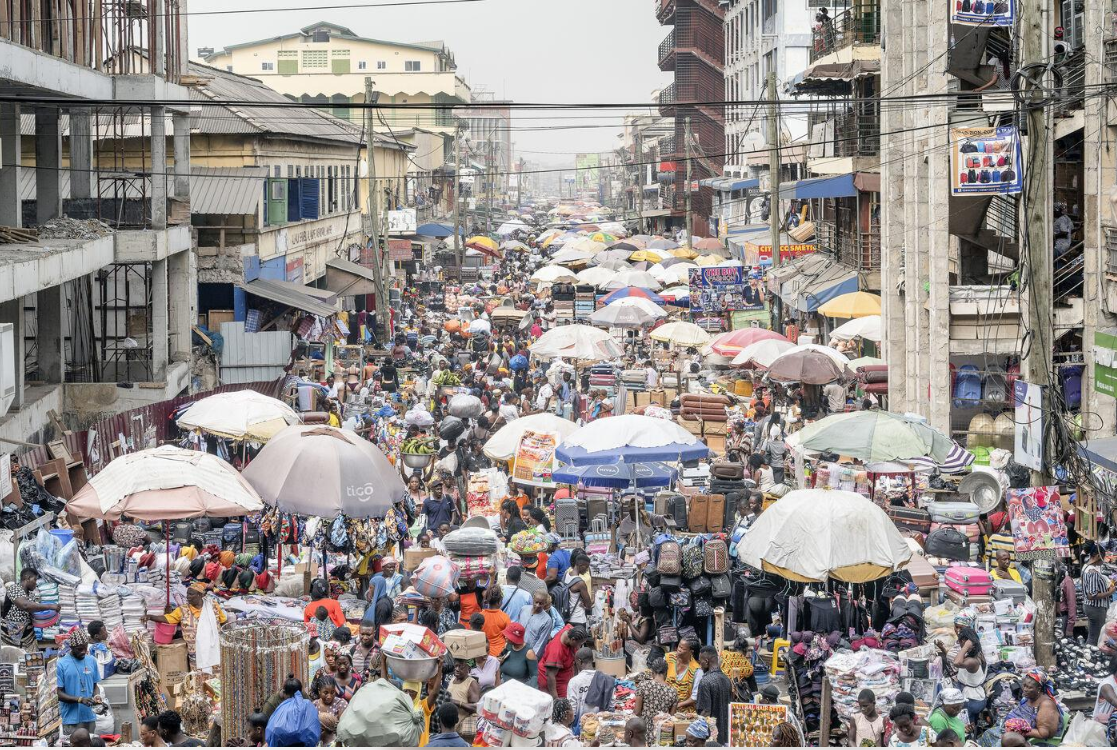
One of the most important features of African consumer markets is the continuing strength of informal and independent retail. Small shops, open-air markets and neighbourhood traders remain essential sources of everyday products in many communities. Their advantages include proximity, familiarity with customers and the flexibility to serve households making frequent purchases in small quantities.
These businesses cannot simply be treated as outdated competitors waiting to be replaced by supermarkets or mobile applications. They often operate within established social and commercial relationships that larger companies struggle to reproduce. For international brands and digital platforms, partnerships with local merchants may therefore prove more effective than direct competition.
The increasing use of digital payments creates opportunities to connect informal retailers with modern financial and distribution systems. Better inventory management, electronic transactions and more reliable wholesale supply could strengthen small businesses while expanding the reach of larger companies. The future of African retail may consequently involve greater cooperation between formal and informal commerce rather than the disappearance of either.
The Promise of a Larger African Market
Regional integration could eventually reshape competition across the continent. The African Continental Free Trade Area aims to reduce barriers between national economies and support the development of stronger regional supply chains. In July 2026, its Council of Ministers emphasized implementation, including efforts to make cross-border commerce more accessible to smaller enterprises and young entrepreneurs.
For consumer businesses, the potential benefits are substantial. Easier regional trade could help manufacturers distribute products across neighbouring countries, reduce certain supply-chain inefficiencies and support larger commercial operations. However, customs procedures, transport infrastructure, regulatory differences and limited access to finance remain obstacles.
The wider economic environment also demands caution. World Bank assessments continue to identify weak income growth, debt pressures and insufficient job creation as major challenges in sub-Saharan Africa. Population growth alone cannot guarantee stronger consumer demand if household purchasing power fails to improve.
THE ABE TAKE
Africa’s consumer economy offers substantial long-term opportunities, but the companies that succeed will be those that understand the difference between population growth and purchasing power. A large potential customer base is not automatically a profitable market. Consumers must have the income, confidence and practical ability to purchase the goods and services businesses provide.
The competition between supermarkets, digital platforms, international brands and neighbourhood retailers is therefore about more than market share. It is a contest over affordability, distribution, convenience and trust. Companies that adapt their business models to local conditions are likely to outperform those that rely on broad assumptions about the continent’s future growth.
Africa’s most successful consumer businesses may ultimately be those that connect modern technology and large-scale investment with the strengths of existing local commerce. The continent’s opportunity is real, but capturing it will require patience, operational discipline and a far deeper understanding of the people businesses hope to serve.
ABE MAGAZINE
Understand More. Think Bigger.