








ABE MAGAZINE | WORLD ECONOMY • FINANCE & GLOBAL MARKETS
October 13, 2026
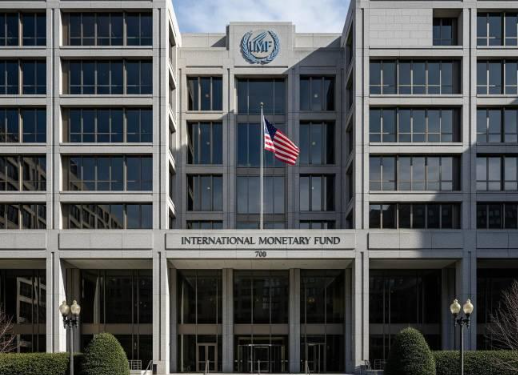
The International Monetary Fund has raised its forecast for global economic growth, offering evidence of an economy that continues to withstand extraordinary pressure. Yet behind the encouraging headline lies a more complicated reality: rising government debt, prolonged energy disruptions, uneven investment and diminishing financial safeguards are leaving countries increasingly exposed to the next major shock.
A Global Economy That Continues to Defy Expectations
The global economy has demonstrated a remarkable ability to continue expanding despite a succession of disruptions that might once have been expected to trigger a severe international downturn. Geopolitical conflict, volatile energy prices, uncertain trade relationships and elevated borrowing costs have tested businesses and governments across much of the world. Yet economic activity has remained more resilient than many policymakers anticipated, supported by consumer spending, technological investment and the ability of companies to adapt their operations to changing circumstances. That resilience is now reflected in the International Monetary Fund’s latest economic projections, although the institution is increasingly concerned about what lies beneath the headline numbers.
In its World Economic Outlook released on October 13, the IMF forecasts global economic growth of 3.1% in 2026, slightly above the 3.0% projected in July. The organization expects growth to strengthen to 3.4% in 2027, suggesting that the international economy could continue expanding despite the difficult environment. The upward revision is modest, but it is significant because it arrives at a time when the war in the Middle East has disrupted energy supplies and complicated the outlook for inflation, trade and public finances. Rather than producing a synchronized global contraction, these pressures have so far been absorbed unevenly by different economies.
The apparent stability, however, conceals an increasingly fragile economic foundation. Some countries are benefiting from substantial investment and relatively strong domestic demand, while others are confronting higher import bills, limited access to financing and weakening purchasing power. Governments that previously relied on emergency spending, energy reserves or monetary support to manage economic disruptions have fewer resources available to respond to another crisis. The central concern is therefore no longer simply whether the world economy can continue growing, but whether that growth is sufficiently broad, durable and financially sustainable.
Why Economic Resilience Is Becoming More Difficult to Sustain
Economic resilience is often understood as the ability of an economy to recover after a disruption. In practice, it also depends on the resources available to prevent a temporary shock from becoming a lasting financial problem. Governments can provide targeted assistance to households, central banks can adjust monetary policy, businesses can change suppliers and countries can draw on strategic reserves when essential commodities become scarce. These mechanisms have helped contain the consequences of recent disruptions, but they are not unlimited.
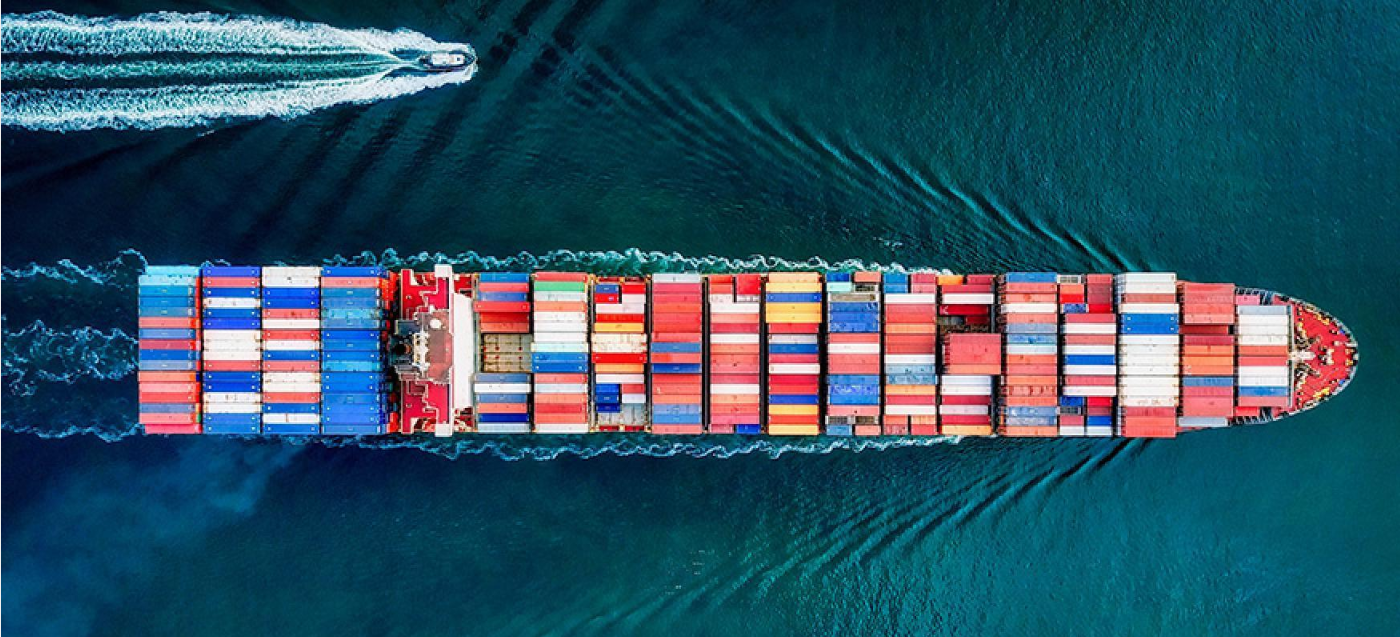
The Middle East conflict provides a particularly important example. Interruptions to energy transportation have forced companies and governments to find alternative supplies, reorganize shipping routes and reduce dependence on vulnerable trade corridors. Strategic energy stocks and adjustments in consumption have also helped prevent the full impact of the disruption from immediately reaching the global economy. According to the IMF’s assessment, such responses have played an important role in protecting growth, but their effectiveness becomes harder to maintain as the disruption continues.
This creates a problem that cannot be fully understood by looking at economic growth alone. A country may continue producing more goods and services while simultaneously exhausting the financial and logistical protections that helped it withstand the previous crisis. Businesses may preserve output by accepting higher operating costs, and governments may maintain household support by borrowing more heavily. These decisions can stabilize economic activity in the short term while leaving the system less prepared for future disruptions.
The IMF’s warning is therefore not a prediction of an inevitable recession. It is an assessment of declining room for error. The longer economic pressures persist, the greater the possibility that a new disruption will arrive before countries have rebuilt the capacity to manage it.
The Energy Shock Is Reshaping the Economic Outlook
Energy remains one of the most powerful channels through which geopolitical conflict affects the wider economy. Oil and natural gas are essential not only for transportation and electricity generation but also for industrial production, agriculture and the movement of goods across international supply chains. When energy becomes more expensive or difficult to transport, the effects spread far beyond the companies directly involved in producing or trading it. Manufacturers face higher operating expenses, logistics providers adjust their prices and households have less disposable income after paying for fuel and utilities.
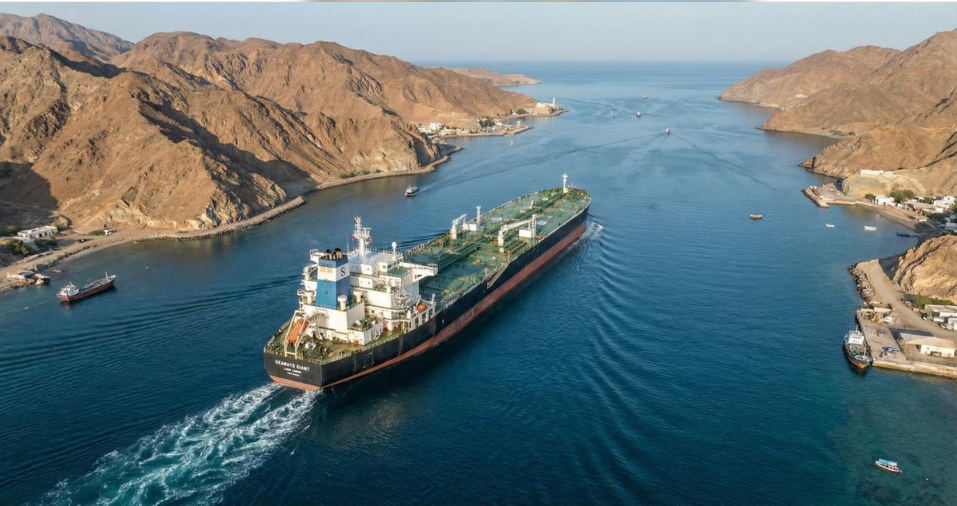
The IMF’s October outlook reflects the continued consequences of the Middle East conflict and the disruption of shipping through the Strait of Hormuz, a critical route for international energy trade. Its baseline projections assume that the strait will reopen in March 2027 and that shipping conditions will broadly return to their prewar state by October of that year. Those assumptions are important because they illustrate how much the economic forecast depends on developments that remain outside the control of central banks and finance ministries.
The institution also examines what could happen if the conflict intensifies. In an adverse scenario in which oil prices remain around $130 per barrel through the first quarter of 2027, global growth would be reduced by approximately half a percentage point in 2027 compared with the baseline forecast. Inflation would rise further, creating a difficult combination of weaker economic activity and more expensive essential goods. Such a scenario would place additional pressure on policymakers already attempting to balance price stability, employment and public finances.
The consequences would not be distributed equally. Energy-producing economies may benefit from higher export prices under some circumstances, although countries directly affected by conflict can suffer severe losses to infrastructure, trade and domestic activity. Energy-importing economies, particularly those with limited foreign-exchange reserves, face a more immediate challenge because they must devote a larger share of national income to purchasing essential supplies. For poorer households, the economic consequences can be especially pronounced when rising fuel costs translate into higher food prices and transportation expenses.
Government Debt Is Narrowing the Room for Economic Protection
Public debt has become another defining vulnerability in the international economy. Governments borrow to finance infrastructure, public services, emergency assistance and other commitments that cannot be covered immediately through tax revenue. Borrowing can support productive investment and help stabilize economic activity during difficult periods, but its sustainability depends on the relationship between economic growth, interest rates, government revenue and the cost of servicing outstanding obligations.
That relationship has become increasingly uncomfortable for many countries. Higher interest rates and elevated government bond yields can increase the cost of refinancing existing debt and financing new spending. When a larger share of public revenue is required to meet interest payments, governments have less flexibility to invest in education, transportation, healthcare and other priorities. They may also find it more difficult to respond to future economic emergencies without adding substantially to their financial obligations.
The IMF has consequently urged governments to rebuild fiscal space through credible medium-term policies that bring debt onto more sustainable paths. Fiscal space refers to a government’s capacity to increase spending or reduce taxes when necessary without undermining confidence in its finances. Rebuilding that capacity does not necessarily mean imposing immediate austerity in every economy, but it does require distinguishing temporary crisis measures from permanent commitments and evaluating whether public resources are being used effectively.
The challenge is particularly difficult because governments face competing demands. Households may require support against higher energy and food prices, businesses may seek relief from rising costs, and aging populations or infrastructure needs can increase pressure on public budgets. At the same time, financial markets may demand higher returns from governments perceived as increasingly risky borrowers. The danger is that countries enter the next downturn with insufficient fiscal flexibility, forcing more difficult decisions precisely when economic support is most needed.
A Growing Divide Between Economies
The IMF’s latest outlook also reveals that global growth is becoming more concentrated. According to the Fund’s October assessment, 32 countries account for approximately 95% of projected global growth, compared with 54 countries in its April projections. This shift suggests that the headline expansion is increasingly dependent on a smaller group of economies rather than being shared broadly across the international system.
The differences are visible among major economies. The IMF expects the United States to grow by 2.3% in both 2026 and 2027, supported by private consumption, investment and other domestic factors. The euro area’s 2026 growth forecast has been raised to 1.1%, while China’s projection has been reduced to 4.5% for 2026 and 4.0% for 2027. India is expected to expand by 7.0% in both years, reflecting relatively strong domestic demand and investment.
These projections illustrate why it is increasingly misleading to speak of the world economy as though every country is experiencing the same conditions. A multinational corporation operating across several regions may encounter strong demand in one market, rising financing costs in another and significant supply disruptions elsewhere. Similarly, investors assessing international opportunities must distinguish between economies benefiting from new investment and those whose growth is constrained by expensive imports, debt obligations or weak domestic consumption.
For developing economies, the divergence carries particular significance. Countries that depend heavily on imported energy and food can experience higher inflation without receiving the investment gains supporting growth elsewhere. Those with substantial foreign-currency debt may face additional pressure if financing conditions tighten or exchange rates weaken. Over time, such differences can make it harder for lower-income economies to narrow the gap with wealthier countries, even when the global growth rate remains positive.
Technology Investment Is Supporting Growth, but Also Creating New Risks
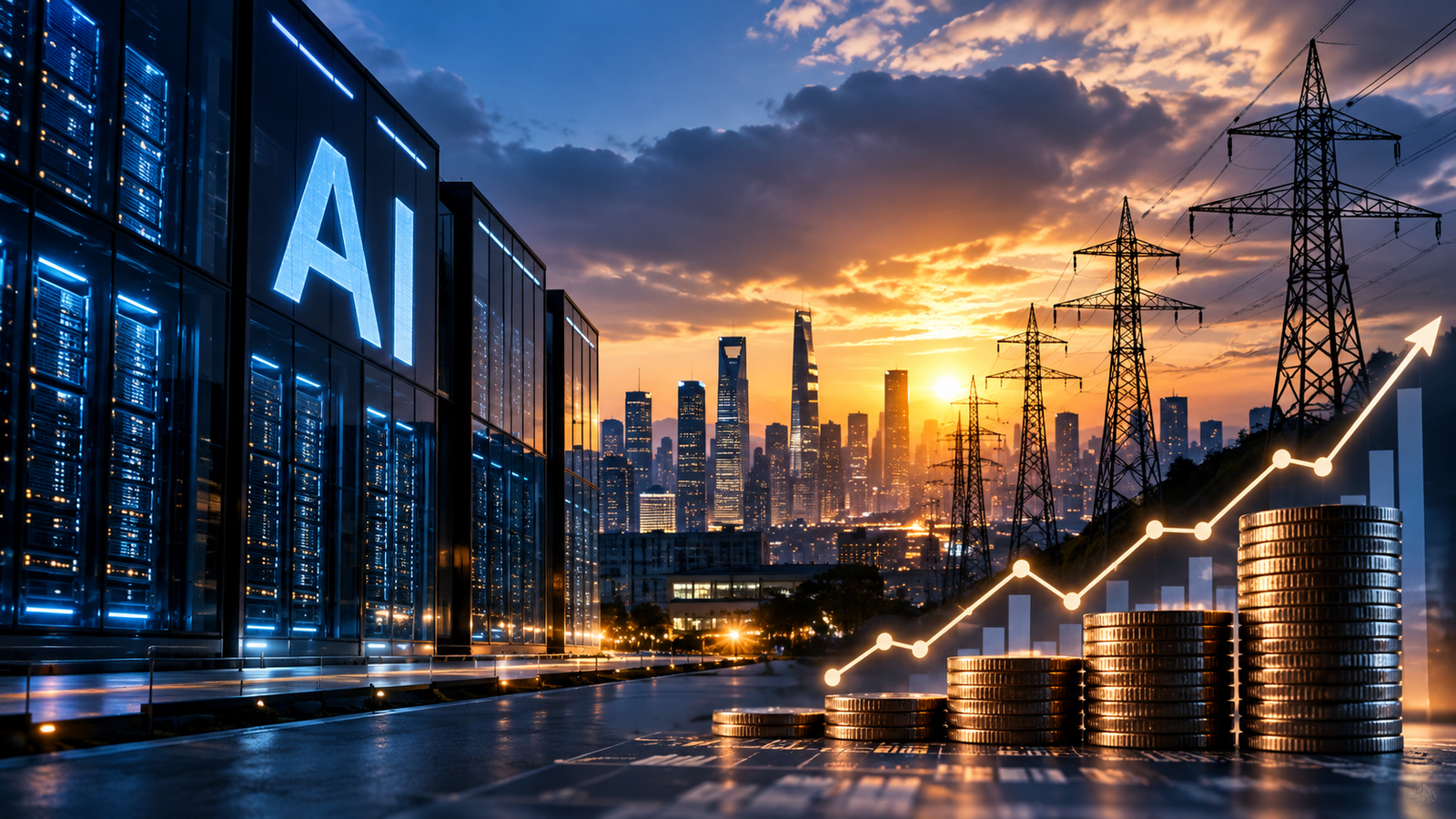
One of the most consequential features of the current economic outlook is the role of investment in advanced computing infrastructure. Large expenditures on data centres, semiconductors, electricity systems and related technologies are supporting construction, manufacturing and business activity in several economies. The benefits extend beyond the countries developing the largest technology platforms to suppliers of specialized equipment and components across international production networks.
This investment helps explain why global growth has remained stronger than expected despite the energy shock. It also contributes to the differences emerging between countries, because the economic benefits are concentrated in places with the capital, industrial capacity, infrastructure and skilled workforce needed to participate in these supply chains. Economies outside those networks may receive fewer direct benefits while still facing the same global pressures from higher energy prices and financial uncertainty.
Yet the IMF identifies an important risk in the dependence on technology-related spending. Investment decisions are influenced by expectations about future profitability and productivity. If those expectations prove too optimistic, companies could reduce capital expenditure, financial markets could reassess valuations and the resulting decline in investment could affect suppliers, employees and consumers across multiple economies.
The IMF’s analysis therefore presents technological investment as both an economic opportunity and a potential source of instability. Faster productivity improvements could strengthen growth over time, but an abrupt reversal in investor expectations could undermine one of the principal forces currently supporting the expansion. The wider lesson is that an economy can become vulnerable not only because investment is insufficient, but also because too much of its momentum depends on the continued success of a narrow set of activities.
Inflation Has Not Disappeared
The persistence of inflation complicates the outlook further. The IMF projects global headline consumer-price inflation of 4.7% in 2026 and 4.1% in 2027, reflecting the continuing influence of energy costs and other pressures. Although inflation is not equally high in every economy, its persistence makes it harder for central banks to respond to slowing growth through rapid interest-rate reductions.
This creates a difficult policy environment. If interest rates remain elevated, borrowing costs can restrain business investment, mortgage affordability and consumer spending. If rates are reduced too aggressively while inflation remains persistent, price pressures could intensify or become embedded in wage negotiations and business pricing decisions. Central banks must therefore assess whether inflation is being driven by temporary supply disruptions, domestic demand or more lasting changes in production costs.
The effects are also deeply personal. Economic growth figures measure the expansion of overall production, but they do not necessarily indicate whether household purchasing power is improving. A family facing higher food, transportation and housing costs may experience significant financial strain even while the national economy continues expanding. For businesses, especially smaller firms with limited pricing power, higher operating costs can reduce profit margins and discourage expansion.
This distinction matters for understanding public confidence in the economy. A positive growth forecast can coexist with widespread frustration about affordability, employment opportunities and living standards. The IMF’s warning is partly a reminder that economic stability must be judged not only by whether output continues increasing, but also by whether households and businesses can withstand the financial pressures accompanying that growth.
What Businesses and Investors Should Watch
For international businesses, the immediate challenge is managing uncertainty without abandoning long-term investment. Companies with diversified suppliers, manageable debt and flexible operations may be better positioned to withstand disruptions in energy markets and transportation networks. Those relying on a narrow range of inputs or operating with substantial borrowing obligations could face greater pressure if costs rise again or financing becomes more expensive.
Investors face a similarly complex environment. Continued global growth may support corporate earnings, but it does not eliminate the possibility of financial-market volatility. Higher bond yields, concentrated investment and geopolitical uncertainty can change asset valuations even when the broader economy remains in expansion. Assessing financial strength therefore requires more than identifying sectors with strong recent performance; it also involves understanding the assumptions on which future profits depend.
Several developments deserve particular attention in the coming months: whether energy transportation routes begin returning to normal, whether inflation moderates, how governments manage rising debt-service costs and whether technology investment produces measurable productivity improvements. None of these factors operates independently. A prolonged energy shock could keep inflation elevated, restrict the ability of central banks to lower rates and further increase government financing costs.
The interaction between these pressures is what makes the present outlook unusually complicated. The world is not facing a single economic problem with a straightforward solution. It is confronting overlapping challenges in which decisions made to address one vulnerability may intensify another.
The Real Test Is What Happens After the Next Shock
The IMF’s latest projections offer grounds for cautious optimism. The global economy has continued expanding under difficult conditions, businesses have demonstrated adaptability and investment remains strong in several important sectors. These are meaningful strengths, and they help explain why the Fund has modestly improved its forecast rather than predicting an imminent worldwide downturn.
Nevertheless, the distinction between surviving a shock and preparing for the next one is becoming increasingly important. Emergency energy supplies cannot be drawn down indefinitely, government borrowing cannot expand without consequences and strong investment in one sector cannot permanently compensate for weakness across the rest of the economy. The challenge for policymakers is to use the current period of growth to strengthen the institutions, infrastructure and financial safeguards that make future resilience possible.
The coming year will therefore be a test of economic preparation as much as economic performance. Governments that rebuild fiscal capacity, improve energy security and support productive investment may be better equipped to withstand future disruptions. Countries that rely on temporary adjustments while underlying vulnerabilities deepen could discover that the next crisis is more difficult to contain than the last.
THE ABE TAKE
The most important message in the IMF’s October outlook is not that the world economy is growing by 3.1%. It is that economic growth and economic security are not the same thing. An economy can expand while its governments become more indebted, its households remain under pressure and its capacity to absorb further disruptions steadily declines. Strong headline figures are encouraging, but they should not be mistaken for proof that the foundations of global prosperity are secure.
The current period of resilience creates an opportunity that policymakers should not waste. Rather than treating continued growth as permission to postpone difficult decisions, governments should use it to rebuild financial flexibility, reduce exposure to critical supply disruptions and encourage investment that strengthens productivity across a wider range of industries and countries. Businesses and investors, meanwhile, should recognize that recent adaptability does not guarantee immunity from future shocks.
The world economy has shown that it can endure extraordinary pressure. The question now is whether it can become stronger before the next major test arrives.
ABE MAGAZINE
Understand More. Think Bigger.