







ABE MAGAZINE | FINANCE • BUSINESS & GLOBAL MARKETS
October 12, 2026
Behind Wall Street’s familiar stock exchanges, a powerful financial system is expanding. Private equity firms and private lenders are reshaping corporate ownership, moving trillions of dollars through less transparent markets and raising new questions about who controls capital and who ultimately carries the risk.
Wall Street’s Quiet Financial Revolution
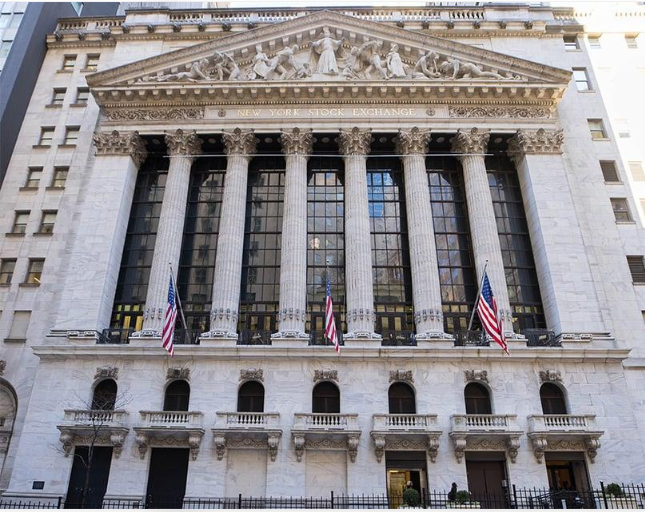
For more than two centuries, Wall Street has been the public face of American finance. Fortunes have been made and lost on trading floors, stock prices have shaped corporate empires, and financial crises have sent shockwaves across the world.
But some of the most consequential decisions in modern finance are increasingly being made far from the stock exchange.
Behind closed doors, private investment firms are buying companies, financing corporate debt and managing enormous pools of capital. Their influence reaches into businesses, pension funds and industries that millions of people depend on.
Unlike publicly traded stocks, many of these investments are difficult to sell quickly, and their valuations are not continuously tested by open markets.
That raises a question Wall Street can no longer afford to ignore: What happens when an increasingly important part of the financial system becomes harder for the public to see?
The rise of private equity and private credit is transforming how businesses raise money and how investors pursue returns. It is also changing where financial risks accumulate, who bears those risks and how easily regulators can identify emerging problems.
Wall Street is not disappearing.
Its power is moving into places that are less visible, but no less important.
According to statistics published by the U.S. Securities and Exchange Commission, private funds filing Form PF reported approximately $29.6 trillion in aggregate gross assets at the end of 2025, an increase of 18.5% from the previous year.
The regulator recorded 58,891 reporting private funds during that period.
These figures measure gross assets across reporting private funds, including leverage and various fund strategies. They should not be interpreted as the net value of private equity or private credit alone.
Nevertheless, they illustrate how significant privately managed capital has become.
The question is no longer whether private markets will influence the future of finance.
It is how far that influence will extend.
What Exactly Are Private Markets?
Private markets refer broadly to investments that are not bought and sold through conventional public stock and bond exchanges.
They include several distinct financial activities.
Private equity firms invest in businesses, often acquiring substantial or controlling ownership positions. They may seek to improve operations, expand the company, restructure its finances or eventually sell it at a profit.
Private credit funds lend money directly to businesses outside the traditional public bond market.
Venture capital firms provide financing to young companies with significant growth potential, usually in exchange for ownership stakes.
Other private investment strategies involve infrastructure, property and specialized financial assets.
These activities have existed for decades.
What has changed is their scale, the diversity of investors participating in them and their growing connections with the wider financial system.
Private markets can offer businesses more flexibility than conventional financing.
A company may negotiate directly with a lender, structure a loan around its specific needs or obtain long-term capital without immediately entering public markets.
For investors, private assets may provide access to businesses and lending opportunities that are unavailable through ordinary stock purchases.
But these arrangements involve trade-offs.
Private investments are generally less liquid, their valuations can be harder to verify and investors may be required to commit capital for extended periods.
The flexibility that makes private markets attractive can also make them more complicated to evaluate.
Why Companies Are Looking Beyond Traditional Banks

The growth of private markets reflects a broader change in how companies obtain financing.
Banks have historically played a central role in providing corporate loans.
Following the 2008 global financial crisis, tighter regulatory requirements and changes in risk management influenced how banks allocated capital.
At the same time, investment managers identified opportunities to provide financing directly to businesses.
Private credit became an increasingly important alternative.
Rather than borrowing exclusively from a commercial bank or issuing publicly traded bonds, a company could negotiate a loan with a private investment fund.
Such arrangements can offer customized repayment schedules, flexible terms and greater certainty of financing.
They can be particularly attractive to businesses that do not fit conventional lending requirements.
However, borrowers may pay higher interest rates or accept more restrictive contractual terms in exchange for that flexibility.
The growth of private credit does not mean traditional banks have become irrelevant.
In fact, banks frequently provide financing and other services to private investment funds themselves.
The result is a more interconnected financial system in which banks and private lenders can function as competitors, partners and creditors to one another.
The Rise of Private Credit
Private credit has become one of the most closely watched developments in modern finance.
In May 2026, the Financial Stability Board estimated the size of the global private credit market at approximately $1.5 trillion to $2 trillion, depending on the scope and definitions used.
The international body acknowledged that private credit provides useful financing options, including for companies with limited access to traditional funding.
But it also warned that the sector’s rapid expansion has introduced potential vulnerabilities.
Unlike publicly traded bonds, many private loans do not change hands frequently.
This can make their market values difficult to determine.
Loan valuations may depend on models, borrower financial information and assessments made by investment managers.
That does not necessarily mean those valuations are inaccurate.
It does mean investors may receive less immediate market-based information about changing credit conditions.
Another concern involves the financial strength of borrowers.
Some private credit funds lend to companies carrying substantial debt or facing limited financial flexibility.
When interest costs rise or business earnings weaken, these companies may struggle to meet their obligations.
The International Monetary Fund warned in its April 2026 Global Financial Stability Report that stress among private credit borrowers could intensify under adverse economic conditions.
Its analysis suggested that significant increases in interest rates or declines in corporate earnings could sharply increase defaults and financial distress.
Private credit has helped expand the availability of business financing.
The question now is how resilient that financing will prove when economic conditions become more difficult.
The Risks Emerging Beneath the Growth
By 2026, concerns about private credit were no longer purely theoretical.
Some funds experienced increased withdrawal requests, while lenders and investors became more attentive to the financial condition of underlying borrowers.
Reuters reported in March that major banks were reviewing certain exposures to private credit providers and that some funds had limited investor withdrawals.
In April, Wall Street executives described efforts to monitor and stress-test their private credit portfolios.
These developments do not establish that the entire industry is facing a systemic crisis.
But they demonstrate why rapid growth deserves careful scrutiny.
One important issue is liquidity.
A private credit fund may hold loans that cannot be sold quickly without accepting a discount.
If investors are permitted to request withdrawals periodically, the fund may face pressure when many seek to redeem their investments at the same time.
Fund managers may respond by limiting withdrawals under the terms of the investment agreement.
Such restrictions can protect remaining investors from forced asset sales, but they may also disappoint investors who expected easier access to their money.
The difficulty becomes more serious when investors underestimate the difference between owning a private loan and holding cash or a publicly traded security.
Private investments may offer attractive income opportunities.
They do not necessarily offer the same flexibility as conventional savings or liquid market investments.
Private Equity Is Reshaping Corporate Ownership
Private credit is only one part of the transformation.
Private equity firms have also become influential owners of businesses across industries, including healthcare, manufacturing, consumer services, infrastructure and professional services.
Their business model often involves acquiring companies, improving their financial or operational performance and eventually selling them or taking them public.
Supporters argue that private equity ownership can bring disciplined management, strategic investment and access to capital that businesses might otherwise struggle to obtain.
For companies undergoing restructuring or seeking rapid expansion, these resources can be valuable.
However, private equity has also attracted criticism.
Acquisitions frequently involve borrowed money, which can place substantial financial obligations on the companies being purchased.
If business performance weakens, debt repayments may limit a company’s ability to invest, hire workers or withstand economic shocks.
Some critics also question whether aggressive cost reductions and short investment horizons can conflict with the interests of employees, customers and long-term business development.
These concerns vary considerably between firms and individual investments.
Private equity is not a single business model with identical outcomes.
Some investments support successful business expansion. Others encounter financial difficulties or fail to deliver the improvements originally anticipated.
The growing influence of private ownership nevertheless raises an important question about corporate accountability.
When major businesses operate outside public stock markets, investors and the wider public may have access to less financial information than they would receive from listed companies.
This makes governance, reporting standards and responsible investment practices increasingly important.
Why Large Investors Are Committing More Capital
Pension funds, insurance companies, sovereign wealth funds and university endowments have become important sources of capital for private investment managers.
These institutions frequently manage money over long periods.
A pension fund, for example, may invest today to meet retirement obligations many years into the future.
This long investment horizon can make certain private assets attractive.
Some private investments offer the possibility of higher returns than traditional public securities, partly because investors accept additional risks and restrictions on withdrawing capital.
Others provide exposure to businesses, infrastructure projects or lending opportunities that are difficult to access through conventional markets.
However, higher expected returns are not guaranteed.
Private investment performance can be affected by borrowing costs, economic conditions, management decisions and the price paid for an asset.
Fees can also be substantial.
Investors must consider management charges, performance-related compensation and the possibility that an investment may remain difficult to sell for years.
The growing popularity of private assets therefore creates an important responsibility for institutional investors.
They must assess whether the potential benefits justify the risks, costs and long-term commitments involved.
For pension funds in particular, these decisions can ultimately affect the financial security of millions of ordinary people.
Private Markets Are Moving Closer to Everyday Investors
For much of their history, private equity and private credit investments were largely associated with wealthy individuals and large financial institutions.
That distinction is beginning to change.
Investment managers have developed products intended to make certain private assets accessible to a broader range of investors.
Some offer periodic opportunities to invest or withdraw money, rather than requiring investors to commit capital for the full life of a traditional private fund.
Supporters argue that wider access could allow individuals to participate in investment opportunities previously reserved for institutions.
But regulators face a difficult balance.
Private assets can be complex, expensive and difficult to value.
They may also be unsuitable for investors who need immediate access to their savings.
In September 2026, the U.S. Securities and Exchange Commission proposed regulatory changes intended to expand access to private assets.
The proposals reflected a broader debate about whether investment opportunities should remain restricted or become more widely available.
Yet greater access does not automatically mean greater financial security.
An investment product can become easier to purchase without becoming easier to understand.
For everyday investors, the most important considerations remain the underlying risks, fees, liquidity restrictions and suitability of the investment for their financial circumstances.
The Transparency Problem

Public financial markets operate under extensive disclosure requirements.
Listed companies generally publish regular financial statements, report significant developments and provide information that investors can use to assess their performance.
Private companies and funds may operate under different disclosure arrangements.
Investors often receive detailed information through private agreements, but that information may not be available to the wider public.
This creates challenges for market observers and regulators.
When a privately held business experiences financial difficulties, changes in its valuation may become visible more slowly than changes in the price of a publicly traded stock.
That does not mean private assets are necessarily riskier than public investments in every situation.
It means their risks can be more difficult to observe.
The Financial Stability Board has identified gaps in available information as an important obstacle to monitoring private credit.
It has also highlighted the increasing connections between private funds, banks, insurers and other financial institutions.
Those connections matter because problems in one part of the financial system can affect other participants.
A private lender experiencing losses may reduce new lending.
A bank financing that lender may reassess its exposure.
Institutional investors may change their allocations in response to losses or liquidity pressures.
The resulting effects can extend beyond the original investment.
Understanding these relationships is becoming an increasingly important part of financial supervision.
Are Private Markets Becoming Too Important to Ignore?
The growth of private finance raises a broader question about the structure of the global economy.
When companies raise more capital privately, traditional public markets no longer provide a complete picture of business financing.
Stock market performance may remain strong while some privately financed companies face growing financial pressure.
Conversely, private investment activity may expand even when public share offerings slow.
This creates a more complicated financial environment.
Investors, regulators and policymakers must consider developments across both public and private markets to understand how capital is being allocated.
The relationship between the two is also increasingly important.
Private equity firms may eventually sell portfolio companies through public listings.
Private lenders may finance acquisitions undertaken by investment funds.
Banks may lend to private investment managers while also competing with them for corporate borrowers.
Rather than operating as entirely separate systems, public and private finance are becoming more closely connected.
The implications extend beyond Wall Street.
The availability and cost of business financing can influence employment, investment, corporate expansion and economic growth.
When private lenders become major providers of capital, their decisions can affect companies and communities that have little direct involvement in financial markets.
This makes the industry’s stability a matter of wider economic interest.
Regulation Is Entering a New Phase
Financial regulators face the challenge of encouraging productive investment while limiting risks that could threaten financial stability.
Private markets provide legitimate economic benefits.
They can finance growing businesses, support infrastructure development and offer alternatives when traditional lending channels are insufficient.
Excessive restrictions could reduce access to capital.
But insufficient oversight could allow vulnerabilities to accumulate without adequate scrutiny.
The Financial Stability Board’s May 2026 assessment emphasized the need to understand private credit’s connections with banks, insurers and other financial institutions.
The International Monetary Fund has similarly called for stronger monitoring of nonbank financial institutions and improved information sharing.
The challenge is not simply to impose the same rules on every type of investment.
Different financial activities involve different risks.
Instead, regulators must ensure that risks are understood, appropriately managed and visible to the institutions responsible for financial stability.
As private markets continue to expand, that task will become increasingly important.
The Future of Wall Street Will Be Both Public and Private
Despite the rapid expansion of private investment, public markets are unlikely to lose their central role in global finance.
Stock exchanges continue to provide liquidity, transparent pricing and access to a broad investor base.
Public bond markets remain essential sources of financing for governments and corporations.
Traditional banks continue to support businesses, households and the international payments system.
Private markets offer an additional layer of financial activity rather than a complete replacement.
Their continued growth will depend on their ability to deliver competitive returns, manage risk and maintain investor confidence.
Economic conditions will also matter.
Periods of low borrowing costs can encourage investment activity and make leveraged transactions more attractive.
Higher financing costs can produce the opposite effect, increasing pressure on borrowers and reducing the appeal of certain transactions.
For private equity managers, weaker acquisition markets can make it harder to sell existing investments.
For private lenders, deteriorating corporate earnings can increase credit losses.
These challenges will help determine which investment strategies remain successful over the longer term.
The firms that thrive may not simply be those capable of raising the largest funds.
They may be those that demonstrate sound investment judgment, financial discipline and transparency through difficult economic cycles.
THE ABE TAKE
Wall Street’s transformation is not simply a story about wealthy investors moving money into new financial products.
It represents a fundamental change in how businesses are financed, how ownership is structured and where financial risks are held.
Private equity and private credit have expanded the options available to companies seeking capital.
They have also created opportunities for investors willing to accept long-term commitments and more complex financial arrangements.
But the growth of private markets should not be confused with proof that they are inherently superior to traditional finance.
An investment does not become safer because its price is not displayed on a stock exchange.
A loan does not become less risky because it is negotiated privately.
And a company does not necessarily become more successful simply because its ownership is transferred from public shareholders to a private investment fund.
The true measure of private markets will be their ability to finance productive businesses while managing the risks associated with leverage, illiquidity and limited transparency.
For regulators, the challenge is to protect financial stability without preventing useful innovation in capital markets.
For investors, the responsibility is to understand what they own, how their returns are generated and when their money can realistically be recovered.
For businesses, the choice between public and private financing should depend on long-term economic needs rather than financial fashion.
The future of Wall Street will not be defined solely by how much capital moves into private markets. It will be defined by whether that capital creates lasting economic value without allowing hidden financial risks to grow beyond control.
Public markets will remain important. Private markets will continue to influence corporate finance.
The financial system of the future will increasingly depend on how effectively the two operate together.
ABE MAGAZINE
Understand More. Think Bigger.