







ABE MAGAZINE | SPORTS • BUSINESS & GLOBAL ECONOMY
October 12, 2026
Formula 1 has evolved from an elite motorsport championship into a multibillion-dollar entertainment business. Through broadcasting agreements, international sponsorships, premium hospitality and the ambitions of cities competing to host its races, the sport has built a commercial empire whose influence extends far beyond the racetrack.
The Multibillion-Dollar Business Behind the Starting Grid
Twenty-two drivers, eleven teams and a championship contested across some of the world’s most recognizable cities. Formula 1 is a competition defined by speed, engineering and decisions made in fractions of a second. Yet behind the spectacle lies a global business whose influence extends into media, tourism, luxury, technology and international investment.
A Formula 1 weekend is no longer simply a sporting event. It is an international commercial gathering that brings together multinational corporations, government officials, investors, tourists and millions of television viewers. Host cities use races to promote themselves to the world, sponsors compete for visibility, and broadcasters invest heavily in the right to deliver the competition to audiences. Formula 1 sits at the centre of these relationships, generating revenue from several industries simultaneously.
In 2025, Formula 1 generated approximately $3.87 billion in revenue, according to financial results released by its owner, Liberty Media. That represented growth of roughly 14% compared with the previous year. Operating income reached approximately $632 million, while adjusted operating earnings, measured using Liberty Media’s adjusted OIBDA metric, climbed to $946 million. These figures illustrate how the championship has developed into one of the most commercially significant properties in international sport.
Its success is built on a fundamental business principle: the racing attracts attention, but the commercial system surrounding that attention generates much of the money. Formula 1 has learned to sell not only sporting competition, but also access, prestige, entertainment and a connection to an international audience.
From Historic Motorsport to Global Entertainment
Formula 1’s commercial transformation developed over decades, beginning with a championship established in 1950 that gradually evolved into one of the world’s most recognizable sporting competitions. As television broadcasting expanded and international sponsors became more involved, the commercial rights associated with the championship grew increasingly valuable. What had initially been a competition centred on automotive engineering and sporting achievement was becoming a global entertainment property capable of attracting significant investment.
A decisive turning point came when American media company Liberty Media announced its acquisition of Formula 1’s commercial business in 2016. The transaction, completed in 2017, valued the enterprise at approximately $8 billion, including debt. Liberty Media inherited a prestigious sporting brand with an established international audience, but it also recognized opportunities to expand the championship beyond its traditional fan base.
Under its ownership, Formula 1 placed greater emphasis on digital engagement, international expansion and the personalities surrounding the sport. Teams and drivers became more visible through social media, while race weekends increasingly incorporated concerts, corporate hospitality and entertainment experiences. The championship also invested in developing its presence in the United States, where motorsport had long been dominated by domestic competitions.
These changes gradually altered Formula 1’s commercial identity. Rather than relying primarily on established racing enthusiasts, the championship began attracting viewers interested in entertainment, fashion, celebrity culture and international sporting rivalries. This wider appeal made the sport more valuable to broadcasters and sponsors, creating opportunities for additional investment and further global expansion.
How Formula 1 Makes Its Money
Formula 1’s business model depends on several major sources of revenue, each connected to a different part of the sporting and entertainment economy. According to Liberty Media’s 2025 financial disclosures, media rights represented approximately 31% of total revenue, race promotion fees accounted for nearly 27%, and sponsorship contributed approximately 22%. The remainder came from activities including hospitality, freight services, licensing and other commercial operations.
The structure allows Formula 1 to generate revenue from multiple participants in a single event. A promoter pays for the right to host a Grand Prix, a broadcaster pays to show it, sponsors purchase commercial exposure, and fans spend money on tickets, merchandise and premium experiences. The championship benefits from coordinating these relationships while the teams, promoters and commercial partners operate their own businesses around the competition.
This diversification gives Formula 1 an important advantage over businesses that depend heavily on one source of income. Long-term broadcasting agreements, race contracts and sponsorship partnerships can provide financial stability and greater visibility into future revenue. However, the system still depends on sustained audience interest and the willingness of commercial partners to pay substantial amounts for access to the sport.
The value of Formula 1 therefore rests on more than its historical reputation. It must continue producing compelling competition, maintaining strong relationships with host cities and demonstrating that its global audience remains commercially attractive.
Why Cities Compete to Host a Grand Prix
One of the most distinctive features of Formula 1’s business model is the relationship between the championship and its race promoters. Unlike many sporting competitions in which organizers pay to use stadiums or venues, Formula 1 generally receives fees from promoters seeking the right to stage a Grand Prix. These promoters may be private companies, circuit operators, tourism organizations or government-backed entities, and they typically rely on ticket sales, hospitality and commercial partnerships to recover their investment.
For host cities, the attraction goes beyond the race itself. A Grand Prix can generate international publicity, attract tourists and create opportunities for businesses operating in hotels, restaurants, transportation and entertainment. Cities such as Singapore, Abu Dhabi, Miami and Las Vegas have integrated Formula 1 into broader strategies involving tourism, investment promotion and destination branding.
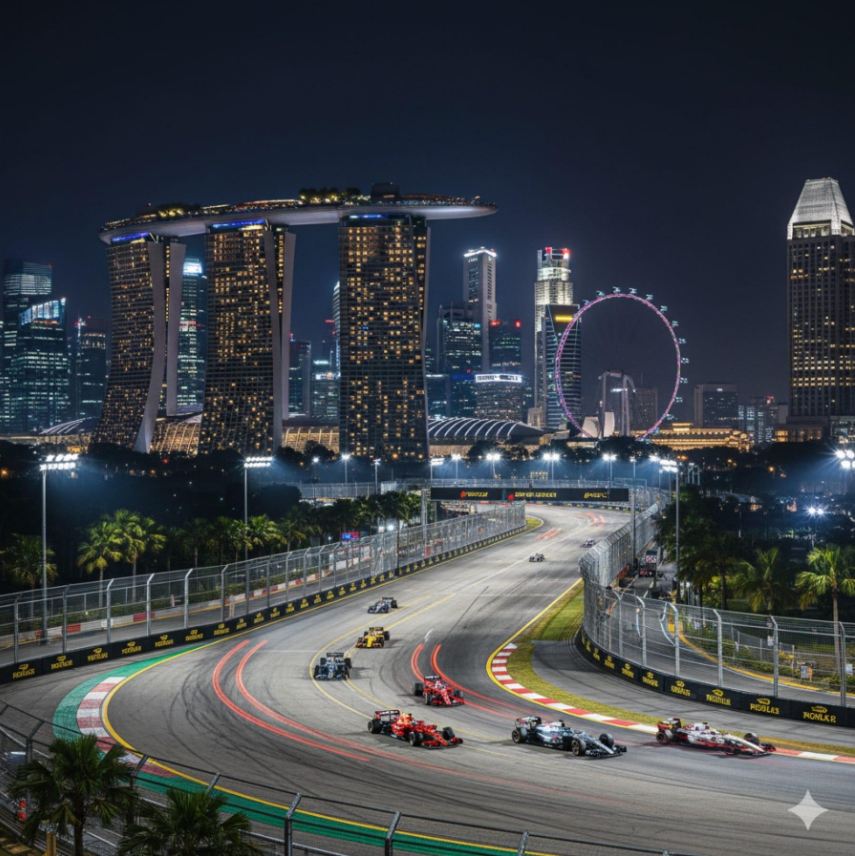
Singapore’s night race places the city’s skyline before a global audience, while Abu Dhabi has used its Grand Prix as part of a wider tourism and entertainment strategy. Miami combines racing with luxury hospitality and corporate networking, whereas Las Vegas has become an example of Formula 1 taking a more direct role in event promotion. Unlike most races, the Las Vegas Grand Prix is promoted by Formula 1 itself, allowing the championship to capture more event-related revenue while assuming greater responsibility for operating costs.
The economics of hosting remain complicated. Race promoters must account for infrastructure, security, temporary construction, transportation and other operational expenses. Although a Grand Prix can create substantial commercial activity, that does not necessarily mean every host city receives a positive financial return. The economic value depends on the cost of staging the event, the spending it attracts and whether the benefits extend beyond the race weekend.
Broadcasting: The Most Valuable Window Into Formula 1
Television and streaming rights form the largest individual component of Formula 1’s revenue. The championship licenses broadcasting rights to media companies in different territories, allowing them to show races, qualifying sessions and related programming. For broadcasters, live sport remains especially valuable because it attracts audiences at specific times, supports advertising revenue and can encourage customers to maintain subscriptions.
In 2025, media rights accounted for approximately 31.3% of Formula 1’s total revenue. The increasing involvement of streaming companies has created new opportunities for the championship, particularly as entertainment businesses compete for exclusive programming that can distinguish their services from competitors.
Beginning in 2026, Apple TV became the exclusive United States broadcaster of Formula 1, replacing ESPN as the principal rights holder in that market. The agreement demonstrates how global technology and entertainment companies increasingly view live sport as an important part of their commercial strategies. Formula 1 also operates its own streaming services in supported markets, providing additional opportunities to distribute content and maintain direct relationships with viewers.
However, broadcasting growth creates an important tension between commercial value and public accessibility. Exclusive agreements can generate substantial revenue, but expensive subscriptions may make the sport harder for some audiences to follow. Formula 1 must therefore balance the financial benefits of premium broadcasting contracts with the long-term importance of introducing new generations to the championship.
The Sponsorship Economy Behind the Cars
Formula 1 cars are among the most recognizable advertising platforms in international sport. Their bodywork, racing suits and team facilities display the names of companies seeking to associate themselves with speed, engineering, innovation and prestige. Sponsors range from financial institutions and technology businesses to luxury manufacturers, consumer brands and industrial corporations.
Sponsorship operates at different levels within the championship. Individual teams negotiate commercial agreements that help finance their racing operations, while Formula 1 itself maintains partnerships that provide exposure across the wider competition. These arrangements are financially distinct: money paid to sponsor a team generally supports that team’s business, whereas championship-wide sponsorship contributes to Formula 1’s central commercial revenue.
In 2025, sponsorship accounted for approximately 21.7% of Formula 1’s total revenue, compared with 18.6% the previous year. The increase reflects the growing commercial appeal of the championship and the willingness of companies to invest in access to its international audience.
Yet sponsorship is not limited to advertising visibility. Major partners use Grand Prix weekends to entertain corporate clients, develop commercial relationships, launch products and strengthen their reputations. Formula 1’s paddock and hospitality facilities have consequently become important networking environments where sporting competition and international business intersect.
How Entertainment Helped Transform the Audience
Formula 1’s expansion into mainstream entertainment has played an important role in its recent growth. Netflix’s documentary series Formula 1: Drive to Survive, which debuted in 2019, introduced audiences to the personalities, rivalries and organizational pressures behind the championship. Rather than presenting motorsport exclusively through race results and technical analysis, the series focused on the people and stories that make the competition compelling.
This approach helped make Formula 1 more accessible to viewers who had little previous interest in racing. Drivers became recognizable personalities, team principals developed public profiles, and events behind the scenes attracted attention alongside the sporting action. The series was particularly influential in supporting wider awareness of Formula 1 in the United States, although the championship’s growth also reflected digital marketing, new race locations and changing audience habits.
The commercial significance of this transformation lies in the relationship between storytelling and consumer engagement. A viewer might discover a driver through a documentary, begin following that person’s social media accounts, watch a race and eventually purchase merchandise or attend an event. Each stage creates another opportunity for the championship and its commercial partners to build a lasting relationship with the audience.
Formula 1 has consequently become a year-round entertainment property rather than a product consumed only during race weekends. Documentaries, interviews, digital content and commercial campaigns sustain interest between events, strengthening the value of the sport’s media and sponsorship relationships.
Luxury Hospitality and the Economics of Exclusivity
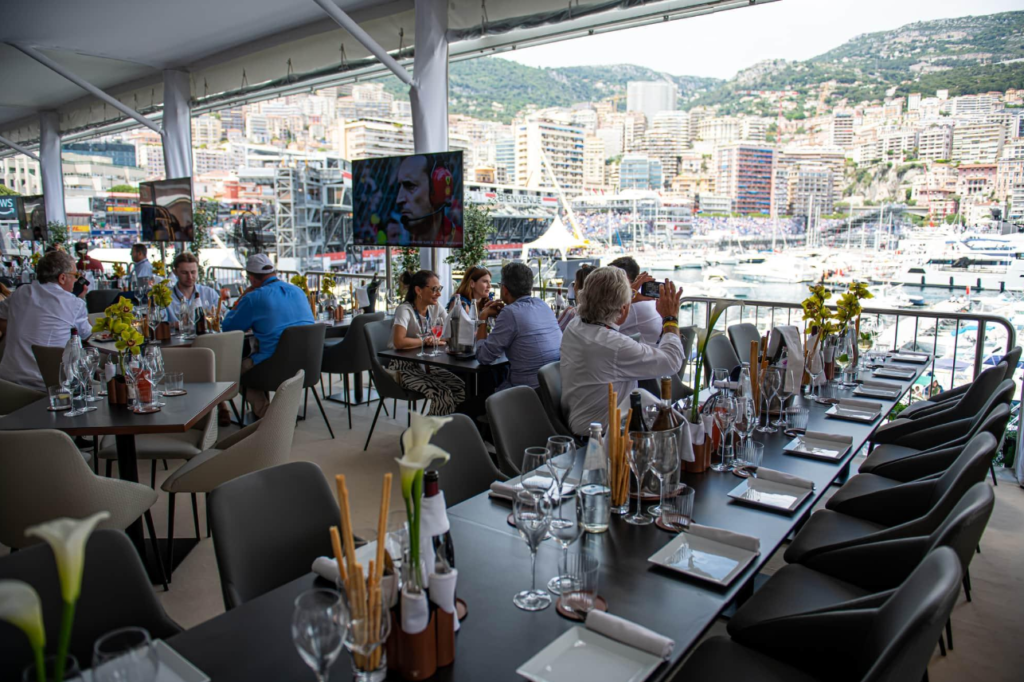
Formula 1 occupies an unusual position in international sport because it combines mass entertainment with an image of exclusivity. Millions of people watch its races through television and streaming services, yet some of its most valuable commercial experiences are designed for a relatively small group of premium customers. Grand Prix weekends frequently bring together luxury hotels, private hospitality facilities, high-end restaurants and corporate entertainment, creating a business environment that extends well beyond ticket sales.
The Paddock Club is one of the clearest examples of this model. Its premium hospitality packages provide guests with carefully managed experiences close to the teams and the sporting action, making them particularly attractive to corporations entertaining clients and executives. These experiences generate additional revenue while reinforcing Formula 1’s reputation as a meeting place for influential figures in business, finance and entertainment.
However, the emphasis on exclusivity creates a challenge for the championship’s relationship with ordinary supporters. Expensive tickets, international travel and premium hospitality can make attending a Grand Prix inaccessible to many fans. Formula 1 must therefore balance two different commercial priorities: attracting wealthy customers willing to pay for exceptional experiences while maintaining the broad audience that makes the championship valuable to broadcasters and sponsors.
The Racing Teams Have Become Investment Assets
Formula 1’s commercial growth has also changed how investors view the teams competing in the championship. Historically, racing teams were often treated as expensive sporting operations funded by automobile manufacturers, wealthy individuals or sponsors seeking promotional exposure. Increasingly, however, they are being evaluated as businesses with valuable commercial rights, international brands and the potential to generate long-term financial returns.
Teams receive distributions under Formula 1’s commercial agreements while earning additional income through sponsorships and partnerships. Their expenses remain substantial, covering engineering, manufacturing, research, personnel and international logistics. Nevertheless, financial regulations have changed the economics of participation. The introduction of a team cost cap in 2021 placed restrictions on certain performance-related expenditures, reducing the extent to which the wealthiest competitors could simply outspend their rivals.
The cost cap does not cover every expense, and competitive success still depends on engineering decisions, management and driver performance. However, greater spending discipline has made team finances more predictable, increasing their appeal to investors. The limited number of positions available on the Formula 1 grid also creates scarcity, potentially supporting the valuations of established teams.
That scarcity does not eliminate investment risk. Buyers who acquire stakes at high valuations must still depend on continued commercial growth, strong sponsorship demand and effective management. A racing team can be financially valuable without winning championships, but sustained underperformance or declining audience interest can eventually affect its commercial prospects.
Formula 1’s Expansion Into New Markets
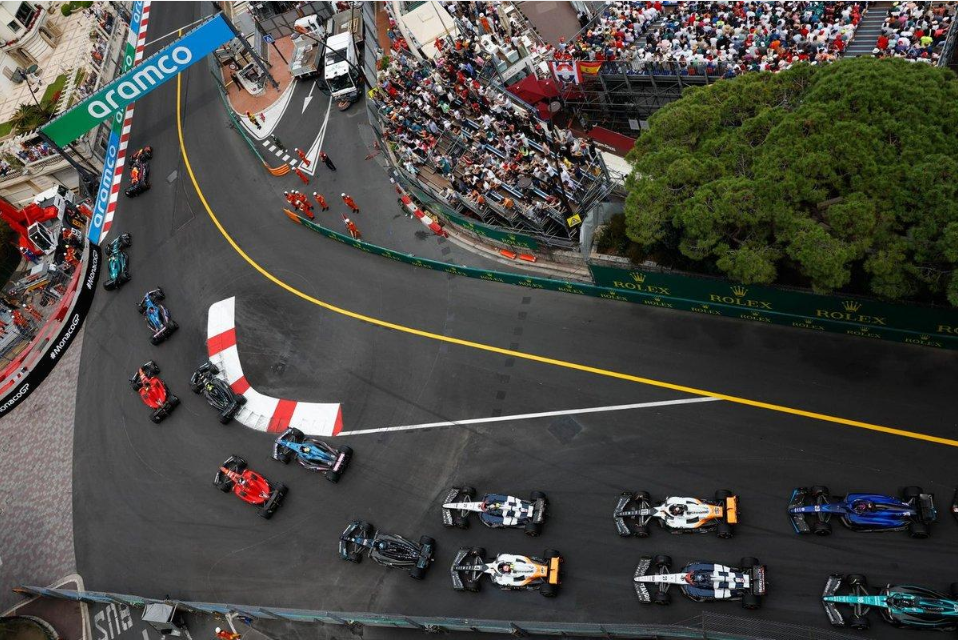
Formula 1’s international calendar demonstrates how sporting heritage and commercial expansion have become closely connected. Historic races at venues such as Monaco, Silverstone and Monza preserve the championship’s identity, while newer events in the United States, Asia and the Middle East help it reach different audiences and commercial partners. This combination allows Formula 1 to market itself as both a prestigious traditional competition and a modern global entertainment business.
The United States has become particularly important to that strategy. Events in Miami, Austin and Las Vegas have strengthened the championship’s presence in one of the world’s largest sports and entertainment markets, helping attract American sponsors, broadcasters and investors. Meanwhile, races in the Middle East and Asia have supported partnerships involving tourism, hospitality and national promotion.
International expansion also creates operational challenges. Teams must transport cars, equipment and personnel across continents while managing demanding competition schedules. Race promoters must make substantial investments in infrastructure and event operations, while Formula 1 must ensure that additional races strengthen rather than dilute the championship’s appeal. The commercial objective is therefore not simply to increase the number of events, but to develop a calendar that remains financially sustainable and attractive to fans.
When Geopolitics Interrupts the Business
Formula 1’s global presence exposes it to political and security risks beyond its control. In March 2026, the championship confirmed that the Bahrain and Saudi Arabian Grands Prix would not take place in April because of the regional security situation. With no replacement events scheduled, the originally planned 24-race season was reduced to 22 races. The disruption demonstrated how quickly international events can be affected by geopolitical developments.
Race cancellations have implications for promoters, sponsors, broadcasters, local businesses and fans who have arranged travel. They can also affect the revenue associated with race promotion, hospitality and commercial partnerships, although the precise financial consequences depend on individual contractual arrangements. Formula 1’s diversified revenue structure provides some protection, but it cannot eliminate the economic effects of disrupted events.
The situation illustrates a broader challenge facing international entertainment businesses. Expanding into more countries creates access to new audiences and commercial opportunities, but it also increases exposure to political instability, transportation difficulties and regional security concerns. Managing these risks has become an essential part of operating a global sporting championship.
The Challenge of Sustaining a Global Empire
Formula 1’s commercial success has been remarkable, but continued growth cannot be taken for granted. The championship must maintain competitive racing, preserve audience interest and ensure that its expansion remains manageable for teams and event organizers. Its ability to attract younger viewers will also depend on how effectively it adapts to changing media habits without making the sport excessively difficult or expensive to follow.
Environmental sustainability represents another challenge. The 2026 technical regulations introduced significant changes to power units and the use of advanced sustainable fuels, reflecting the sport’s attempt to reduce its environmental impact while preserving its role as a platform for automotive engineering. These developments require substantial investment and place additional pressure on teams and manufacturers to manage technological change effectively.
The most important challenge, however, concerns the relationship between commercial growth and sporting quality. Formula 1 can sell broadcasting rights, hospitality packages and sponsorship agreements only because audiences remain interested in the competition. If racing becomes predictable, access becomes prohibitively expensive or commercial expansion overwhelms the sporting experience, the championship risks weakening the foundation of its success.
Formula 1’s future will therefore depend on its ability to balance commercial ambition with competitive integrity, financial discipline and the expectations of its global audience.
THE ABE TAKE
Formula 1’s transformation into a multibillion-dollar enterprise demonstrates how modern sporting competitions can become powerful international businesses. The championship has developed multiple revenue streams from broadcasting, sponsorship, race promotion, hospitality and digital entertainment, turning the attention generated by racing into substantial commercial value. Its success provides a compelling example of how a recognized sporting brand can expand across industries and geographical markets without abandoning its central product.
Yet Formula 1’s growth should not be understood simply as a triumph of marketing or commercial management. Its financial strength depends on the drivers, teams, engineering achievements and sporting rivalries that make people want to watch. The business has become more valuable because it has attracted a broader audience and created more ways for companies to participate in the experience. Maintaining that relationship between sporting excellence and commercial opportunity will be essential to its future.
The risks are equally important. High prices can alienate supporters, excessive expansion can strain operations, geopolitical disruption can undermine events, and weak competition can reduce audience interest. These challenges demonstrate why sustainable commercial growth requires more than increasing revenue or attracting prestigious sponsors.
Formula 1 has built a global empire by turning the excitement of racing into an international commercial enterprise. Its greatest challenge now is ensuring that the business never becomes more important than the sport that made it possible.
For Liberty Media, the teams and the championship’s commercial partners, the opportunity remains substantial. But the foundation of Formula 1’s value is ultimately not its broadcasting contracts, luxury hospitality or sponsorship agreements. It is the enduring ability of the competition to capture the attention and loyalty of people around the world.
ABE MAGAZINE
Understand More. Think Bigger.