






Africa’s Financial Markets Are Getting Stronger. Why Is Investment Still So Difficult?
ABE MAGAZINE | FINANCE & AFRICAN MARKETS
October 14, 2026
Africa’s financial markets are becoming more sophisticated, with stronger regulations, improving economic conditions and new investment products. But a landmark report reveals that progress in building financial systems has not yet translated into the liquidity and accessibility needed to finance the continent’s development.
A Decade of Progress, but an Investment Gap Remains
Africa’s financial markets are making measurable progress, yet the continent continues to face a difficult challenge: turning stronger financial institutions into investment that supports businesses, infrastructure and economic growth. The 2026 Absa Africa Financial Markets Index, released on October 14, found that 21 of the 29 economies assessed improved their scores, reflecting gains in economic stability, foreign-exchange reserves and financial regulation.
The index, produced by Absa Group and the Official Monetary and Financial Institutions Forum, has now completed its tenth edition. Its average score reached 56, the highest in its history. Covering economies that represent approximately 80% of Africa’s population and economic output, the assessment provides a broad picture of how the continent’s financial systems are developing.
But the findings also reveal a persistent weakness. Many markets have introduced new financial products, improved trading infrastructure and strengthened regulatory frameworks without generating enough actual trading activity. The result is a growing distinction between having a functioning financial market and having one capable of attracting investment at scale.
Why Market Liquidity Matters
Liquidity is one of the most important characteristics of a successful financial market. It describes how easily investors can buy or sell assets without causing major changes in their prices. When trading activity is limited, investors may struggle to exit positions, companies may find it harder to raise capital, and governments may face greater difficulty financing long-term projects.
This problem affects more than stock exchanges. Bond markets, pension funds and other investment institutions help direct savings toward productive activities. A business seeking funds for expansion, for example, may benefit from issuing bonds or shares rather than relying entirely on bank loans. However, investors are less likely to purchase those securities when there are few opportunities to trade them later.
Africa’s challenge is therefore not simply to create more financial instruments. It is to develop markets with enough participants, transparency and dependable infrastructure to make investment practical. Without that depth, improvements in regulation and market design may produce less economic benefit than policymakers expect.
The Countries Leading Africa’s Financial Development
South Africa retained first place in the 2026 index, supported by its established capital markets, extensive financial products and strong institutional-investor participation. Mauritius followed in second place, reflecting its comparatively open financial system and developed regulatory environment. Namibia ranked third, benefiting partly from its substantial pension industry relative to the size of its economy.
Other countries demonstrated notable progress. Cape Verde climbed six places to thirteenth, supported by stronger foreign-exchange reserves and sustainable-finance initiatives. Ghana rose four positions to sixth as easing inflation, improved stock-market performance and better economic conditions supported its recovery from a debt crisis.
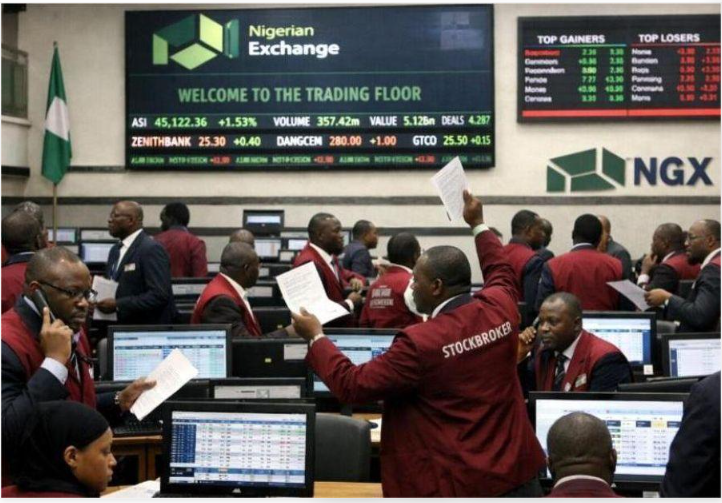
Not every economy advanced in the rankings. Botswana and Nigeria each fell two positions, to seventh and eighth respectively. Nigeria faced weaker foreign-exchange access and transparency scores, while Botswana was affected by rising inflation. These differences demonstrate why Africa’s investment environment cannot be understood as a single market. Financial conditions vary considerably between countries, even as the broader regional trend improves.
The Barriers to Investing Across Borders
One of the clearest examples of Africa’s fragmented investment landscape emerged during the initial public offering of Nigeria’s Dangote refinery. The $1.6 billion share sale was intended to attract investors interested in one of the continent’s most significant industrial projects. Yet participation outside Nigeria proved complicated because the offering was not initially registered as a public share sale in other African countries.
Investors faced different securities regulations, approval requirements and limited access to authorized investment platforms. Kenya eventually approved an offering of depositary receipts linked to the refinery shares, but the process illustrated how difficult it remains to organize investment across national borders.

The implications extend beyond a single company. If investors in neighbouring African countries cannot easily participate in major regional opportunities, businesses may struggle to mobilize the continent’s available savings. Fragmented capital markets can therefore limit industrial development even when investors and companies are interested in doing business with one another.
Stronger Regulations Are Only Part of the Solution
Financial-market development requires confidence. Investors need reliable information, enforceable contracts, transparent pricing and reasonable access to foreign currency. Over the past decade, African countries have made progress in several of these areas, including stronger reporting standards, improved market infrastructure and more sophisticated investment products.
The 2026 index also highlights advances in sustainable finance and risk management. Nineteen countries reported environmental, social and governance initiatives, while eleven had introduced climate stress testing. These measures indicate that financial institutions are preparing to manage a wider range of economic and environmental risks.
Nevertheless, improved standards cannot entirely overcome difficult economic conditions. Inflation, currency volatility, high borrowing costs and global uncertainty can discourage investment even where regulations are becoming more reliable. Policymakers must therefore combine financial reforms with credible economic management and measures that encourage investors to participate actively in domestic markets.
THE ABE TAKE
Africa’s financial markets have made genuine progress, but their next challenge is more demanding than improving international rankings. They must demonstrate that better institutions can mobilize capital, support businesses and finance infrastructure at a scale that makes a meaningful difference to economic development.
The contrast between rising index scores and persistent liquidity problems is particularly revealing. A financial market can become more transparent, introduce new products and adopt stronger regulations while remaining difficult for investors to use. Progress should ultimately be judged not only by institutional sophistication, but also by whether capital reaches productive businesses and projects.
Greater regional cooperation, stronger domestic investment institutions and more accessible trading systems could help close that gap. Africa does not lack economic opportunities, but its financial systems must become better at connecting those opportunities with available capital. The next decade will test whether the continent can turn financial-market reform into broader economic transformation.
ABE MAGAZINE
Understand More. Think Bigger.