







By ABE Magazine | November 6, 2026
Australian financial services giant Macquarie Group has reported a 50% increase in first-half profit, benefiting from stronger commodities trading, asset management earnings and increased activity across global financial markets. The Sydney-based company generated A$2.48 billion in net profit for the six months ended September 30, 2026, exceeding analysts’ expectations and marking a strong conclusion to the eight-year leadership of outgoing chief executive Shemara Wikramanayake.
The Macquarie Group profit surge highlights how diversified financial institutions can benefit from market conditions that create uncertainty for other businesses. While volatile energy prices and financial-market fluctuations have unsettled investors, they have also generated trading opportunities for Macquarie’s commodities and global markets division.
However, the bank’s strong financial results arrived alongside renewed regulatory scrutiny, with Australia’s prudential regulator imposing an additional A$100 million capital requirement over weaknesses identified in the company’s risk-management processes.
Macquarie Reports Stronger-Than-Expected Earnings
Macquarie reported net profit attributable to ordinary shareholders of A$2.478 billion, compared with approximately A$1.66 billion in the same period a year earlier.
The result exceeded the Visible Alpha consensus forecast of approximately A$2.32 billion, according to Reuters. Earnings per share increased 49% to A$6.52, while net operating income rose 10% to A$9.57 billion.
Operating expenses increased by just 1% to A$6.32 billion, allowing revenue growth to translate into stronger profitability.
The results demonstrate the importance of cost management in financial services. When revenue rises faster than operating expenses, a larger portion of additional income can contribute to earnings.
Macquarie’s annualized return on equity reached 13.8%, compared with 9.6% during the corresponding period last year.
Return on equity measures how effectively a company generates profits from shareholders’ capital. The improvement indicates stronger earnings performance relative to the equity supporting the business.
However, the bank’s profit was 22% lower than in the preceding six-month period, illustrating how results can fluctuate depending on market conditions and the timing of major transactions.
Commodities Trading Becomes the Main Profit Driver
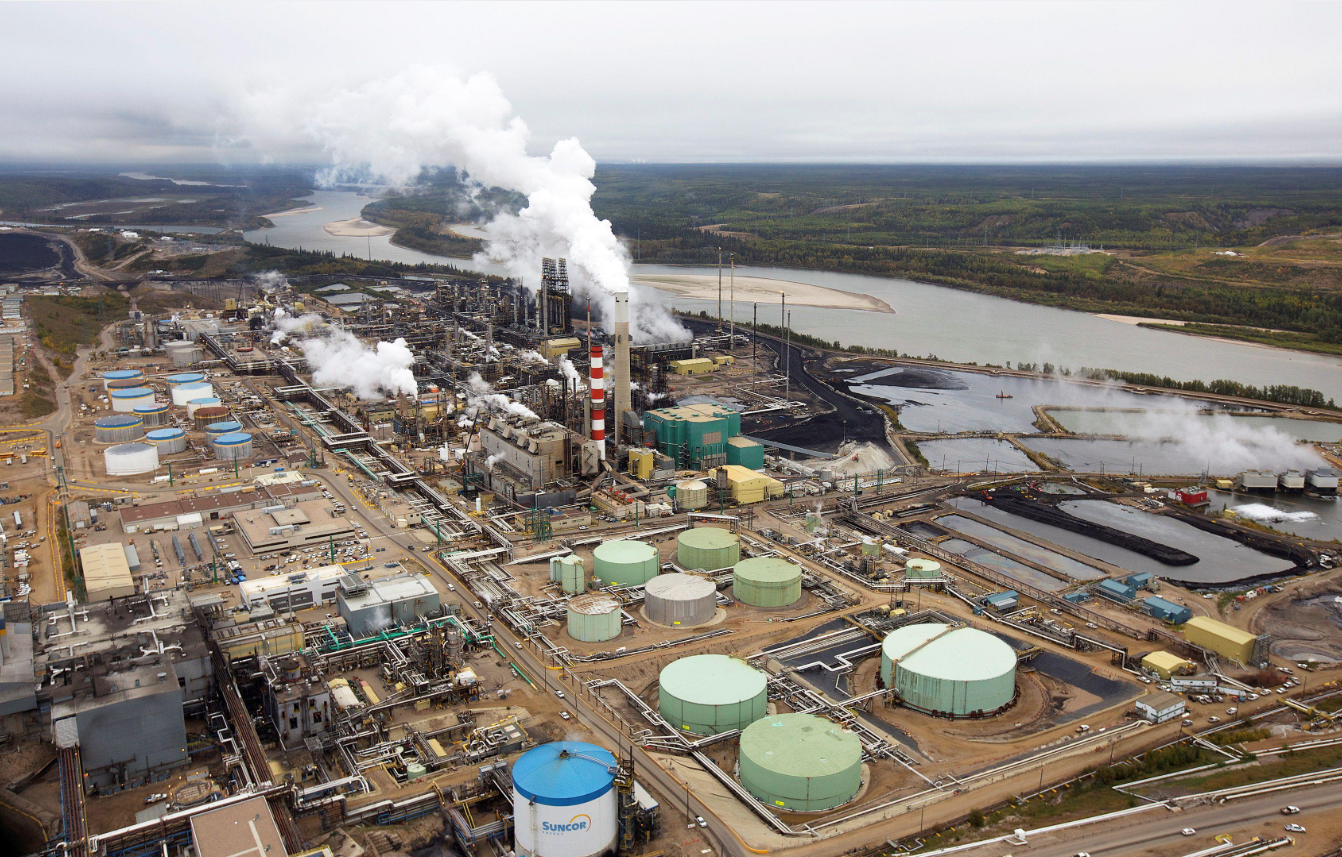
The strongest performance came from Macquarie’s Commodities and Global Markets division.
The business generated A$2.03 billion in net profit contribution, an increase of 83% from A$1.11 billion a year earlier.
The division operates across energy, commodities and financial markets, providing trading, financing and risk-management services to businesses and institutional clients.
Volatility in global energy prices created additional opportunities as companies sought to manage exposure to changing commodity costs.
Energy producers, airlines, utilities and industrial businesses frequently use financial contracts to reduce uncertainty surrounding future prices.
A company expecting to purchase substantial amounts of fuel, for example, may use hedging arrangements to limit the financial impact of unexpected price increases.
Financial institutions such as Macquarie help structure and facilitate these transactions, earning revenue through trading activity, financing and related services.
However, higher market volatility does not automatically guarantee profits. Trading businesses must manage their own exposure carefully because unexpected price movements can also produce substantial losses.
Macquarie’s performance reflects its ability to generate income from client activity and market opportunities during a particularly active period.
Asset Management Adds to the Earnings Growth
Macquarie Asset Management also contributed significantly to the group’s results.
The division reported a 28% increase in net profit contribution to A$1.51 billion, compared with A$1.18 billion in the previous year.
The improvement was driven primarily by gains associated with the sale of Macquarie AirFinance, an aircraft leasing business.
Macquarie manages investments across infrastructure, real estate, private credit and other asset classes.
These businesses can generate revenue through management fees, performance-related income and gains from selling investments.
However, earnings from asset sales may not recur at the same level every reporting period.
This distinction matters when assessing financial performance.
A company can report a substantial increase in profit because it sold an investment at an attractive valuation. That transaction may strengthen its financial position, but it does not necessarily indicate that recurring income will grow at the same pace.
For Macquarie, the combination of investment realizations and ongoing asset-management activities contributed to its strong first-half results.
The group reported approximately A$742.9 billion in assets under management, demonstrating the scale of its international investment operations.
Traditional Banking Continues to Expand
While trading and asset management attracted attention, Macquarie’s Banking and Financial Services division also recorded growth.
The business generated A$841 million in net profit contribution, up 6% from A$793 million a year earlier.
The increase reflected growth in lending and customer deposits, although stronger competition and higher credit provisions affected profitability.
Total group deposits reached A$244.2 billion at September 30, increasing 10% from A$221.5 billion at the end of March.
Deposit growth is important because customer deposits provide a major source of funding for banking operations.
Banks use deposits, together with other funding sources and capital, to support lending and financial services.
However, attracting deposits can become more expensive when banks compete by offering higher interest rates.
Macquarie’s results illustrate the challenge facing financial institutions: expanding customer relationships while protecting lending margins and managing credit risks.
The division’s continued growth also reflects Macquarie’s development beyond its traditional reputation as an investment bank.
Shareholders Receive a Higher Dividend
Macquarie announced an interim dividend of A$3.25 per share, compared with A$2.80 a year earlier.
That represents an increase of approximately 16%.
The dividend is scheduled for payment on December 17, 2026, to eligible shareholders on the company’s register at the November 12 record date.
Dividends allow companies to distribute part of their profits directly to shareholders.
For investors seeking income, consistent dividends can be an important consideration. However, dividend payments are not guaranteed and depend on earnings, capital requirements and decisions made by a company’s board.
Macquarie’s interim dividend represents a payout ratio of approximately 50%, consistent with the lower end of its stated annual dividend policy range of 50% to 70%.
The increase signals confidence in the company’s financial position, although management continues to emphasize the importance of maintaining adequate capital and liquidity.
A Major Leadership Transition Begins

The earnings announcement also marks the end of an important period in Macquarie’s history.
Shemara Wikramanayake is stepping down after eight years as chief executive and nearly four decades with the company.
During her leadership, Macquarie expanded its global investment operations and strengthened its position across infrastructure, energy markets and financial services.
Her successor, Greg Ward, previously led the Banking and Financial Services division and served in senior financial leadership roles within the group.
Ward inherits a company with substantial international operations, strong earnings momentum and exposure to several major global investment trends.
However, he will also face challenges involving financial-market volatility, regulatory oversight and competition.
The leadership transition comes as financial institutions reassess the opportunities and risks associated with artificial intelligence, digital infrastructure and changing global economic conditions.
Ward has argued that market volatility can encourage investors to evaluate risks more carefully, particularly after the rapid expansion of investment in AI-related businesses.
His immediate responsibility will be to maintain Macquarie’s financial performance while strengthening investor and regulatory confidence.
Regulatory Scrutiny Raises Questions About Risk Management
Despite its strong earnings, Macquarie faces additional scrutiny from the Australian Prudential Regulation Authority.
The regulator identified weaknesses in the company’s historical assessment of capital requirements for risks within its non-banking businesses.
As a result, an additional A$100 million capital requirement was imposed, alongside an existing A$500 million capital buffer previously applied to Macquarie Bank.
Capital requirements are designed to ensure that financial institutions maintain sufficient financial resources to absorb unexpected losses.
For banks, effective risk management is particularly important because financial problems can affect depositors, investors and the wider economy.
The additional requirement does not mean Macquarie has become financially unstable. The group reported capital and liquidity measures above regulatory minimums.
However, the regulatory action demonstrates that strong profitability does not eliminate the need for effective governance.
Financial institutions must maintain reliable systems for measuring risks, reporting financial information and complying with supervisory requirements.
For incoming chief executive Greg Ward, addressing these concerns will be an important part of establishing confidence in his leadership.
Why Macquarie’s Results Matter Beyond Australia
Macquarie operates internationally across banking, investment management, infrastructure and commodities markets.
Its financial performance therefore provides insight into developments extending beyond the Australian economy.
The strength of its commodities business reflects the importance of energy trading and risk management during periods of geopolitical uncertainty.
Its asset-management operations demonstrate the continued role of private investment in infrastructure and other long-term assets.
Meanwhile, the growth of its banking division illustrates how financial institutions can expand through deposits and lending even when competition affects margins.
For businesses, Macquarie’s results highlight the value of financial services that help manage uncertainty.
For investors, they demonstrate how diversification can create multiple sources of earnings.
However, the group’s performance also shows why reported profits must be examined carefully. Trading opportunities, investment sales and recurring banking income have different risk profiles and levels of predictability.
Understanding those differences is essential when evaluating the long-term performance of a financial institution.
What Investors Should Watch Next
Several developments will influence Macquarie’s performance over the coming months.
The first is whether commodities trading activity remains strong. Market volatility has contributed significantly to earnings, but the level of trading opportunities can change quickly.
The second is the performance of its asset-management business. Future profits will depend partly on investment realizations, asset valuations and demand for infrastructure and alternative investments.
Third, investors will monitor competition in Australian banking, particularly its effect on lending margins and deposit costs.
Regulatory compliance will also remain important as Macquarie responds to additional capital requirements and strengthens its governance processes.
Finally, the leadership transition will place greater attention on Greg Ward’s strategy for managing the group’s international operations.
Macquarie enters the new leadership period with strong profitability, but maintaining that performance will require continued financial discipline.
THE ABE TAKE
The Macquarie Group profit surge demonstrates an important principle of modern banking: uncertainty can create opportunities for institutions capable of managing risk effectively.
While volatile energy prices and financial markets have created difficulties for many businesses, Macquarie generated substantial income by providing trading, financing and risk-management services.
Its diversified business model also helped support earnings through asset management and traditional banking activities.
However, investors should avoid assuming that every component of the profit increase will continue at the same pace. Trading conditions can change, and gains from major asset sales are not necessarily recurring.
The regulatory action against Macquarie adds another important lesson. Financial success and effective governance must develop together. A profitable institution can still face weaknesses in the systems designed to measure and control risk.
For the incoming leadership team, the challenge will be maintaining growth while strengthening the company’s financial controls and regulatory relationships.
The broader lesson is that successful financial institutions do not simply benefit from favourable markets. They build diversified operations, manage uncertainty and maintain the confidence of customers, investors and regulators.
Macquarie’s latest results demonstrate the financial rewards of that strategy, while also revealing the responsibilities that accompany it.
ABE MAGAZINE
Understand More. Think Bigger.