








Under the leadership of Belén Garijo, the French pharmaceutical giant is pursuing one of its most ambitious acquisitions in decades, seeking to strengthen its commercial portfolio and prepare for a future beyond its best-selling medicine.
By ABE Editorial Desk | ABE Magazine
November 28, 2026
Building a successful pharmaceutical empire requires more than discovering effective medicines. It demands careful capital allocation, scientific expertise and the ability to anticipate changes in revenue years before they occur. French pharmaceutical giant Sanofi is confronting this challenge through its proposed $41 billion acquisition of American biotechnology company Insmed. Announced on November 24, the transaction represents a defining strategic decision under the leadership of chief executive Belén Garijo.
Garijo revealed in an interview with Reuters on Friday that preparations for the acquisition began shortly after she assumed leadership in May. The transaction reflects an effort to address weaknesses in Sanofi’s future product portfolio while expanding its presence in respiratory medicine. However, its significance extends beyond healthcare. It offers a valuable example of how established corporations use acquisitions to protect their competitive positions and prepare for long-term growth.
The Business Empire Behind Sanofi
Sanofi has developed into one of Europe’s most influential pharmaceutical companies through scientific research, international expansion and corporate consolidation. Its modern structure was significantly shaped by the combination of Sanofi-Synthélabo and Aventis in 2004. That transaction helped establish a pharmaceutical group with the resources and international reach required to compete against the world’s largest healthcare corporations.
The company’s business model depends on transforming scientific discoveries into commercially viable medicines. Pharmaceutical companies must finance research, clinical trials, regulatory applications and manufacturing before many products generate meaningful revenue. Even after substantial investment, experimental treatments may fail to demonstrate sufficient effectiveness or safety.
This uncertainty makes portfolio diversification particularly important. A pharmaceutical enterprise cannot depend indefinitely on a small number of successful products. Management must continuously develop or acquire new commercial opportunities to replace medicines approaching the end of their market exclusivity.
Belén Garijo and the Importance of Executive Leadership
Garijo became Sanofi’s first female chief executive in May 2026, following her leadership of Germany’s Merck KGaA. She inherited a company facing questions about the strength of its research pipeline and future growth opportunities. Her approach has emphasized organizational priorities, investment discipline and faster strategic decision-making.
The proposed Insmed acquisition demonstrates the influence that executive leadership can have over corporate direction. Identifying an acquisition opportunity requires understanding the company’s existing weaknesses and recognizing where another enterprise possesses complementary capabilities. Management must then establish whether the potential benefits justify the financial commitment.
However, decisive leadership should not be confused with aggressive spending. Large acquisitions can create considerable value when they address genuine strategic needs. They can also weaken a company’s financial position when management overestimates future revenue or underestimates operational challenges.
Why Sanofi Wants to Acquire Insmed
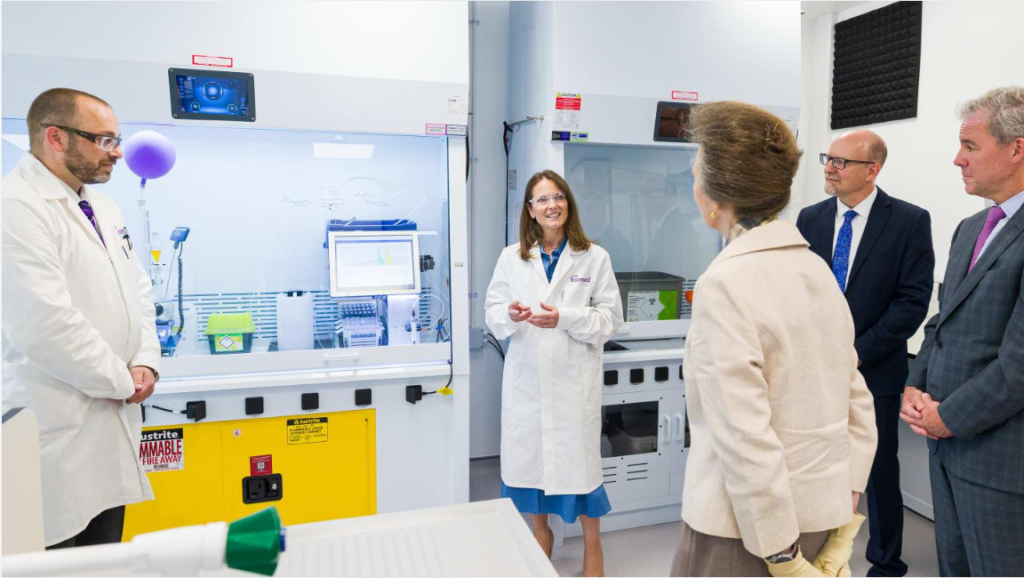
Insmed specializes in developing treatments for serious diseases, with an established presence in respiratory medicine. Its commercial portfolio includes Brinsupri and Arikayce, alongside additional treatments undergoing development. These assets provide Sanofi with opportunities to expand within areas that complement its existing healthcare activities.
Acquiring a biotechnology company with approved medicines offers a different risk profile from purchasing an enterprise whose products remain entirely experimental. Commercialized medicines have already passed significant regulatory milestones and can generate revenue. Nevertheless, their long-term financial performance remains dependent on competition, pricing, reimbursement and adoption by healthcare professionals.
For Insmed, becoming part of a larger pharmaceutical organization could provide access to international distribution networks and additional commercial resources. Smaller biotechnology companies often possess valuable scientific capabilities but lack the infrastructure required to achieve extensive global expansion. This creates opportunities for acquisitions that combine specialist innovation with established corporate scale.
Preparing for Life Beyond Dupixent
One of the most important factors behind Sanofi’s acquisition strategy is its dependence on Dupixent. Developed in partnership with Regeneron, the medicine has become a major contributor to Sanofi’s financial performance. Its commercial success has strengthened the company’s position in immunology while creating significant exposure to a single product.
The pharmaceutical industry faces a structural challenge commonly described as the patent cliff. When important intellectual property protections expire, competitors may introduce alternative treatments that place pressure on prices and existing sales. For companies with substantial revenue concentrated in individual medicines, these changes can have significant financial consequences.
Sanofi must therefore develop additional sources of growth before Dupixent faces greater competitive pressure in the coming decade. The Insmed acquisition is intended to support that transition. It illustrates why effective corporate strategy requires management to prepare for future vulnerabilities while existing operations remain profitable.
The Financial Logic Behind the $41 Billion Deal
Under the announced agreement, Sanofi would acquire Insmed for $175 per share in cash. The company plans to finance the transaction through available cash and borrowing, with completion anticipated during the first half of 2027. Management expects the acquisition to contribute positively to earnings per share by the end of 2028.
These projections reflect Sanofi’s expectations rather than guaranteed outcomes. The financial success of the transaction will depend on the performance of Insmed’s medicines, the cost of financing and the effectiveness of integrating its operations. A purchase of this magnitude also creates an opportunity cost because the capital committed becomes unavailable for other strategic investments.
For shareholders, the central question is whether acquiring Insmed will generate greater long-term value than alternative uses of the same resources. Potential alternatives include developing medicines internally, acquiring several smaller biotechnology businesses or strengthening existing research partnerships. Management must demonstrate that its chosen strategy offers an appropriate balance between commercial opportunity and financial risk.
Why Pharmaceutical Giants Buy Innovation

Independent biotechnology companies often concentrate their resources on specialized scientific problems. This focus can enable them to develop expertise in areas that larger organizations may not prioritize. When their discoveries demonstrate commercial potential, established pharmaceutical companies can acquire those businesses or negotiate partnerships.
This relationship creates an interconnected market for scientific innovation. Biotechnology entrepreneurs and investors assume considerable development risk, while established corporations provide manufacturing, regulatory and international commercial capabilities. Acquisitions can allow both sides to benefit from combining their respective strengths.
Nevertheless, relying excessively on acquisitions can become expensive. Pharmaceutical companies must maintain productive internal research capabilities rather than treating corporate purchases as a permanent replacement for innovation. The strongest businesses are likely to combine internal scientific expertise with disciplined external investment.
THE ABE TAKE | Acquiring the Future Before It Becomes a Crisis
Sanofi’s proposed acquisition offers an important lesson in corporate leadership. Businesses can become vulnerable precisely because their most successful products generate exceptional financial returns. Those returns can encourage management to underestimate the importance of developing alternative sources of revenue.
Belén Garijo’s strategy reflects an attempt to prepare for that vulnerability before it becomes an immediate financial crisis. However, committing $41 billion to an acquisition introduces substantial responsibilities. Sanofi must preserve Insmed’s scientific capabilities, support commercial expansion and generate sufficient returns to justify the investment.
The enduring strength of a pharmaceutical empire depends not simply on the medicines it owns today, but on its ability to develop and acquire the innovations that will sustain it tomorrow. In business, protecting the future often requires making difficult decisions while the present remains profitable.
Understand More. Think Bigger.