








November 12, 2026 | By ABE Editorial Desk
Britain’s Metro Bank has opened the door to a potential takeover, marking a significant turning point for a lender that came close to a financial crisis just three years ago. On November 12, the bank announced a formal sale process as part of a broader strategic review, following a restructuring programme that restored profitability and repositioned its lending business. The decision comes as Metro Bank seeks to build on improving financial performance, while its majority shareholder, Colombian billionaire Jaime Gilinski Bacal, faces the possibility of realising substantial gains from his investment. Beyond the immediate prospect of a sale, the development raises wider questions about banking consolidation, private investment and whether smaller lenders can remain independent competitors in Britain’s increasingly demanding financial market.
A Bank That Once Challenged Britain’s Financial Establishment
When Metro Bank opened in 2010, it represented an unusual development in British banking. Founded by American entrepreneur Vernon Hill, it became the first new high-street bank launched in the United Kingdom in more than a century, seeking to challenge established institutions through a distinctive approach to customer service.
Its strategy emphasised accessible branches, extended opening hours and a retail banking experience designed to distinguish it from traditional competitors. At a time when established banks were reducing their physical presence, Metro Bank sought to make its branches a central feature of its commercial identity.
However, expansion created financial and operational challenges. A major accounting error disclosed in 2019 damaged investor confidence, while subsequent difficulties involving capital requirements and the bank’s business model placed further pressure on its financial position.
By 2023, Metro Bank faced a serious funding challenge that required an extensive recapitalisation. The crisis demonstrated how difficult it could be for a relatively young banking institution to compete against established lenders while maintaining adequate capital, controlling costs and generating sustainable returns.
The £925 Million Rescue That Changed Metro Bank’s Future
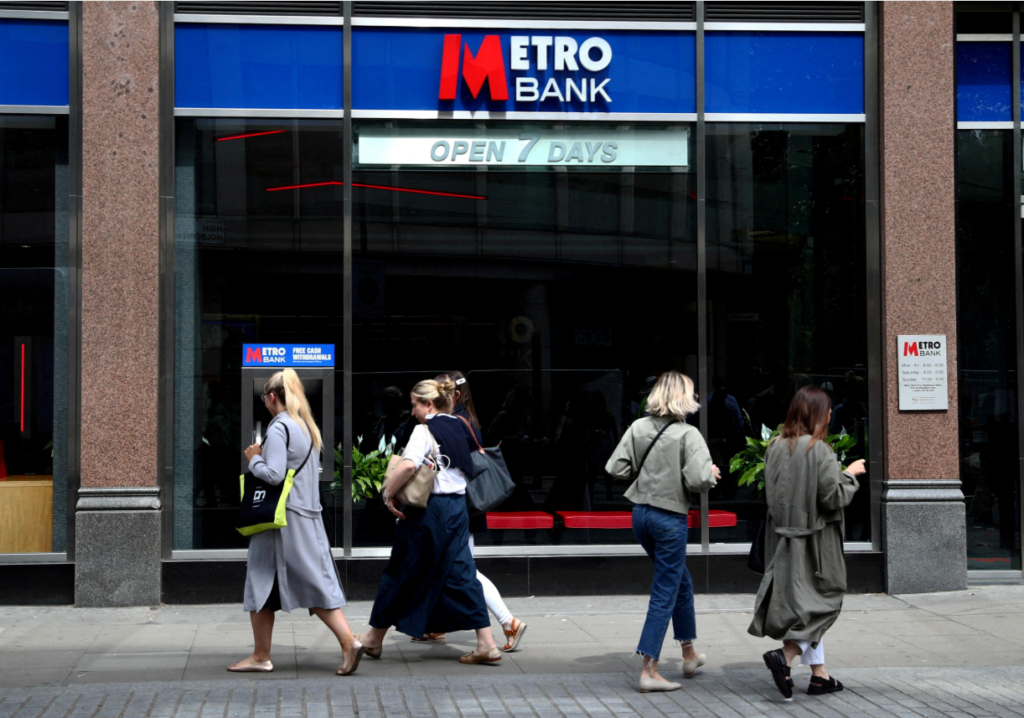
Metro Bank’s financial position changed significantly following a £925 million rescue package agreed in 2023. The transaction included new equity and debt refinancing, providing the institution with the financial support necessary to continue operating and pursue a restructuring programme.
Colombian billionaire Jaime Gilinski Bacal emerged as a central figure in the rescue through his investment vehicle, Spaldy Investments. The transaction ultimately gave him a majority shareholding of approximately 53%, making him the bank’s most influential investor.
Gilinski’s involvement reflected an investment strategy associated with acquiring significant positions in financial institutions undergoing difficulty and seeking to benefit from their recovery. For Metro Bank, the rescue created an opportunity to rebuild its balance sheet, reduce expenditure and redirect lending toward more profitable business segments.
The restructuring was substantial. The bank reduced staffing levels, adjusted branch operations and moved away from some lower-return lending activities. These decisions changed aspects of the original customer-service model but helped establish a more commercially disciplined institution.
Three years later, the prospect of a sale suggests that the rescue investment may have created a potential exit opportunity, although no transaction has been agreed.
Financial Recovery Strengthens the Case for a Sale
Metro Bank’s recent financial performance helps explain why its board believes the institution is now positioned to consider strategic alternatives.
The lender reported an £87.2 million profit for 2025, compared with a £212.1 million loss in 2024. Its recovery continued during the first half of 2026, when pre-tax profit reached approximately £61 million, representing a 41% increase from the corresponding period a year earlier.
The improvement reflects a combination of cost reductions, changes in lending strategy and stronger returns from selected business activities. Metro Bank has increasingly concentrated on commercial lending, specialist mortgages and customers whose financing requirements may be less effectively served by larger institutions.
Its November 4 trading update reported 37% year-on-year growth in targeted lending segments and a net interest margin of 3.45%. The bank also reaffirmed its ambition to achieve a return on tangible equity above 15% in 2027 and above 18% in 2028.
These figures suggest that Metro Bank is approaching the sale process from a stronger position than it occupied during its financial difficulties. Nevertheless, improved profitability does not automatically guarantee that a buyer will emerge or that shareholders will receive an attractive offer.
Who Could Buy Metro Bank?
The formal sale process introduces several possible outcomes, each carrying different implications for the institution’s future.
Metro Bank has appointed Morgan Stanley as its lead financial adviser and invited interested parties to consider potential proposals. The bank has emphasised that it is not currently engaged in active discussions with bidders and has received no takeover approach.
Potential buyers could include private equity investors, specialist financial institutions or established banking groups seeking to expand particular lending activities. A transaction involving another lender could offer opportunities to combine operations, reduce overlapping costs and strengthen market presence.
However, Metro Bank’s physical branch network could complicate negotiations. Larger institutions already operating extensive branch systems may see limited value in acquiring additional locations, particularly as digital banking continues to influence customer behaviour.
Private equity investors might view Metro Bank differently, focusing on its improving profitability and opportunities for further operational restructuring. Such an approach could support financial returns but also intensify scrutiny of the bank’s long-term investment priorities and customer-service model.
For now, these remain possibilities rather than confirmed bids. Metro Bank has stated that it will continue implementing its independent strategy if the sale process does not produce a suitable transaction.
What a Takeover Could Mean for British Banking Competition
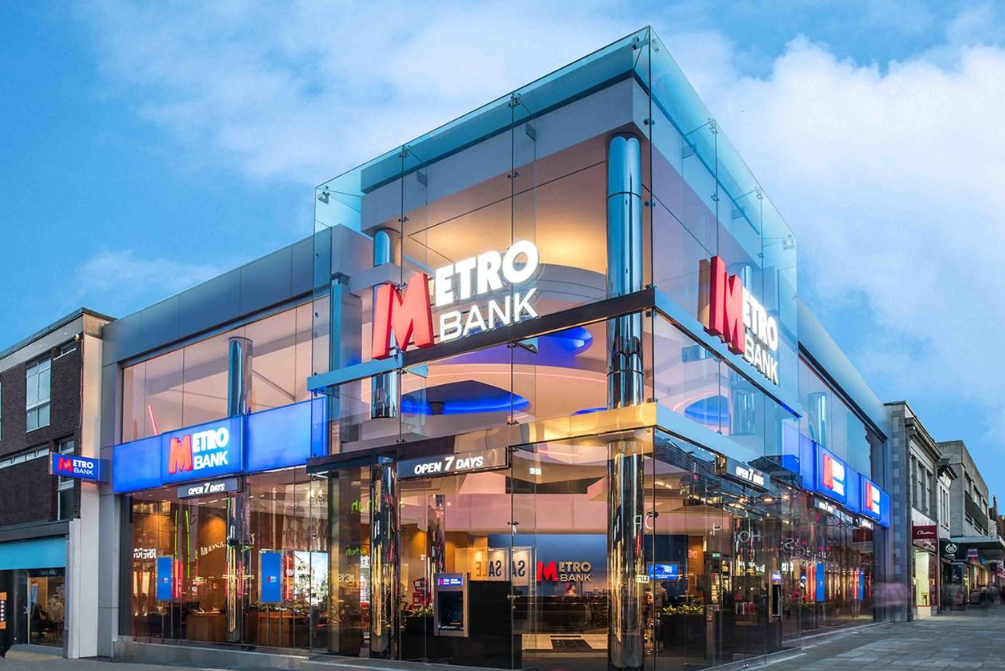
Metro Bank’s potential sale carries implications beyond its shareholders because the institution was originally established to challenge the dominance of Britain’s largest banking groups.
The UK banking market remains heavily influenced by established institutions with extensive customer bases, strong capital positions and substantial technological resources. Smaller banks compete by specialising in underserved markets, offering differentiated customer experiences or developing more flexible lending services.
A successful acquisition could strengthen Metro Bank if a new owner provides additional capital, operational expertise and access to broader financial networks. It could also create opportunities to expand lending to businesses and customers requiring specialist financial products.
However, consolidation can reduce the number of independent competitors, potentially weakening the diversity of banking services available to consumers and businesses. The effect would depend on the identity of the buyer, the structure of the transaction and any changes to Metro Bank’s operations.
Regulators would also have an important role in assessing applicable prudential, ownership and competition requirements. A transaction involving a regulated bank is not simply a commercial negotiation between investors.
The central question is whether new ownership would preserve Metro Bank’s competitive role or integrate it into a larger institution with different strategic priorities.
THE ABE TAKE
Metro Bank’s decision to explore a sale demonstrates how financial restructuring can transform the prospects of a struggling institution. In 2023, the bank required emergency financial support to secure its future. By November 2026, stronger profitability and a more focused lending strategy had created an opportunity to consider a takeover from a position of greater stability. The transformation illustrates the potential value of disciplined capital allocation, although the operational and employment costs of restructuring should not be overlooked.
For Jaime Gilinski Bacal, the situation also highlights the opportunities associated with investing in distressed financial institutions. Acquiring a substantial position during a period of uncertainty can generate significant returns if management succeeds in restoring confidence and profitability. Yet such investments carry considerable risk, particularly in banking, where capital requirements, regulatory oversight and public trust can determine whether a recovery succeeds.
The broader significance lies in the future of independent banking competition. Metro Bank was created to challenge established institutions, but its experience demonstrates that differentiation alone is insufficient without a sustainable financial model. Smaller lenders must combine customer service and innovation with disciplined risk management, adequate capital and consistently profitable operations.
Whether Metro Bank ultimately finds a buyer or continues independently, its next chapter will offer an important test of Britain’s banking market. A successful outcome should be judged not only by the value delivered to shareholders, but also by whether the institution can continue providing meaningful competition, reliable banking services and financing for businesses that remain underserved by larger lenders.
ABE MAGAZINE
Understand More. Think Bigger.