





ABE NEWS | SUNDAY, AUGUST 23, 2026
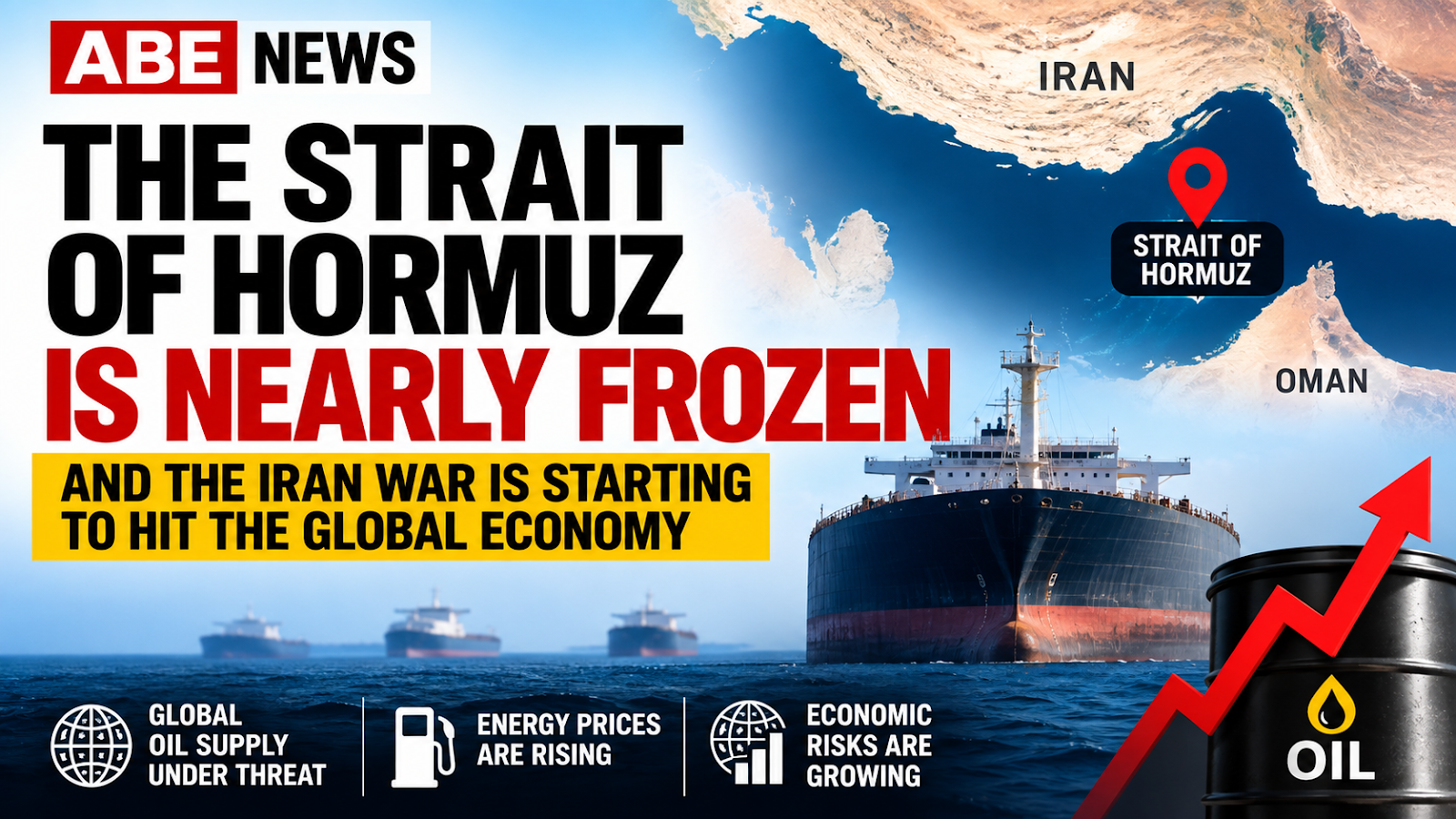
There is a narrow stretch of water between Iran and Oman that most people will never see.
It is only about 33 kilometres wide at its narrowest point.
Yet what happens there can influence how much families pay to fill their cars, how much airlines spend on fuel, how expensive goods become to transport and ultimately where inflation goes around the world.
That waterway is the Strait of Hormuz.
And right now, one of the most important energy corridors on Earth is barely functioning normally.
After nearly six months of war involving Iran, the United States and Israel, Tehran has brought unauthorized oil-tanker traffic through the Strait of Hormuz to a virtual standstill, according to Reuters. Oil prices have risen sharply, governments are scrambling to protect supplies, and Washington is preparing another major round of economic pressure against Iran on Monday.
This is no longer simply a Middle Eastern military confrontation.
The consequences are moving into the global economy.
Why One Narrow Waterway Matters So Much
The Strait of Hormuz connects the Persian Gulf with the Gulf of Oman and, beyond it, global shipping routes.
Some of the world’s biggest oil and gas producers—including Saudi Arabia, Iraq, Kuwait, Qatar, the United Arab Emirates and Iran—depend heavily on the region’s shipping infrastructure.
That makes Hormuz extraordinarily important.
When the strait functions normally, enormous quantities of energy move through it toward customers in Asia, Europe and elsewhere.
When that movement is disrupted, the market immediately begins asking a much more uncomfortable question:
Where will those barrels come from instead?
Iran’s restrictions have already stranded huge numbers of vessels. The Canadian government said earlier this month that more than 1,500 vessels were stranded in the Persian Gulf, with roughly 6,000 seafarers trapped aboard ships amid fears of military confrontation.
The problem isn’t necessarily that the world’s oil has disappeared.
It’s that getting it from producer to customer has become much harder.
Oil Is Already Reacting
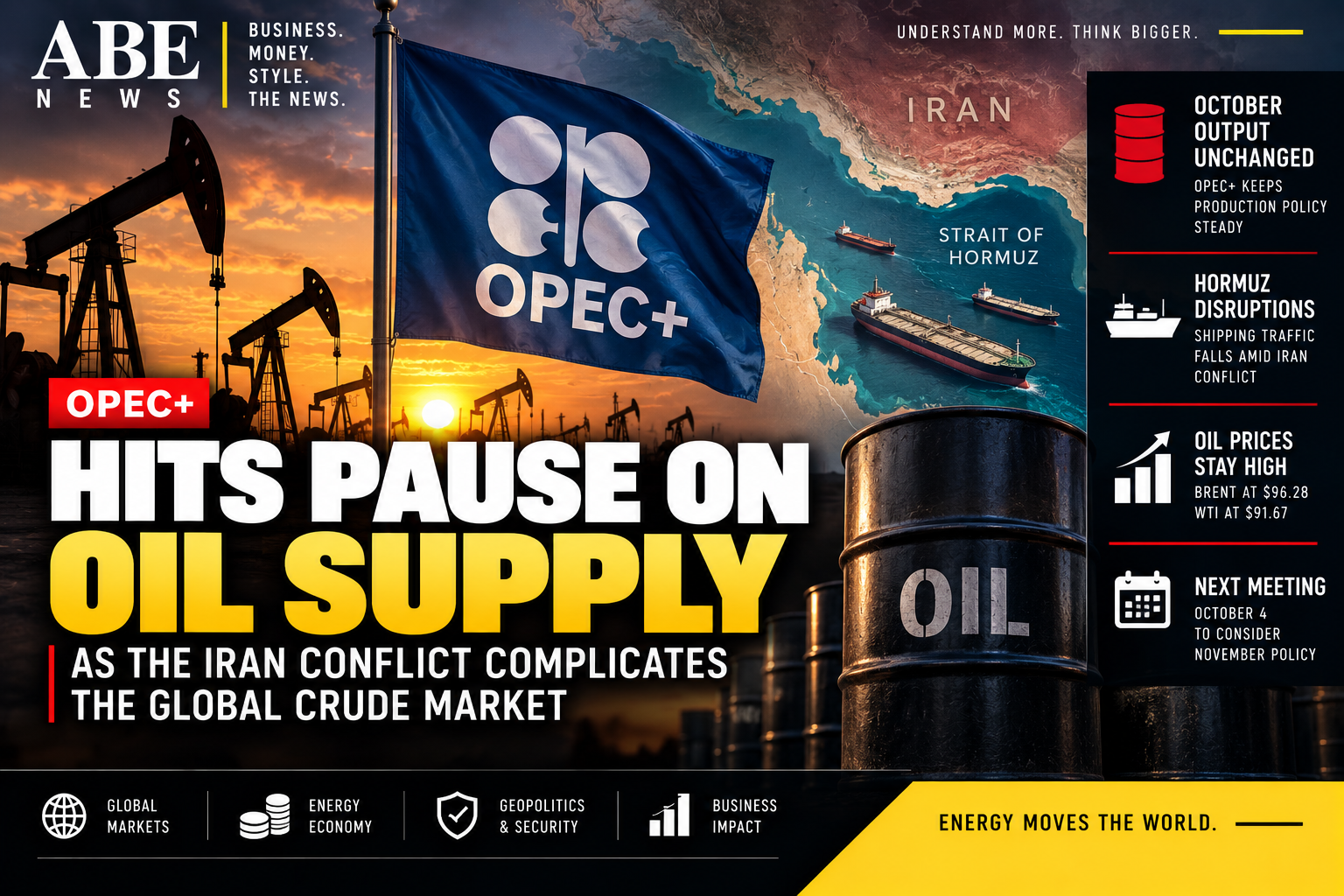
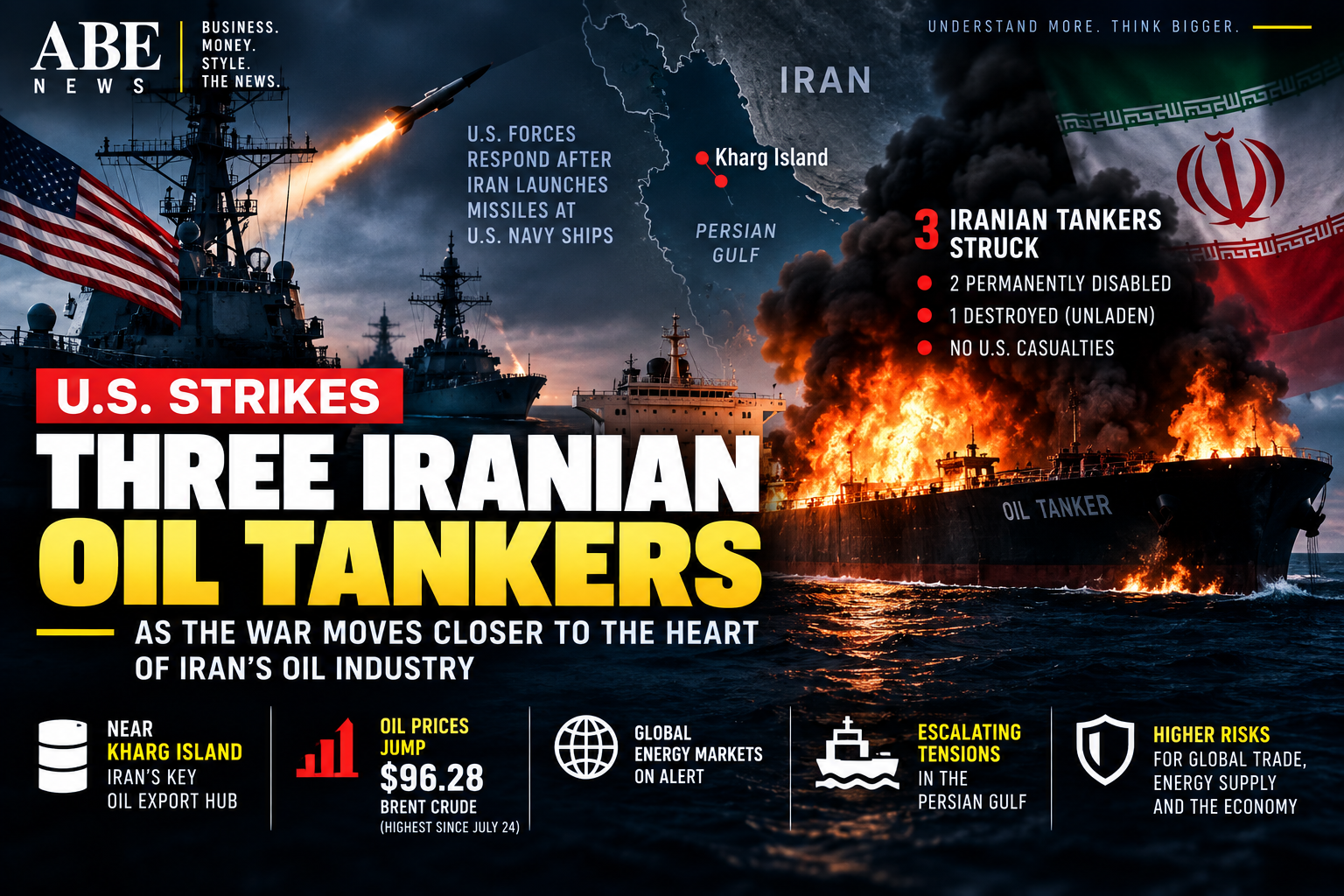
Brent crude settled Friday at $94.39 a barrel after six consecutive sessions of gains.
That’s important because crude oil doesn’t stay inside financial markets.
It moves through the economy.
Higher crude prices can mean higher gasoline and diesel costs.
Higher diesel prices increase transportation costs.
Higher jet-fuel prices pressure airlines.
Petrochemicals feed into plastics and manufacturing.
Shipping companies face higher operating costs.
Businesses eventually decide whether to absorb those expenses or pass them to customers.
That’s how a conflict thousands of kilometres away can eventually appear on a grocery receipt or transportation bill somewhere else.
And if elevated energy prices persist, central banks face another problem.
Inflation.
After years spent trying to bring price growth under control, policymakers could find themselves confronting another external energy shock.
Saudi Arabia Is Finding Ways Around the Problem
The world’s energy system isn’t simply sitting still.
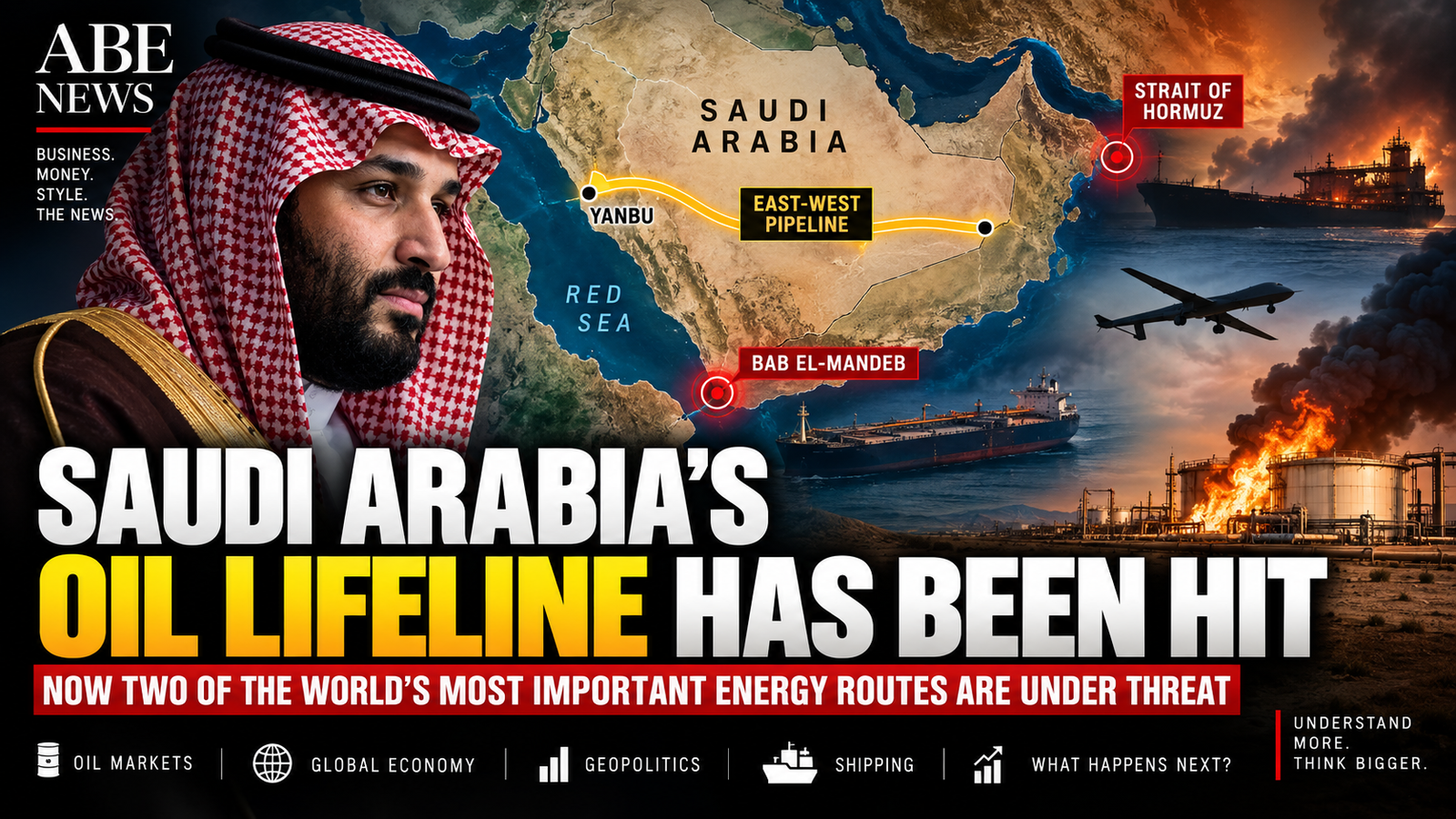
Saudi Aramco has already sold at least 4 million barrels of crude to China using loading points that allow shipments to avoid passing through Hormuz, Reuters reported this week.
Aramco has also resumed some oil loading from inside the strait and has additional tankers waiting as it offers cargoes to buyers.
That tells us something important.
When a major shipping route becomes unreliable, companies begin redesigning logistics.
Alternative ports become more valuable.
Pipelines become more strategically important.
Tankers capable of operating through safer routes become more valuable.
And countries begin thinking differently about energy security.
That shift is already appearing in financial markets.
Investors Are Betting on the Disruption
Most Gulf stock markets rose Sunday as higher oil prices supported sentiment.
Saudi Arabia’s benchmark index gained 1.1%.
But one move was particularly striking.
Shares of the National Shipping Company of Saudi Arabia surged 9.5%, reaching their highest closing level in roughly two decades.
Why?
Because disruption creates losers—but it can also create businesses whose services suddenly become much more valuable.
If shipping routes become longer, more complicated or more dangerous, transportation capacity becomes more important.
That is one of the strange realities of geopolitical crises.
The same event hurting consumers can create enormous opportunities elsewhere in the market.
Monday Could Raise the Stakes Again
The next major moment comes Monday.
U.S. Treasury Secretary Scott Bessent is scheduled to announce a new package of measures against Iran, which he has described as potentially the “toughest sanctions in history.”
Iran isn’t backing down.
Foreign Minister Abbas Araqchi dismissed the coming measures Sunday as evidence of American desperation and said they would fail.
President Donald Trump has meanwhile threatened economic consequences for countries providing Iran with what he describes as a financial or commercial lifeline.
That could transform the dispute.
Because the next phase may not be only about Iran.
It could be about countries that continue doing business with Iran.
And one country matters more than almost any other.
China Is the Giant in the Room
China is Iran’s biggest oil customer.
According to 2025 data from Kpler cited by Reuters, China purchased more than 80% of Iran’s shipped oil.
That makes Washington’s next move extremely delicate.
Sanctioning Iran is one thing.
Trying to punish companies, banks or countries that continue buying Iranian energy can spread the economic confrontation much further.
China has urged diplomacy.
But if Washington’s new measures significantly target Chinese commercial relationships with Iran, the consequences could reach beyond oil.
They could become another source of friction between the world’s two largest economies.
That is why Monday matters.
We don’t yet know the full details of the measures.
And until they’re actually announced, we shouldn’t pretend we do.
But the direction is clear:
Washington wants to make Iran’s economic isolation significantly more painful.
Tehran is signaling that it won’t simply surrender under that pressure.
Iran Is Threatening the Alternatives Too
There is another worrying development.
Iran’s new security chief, Mohsen Rezaei, has warned neighbouring countries against participating in Washington’s sanctions campaign.
He said Iran could retaliate against alternative oil-shipping routes out of the Persian Gulf if neighbouring states join U.S. economic pressure.
That matters because alternative routes are precisely what producers need when Hormuz becomes unreliable.
If those alternatives themselves become targets, the risk calculation changes again.
There is some positive news: a U.S.-Navy-overseen multinational coalition said Sunday that there had been no confirmed attacks in the Strait of Hormuz during the previous 48 hours, although shipping remained at reduced levels.
So the situation is dangerous, but it isn’t moving in only one direction.
Diplomacy is still alive.
Pakistan Is Trying to Find a Way Out
Pakistan is emerging as one of the countries attempting to bring Washington and Tehran back toward negotiations.
Army chief Field Marshal Asim Munir is expected in Tehran on Monday, with Iranian officials saying the visit is aimed at helping restore regional peace and security.
Pakistan has been acting as a mediator in the conflict.
Iranian President Masoud Pezeshkian has also continued publicly supporting a diplomatic solution.
That creates an unusual picture inside Tehran.
Some senior Iranian figures are issuing increasingly aggressive warnings.
Others are openly arguing that negotiation is preferable to an endless conflict.
The same tension exists internationally.
The United States is preparing tougher economic pressure while intermediaries are trying to restart diplomacy.
Monday could therefore bring both escalation and mediation at the same time.
The Biggest Danger May Be Economic, Not Military
When people hear “Strait of Hormuz,” they naturally think about warships, missiles and tankers.
But the consequences don’t stop at the water.
Consider the chain:
Hormuz disruption → tighter energy supply → higher oil prices → higher transportation costs → higher business costs → higher consumer prices → inflation pressure → harder decisions for central banks.
That’s how a geopolitical conflict becomes an economic one.
And it can happen even without a dramatic military escalation.
The strait doesn’t need to be completely closed for months to hurt the global economy.
It only needs to become sufficiently dangerous and unreliable that ships avoid it, insurers charge more, businesses seek expensive alternatives and energy traders price additional risk into every barrel.
Uncertainty itself has a price.
This Could Change Energy Strategy for Years
There is also a longer-term consequence.
Every major disruption teaches governments the same lesson:
Depending heavily on one route, supplier or region creates vulnerability.
Europe learned that lesson after its dependence on Russian energy became a geopolitical liability.
Countries watching Hormuz today may reach similar conclusions.
Expect more interest in strategic petroleum reserves.
Alternative pipelines.
LNG infrastructure.
Domestic production.
Renewable energy.
Nuclear power.
And diversified supply relationships.
Not because oil suddenly disappears from the global economy, but because governments increasingly treat energy security as national security.
A crisis can therefore accelerate investments that continue long after the crisis ends.
🔴 THE ABE NEWS TAKE
The most important thing happening in the Strait of Hormuz isn’t that ships are moving more slowly.
It’s that the global economy is being reminded how much of modern life still depends on a few geographic chokepoints.
We live in a world of artificial intelligence, satellites, autonomous machines and instant global communication.
Yet trillions of dollars of economic activity can still be influenced by whether tankers can safely pass through a narrow strip of water.
That vulnerability isn’t new.
What is new is how long the current disruption has lasted—and how many additional economic pressures are beginning to build around it.
Oil is rising.
Shipping patterns are changing.
Investors are repositioning.
Iran is threatening retaliation.
Washington is preparing tougher sanctions.
China could become increasingly important to what happens next.
And Pakistan is trying to reopen a diplomatic door before the confrontation moves further.
Tomorrow could change this story again.
But one thing is already clear.
The Iran war is no longer something financial markets can treat as a distant geopolitical event.
It is entering the price of energy.
And once a war begins entering the price of energy, it begins entering the global economy.
ABE NEWS
Business. Money. Style. The News.
Understand More. Think Bigger.