








ABE NEWS | September 12, 2026
Saudi Arabia has spent decades preparing for a crisis in the Strait of Hormuz. The kingdom knew that concentrating so much of its oil-export infrastructure around one of the world’s narrowest and most politically sensitive waterways created an obvious vulnerability. If tankers could no longer move safely through Hormuz, Saudi crude needed another route to international markets.
That is why the East-West pipeline matters.
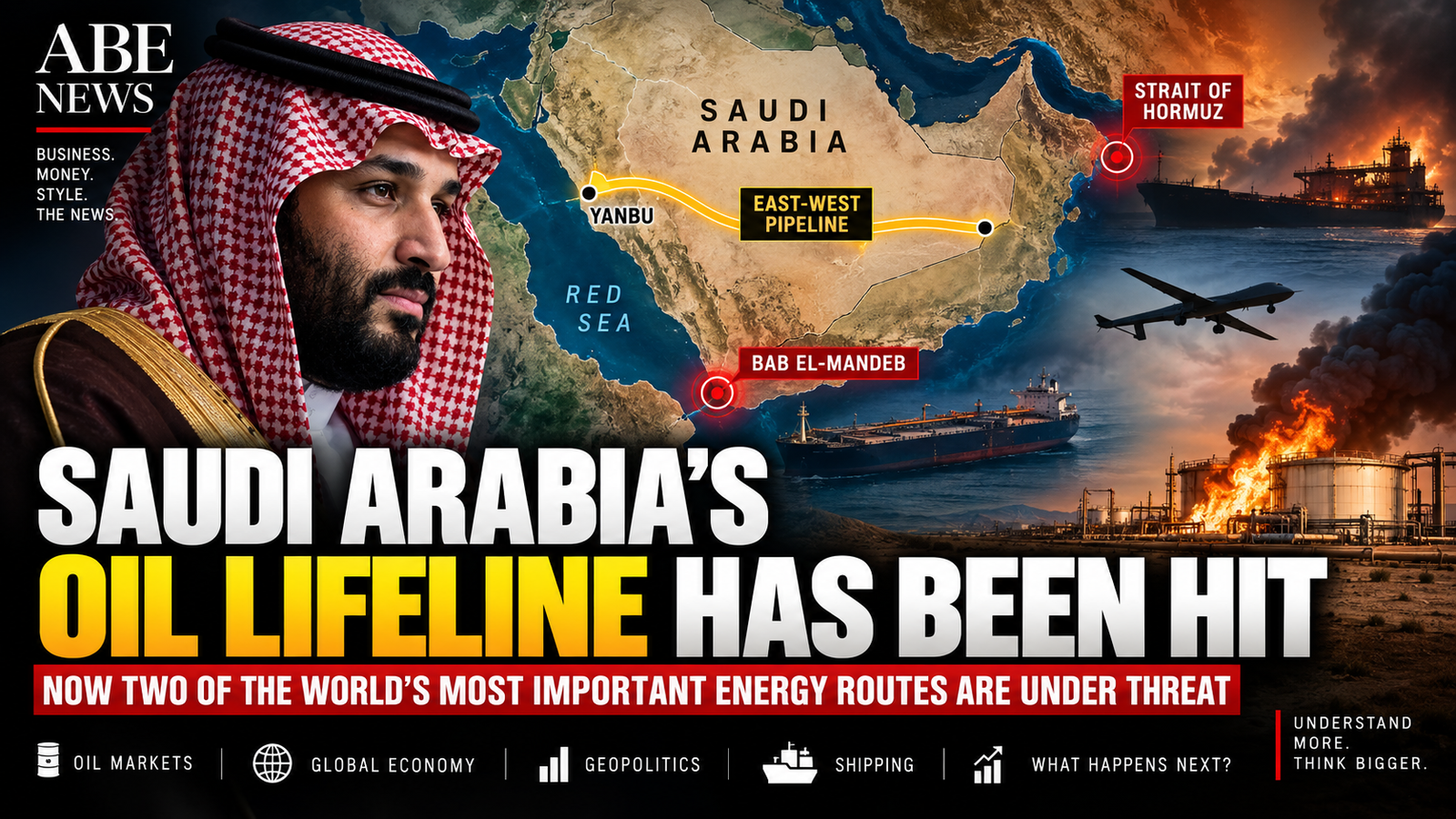
Running roughly 1,200 kilometres across Saudi Arabia, the pipeline carries crude from the kingdom’s oil-producing regions in the east to Yanbu on the Red Sea coast. From there, tankers can leave Saudi Arabia without travelling through the Strait of Hormuz. It is effectively one of the kingdom’s most important insurance policies against a disruption in the Persian Gulf.
That insurance policy has now been hit.
Saudi Arabia temporarily shut the East-West pipeline after drones struck facilities connected to the network. Saudi Arabia and Iraq say the drones originated from Iraqi territory, where Iran-aligned armed groups operate. The attack caused injuries and infrastructure damage, although Saudi authorities have described the shutdown as precautionary while the impact is assessed.
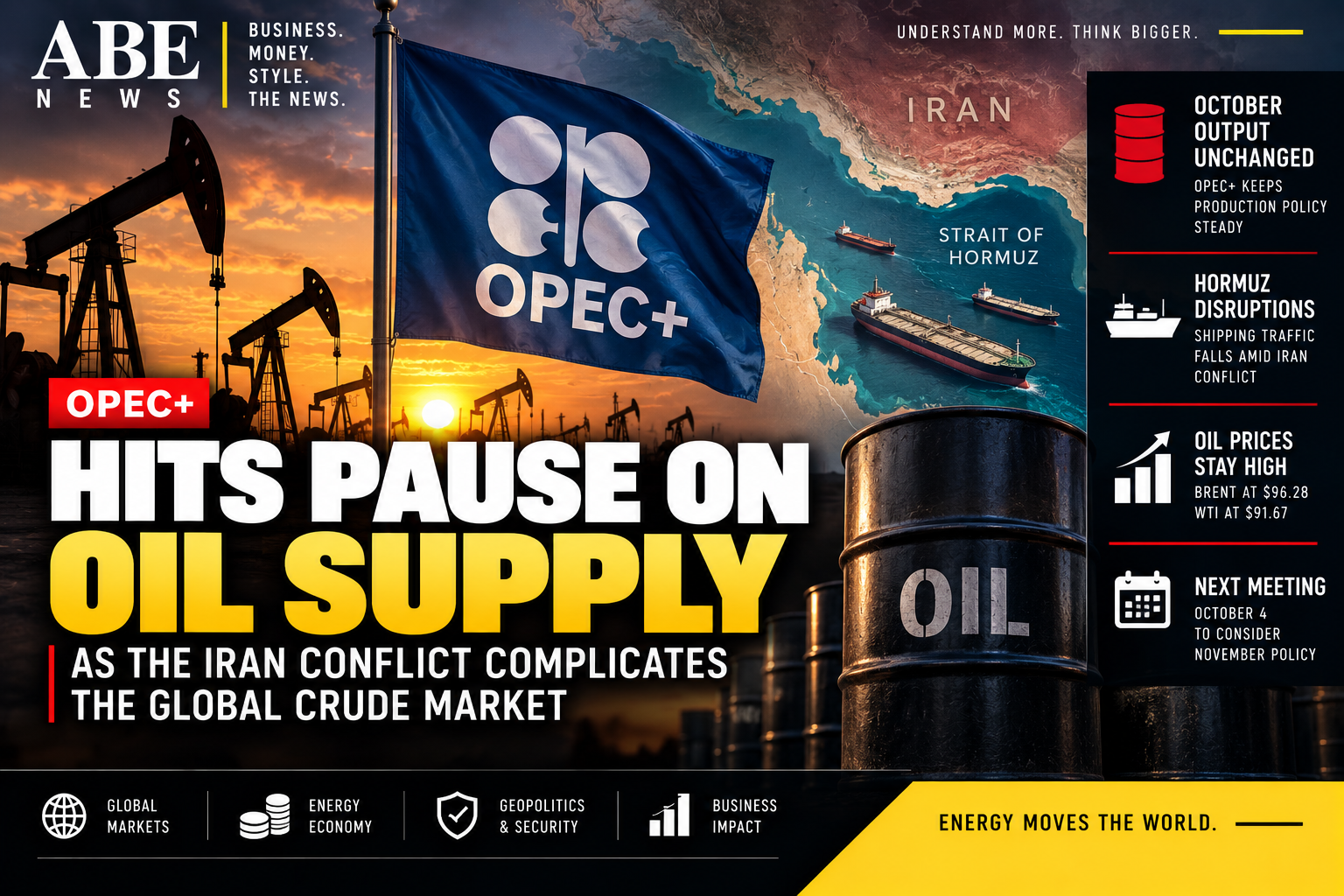
Under ordinary circumstances, an attack on a major Saudi pipeline would already command global attention. But the timing makes this incident considerably more consequential. Traffic through the Strait of Hormuz has already been severely disrupted by the wider Middle East conflict, increasing the importance of Saudi Arabia’s alternative route to the Red Sea. At the same time, Iran-aligned Houthi forces in Yemen have strengthened their position around Bab el-Mandeb, another strategic waterway through which ships enter and leave the Red Sea.
The result is an uncomfortable new reality for global energy markets: the principal route is under pressure, the alternative pipeline has been attacked, and the maritime corridor at the other end of that alternative is becoming more dangerous.
This is no longer simply a story about one damaged piece of Saudi infrastructure. It is becoming a test of how resilient the system that moves Middle Eastern oil around the world really is.
THE PIPELINE WAS BUILT FOR A CRISIS LIKE THIS
Saudi Arabia’s geography explains the strategic importance of the East-West pipeline. Much of the kingdom’s enormous oil production is concentrated in the east, close to the Persian Gulf. Crude exported from terminals there would ordinarily travel through the Strait of Hormuz before reaching the Arabian Sea and eventually customers around the world.
Hormuz is extraordinarily important to the global energy system because vast quantities of crude oil and liquefied natural gas pass through a relatively narrow stretch of water. That concentration creates a classic economic chokepoint. A serious disruption does not have to eliminate global oil production to cause problems; it only has to make transporting that oil more difficult, expensive or uncertain.
Saudi Arabia’s East-West pipeline provides a way around that vulnerability. Instead of loading crude onto tankers in the Persian Gulf, Saudi Aramco can move oil overland to Yanbu on the Red Sea. The crude can then be loaded onto ships hundreds of kilometres away from Hormuz.
The pipeline’s strategic importance has increased dramatically during the current conflict. It has recently been carrying approximately 4 million to 5 million barrels of oil per day, according to Reuters, equivalent to roughly 4% to 5% of global oil supply.
That does not mean the pipeline attack has removed 5 million barrels per day from the market. Saudi Arabia has described the shutdown as precautionary, and the duration of the interruption remains critical. A short closure followed by normal operations would be very different from sustained damage that restricts exports for weeks.
But the volume travelling through the system shows why markets are paying attention. This is not an obscure regional pipeline. It has become one of the most important alternatives available to the world’s largest crude exporter at precisely the moment its traditional shipping route is under severe pressure.
THE BACKUP ROUTE HAS BECOME A TARGET
Saudi Arabia and Iraq say the drones involved in the attack came from Iraqi territory. Baghdad has launched an investigation as it faces renewed pressure over Iran-aligned armed groups operating within the country. The episode places Iraq in a particularly difficult position because its government is attempting to avoid being dragged deeper into a regional confrontation while maintaining complicated political and security relationships with Iran and the United States.
For Saudi Arabia, the attack exposes a broader weakness in the idea of simply rerouting energy around a dangerous maritime chokepoint. Moving oil away from Hormuz reduces one form of risk, but it does not eliminate geopolitical risk altogether. Pipelines, pumping stations, storage facilities and export terminals can themselves become targets.
Saudi Arabia has invested heavily in protecting its energy infrastructure, and its system contains substantial redundancy. Yet the more global markets depend on a particular alternative route, the more strategically important that route becomes. Infrastructure built as a backup can therefore become a target precisely because it is functioning as a backup.
The situation also presents Riyadh with a delicate strategic decision. Saudi Arabia has spent years trying to reduce regional tensions while simultaneously pursuing an enormous domestic economic transformation under Vision 2030. Another major confrontation would threaten investment, tourism, logistics, financial development and many of the other industries the kingdom hopes will eventually reduce its dependence on oil.
Saudi Arabia therefore has powerful reasons to avoid escalation. At the same time, repeated attacks on critical infrastructure could eventually make restraint more difficult to sustain.
THE RED SEA IS NOW PART OF THE SAME STORY
The situation becomes even more significant when viewed from the other side of the Arabian Peninsula.
Iran-aligned Houthi forces have advanced around Yemen’s Red Sea coast and reached Perim Island, also known as Mayun, which sits inside the Bab el-Mandeb Strait. The island’s physical size is relatively small, but its location gives it enormous strategic importance. Bab el-Mandeb connects the Gulf of Aden and Indian Ocean with the Red Sea, providing access toward the Suez Canal and Mediterranean.

For Saudi Arabia, this creates a problem that can be understood simply by looking at a map. The Strait of Hormuz lies to the east. Bab el-Mandeb lies to the southwest. The East-West pipeline runs across the kingdom to move oil away from the first chokepoint and toward the Red Sea.
If Hormuz is dangerous, Saudi Arabia can send more crude west. But once that crude reaches Yanbu and enters the maritime shipping system, security in the Red Sea and around Bab el-Mandeb becomes increasingly important.
This is why the Houthi advance and the pipeline attack should not be treated as completely separate stories. Together they illustrate how several vulnerabilities in the global energy network can begin to overlap. The world’s alternative route around one chokepoint is becoming exposed to instability around another.
OIL MARKETS DO NOT NEED A COMPLETE BLOCKADE TO REACT
One of the easiest mistakes to make during an energy crisis is to assume that prices only rise when oil physically disappears.
Markets operate on expectations.
Refiners need confidence that crude will arrive. Shipping companies need to know whether vessels can travel safely. Insurers need to calculate the probability of a ship being damaged or detained. Traders need to anticipate what supply will look like weeks or months ahead.
When uncertainty increases, costs can rise even while oil continues moving.
A tanker company may demand more money to enter a dangerous region. An insurer may charge a larger war-risk premium. A ship may travel a longer route to avoid a threatened waterway. A refinery may compete more aggressively for crude from another producer because it is uncertain whether its usual supply will arrive.
Those decisions can gradually push the cost of energy higher without a single announcement that the world’s oil supply has been “cut off.”
That distinction is important when assessing Saudi Arabia’s pipeline shutdown. There is currently no evidence that the attack has permanently removed the pipeline’s entire capacity from the global market. What has changed is the perception of how secure that capacity is.
In energy markets, reliability has economic value.
SAUDI SUPPLY WAS ALREADY UNDER PRESSURE
The attack also arrives at a difficult moment for Saudi production.
Saudi crude supply fell by approximately 2.3 million barrels per day in August to around 6 million barrels per day, according to the International Energy Agency, taking output to its lowest level in more than three decades amid disruptions associated with the conflict.
That does not mean Saudi Arabia has lost the ability to produce substantially more oil. The kingdom possesses considerable production capacity. The problem is increasingly about whether crude can be produced, transported and exported reliably while regional infrastructure and shipping routes remain under threat.
That distinction—between having oil and being able to move oil—could become one of the defining features of this crisis.
Energy markets contain multiple layers of redundancy. Producers can sometimes increase output when another supplier experiences trouble. Governments can release oil from strategic reserves. Refiners can purchase different grades of crude. Tankers can change routes.
The system is designed to adapt.
But redundancy becomes less effective when several disruptions occur simultaneously. Pressure around Hormuz, reduced Saudi supply, an attack on the East-West pipeline and instability around Bab el-Mandeb do not simply add four separate risks to the market. They can reinforce one another by reducing the number of alternatives available when something goes wrong.
THE CONSEQUENCES TRAVEL FAR BEYOND THE MIDDLE EAST
The significance of this crisis becomes clearer when oil is viewed not merely as a commodity traded by energy companies, but as an input embedded throughout the global economy.
Airlines buy jet fuel. Trucking companies buy diesel. Cargo ships consume enormous quantities of fuel. Farmers depend on energy to operate machinery and transport products. Manufacturers receive components through supply chains that stretch across continents. Petrochemicals derived from oil appear in plastics and countless industrial products.
When crude becomes persistently more expensive, businesses eventually have to decide who absorbs the additional cost.
Some accept lower margins. Others increase prices. Some reduce production or postpone investment. Transportation companies can introduce fuel surcharges, while airlines can adjust fares. Manufacturers may pass higher logistics expenses along to retailers, which can eventually reach consumers.
That is how instability around a pipeline in Saudi Arabia can eventually affect businesses thousands of kilometres away, including companies operating in Canada, Europe and Asia.
The transmission is rarely immediate and never perfectly uniform, but the economic connection is real.
CENTRAL BANKS HAVE ANOTHER INFLATION PROBLEM
A sustained energy shock would also complicate monetary policy.
Central banks have spent years trying to bring inflation under control without causing unnecessary economic damage. Higher oil prices make that balancing act more difficult because they can simultaneously increase costs and weaken economic activity.
If the increase in energy prices is brief, policymakers may decide that changing interest rates would accomplish little. But if expensive oil persists, the effects can spread through transportation, manufacturing and consumer prices. Businesses may begin incorporating higher energy costs into contracts, while workers may demand higher wages to compensate for rising living expenses.
Central banks could then face an unpleasant combination: inflationary pressure at the same time economic growth is weakening.
Raising interest rates can help restrain inflation, but higher borrowing costs also weigh on housing, investment and consumer spending. Leaving rates unchanged can support growth, but risks allowing inflation expectations to become less stable.
The longer disruption persists around major energy routes, the harder that calculation becomes.
SHIPPING MAY EVENTUALLY MATTER AS MUCH AS OIL
Bab el-Mandeb also matters for reasons extending far beyond crude.
The strait forms part of one of the world’s most important shipping corridors. Vessels travelling between Asia and Europe can pass through Bab el-Mandeb, enter the Red Sea and continue north through the Suez Canal. Serious disruption can force ships to travel around the Cape of Good Hope at the southern tip of Africa instead.
That route remains viable, but it is significantly longer.
Longer voyages consume more fuel, keep ships occupied for additional days and effectively reduce the amount of shipping capacity available at any given time. Freight rates can rise, delivery schedules become less predictable and companies may need to carry more inventory as protection against delays.
Recent disruptions in the Red Sea have already demonstrated an important lesson for global trade: a waterway does not have to be physically closed to become economically impaired. If enough shipping companies conclude that operating there is too risky, commercial traffic can fall sharply even while the route technically remains open.
That means the Houthi position around Bab el-Mandeb has implications not only for energy traders but for retailers, manufacturers, exporters and consumers around the world.
SAUDI ARABIA’S ECONOMIC TRANSFORMATION IS ALSO EXPOSED
There is a deeper irony for Saudi Arabia.
The kingdom is investing hundreds of billions of dollars precisely because it wants oil to become less central to its economic future. Vision 2030 has encouraged investment in tourism, entertainment, logistics, finance, technology, manufacturing and other industries.
But diversification depends heavily on stability.
Multinational companies establish regional headquarters where they believe employees and capital will be secure. Tourists visit destinations they consider safe. Financial centres depend on investor confidence. Logistics hubs require predictable shipping routes. Large infrastructure projects need reliable access to financing, materials and international contractors.
A prolonged regional conflict therefore threatens more than Saudi oil revenue. It could make the kingdom’s broader economic transformation more difficult and expensive.
Protecting energy infrastructure is consequently connected to a much larger objective: convincing the world that Saudi Arabia remains a stable place in which to invest and build.
IRAQ IS BEING FORCED TO CONFRONT ITS OWN WEAKNESS
For Iraq, the pipeline attack raises a different question: how much control does the government actually exercise over armed groups operating within its borders?
Baghdad does not want a confrontation with Saudi Arabia. It also does not want to become a battlefield between Iran and its regional rivals. Yet if drones can be launched from Iraqi territory against neighbouring states without the central government’s approval, other countries may increasingly view Iraq as part of the security problem regardless of Baghdad’s intentions.
That places Iraqi leaders in a difficult position. Iran remains enormously influential inside the country, including through political relationships and armed factions. The United States maintains interests there. Saudi Arabia has worked to improve relations with Baghdad. Iraqi leaders, meanwhile, have powerful reasons to avoid another conflict after decades of instability.
The investigation into the pipeline attack therefore matters beyond identifying who launched the drones. It is a test of whether the Iraqi state can prevent its territory from becoming a platform for attacks that could trigger retaliation and drag the country into a wider war.
GEOGRAPHY CAN CREATE ECONOMIC POWER
The growing importance of the Houthis also illustrates something broader about the global economy.
Economic influence is not determined solely by the size of a country’s GDP or the sophistication of its companies. Geography can create extraordinary leverage.
Bab el-Mandeb is a relatively narrow waterway, yet its position between major trading regions gives events around it global consequences. A comparatively small armed movement operating near that corridor can influence shipping decisions made in London, insurance prices determined by global underwriters, delivery schedules for European retailers and energy calculations made by governments in Asia.
The same principle explains the strategic importance of Hormuz, the Suez Canal, the Panama Canal and other chokepoints.
Globalization created enormous efficiency by concentrating trade along the fastest and cheapest routes. But efficiency can also create vulnerability. When enormous volumes of goods depend on a small number of corridors, instability in one location can transmit economic consequences across continents.
THE WORST-CASE SCENARIO IS NOT INEVITABLE
There are still good reasons to avoid exaggerated conclusions.
Saudi Arabia could restore normal pipeline operations quickly. Iraq could successfully prevent further attacks originating from its territory. Houthi advances do not automatically mean Bab el-Mandeb will become unusable. Diplomatic efforts could reduce tensions, while other oil producers could respond to sustained shortages by increasing output.
Governments also possess strategic petroleum reserves, companies can adjust supply chains and higher prices themselves can eventually reduce demand.
The global energy system has survived wars, embargoes, tanker attacks and major production disruptions before.
The responsible conclusion is therefore not that the world is about to run out of oil.
The concern is subtler and potentially more important: the number of dependable ways to move Middle Eastern energy to global customers is being tested simultaneously.
The longer that situation persists, the greater the probability that higher transportation costs, insurance premiums and energy prices begin spreading through the broader economy.
🔴 THE ABE NEWS TAKE
The Saudi pipeline attack matters because it exposes a weakness that is easy to overlook when discussing global energy security.
For decades, governments and energy companies have built alternative routes precisely so that the failure of one chokepoint does not paralyse the entire system. Saudi Arabia’s East-West pipeline is a textbook example. If Hormuz becomes unsafe, crude can travel across the kingdom and leave through the Red Sea instead.
That strategy works extremely well when the crisis is concentrated in one place.
The problem begins when risks overlap.
Hormuz is already under severe pressure. Saudi Arabia’s alternative pipeline has now been attacked. At the western end of the system, instability around Bab el-Mandeb threatens another strategically important shipping corridor. None of these developments alone proves that a global energy crisis is inevitable, but together they reduce the margin for error.
That is the larger story.
The global economy does not depend merely on producing enough oil. It depends on an enormous network of pipelines, ports, tankers, insurance markets and shipping lanes capable of moving that oil reliably from producers to consumers.
Saudi Arabia still has enormous reserves beneath the ground. The world still produces huge quantities of crude every day. The immediate danger is not that the oil suddenly ceases to exist.
It is that getting it from where it exists to where it is needed becomes increasingly difficult, risky and expensive.
And when the world’s backup routes begin needing backup routes of their own, businesses, governments and consumers far beyond the Middle East have reason to pay attention.
ABE NEWS
Business. Money. Style. The News.
Understand More. Think Bigger.